hero media

Ever wanted fly a jumbo jet? This is for you…

Steering a 747 over London needn’t mean having a pilot’s licence or any mechanical know-how for that matter finds Alissa Jenkins, as she trials British Airways’ flight simulator experience.

Well, this was never part of the career plan.

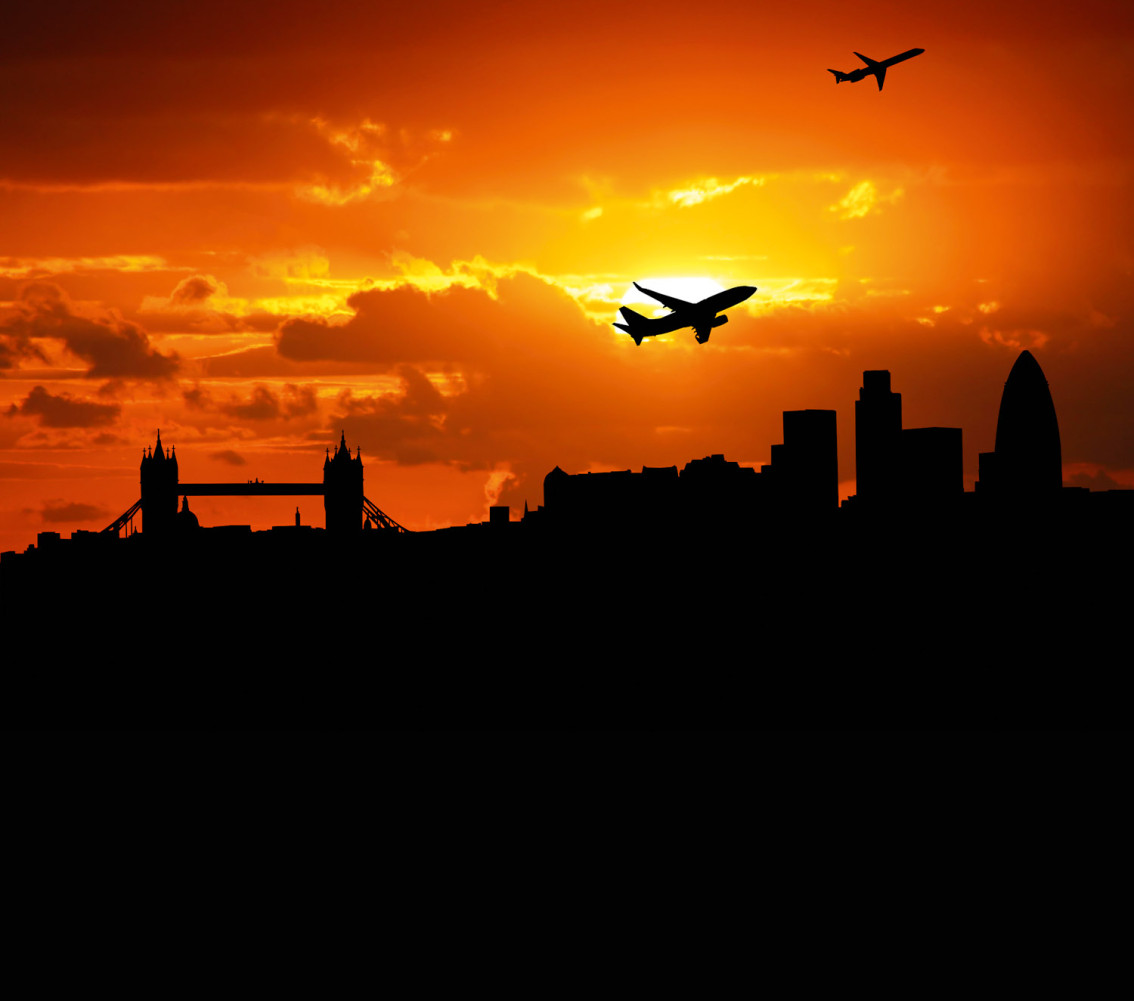
Sitting in the cockpit of a Boeing 747, I’m about to take a multi-million-dollar aircraft on a joyride over London.

The thing is, I’m not a pilot. I’m not even a trainee pilot.

Truthfully, I’m a right-brained journalist through-and-through, without a skerrick of mechanical know-how. I can’t even drive a manual car let alone a jumbo jet.

However my co-pilot Andy Clubb doesn’t seem too phased.

“Now just remember, no matter how you land this, we’ll all be able to walk away‚ " he reassures.

Although my hyperactive heartbeat suggests otherwise, he’s not wrong.

We’re at the British Airways training centre near Heathrow Airport, where there are 17 flight simulators that, when not being used to train pilots, the public can trial to get a taste of life in the cockpit.

“Every bolt and nut in this flight deck is exactly the same as the real deal – it’s straight off the same production line," says Andy, safety instructor for British Airways Flight Training. “And the visuals are the best on the market – it’s so lifelike that some people do get quite anxious."

Oh goody…

With a crash course in the smorgasbord of buttons and levers splayed out on the control panel, Andy turns on the engine and like a rising curtain, it’s show time.

The screen (or rather windscreen), lights up and sets the scene. We’re at Heathrow on runway 2.7 left. It’s twilight and, thankfully for this novice, the settings have been fixed to clear conditions today.

I press down on the foot pedals to wiggle the plane left to right down the runway, before the engine revs up and we commence take-off.

Apologies in advance to all my passengers.

The simulator roars and rattles while the acceleration of soaring 3000 virtual feet into the sky literally pushes us back into our seats.

Below us the London cityscape beams. It’s so convincing I can even see streams of carlights moving along highways like tiny red and orange ants on a pre-rain march.

“Now start to ease to the right, then go slightly left before straightening up," instructs Andy.

I steer the handles accordingly, focusing on the navigation display screen, which essentially tracks the route plan and how far you are from it.

Next to this is the primary flight display (or PFD to those in the know), featuring a circle that marks the nose of the plane and a large cross section – the centre being where the nose of the plane should be on the flight path.

Pulling, pushing and steering to keep said circle in the centre, this simplified version of piloting is beginning to feel rather like a 3D video game.

“You know, women always seem to be much better at flying than men, " Andy comforts. “You seem to be better at the slow, subtle movements when steering." Perhaps all is not lost.

We glide side to side over the city, over landmarks like Westminster Abbey and Canary Wharf, as well as the occasional air pocket.

But just as I’m getting comfortable comes the real challenge of flying, the deal maker or breaker for trainees, the soufflé of the aviation world – exceptionally tricky but no less essential: landing.

I position the aircraft so we’re in line with the distant runway before beginning our decent into Heathrow – and imminent virtual death?

A persistent voiceover chimes in with “500 feet… 300 feet" as we near the tarmac. The closer we get the more sensitive the control panel becomes.

It’s a delicate balancing act once we reach the nerve-wracking 50-feet mark.

Following Andy’s lead, I swiftly attempt to flare the aircraft (translation: tilt it upwards), drop the back wheels and begin breaking.

Vvvvrrrrooooooooooooommmmm. We land without a hitch; I’m as relieved as I am stunned.

“A born natural!" Andy says generously.

Who knew that a jumbo jet would be easier to steer than a manual car?

Perhaps it ought to be part of the career plan after all.


Details

Where

British Airways Flight Training Centre Cranebank, London Heathrow Airport

Cost

From $732 per person

Need to know

Corporate and public experiences are available whenever the simulators are not being used for pilot training.

But considering some 40 other airlines also use the facility to train their pilots, there can be quite a wait.

Public flights can be booked 30 days in advance.

For more information visit ebaft.com.

Want to see more stories from International Traveller in your Google search results?

  1. Click here to set International Traveller as a preferred source.
  2. Tick the box next to "International Traveller". That's it.
hero media

What the European heatwave means for your summer travel plans

Temperatures are soaring this summer, breaking records across Europe and the UK. 

Euro summer is a feeling like no other. But when a heatwave hits? The dream trip quickly turns into a sweaty mess. Extreme heat is sweeping Europe and the UK this week, with record-high temperatures impacting travel plans across the continent.

And while Australian summers are typically hotter in absolute temperature, many European cities aren’t equipped for high temperatures, resulting in unbearable weather.

Why is it so hot in Europe?

Signs of a hot summer loomed in May, when the mercury hit unprecedented spring highs. Now, extreme high temperature warning alerts have been issued in countries such as Spain, Italy, France, England, the Netherlands and Germany.

France saw its hottest day on record on Wednesday, with an average temperature of 30°C across the day and night. This surpasses the average temperature for June, which is 15°C to 25°C. Dozens of people have died, including 40 from drowning.

In Spain, 212 deaths have been linked to the heatwave.

The UK recorded its hottest June day ever on Wednesday with temperatures soaring to 36.1°C. In an article published by the Met Office – the UK’s national meteorological service – Professor Stephen Belcher CBE, Met Office Chief Scientist, shared his concerns about June’s heat. “To see temperatures like this in the UK in June is sobering. Events like this bring home the implications of climate change, with very high temperatures and humidity bringing significant health implications from heat stress, as well as impacts to a range of sectors such as transport, energy and water supply,” he said.

Heatwaves are becoming increasingly common in Europe and the UK, neither of which is prepared for such extremes. The World Meteorological Organization reported that in 2025, at least 95% of Europe experienced above-average annual temperatures and that the continent was heating up twice as fast as the global average.

How travel is impacted

A pharmacy sign displaying 40 degrees Celcius
A pharmacy broadcasting local weather data. (Credit: Getty/Dragoncello)

During a heatwave, power grids, water systems and transport networks can be affected, resulting in disrupted itineraries for travellers. In France, power outages have left thousands without electricity and early closures have been implemented for two of Paris’s biggest attractions, the Eiffel Tower (early afternoon rather than late at night) and the Louvre (two hours early). Eurostar cancelled its London to Paris and Paris to London services from the 22nd to the 25th, and major UK rail companies have been advising travellers to avoid using trains where possible, or to travel during early hours.

If a heatwave is predicted, being flexible with your itinerary and having fully refundable/changeable tickets is key, as extreme heat can force the cancellation of outdoor activities, impact rail and flight services and change the opening hours of sites and eateries.

Why does summer in Europe often feel hotter than summer in Australia?

people swimming in the Canal Saint-Martin in Paris
People swimming in the Canal Saint-Martin in Paris to cool off. (Credit: Rachael Thompson)

With some of the highest UV levels in the world, Australians are no strangers to the heat, adapting well to intense weather. But our infrastructure is largely equipped to withstand soaring temperatures with climate-responsive passive design, refrigerated air conditioning or evaporative coolers, as well as swimming spots aplenty.

Buildings in Northern and Western Europe and the UK, however, are constructed to retain heat and handle frosty winters. The lack of universal air conditioning means it generally feels hotter even though the temperature on your app might not look it. During a heatwave, it can feel like you’re in a sauna as cities act like heat traps.

How to stay cool and prepare for another heatwave

Relief is expected across Europe and the UK later this week, but more heatwaves are still possible in the coming months. Summer heat typically peaks in July and August.

Public transport often doesn’t have air conditioning, and buses in particular can be swelteringly hot. If you’re heading outside or your accommodation has no air conditioning, it’s worth buying a spray bottle and a handheld fan from a pharmacy or tourist stand. Check ahead of time if restaurants and cafes have air conditioning and make a booking in advance. The highest temperatures typically hit between 3pm and 6pm, so aim to head outdoors outside of these hours.

Rising temperatures invite travellers to enter a more intentional era of seeing the world. Now more than ever is the time to embrace lower-impact “coolcations” and off-season getaways.