hero media

The gourmet guide to Japan’s best regional cuisine

With its diverse, fertile landscape and a multitude of microcultures, Japan is a leading destination for those who travel by their taste buds.

In ancient times inaccessible terrain was both the cause of isolation and inspiration for the development of a fascinating array of truly local food in Japan, which focus on the natural bounty of each region’s immediate surroundings.

Supping sweet seafood in coastal enclaves, savouring umami-loaded hotpots in rustic alpine villages, or partaking in celebratory foods at annual festivals gives reason enough to traverse the country’s breathtaking countryside. But regional food culture is not just about what’s in your bowl, it’s also an expression of the seasons, community and history.    

1. Jingisukan (ghenghis khan) in Hokkaido

Famous for ski havens and long, powdery winters, Hokkaido is awash with green in the warmer months ensuring a paradise for nature lovers. The bulk of Japan’s dairy cattle and sheep graze on its bouquet of meandering clover and delicate florals.

In fact, Hokkaido is the only Japanese island where sheep farming has thrived. Here they’re renowned for grill joints known as jingisukan (rumoured to be named for convex cooking vessels shaped like Ghenghis Khan’s hat). Various succulent lamb and sometimes mutton cuts, seasonal vegetables and garlicky sauces are most often a DIY barbeque affair, washed down with Hokkaido’s famous Sapporo beer. Or shochu, a distilled spirit made from locally grown potatoes and sometimes corn.

Find an abundance of jingisukan restaurants in Sapporo and around the izakaya-lined yokocho (alleys) of Asahikawa and Hakodate, often not far from main train stations.
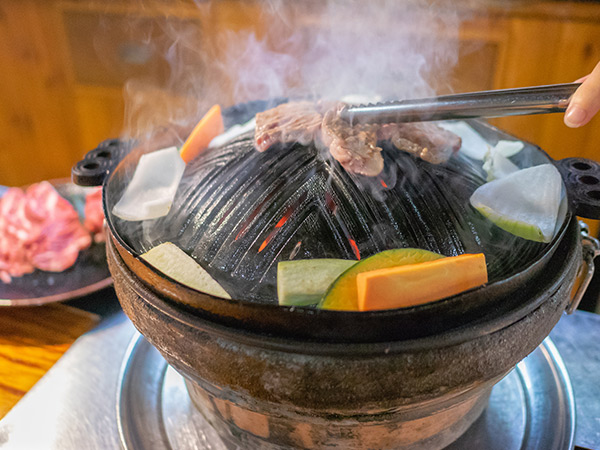
traditional Jingisukan In Hokkaido
Savour the authentic taste of Hokkaido with Jingisukan. (Image: Okimo)

2. Oma maguro in Aomori Prefecture

Summer in Aomori’s Tsugaru Strait, at Honshu’s northern tip, marks the arrival of blue-fin or hon-maguro congregating in the cold northern waters. By winter the fish have reached an enormous 200 to 300 kilos, earning them the nickname ‘black diamond’ which speaks of their colour and value. In the port town of Oma, they are so famous for their own brand of hon-maguro, it’s been named after them.

Swimming fast against the straight’s strong current to maintain body temperature has the added bonus of refining the quality of Oma maguro’s tuna flesh, treasured for its balance of fat and savoury-sweet flavour. The vivid red meat, favoured for sushi, only improves in excellence as the temperatures continue to drop, reaching their peak around the end of January.

What’s more, in Oma, tuna are reeled in using a sustainable line and pole method, ensuring the pristine condition of the fish and its marine environment.

In late October, Oma hosts the Oma Cho-Maguro (super tuna) Festival offering a merry mix of entertainment and speciality dishes. Think tuna auctions and cooking demonstrations, seafood barbeques, stick-sushi, curry and tuna burgers. It’s also your chance to sample locally made, umami-rich maguro-joyu (soy sauce with tuna extract).
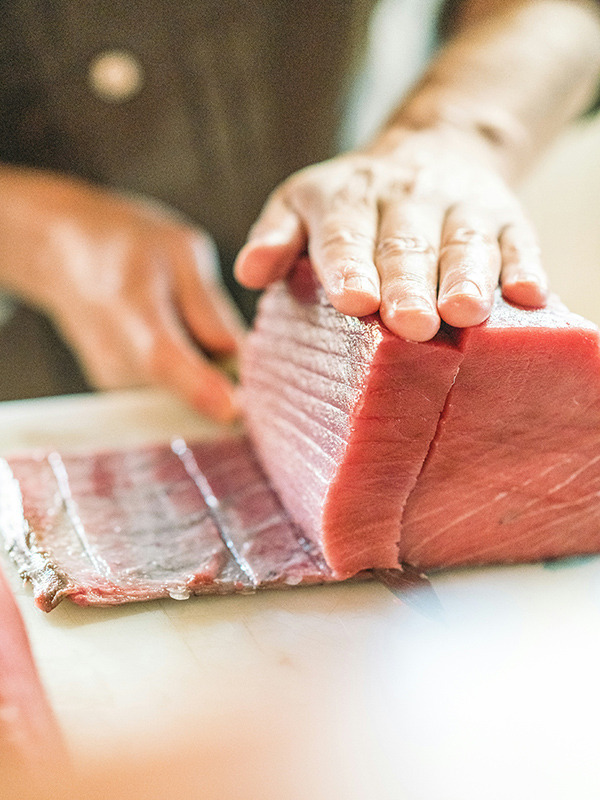
A slice of Japan's best regional cuisine through Oma Maguro. blue-fin or hon-maguro
Experience Oma maguro’s prized tuna flesh. (Image: Big Dodzy)

3. Oysters in Miyagi Prefecture

Japan’s most eloquent and romantic writers, including 17th-century Haiku poet Basho, found it difficult to describe the beauty of Matsushima Bay in Tohoku’s Miyagi Prefecture. Here, 260 small, pine-covered islands dot the bay, linked together by vermillion footbridges and hosting historic temples and meditation caves hand-carved by monks.

Not just a pretty place, the islands act as guardians to the coastline’s oyster farms. Known to produce some of Japan’s most delectable shellfish, warm phytoplankton and nutrient-rich waters generate an optimum environment for oyster growth.

During harvest time (October to March), all-you-can-eat kakigoya (oyster shacks) are open to the public. Here, travellers can mingle with locals over smoky grill tops.

Raw oysters can be enjoyed at many neighbourhood restaurants. Try them with ponzu (soy infused with citrus and preserved bonito) or topped with a simple relish of grated daikon and chilli. Pair them with Miyagi Prefecture’s dry junmai (pure rice) sake – a typically smooth and dry style.

Open year-round, Yaki-gaki House sits opposite Matsushima’s Sakana Ichiba (fish market) and is the perfect place to taste oyster-centric dishes like kaki-don (marinated-oyster-topped rice bowls) and other local seafood.

While many local shops also sell these particularly rich, creamy oysters in a variety of snacks and casual dishes. Start with kare-pan (deep-fried bread filled with oyster curry) and work your way to kaki-senbei (thin, pressed oyster rice crackers).
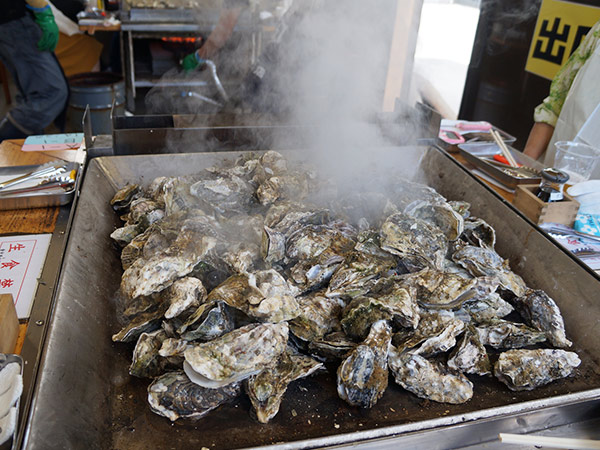
people eating oysters in a restaurant in Miyagi Prefecture japan
Indulge in fresh oysters from Miyagi Prefecture. (Image: Photon09)

4. Kan-buri in Toyama Prefecture

Nestled between the alps and sea in the west of Japan, Toyama Prefecture is an omnivore’s paradise. The majority of the population resides in an arc around idyllic Toyama Bay, buffered from the brunt of inclement weather by the pointy finger of the Noto Peninsula.

Popular local dishes include black ramen (rich, dark soy and black pepper broth), kombu-maki kamaboko (fresh fish paste cakes rolled with kombu to preserve flavour) and their famous red snow crab. However, none are so treasured by locals as kan-buri (winter yellowtail), affectionally referred to as ‘king of Toyama Bay’, and shiro-ebi (glass shrimp).

Kan-buri make wonderful sashimi or sushi, but a most adored winter dish is buri-daikon – fleshy fish cuts simmered with thick daikon chunks, which soak up the yellowtail’s rich flavour. Alternatively, kanburi shabu shabu is a lighter but still flavoursome hotpot dish.

More delicate is the shimmering, pale flesh of the shiro-ebi, which tastes fresh and briny on the palate with a creamy finish. It’s perfect for serving raw as sashimi, or over warm sushi rice or fried rice, to highlight its natural sweetness. Shiro-ebi is also popular in tempura for a textural crunch.
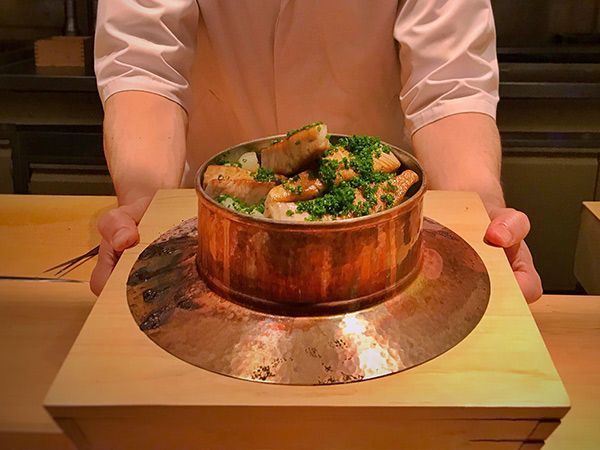
Kan-buri or Yellowfin Tuna prepared as a winter dish, Buri Daikon
Taste buri-daikon in Toyama Prefecture. (Image: T.Tseng)

5. Hiroshima okonomiyaki in Hiroshima Prefecture

Heated discussion is bound to ensue when comparing regional okonomiyaki styles, but for many connoisseurs, Hiroshima Prefecture does it best.

Okonomiyaki translates to ‘grilled as you like it’. And in Japan’s Kansai region. the preference is for a thick, wheat flour version of this enriched pancake-omelette hybrid. Try it topped or mixed with a variety of meat, seafood and vegetables and slathered with a rich, thick and sweet Worcestershire-style sauce and Kewpie mayonnaise. It’s often garnished with additional seasonings like shaved katsuobushi (preserved dried bonito), pickled ginger and aonori (a type of nori, finely ground).

Hiroshima’s unique style griddles thin discs of batter until almost crisp, before topping with ingredients of your choice. Those always include a tumble of lightly griddled soba noodles, sometimes sandwiched with a second crispy disc, or topped with a runny fried egg.

Prefectural pride has birthed many unique renditions, with some towns and villages replacing noodles with udon or rice. Others feature freshly caught squid, oysters and chikuwa (fish cake)  – all local to Hiroshima City.
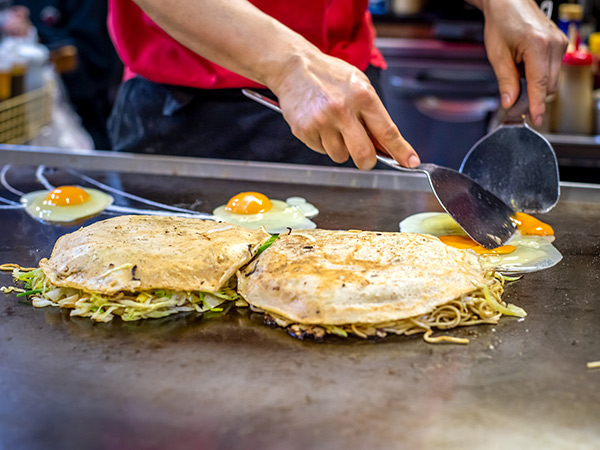
Okonomiyaki - a savory pancake in Hiroshima food in japan
Enjoy Hiroshima’s okonomiyaki, sometimes topped with a fried egg. (Image: Eloi Omella)

6. Sanuki udon in Kagawa Prefecture

In the north-west of Shikoku, Kagawa – formally named Sanuki – is the smallest of Japan’s 47 prefectures. Legend states that Sanuki udon origins are modelled on wheat noodles brought back to Japan from China over 1200 years ago by famous monk and scholar, Kukai (also known as Kobo Daishi).

Sanuki udon, the finest of which is made with wheat grown in Kagawa’s sub-tropical sun climate, is a chewy but tender, slightly salty noodle with flat edges. It’s commonly served in a simple dashi broth or dipping sauce flavoured with niboshi (dried sardines), and soy. Toppings include chopped negi (spring onion), a spritz of local citrus fruit juice and sometimes an egg yolk or tempura prawn.

There are over 700 Sanuki udon restaurants in Kagawa alone, and even a special Udon Taxi – its roof adorned with an oversized, 3D bowl of Sanuki udon – which can be hired for a magical mystery tasting tour of the best.
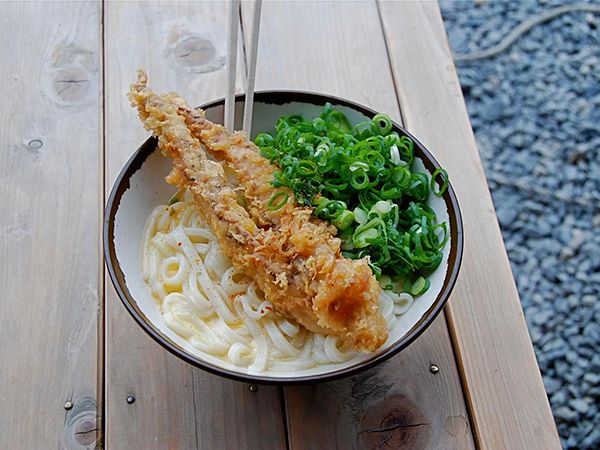
Sanuki Udon with Tempura Prawn, one of Japan's best regional cuisine
Pair your Sanuki Udon with a tempura prawn for a delightful experience. (Image: Raneko)

Weekly travel news, experiences
insider tips, offers,
and more.

7. Yatai food stalls in Fukuoka City

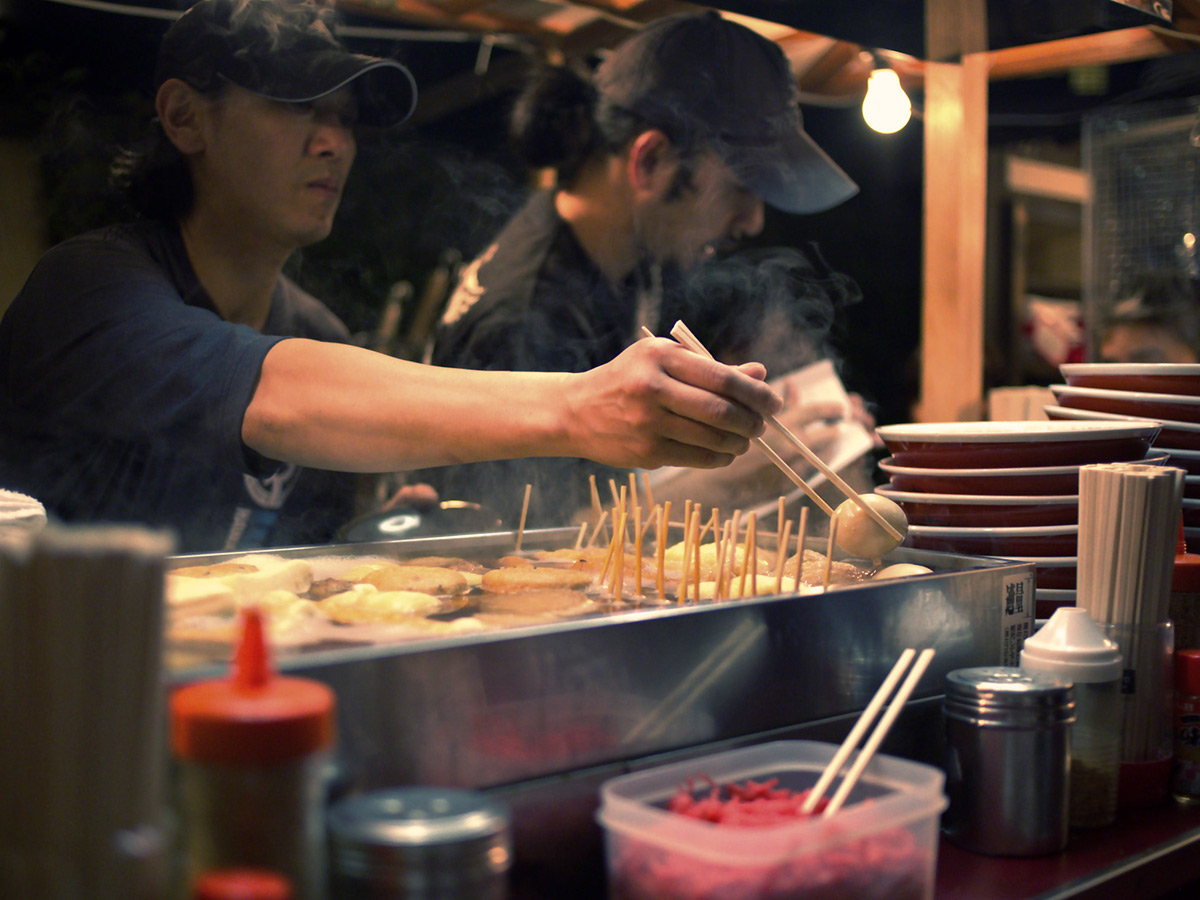
While many south-east Asian destinations encourage snacking on the go, Japan rarely indulges in street food culture as eating whilst walking is considered impolite. Fukuoka City’s yatai (moveable street stalls) offer the perfect solution: food sold on the street that comes with a seat.

A huge camp of lantern-lined food shacks can be found beside the Naka River in Nakasu, with smaller huddles located in downtown Tenjin and Nagahama (near the fish market and port). Open from around 6pm until late, it’s common for office workers to yatai-hop after work.

Fukuoka’s own rich, porky tonkotsu ramen is some of Japan’s most sought-after. Find plenty of it, alongside other regular yatai favourites like gyoza, yakitori and oden (simmered tofu, vegetables, fishcakes, whole eggs and other select items simmered in broth).

Note before you go that many yatai do not accept credit cards, nor do they have toilets. Also, try not to linger after dining because seats are limited and there’s always a line.
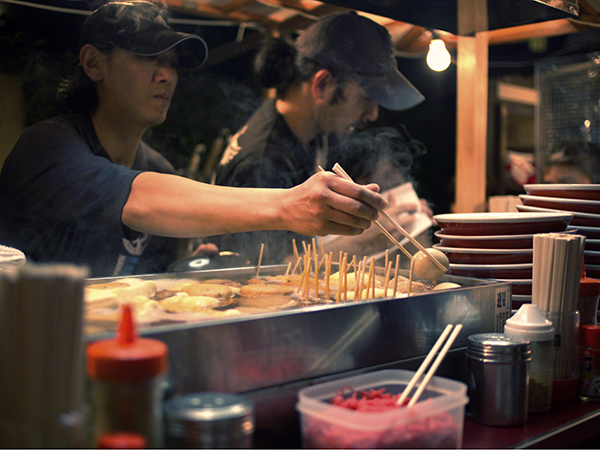
Try out Japan's best regional cuisine in a food stall in Yatai, Fukuoka, Japan preparing fish sticks.
Explore a variety of food options at Yatai food stalls. (Image: Drufisher)

8. Goya champuru in Okinawa

Formally known as the Ryukyu Kingdom, a range of cultural influences from other East Asian countries mean Okinawa serves a cuisine quite unlike anything you’ll find on the greater mainland.  All the favourite are available, but it’s the traditional Ryukyu foods that steal the show here.

Find colourful, healthy and flavoursome dishes perfectly suited to the sub-tropical environment. Many indigenous medicinal ingredients, like herbs, fruits and vegetables (don’t miss umi-budo/sea grapes) are at their core. This might explain why nearby cities are home to a significant population of locals in their nineties (and older).

Superfood goya is a variety of bitter gourd which locals are experts in selecting and preparing for minimal bitterness. Bright green goya juice stands are dotted around the island, often mixed with shikuwasa citrus, offering a powerful antioxidant, anti-inflammatory and anti-bacterial. Goya is also the key ingredient of Okinawa’s soul food, goya champuru, a slightly peppery stir fry featuring fresh tofu and goya and either pork belly, seafood or eggs.

Every household has its own recipe. Enjoy it at local restaurants around the island, or pick some up from a michi-no-eki, (road station). Learn how to prepare goya champuru for home by taking a market tour and class with Yonner Food Cooking Studio.
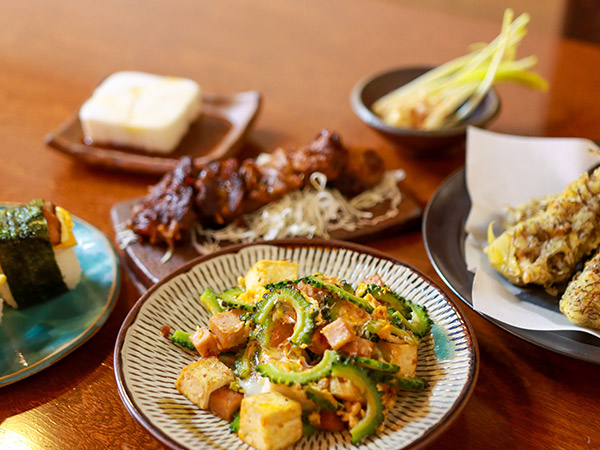
Goya Chanpuru and other Okinawa regional specialities food in japan
Have a bite of Okinawa’s healthy and flavoursome Goya Champuru (Image: Kyonntra)

Want to see more stories from International Traveller in your Google search results?

  1. Click here to set International Traveller as a preferred source.
  2. Tick the box next to "International Traveller". That's it.
hero media

These community homestays are changing how travellers experience Nepal

    After youth-led protests in 2025, this year Nepal elected a 35-year-old former rapper as Prime Minister. In a country where tourism is its biggest industry, what’s next for travellers? 

    In 1986, Nepal changed its clock. It had used India Standard Time since 1920 so, to differentiate, it wound its clock 15 minutes ahead of, not behind, its big-brother neighbour. Boss move. “Nepal is strongly opposed to the idea that our identity is connected to India,” says Community Homestay Network (CHN) guide Bikal Khanal.  

    Tharu dance
    Tharu dance is traditionally set to hand drums. (Credit: Kate Lewis)

    Today, Nepal is the only independent country with a 45-minute deviation to universal time; an oddity that’s become a symbol of national pride. The quirk is nearly as endearing as Kathmandu’s Tribhuvan airport where carved varnished wood and shiny red bricks rule. One sign points to a ‘Travelator’ and another to a ‘Grievance Handling Desk’ while visas are noisily stamped at customs for US dollars, cash only. When am I?  

    Nepal gray langur
    Spot the endemic Nepal gray langur. (Credit: Simon Urwin)

    The 15 or 45 minute anomaly sees me tap out completely on timezone calculations. Why bend my brain calculating if it’s quarter to or quarter past elsewhere when I’m in the honking here and now of Kathmandu where the air is high-altitude crisp, the prayer flags flutter and the street dogs howl?  

    How tourism is changing in Nepal

    Bardiya National Park
    Bardiya National Park is rich with wildlife. (Credit: Simon Urwin)

    India is not the only association many Nepalis would like to shake. With eight of the world’s 10 tallest mountains, including Mount Everest and Annapurna, Nepal has long attracted mountaineers and trekkers, and expedition numbers are continuing to rise.  

    Tourism is one of the country’s biggest sources of foreign currency, so this growth is not negative, per se. But according to Ang Tshering Lama, who co-founded Phaplu Mountain Bike Club, being reduced to a mere trekking destination is limiting.  

    “Trekking is just one layer of our identity,” says Ang. “When it becomes the dominant narrative, it limits how we’re seen and how we see ourselves.” Nepal’s recent success, however, in diverting trekkers to less-trafficked areas such as Manaslu mofuntain, where visitor numbers rose by 117 per cent last year, offers hope that tourism can diversify even more radically.   

    Local men in Bhada village
    Local men in Bhada village. (Credit: Simon Urwin)

    The founder of CHN, Shiva Dhakal, wants that change. “The whole idea of the Community Homestay Network is to promote experiences outside of trekking,” he says. “Community tourism changes lives and helps kids stay home instead of coming to the city or migrating to the Middle East.”  

    Ang grew up seeing people leave, “not because they wanted to but because there weren’t enough opportunities to stay”, he states. Yet from remote villages to living traditions; food, art, music and emerging subcultures, “there’s so much that’s not being seen.” 

    CHN is opening some of those doors. It doesn’t own, or fund, any homes. Rather, it promotes homestays to travellers on a single, slick platform, while fostering entrepreneurship in places where women, marginalised castes, Indigenous people and the youth stand to benefit the most.  

    A new generation demanding more

    Dalla Town Hall
    Dalla Town Hall, where volunteers discuss anti-poaching tactics. (Credit: Bheem Thapa)

    The future prospects of next-gen Nepalis can no longer be ignored. On a Kathmandu tour with 33-year-old guide Monica K.C, we pass buildings torched in the September 2025 ‘Gen Z protests’, including the Supreme Court and Parliament House. Seventy-two people died. “They were anti-corruption protests,” says Monica. “Politicians’ children are living a lavish life but the airports are crowded with youngsters leaving to find work.”  

    We stop in ‘little Tibet’ at the wondrous sixth-century Boudha Stupa. “The wheel of life is Buddhism in a nutshell,” says Monica. “Things such as hate, ignorance and anger keep you rotating around the wheel, so you must follow the principles of Buddhism to detach. If you can’t, there’s no nirvana for you.”  

    Boudha Stupa's prayer wheels
    Boudha Stupa’s prayer wheels are used to recite Buddhist prayers. (Credit: Kate Lewis)

    In a sun-drenched twist to the usual temple visit, we ascend the stupa’s sloping plinth and roam its whitewashed dome. Tendrils of diaphanous prayer flags stream from a steeple-like structure where the Buddha’s unblinking eyes stare out. No nirvana for you… 

    bouda stupa prayer flags
    Tibetan-style prayer flags embellish the whitewashed dome of Bouda Stupa, a Buddhist temple. (Credit: Kate Hennessy)

    The dome is delightfully free of guard rails or chiding from security. There is, however, a stern ‘No TikTok’ sign, perhaps in response to the youth’s newly flexed power. The booted-out Prime Minister, K.P. Sharma Oli, was replaced in a resounding election victory in March by 35-year-old Balendra Shah of the Rastriya Swatantra Party (RSP) – a former rapper and mayor of Kathmandu. The RSP’s manifesto indicates tourism is a priority, and that Nepal’s cultural identity in areas such as gastronomy will be strengthened.  

    Boudha Stupa vendors
    Vibrant souvenir shops and cafes around Boudha Stupa. (Credit: Kate Hennessy)

    A more confronting stop awaits at Pashupatinath Temple. Today is Bala Chaturdashi, a Hindu festival where thousands of devotees gather to honour their dead ancestors. Vendors hauling foam mattresses do a lucrative trade as people set up for a night of vigil. This includes burning the bodies of recently deceased relatives on bamboo pyres in the Bagmati River, which flows into the sacred Ganges.  

    A woman at annual Hindu festival Bala Chaturdashi
    A woman at annual Hindu festival Bala Chaturdashi, in Kathmandu. (Credit: Kate Hennessy)

    Wrapped in a shroud, the bodies are positioned with their heads facing north to the Himalayas where Lord Shiva resides. They’re covered with flowers and straw and set alight by male family members.  

    Hours later, the ashes are swept into the river where devotees will take a holy dip the next day. As much as Monica assures us it’s not voyeuristic to watch, I struggle to do so. “Here you see the reality of life because everyone ends up there,” she says, gesturing to the river.  

    Life unfiltered in the Terai region

    tharu woman
    Tharu woman and master weaver Parbati Chaudhary in Bhada Village. (Credit: Bheem Thapa)

    The reality of life needs processing time, which the western Terai region delivers in spades. The Terai is largely separated from India by the Karnali River and Bardiya National Park, where elephants, rhinos and the elusive Bengal tiger roam.  

    Once a nomadic tribe, the Indigenous Tharu people are now the largest ethnic group here. “They didn’t know their daily life was interesting for international travellers but they’re starting to understand now,” says CHN founder Shiva.  

    safari through Bardiya National Park
    Take a Jeep safari through Bardiya National Park. (Credit: Bheem Thapa)

    We fly Buddha Air to Dhangadhi airport and drive five hours to stay in Tharu homes. The journey to Bhada village is a blur of roadside fruit stalls, traffic-stopping sacred cows and fields sown with wheat, rice, mustard, spinach, cauliflower and potatoes. Nepal’s agriculture feeds only Nepal.  

    Marigolds
    Marigolds are an important part of Hindu rituals. (Credit: Simon Urwin)

    “The only thing we export is young people,” says our guide Bikal. As the light dims and we plunge evermore rural, mysterious mounds of compacted hay – some house-sized – loom like the creatures from Where The Wild Things Are. Even our trusty driver gets flummoxed by a dirt road that abruptly ends and we find ourselves hurtling across a paddock.  

    On arrival, some are ferried to mud-walled cottages greened by gourd creepers, with thatched roofs and rustic-chic mosquito nets. Myself and two others are ushered to the home of corner store owner, mechanic and mushroom farmer Man Kumar Chilaruwa and his wife Rajkumari.  

    community homestay entrance
    A warm welcome at a community homestay. (Credit: Simon Urwin)

    They escort us to a bunker-esque back building with steel doors and a folding security gate, behind which is gleaming linoleum, dolphin-printed tiles and a shower cavity that must be gingerly stepped through to reach the toilet.  

    The ceiling lights emit a rainbow of colours (the bathroom light gets stuck in, frankly, a quite frightening red). We’re nevertheless touched that our hosts invested in all this bling when the average salary is around $275 a month.  

    In the coming days, we participate in Tharu traditions such as making moonshine, dancing, weaving straw handicrafts and gold-panning. We’re fed well with staples of rice, mustard greens, lentil pancakes, daal, curried chicken and tomato chutney served on antibacterial saal leaves.  

    food at community homestay
    Dig in. (Credit: Kate Hennessy)

    Sonara community homestay president Indradevi Tharu tells us river snails are often served, and the boiled and pickled flesh of rats hunted in the rice fields. “Perhaps next time?” we say and all have a laugh.  

    The power of community homestays 

    community homestay owners in Nepal
    Barda community homestay owners Parbati Chaudhary and Ram Krishni Devi Chaudhary. (Credit: Simon Urwin)

    Immersing Western visitors in foreign cultural practices is not new. But with the Tharu, I never get that uneasy sensation that I’m being performed for. Despite being the only tourists, there’s no ‘othering’; just warm, composed and ultra-dignified welcomes. Like we’ve always been here.  

    “I love to have travellers in my village so I can see the world,” says local woman Parbati Chaudhary. “Why would I travel the world when the world comes to me?” 

    The graceful acceptance the Tharu offer, as well as the slow pace, works miracles on my frazzled nervous system. One day I even take a nap on a vacant homestay bed. 

    Sonara community room
    An authentic stay in the Sonara community. (Credit: Kate Hennessy)

    Roosters strut and goats bray as we sit on the ground in al fresco kitchens, rolling rice flour into cylinders steamed to make dhikri (dumplings). When water is needed, we fetch it using a hand-operated pump as a family of ducks strolls by, side-eying us like curious neighbours.  

    Animal lovers will delight in Tharu villages. Kind and resourceful inventions are everywhere, such as snacking stations where two posts lean together, with leafy boughs dangling on rope for baby goats to forage from.  

    CHN’s CEO, Aayusha Prasain, nods knowingly when one in our group says she cried when she left her host, Shayam Chaudhary, in Bhada. Shayam’s 17-year-old son, Prashant, had translated, which deepened the connection.  

    “Community tourism turns travel into a relationship, not a transaction,” says Aayusha. “It places decision-making power in the hands of local communities, especially women and youth.” Since 2018, CHN has hosted more than 4000 travellers from 52 countries in 408 households, and estimates women’s participation has increased by 381 per cent.  

    Elephant watch
    Elephant watch. (Credit: Simon Urwin)

    In the Bardiya community, where vexing human-animal conflict has been a balancing act for decades due to elephants raiding crops, long-time homestay operator Salik Ram Chaudhary says young people keep the older ones on their toes.  

    Gathering greens
    Gathering greens. (Credit: Bheem Thapa)

    “We can’t keep homestays stagnant,” he says. “We have to upgrade our service and redefine our product or young people won’t see it as an attractive business. If we can keep evolving with this travelling trend we’re confident the youths will stay and continue it.” 

    Back in Kathmandu, Monica explains that after the deaths of young protestors in September, a determination had spread to not let their sacrifice be in vain. “We want to keep holding the government accountable,” she says. “We don’t know what situation we’re facing, but we’re ready to face it.”  

    Interested in Nepal but prefer to experience it in total comfort? Read our guide to luxury travel in Nepal

    The gourmet guide to regional food in Japan