Nepal has long drawn travellers for its natural beauty and spirituality. Now, a new generation of entrepreneurs is placing the Himalayan country on the luxury travel map with a hospitality ethos grounded in sustainability, conservation and culture.
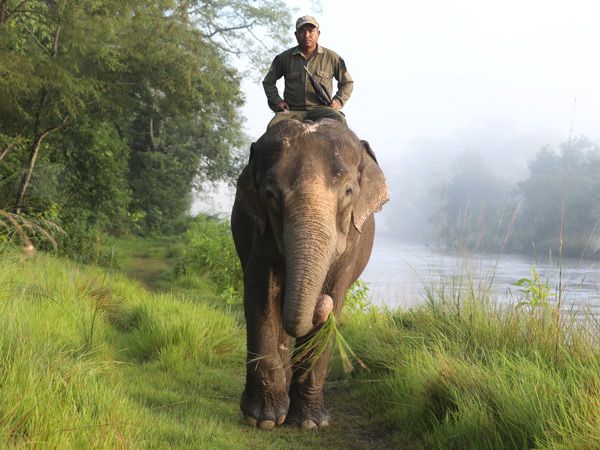
My eyes are fixed on the rhythmic movement of a long tail swishing in front of me on the banks of a misty backwater of the Narayani River. My guide, Sam Mahato, from Tiger Tops Tharu Lodge in Nepal’s Chitwan National Park, has told me to walk six feet behind the elephant padding along a grassy track. And I do exactly that as we enter a dripping jungle, dark with rhododendrons, ferns and lofty blackberry trees where I am not top of the food chain.
Sam stops. Pointing to a kapok tree bleeding with long, garish claw marks, he whispers: “A tiger was here last night." A rustle makes me jump. A sambar deer vanishes. I creep a little closer to the elephant, Chun Chun Kali. She and her best friend Gulab Kali walking behind me are my only protection from the 135 Royal Bengal tigers and 600 rare Asian one-horned rhinos coated in plated armour roaming 1000 square kilometres of jungle.
The origin of tourism in Nepal
Sixty-year-old Gulab and I go back a long way, to 1986 when I visited the original Tiger Tops, a long stilt house with open windows lit by kerosene lamps and founded in 1971 by the legendary conservationist Jim Edwards, who pioneered tourism in Nepal. Swapping guns for cameras, his jungle lodge became a mecca for well-heeled adventurers including King Charles, Henry Kissinger, Hilary Clinton and Mick Jagger. Back then, Gulab carried us on a howdah strapped to her back and guests were woken in the night by a bell if a tiger took the bait left outside a hide. I will never forget shimmying down a ladder and trotting in single file through a night jungle whistling with the hum of cicadas.
But, exciting as it was, that memory is no match for the holistic, almost spiritual experience pioneered by Edwards’ son Jack in 2017 of walking with an animal unfettered by chains who chooses to protect you. It feels natural watching Gulab and Chun Chun, 45 and Jack’s fourth birthday present, grazing by the river while their mahouts scythe grasses for their supper; the secrets of their unique relationship unfolding as the huge animal helps her carer to walk up her trunk and then passes him in turn: the grass, a sack to sit on, his panga (machete) and umbrella. As my own journey unfolds, I realise it’s no accident that Kali means goddess.
Nepal’s hospitality ethos
Jack Edwards, who renounced a successful financial career with Rothschild to return to the jungle, is one of a small number of exciting young second-generation entrepreneurs who are putting Nepal back on the map of high-end travel by placing luxury, sustainability, conservation and culture at the forefront of their hospitality ethos.
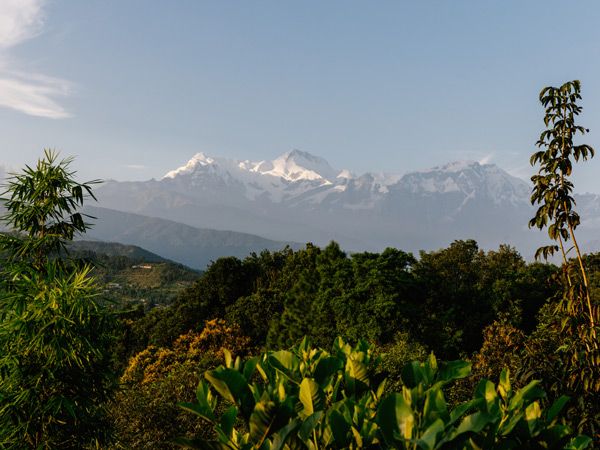
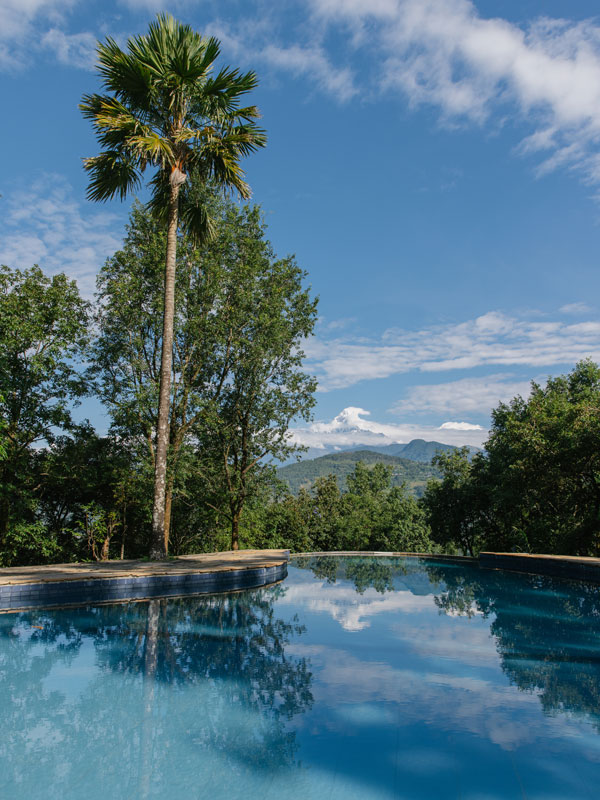
I catch up with them at the 25th-anniversary celebrations of Tiger Mountain Pokhara Lodge on a grassy ridge overlooking Machapuchare, the ‘fish-tail’ mountain nobody is allowed to climb because it’s home to the gods. Pokhara Valley, Nepal’s adventure capital, is hidden below fat clouds. But up here, the sun is shining and four young men are squashed together on a small wooden bench, laughing and chatting like schoolboys.
First up is Sangjay Choegyal, a hotel consultant with a finger in hospitality pies all over Asia who cut his teeth working for Aman Resorts alongside hotelier Jason Friedman. He’s masterminding the relaunch of Tiger Mountain Pokhara Lodge, opened by Everest conqueror Sir Edmund Hillary in 1998.
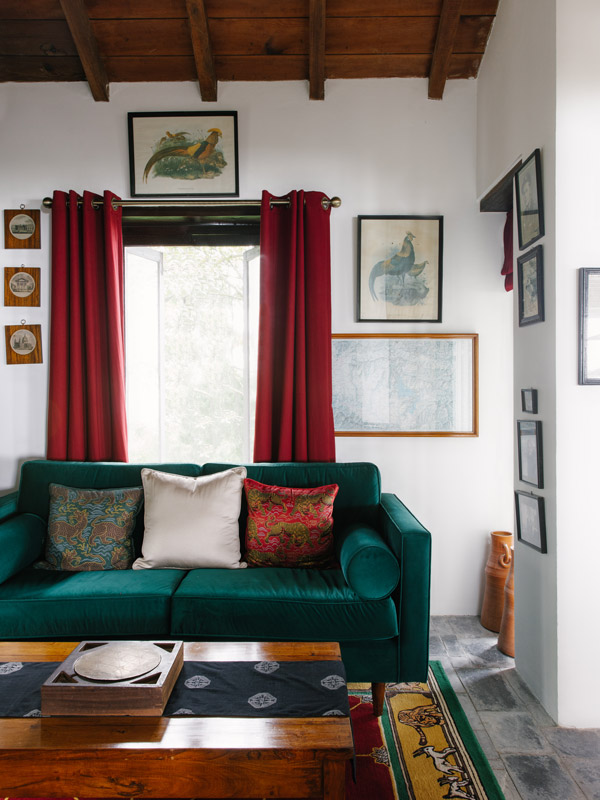
The eco-conscious mountain retreat is rich with woollen curtains the madder red of monks’ robes and Luke Piper paintings hanging on the walls of colourful cottages. And, like Tiger Tops, it has survived insurgency, regicide, earthquakes, pandemics and the curse of any country, Lonely Planet’s recommendation as a $10-a-day traveller’s paradise. Today, it continues its legacy serving as a springboard for those visiting the high Himalayas.
Slow travel isn’t just a hashtag
In a country where they talk about altitude the way the Brits talk about weather, slow travel isn’t just a hashtag on Instagram. In fact, taking time to acclimatise is essential. I spent a few days here hiking along a ridge alive with butterflies, bees and birds (including Nepal’s only endemic species, the spiny babbler), learning more about the highest country in the world, fissured between the giants of India and China, from environmental activist Marcus Cotton. He co-owns Tiger Mountain with Sangjay’s mother, now New Zealand’s Honorary Consul to Nepal. British-born Lisa Choegyal arrived here 50 years ago, worked for Jim Edwards (it’s a close-knit community) and then married Sangjay’s father, Tenzin, son of a ruler of the warlike Khampa tribe in Eastern Tibet who led the resistance against the Chinese occupation until the Dalai Lama called them off.
It’s stories like these that quicken the heartbeat of visitors drawn to Nepal by its magnificent beauty, cultural and spiritual history, the monasteries and monks hidden away in remote mountain valleys, or to face the challenges of climbing eight of the world’s 14 highest sky-scraping peaks exceeding 8000 metres. But until last summer there were no hotels offering five-star luxury in the high Nepali Himalayas. That’s where Namgyal Sherpa, whose family company, Sherpa Hospitality, owns Yeti Airlines, comes in.
The magical retreat of Shinta Mani Mustang
Shinta Mani Mustang is his baby. Opened last August in Lower Mustang, the gateway to the former Kingdom of Lo (a semi-autonomous region forbidden to foreigners until the 1990s), the resort is making waves across the Himalayas.
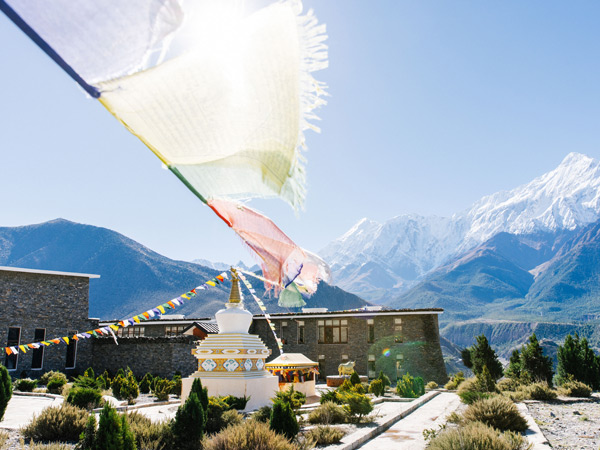
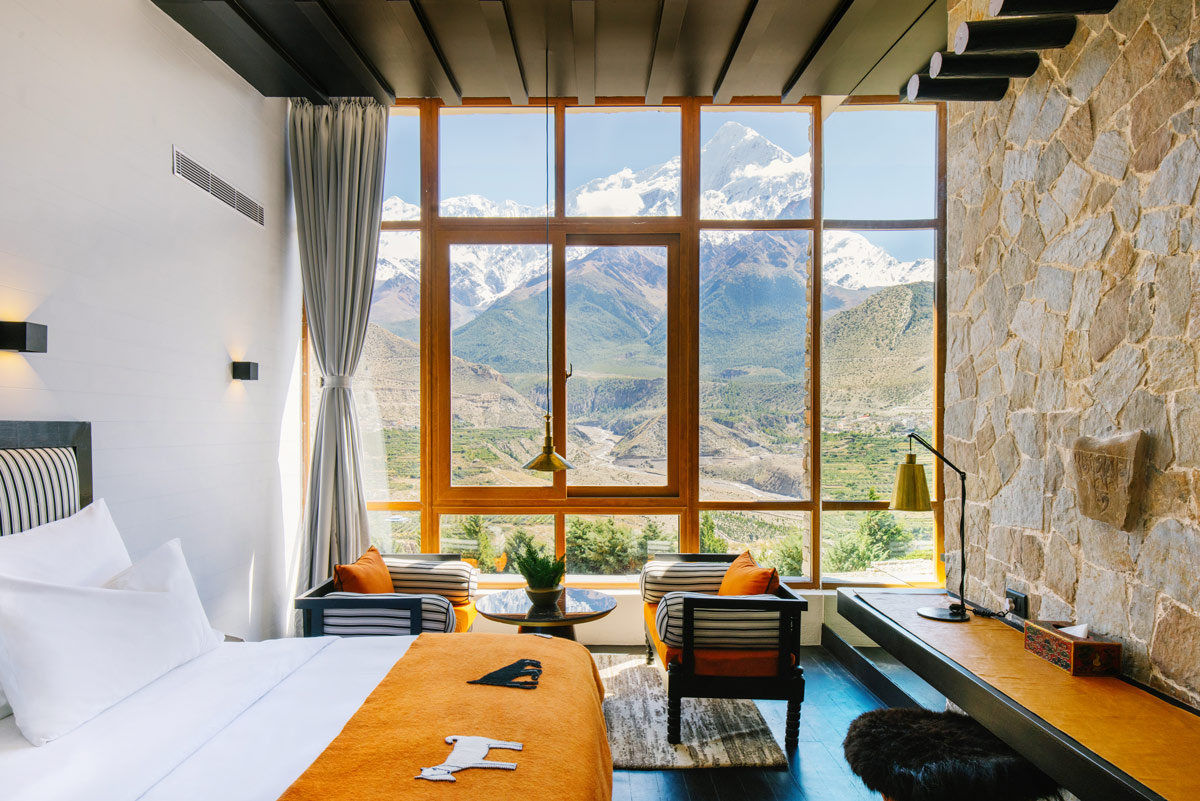
Namgyal invited Friedman and the wildly talented sustainability design genius Bill Bensley to repurpose a long imposing building, more glass than stone, into a 29-bedroom five-star hotel in this deeply spiritual region more Tibetan today than the actual Tibet barely a hundred kilometres away.
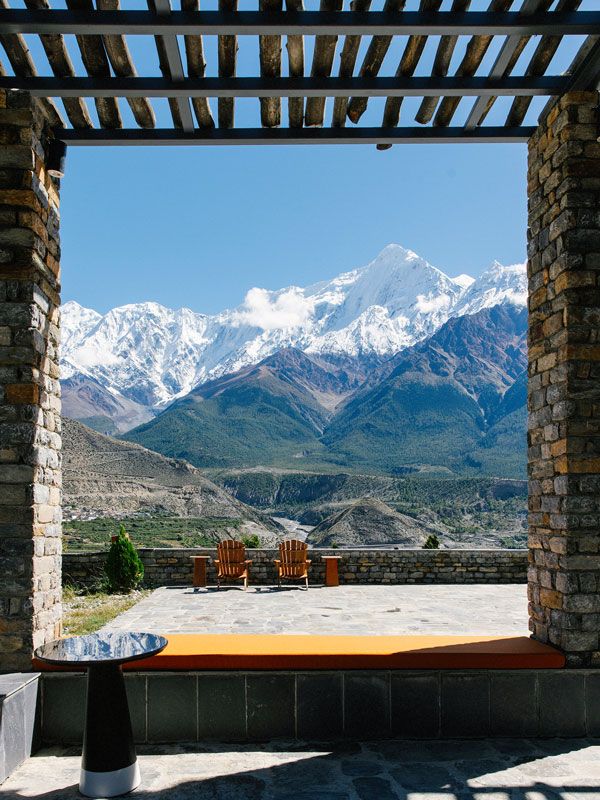
Now well-heeled adventurers (Bill Gates has already taken his family) flying through steep mountain passes into Jomsom can warm their feet on designer rugs with roaring tigers woven in Tibetan wool and Chinese silk while gazing up at massive mountains through panoramic floor-to-ceiling bedroom windows.
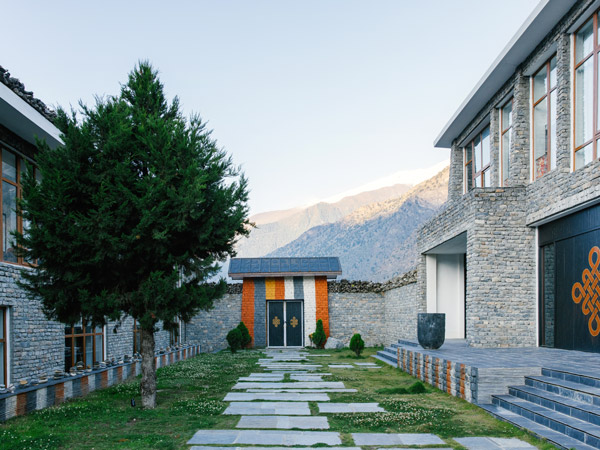
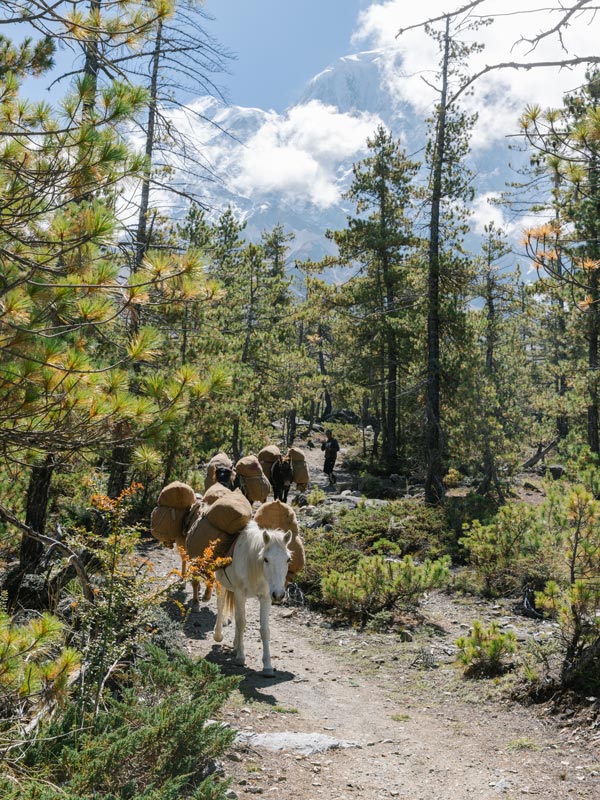
“Welcome to windy valley, Ong Annabel," says Abhishek, my butler, offering to unpack for me when I arrive. The nine-hour drive to get here followed a narrow muddy track etched into the side of the deepest gorge in the world. It was cut by the Kali Gandaki River, fast and wild and milky grey like China clay pouring out of a vast plateau.
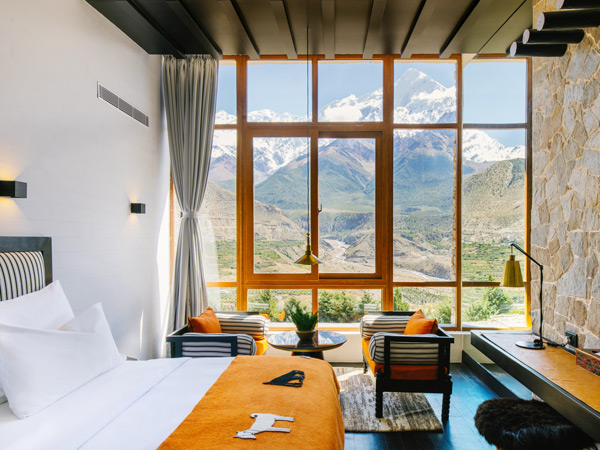
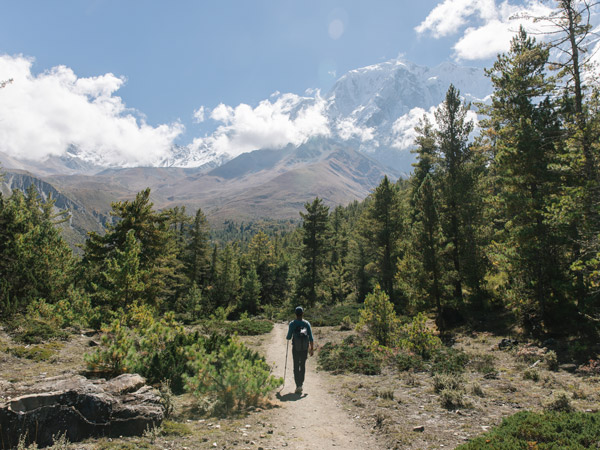
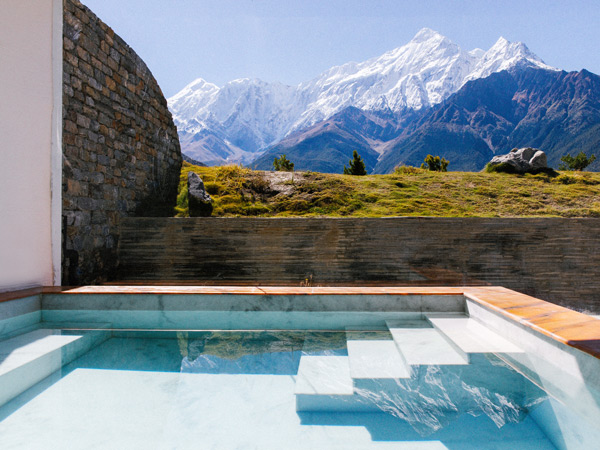
The wind races down the mountains every morning around 11, bending the apple and apricot orchards behind Shinta Mani, but a speck on a vast monochrome landscape swept with the scent of juniper and overshadowed by the mighty Dhaulagiri. It’s mystical and mysterious and so far from the 21st century.
Enduring sustainability
An entrance guarded by dancing demons. A giant ammonite in a sleek bar lit by crazy-coloured lanterns hung with yaks’ tails. Cloud carpets, pink Himalayan bath salts and small tokens of the day’s excursion left by the bed at night: prayer flags, apricot jams or two walnuts.
It took weeks of negotiation by Friedman to secure those walnuts from the owners of an 800-year-old tree planted by the Bon-po Lama, who founded Lubra. The 12 families living here practise Bon-po, a shamanistic religion believed to be 18,000 years old, beneath sky caves scored into serpentine cliffs where monks have hidden, meditated and died.
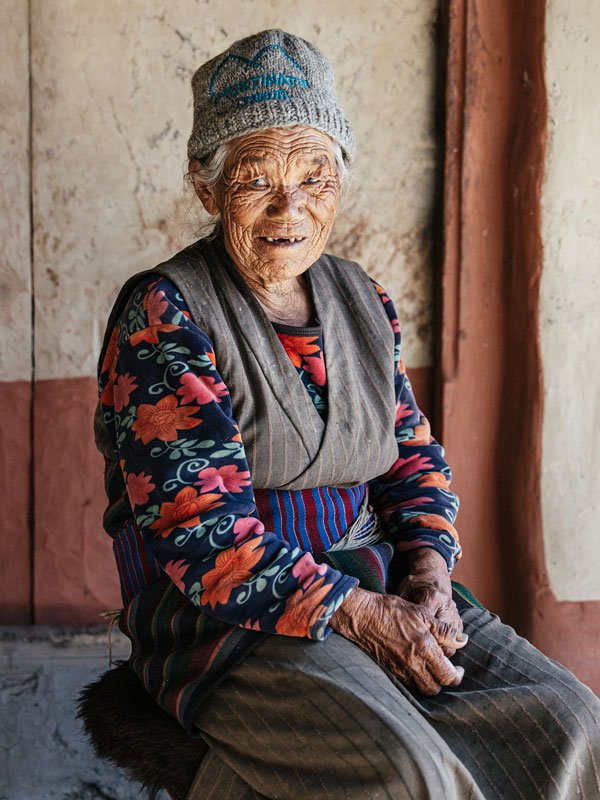
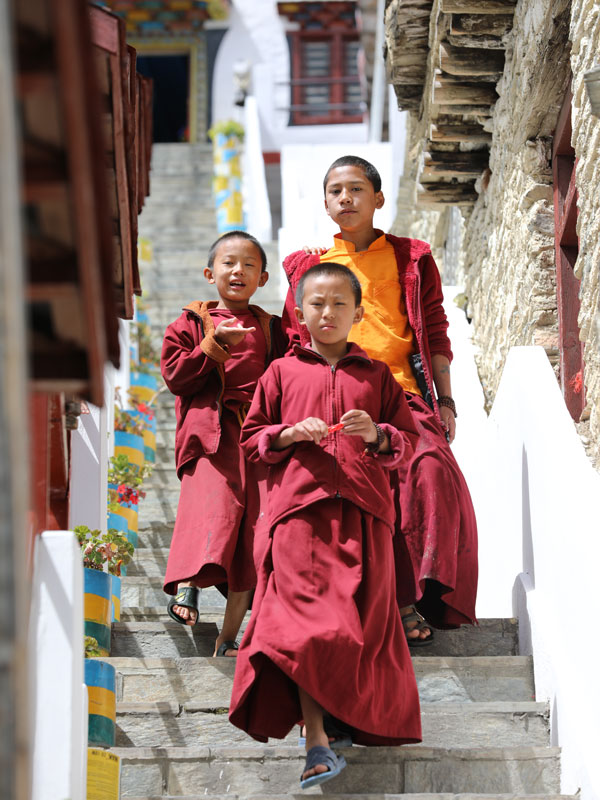
Every day, Sagrit, my Shinta Mani guide, and I leap into chapters of living history. We practise puja (ceremonial worship) in a 500-year-old monastery or meditate in his shrine room with Tsewang Gyurme Gurung, an 11th-generation Amchi. The Tibetan doctor leading the wellbeing centre felt my pulse on arrival to read my health.
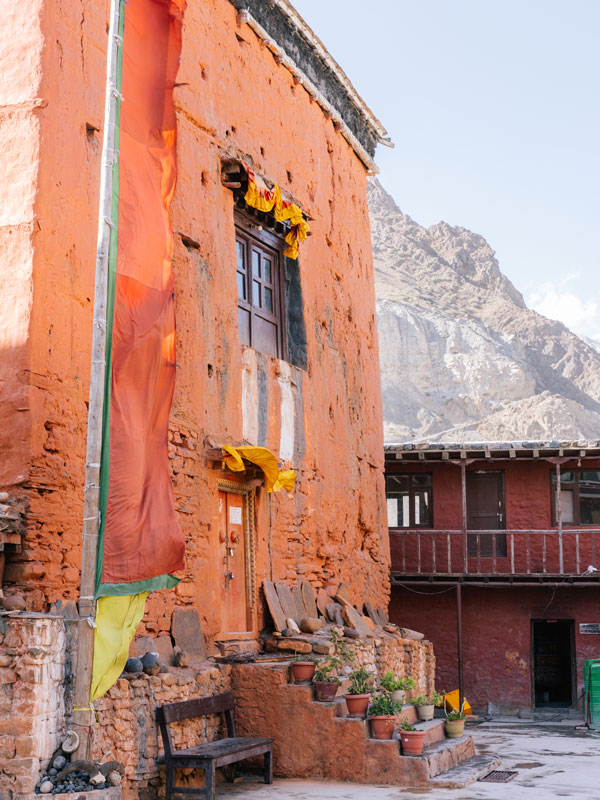
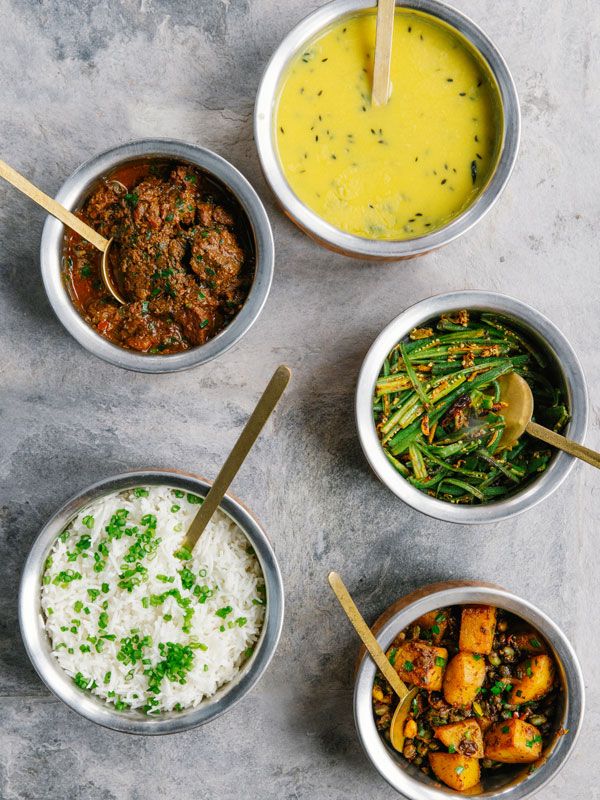
In line with Bensley’s ethos of enduring sustainability, everything that can be is locally sourced. Farmed Mustang potatoes, frothy pink buckwheat and foraged mushrooms are conjured into delicious, themed evening meals. Keeping me warm at night are cashmere rugs custom-made in Kathmandu and sold in Paris by the baby of this entrepreneurial group, D’Artagnan Giercke, 25. The son of a Mongolian mother and German documentary maker, D’Artagnan spends his summer months hosting riding and polo enthusiasts in the Mongolian steppe.
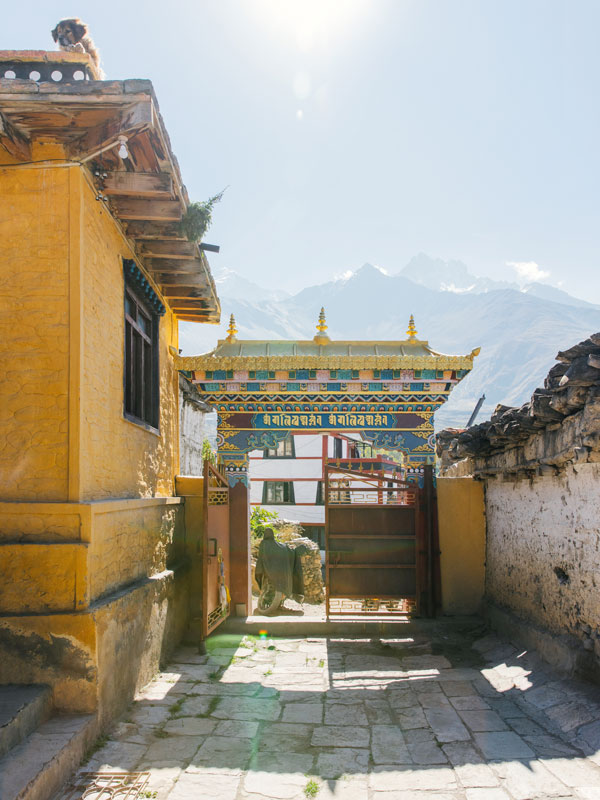
Where physical and spiritual worlds overlap
Missing from the group that day was Ang Tshering Lama, who was leading an expedition in the even more remote Dolpa, following in the footsteps of Peter Matthiessen, author of The Snow Leopard. His home in north-east Nepal was nicknamed The Happy House by Sir Edmund Hillary because it was his happy place to where he returned again and again, founding hospitals and schools. Ang returned from New York where his parents had fled to escape the Maoist insurgency and in 2018 opened it up as a small boutique hotel attracting mountain literati, explorers, as well as writers-in-residence and artists. The works of Tsherin Sherpa, who represented Nepal in its first Venice Biennale, line a 10-bedroom pine corridor upstairs.
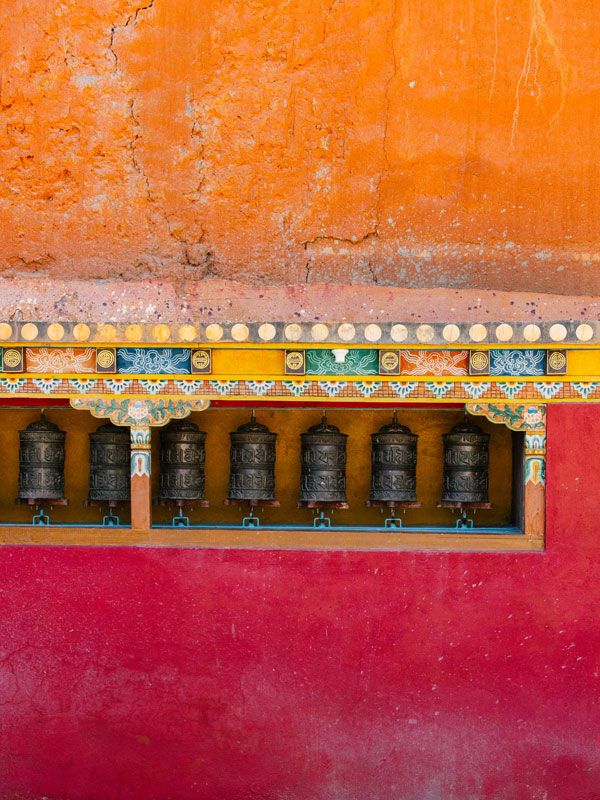
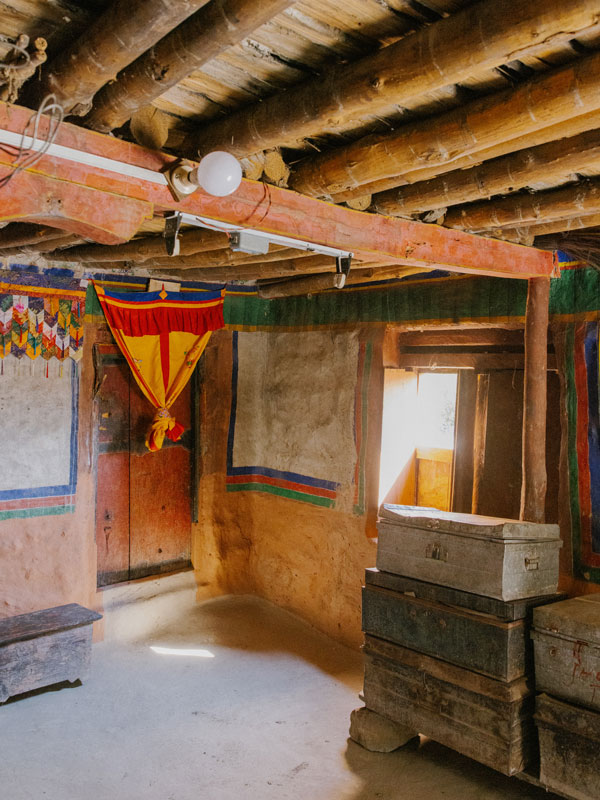
“Nepal is only 150 miles wide but in that time you can go from near sea level to the top of the world" says Ang. And into the heavens too, I think, when I arrive in Phaplu, home to the Sherpas who left Eastern Tibet 400 years ago. Pines hung with fluttering prayer flags guide me up misty steps into a room that takes my breath away. Richly coloured frescoes painted with exquisite care by a master of the monastic art of thangka painting glow in the light of a crackling fire surrounded by comfy sofas. At its heart is an oak refectory table polished by years of storytelling.
Everyone else is off climbing mountains, camping and picnicking on ridges overlooking pine forests gaudy with rhododendrons or staying in a monastery with monks, so tonight I have Ang to myself. I learn about his family, inextricably entwined with centuries of monastic Buddhist culture. About Beyul, the 108 secret places where physical and spiritual worlds overlap. And I learn that the soft hum I thought I had heard in my dreams that morning was in fact coming from the mountain behind me, where 300 monks and nuns are praying for world peace. They say that when the Waheguru is chanted, it brings you very near God in every moment. In the Himalayas you already are.
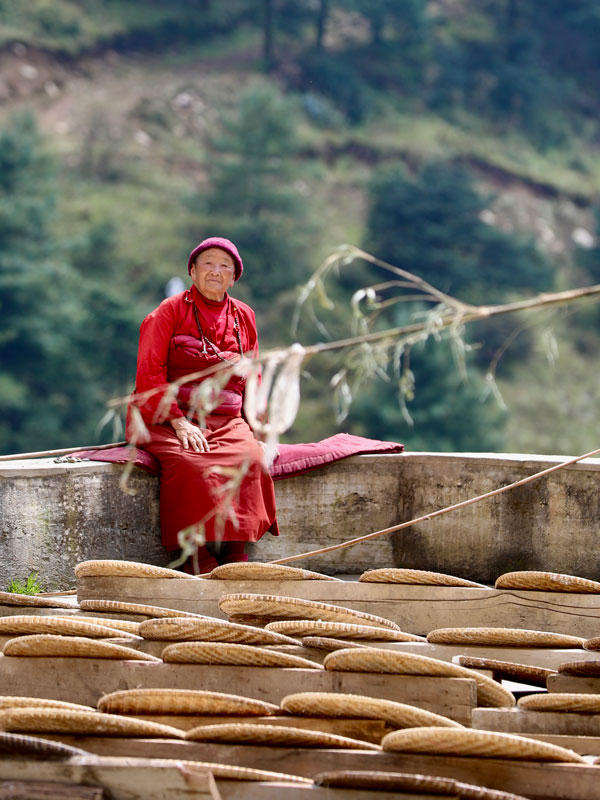
Nepal’s conservation success story
Passing into a glade on the banks of the Narayani River dominated by a series of long wooden buildings covered in bougainvillea, my guide Sam Mahato cautioned me to put down my camera. “We are passing the army buildings and photographs are not allowed," he says.
I am on the edge of the Chitwan-Parsa- Valmiki Complex comprising Chitwan National Park and Parsa Wildlife Reserve and accounting for nearly 2000 square kilometres of jungle, the home of some of the most beleaguered animals in the world: the Asian one-horned rhino, Bengal tiger, gharial crocodile and the vulture. But an engagement of national and international NGOs along with the Nepali army over the past couple of decades has changed the trajectory. So much so that recently the ZSL conservation programmes director Professor Dr Jonathan Baillie said, “Nepal’s exemplary track record in conserving its iconic wildlife makes it a conservation leader in the South Asian region" and in 2023, Nepali conservation officials and stakeholders shifted their focus from increasing population figures to mitigating human-wildlife clashes and better protecting animal movement corridors.
Numbers of the majestic Bengal tiger, which was hunted to the edge of extinction and deprived of its preferred food source, the sambar deer, has trebled from a 2010 low point of 121 to 355. Poaching of the Asian one-horned rhino rapidly reduced once the army engaged with poachers, although it is still threatened by human encroachment on its preferred grassy habitat. The fate of the critically endangered gharial crocodile, with only 200 left in Nepal, cannot be ignored.
But the number of vultures previously poisoned into near extinction by eating dead cattle treated by diclofenac (which is now banned) are recovering, their rising numbers enhanced by ingenious Vulture Kitchens; the first one to be set up was supported by Tiger Tops. Old cattle are bought from the farmers, fed vulture-friendly medicines until they die naturally and then fed to the vultures, watched by tourists who pay to see them.
Weekly travel news, experiences
insider tips, offers, and more.
The fight to get the Himalayas recognised as the Third Pole
When I first met Pema Gyamtsho in Kathmandu last year, the Director General of ICIMOD (the International Centre for Integrated Mountain Development) was on his way to Paris to an emergency summit called by President Macron to discuss the cryosphere crisis, the melting of the ice and glaciers at the poles. The former Bhutanese Agricultural minister was going to address the assembled international leaders to persuade them to recognise the Hindu Kush Himalaya as the third pole.
Himalaya means abode of snow but the mountains are melting, bringing both drought and flooding to the people living there. Yet ICIMOD scientists have calculated that while in the past five years, $7 billion has been spent on research in the North and South Pole, a mere $5.8 million has been invested into the Hindu Kush Himalaya, home to 40 per cent of the world’s poorest people.
Nobody lives permanently in the two Poles, but the 2500 kilometres of the HKH covering the eight countries of Nepal, India, China, Afghanistan, Bhutan, Myanmar, Pakistan and Bangladesh is home to 240 million mountain people. Two billion people depend upon water flowing from the highest mountains in the world, the source of 10 large Asian river systems including the Indus, Ganges, Yangtze, Irrawaddy and Yellow River but scientists report that 20-30 per cent of the nine million springs flowing from the mountains have dried up. Jigme Biste, the former King of Lo, a semi-autonomous kingdom covering the Mustang area that only ceased to exist when Nepal became a republic in 2008, told me he has had to relocate two villages because they no longer had any water. In other places, floods and landslides are killing people. In Bangladesh alone, scientists estimate there will be 18 million climate refugees.
I caught up with Gyamtsho after the conference at which 32 countries signed the Paris call for Glaciers and Poles and Macron pledged a billion euros to research in the polar regions. He looked satisfied. “Today I put in my statement that the Himalayas should be described as the Third Pole; not the ignored pole. I think they heard me."
Getting there
Singapore Airlines and Malaysia Airlines fly to Kathmandu. Domestic flights are often delayed by weather but helicopters are an exhilarating option. Road journeys are long but rewarding.
Playing there
Cazenove+Loyd specialises in creating high-end tailor-made journeys worldwide.
Staying there
For a quirky option, stay at The Inn Patan, a restored Newari house just off Patan’s Durban Square serving excellent Newari food. Book a luxury tent at Tiger Tops Tharu Lodge. Shinta Mani Mustang – A Bensley Collection offers a minimum of five nights but seven nights would be better with a two-night visit to Lo-Manthang.
Praying there
In Kathmandu, visit the Aarati in front of the Pashupatinath Temple beside the cremation ghats and do the Kora around Boudhanath Stupa. In Phaplu, overnight in a monastery.
Shopping there
Om Handicrafts just off Durbar Square Patan sells jewellery, pashminas and singing bowls. Ask for sound-healing therapy.
Want to see more stories from International Traveller in your Google search results?
- Click here to set International Traveller as a preferred source.
- Tick the box next to "International Traveller". That's it.