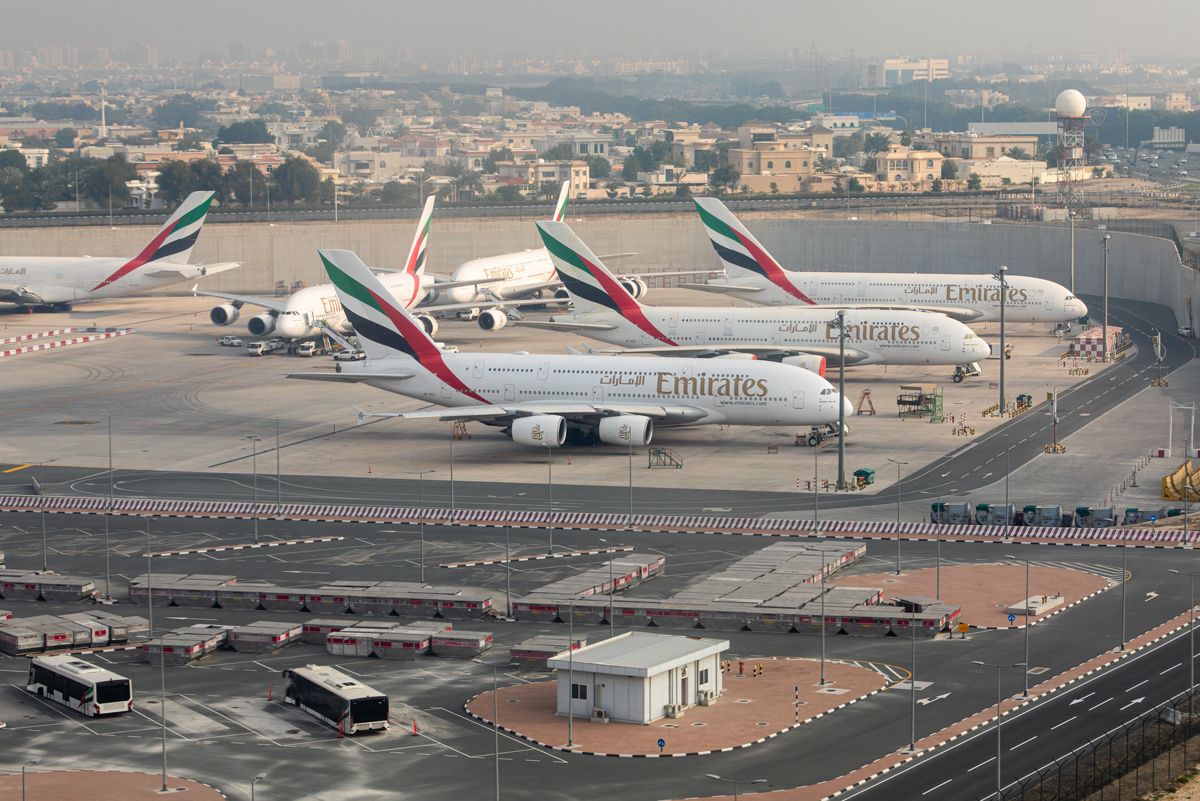

Airspace closures and airline suspensions across the Middle East are disrupting global flight paths and key transit hubs for Australians. Here’s what’s happening, how airlines are responding, and what it means if you’re due to fly.
Following US and Israeli strikes on Iran, aviation authorities have issued conflict-zone advisories across large parts of the Middle East, prompting flight suspensions, reroutes and widespread delays, with airlines now gradually restoring limited services.
For Australians, the impact is immediate. Dubai, Doha and Abu Dhabi are among the world’s busiest connection points for Europe-bound travellers, and when those corridors tighten, the ripple effect can stretch far beyond the region itself.
This explainer breaks down what’s happened, why it matters for global aviation, and the practical steps travellers can take right now to make informed decisions.
Gulf airlines begin limited flight recovery
Several major Gulf carriers have begun gradually restoring operations following days of widespread airspace closures across the Middle East.
Airlines, including Emirates, Etihad Airways and Qatar Airways, are now operating limited schedules or preparing to resume selected routes, though authorities warn disruption will likely continue while regional airspace restrictions evolve.
Travellers are being urged to check flight status before heading to the airport and to wait for confirmation from airlines before travelling, as schedules remain fluid and many services are still suspended or operating on reduced networks.
Why this is impacting flights well beyond the Middle East
Even if you’re not travelling to the region, you may still be affected because Dubai, Doha and Abu Dhabi are critical global transit hubs. When airspace closes or narrows, airlines have fewer safe corridors to use, which can mean:
- Longer flight paths, increasing travel time and fuel use.
- Crew duty-time issues that can trigger cancellations.
- Aircraft and crews are positioned in the wrong cities, slowing recovery even after the airspace reopens.
The official safety picture airlines are working from
The European Union Aviation Safety Agency (EASA) issued an active conflict-zone bulletin recommending operators do not operate at any altitude across a wide block of Middle East and Gulf airspace while risks remain elevated.
In Australia, DFAT has warned Australians overseas to prepare for serious travel disruption and to monitor Smartraveller updates closely.
Airlines base decisions on these formal advisories, as well as real-time intelligence and risk assessments. If a corridor is deemed unsafe or unstable, carriers will suspend or reroute services rather than operate through uncertainty.
On 1 March, Smartraveller updated its advice to “do not travel" to Lebanon, the UAE, Qatar, Kuwait and Bahrain, joining the same advice level as Israel, Iran, Iraq, Syria, Palestine and Yemen. It told Australians with plans to travel to Jordan, Saudi Arabia, and Oman to “reconsider your need to travel".
On 10 March, Prime Minister Anthony Albanese announced that Australia will deploy an E-7A Wedgetail aircraft and advanced air-to-air missiles to the United Arab Emirates, following a formal request from UAE President Mohammed bin Zayed. The Government has been clear that Australia is not taking offensive action against Iran and will not send troops to fight on the ground. The initial deployment is for four weeks.
What to do next
Australian Travel Industry Association (ATIA) chief executive officer Dean Long said the Middle East conflict is evolving rapidly.
“Our message to travellers is simple: 1. Do not cancel arrangements without first seeking professional advice; 2. Please, unless you are travelling in the next 48 hours and have not been contacted, hold off contacting your travel agent right now to allow them to support those currently caught up in, and who are stranded, delayed and dealing with cancellations," Long said.
“The situation is evolving rapidly, and experienced travel professionals are best placed to provide up-to-date guidance tailored to each traveller’s circumstances."
If you are stranded right now
- Do not cancel your booking yourself (yet)
Multiple authorities and industry groups warn that this can reduce your options for refunds/rebooking compared with being re-accommodated after an airline-initiated cancellation. - Use official channels first
Airline app, flight status page, and verified social updates (not screenshots in group chats). - Get yourself “claim-ready"
Screenshot disruption notices, keep receipts, and note who you spoke to and when. (This matters for airline compensation processes and travel insurance claims where applicable.) - If medication is an issue
Don’t wait. Ask the airline desk for support options and contact your travel insurer’s emergency number. DFAT has also activated crisis support for Australians in the region. - Monitor
Follow Smartraveller and subscribe for updates.
If you have a flight booked in the next 72 hours
- Check whether your airline has issued a travel waiver covering free changes, travel credits or refunds.
- If your flight is still operating, expect knock-on delays as aircraft are rerouted and schedules adjusted.
- If you booked via a travel agent and are not departing immediately, avoid flooding phone lines. Agents are prioritising the most urgent departures first.
If you’re booked later this month (and just want to make a smart call)
Your best move is to watch for two things:
- Smartraveller level changes for key transit countries you’re routing through (DFAT has warned that disruption may affect travel insurance provisions).
- Airline waiver extensions (these often roll forward in three- to seven-day increments).
Airline updates Australians are most likely to need
“Emirates, Etihad Airways and Qatar Airways are the most directly impacted at this stage, but European and other international carriers routing through Gulf airspace are also experiencing delays and rerouting," Long said.
“The impact is broader than many travellers may expect."
Qatar Airways
Qatar Airways Operates Limited Flight Schedule to and from Doha
With Qatar Airways flights still temporarily suspended due to the closure of Qatari airspace, we are doing everything possible to support affected passengers and help reunite them with family and loved ones. We… pic.twitter.com/a8zuKMzJw0
— Qatar Airways (@qatarairways) March 10, 2026
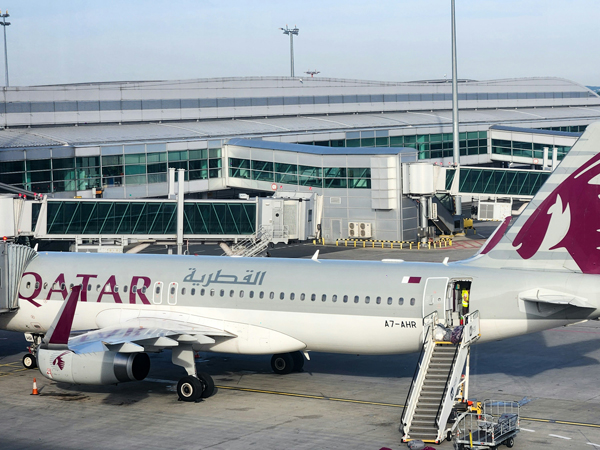
Qatar Airways says scheduled commercial flight operations remain temporarily suspended while Qatari airspace restrictions remain in place.
However, following temporary authorisation from the Qatar Civil Aviation Authority allowing limited operating corridors, the airline plans to operate a reduced number of flights over the coming days to assist stranded passengers.
Planned departures from Doha include services to cities such as London, Seoul, Delhi, Madrid, Beijing, Perth, Melbourne, Paris, Toronto, Dallas and others.
Qatar Airways said these services are intended to help passengers affected by the disruption and do not represent a full resumption of normal operations. Passengers are advised not to travel to the airport unless they hold a confirmed ticket.
Qatar said that passengers can refund or change their flights up to 14 days from the original travel date, if they have a confirmed booking with a travel date between 28 February and 22 March 2026.
Etihad Airways
Etihad to resume limited flight schedule from 6 March
Etihad will resume a limited commercial flight schedule from 6 March 2026, operating between Abu Dhabi and a number of key destinations.
Guests with previous bookings will be accommodated on these flights as soon as… pic.twitter.com/GNiAWjmmY2
— Etihad Airways (@etihad) March 6, 2026
Etihad Airways has resumed a limited commercial flight schedule since 6 March, operating services between Abu Dhabi and a number of key destinations. The airline said affected passengers will be accommodated on these flights where possible, and new tickets are also available for sale. However, most scheduled services to and from Abu Dhabi remain suspended while the airline gradually rebuilds its network.
Passengers are advised not to travel to the airport unless they have been contacted directly by Etihad or hold a confirmed booking.
Etihad has also expanded its flexibility policy. Guests holding Etihad tickets issued on or before 28 February, with original travel dates up to 21 March, may rebook free of charge onto Etihad-operated flights up to 15 May or request a refund.
Emirates
Our post from 11:08am Dubai time regarding operational status is no longer current, and has been deleted to avoid causing unnecessary confusion.
Emirates has resumed operations. Passengers who have confirmed bookings for this afternoon’s flights may proceed to the airport. This… pic.twitter.com/j6niNfBCoI
— Emirates Support (@EmiratesSupport) March 7, 2026
Emirates says it has resumed operations following the partial reopening of regional airspace, though the airline is currently operating a reduced flight schedule. Emirates anticipates a return to 100 per cent of its network within the coming days, subject to airspace availability.
Passengers with confirmed bookings may proceed to the airport, including those transiting through Dubai, only if their onward connecting flight is also operating. Emirates has urged customers not to travel to the airport unless they hold a confirmed booking.
Emirates has also introduced additional flexibility for customers booked to travel between 28 February and 31 March. Eligible passengers can rebook on another Emirates flight to their intended destination for travel on or before 30 April, or request a refund. Customers who booked through a travel agent must contact their agent directly.
Weekly travel news, experiences
insider tips, offers, and more.
Travel insurance
A lot of people assume travel insurance automatically covers “anything that goes wrong." In reality, many policies exclude or restrict claims connected to war/armed conflict or where you travel against government advice.
PassportCard Australia chief underwriting officer, Michael Storozhev, told International Traveller that, from their understanding, travel insurance has never covered acts of war. Most insurers will look at the direct cause of the loss, so if the airspace closure is due to the conflict, the exclusion will typically apply.
“For many insurers, coverage is limited by a ‘Do Not Travel’ warning, but it does not invalidate coverage," Storozhev said.
“If you find yourself overseas in a location with a ‘Do Not Travel’ warning from Smartraveller, PassportCard policies will still provide coverage for unrelated reasons to the warning. So if you get sick and require medical attention, we would still look to help you get the care you need, even if there is an active conflict happening."
Storozhev said that the more common situation right now is travellers transiting through major Gulf transit hubs, including Dubai, Abu Dhabi and Doha.
“Unfortunately, with the airspace closures due to the conflict, many of these disruptions will be caught up by the ‘acts of war’ exclusion," he said.
“Encouragingly, we have just heard that Emirates is beginning to schedule a few flights."
- Smartraveller encouraged travellers to look over their insurance policies. However, they warn that most insurers do not cover war or following “do not travel" advice as a valid reason for a claim.
- Acts of war and armed conflict are commonly not covered in standard travel insurance policies.
- Read your PDS and call your insurer before making big, irreversible choices (like self-cancelling flights or booking expensive new routings).
Realistic alternatives from Australia

Storozhev told International Traveller that the knock-on effects are global.
“It’s ongoing and unpredictable. Even a one-off event like the ash cloud in 2010 in Iceland. We recall that disrupted European airspace for about six days at its worst, though knock-on effects lasted weeks," he said.
“Realistically, travellers could expect weeks of disruption, not days."
If your itinerary is flexible, the most common workarounds travellers and agents will look at are:
- Asian transit hubs for Europe-bound travel, including Singapore, Hong Kong, Tokyo, Seoul, Kuala Lumpur and Bangkok.
- Direct(ish) options: some carriers may keep operating on routes that avoid the region entirely (for example, Qantas has indicated it avoids Middle East routings in its network approach).
Note: alternatives can be pricier and involve longer travel times because global flight paths are busier.
Why airlines take conflict-zone risk so seriously
Airlines don’t make rerouting decisions lightly. Changing a long-haul flight path means more fuel, longer flight times, crew duty issues and global scheduling knock-ons. But when conflict escalates, safety advisories can shift almost overnight, and history has reshaped how the industry approaches risk.
The most defining modern precedent is Malaysia Airlines Flight 17 (MH17). In July 2014, the Boeing 777 was shot down over eastern Ukraine while cruising at altitude, killing all 298 people onboard. At the time, parts of Ukrainian airspace remained open to civilian aircraft above certain flight levels.
The tragedy fundamentally reshaped how airlines and regulators assess conflict-zone risk. In the years since, airlines and regulators have:
- Adopted far more conservative approaches to overflying active or unstable regions.
- Increased reliance on real-time intelligence and conflict-zone bulletins.
- Expanded coordination between civil aviation authorities and defence agencies.
- Accepted higher operating costs to avoid even theoretical risk corridors.
In practical terms, this means that when airspace is closed, restricted or assessed as elevated risk, airlines will typically reroute or suspend services entirely – even if it results in mass disruption.
Want to see more stories from International Traveller in your Google search results?
- Click here to set International Traveller as a preferred source.
- Tick the box next to "International Traveller". That's it.