hero media

Oman to Jordan: 5 must-have cultural experiences in the Middle East

If you’re heading to the Middle East, these are the cultural experiences you simply don’t want to miss.

1. Wander the frankincense trail in Oman

Travelling with: Catherine Marshall

A mabkhara (frankincense burner) spouts clouds of perfume beneath the hem of guide Raya Al Alwy’s abaya. “This is the quick way to smell good," she says. Perfume suffuses the people and places here in Oman’s Dhofar region. Visitors leave smelling good, too: my skin is sweetened with frankincense-infused oil during an Arabian massage at the Al Baleed Resort Salalah by Anantara.
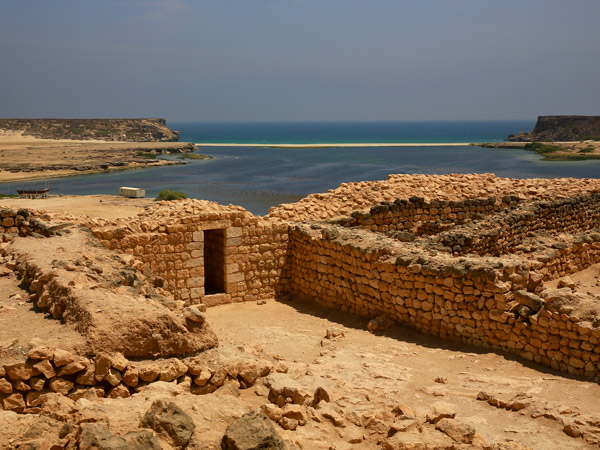
the ruins of Sumhuram in Oman
Unearth the trader stories at the port of Sumhuram. (Image: Catherine Marshall)

The biblical sap is harvested from the frankincense trees plugging the wadis in the UNESCO World Heritage-listed Land of Frankincense north of Salalah. Traders have been sourcing the perfume from the wadis since ancient times; their stories are unearthed at the port of Sumhuram, established around the 3rd century BCE.
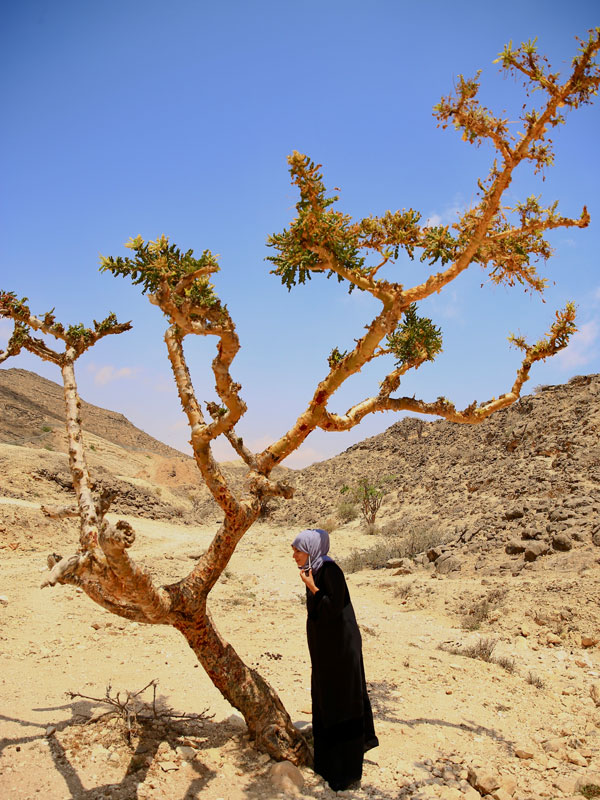
guide Raya Al Alwy under a frankincense tree in Oman
Tour the frankincense trail in Oman with guide Raya Al Alwy. (Image: Catherine Marshall)

2. Discover the Museum of Islamic Art in Qatar

Travelling with: Kee Foong

For Australian travellers, Qatar is often seen as a transit port en route to the UK or Europe rather than a destination. However, it’s worth adding a stopover to explore the region’s cultural treasures, in particular the Museum of Islamic Art. The museum is on the waterfront in a landmark building designed by Pritzker Prize-winning architect Ieoh Ming Pei, who was also responsible for the Louvre’s iconic glass pyramid. Within the museum is one of the world’s foremost collections of Islamic art, a breathtakingly beautiful treasure trove of manuscripts, metalwork, jewellery, textiles, ceramics and glassware spanning 1400 years of civilisation.
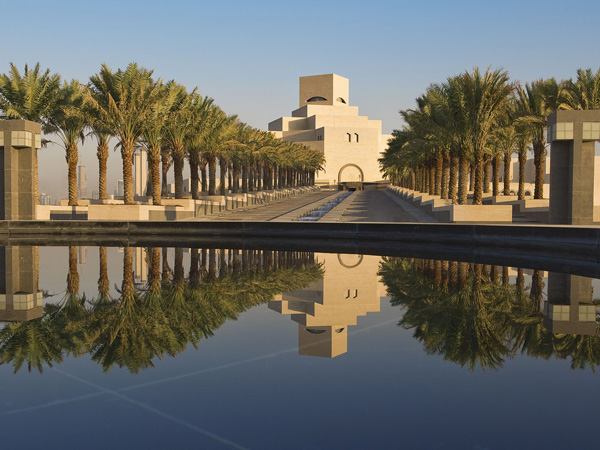
the Museum of Islamic Art in Doha, Qatar
The Museum of Islamic Art is housed within a landmark building.

3. Learn about the heritage of falconry in the UAE

Travelling with: Elizabeth Whitehead

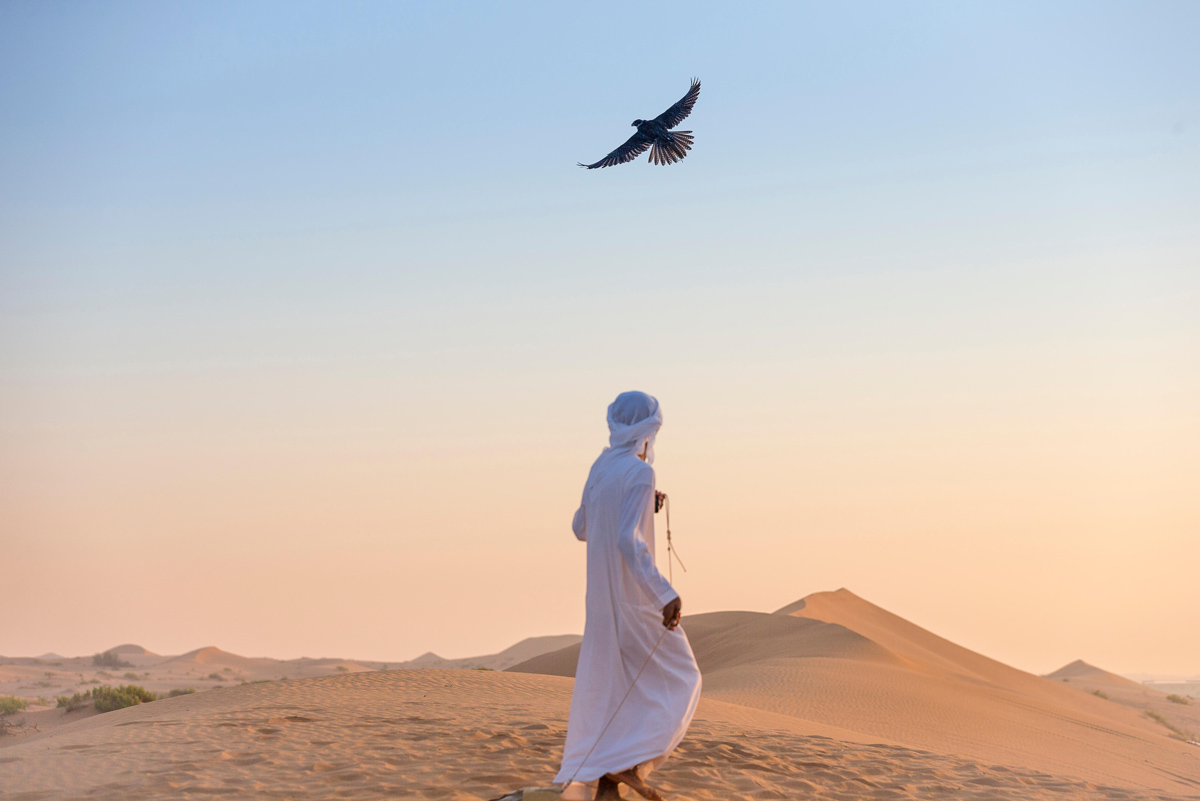
The sport of falconry is borne of a millennia-old bond between humans and birds of prey. Long before the UAE was dominated by futuristic cityscapes, it was inhabited by nomadic Bedouin tribes. Falcons helped them hunt on resource-scarce land, their keen eyesight and aerial view over the desert sands an unmatched advantage. Today, falconry remains a traditional Emirati sport, a skill passed down over generations. Visitors can take a desert safari and explore the art of falconry – a living human heritage that’s endured the sands of time.
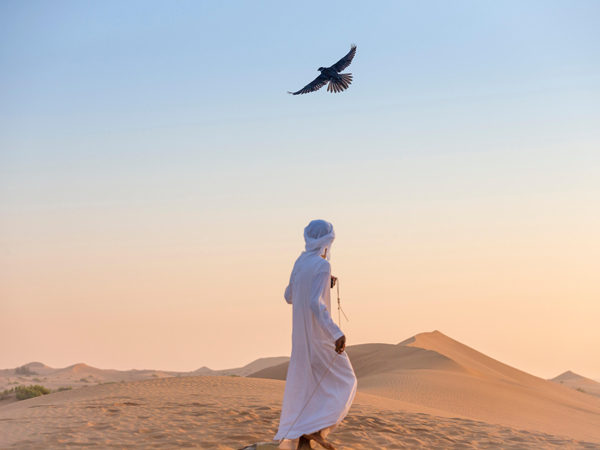
falconry in the UAE
Falconry remains a traditional Emirati sport. (Image: Alamy/Juniors Bildarchiv GMBH)

4. Experience Bedouin history and culture in Jordan’s Wadi Rum

Travelling with: Imogen Eveson

“Do you hummus?" My Bedouin guide Ali doesn’t need to ask twice as he serves me a dish of galayet bandora (literally, tomatoes on fire) cooked on flames in the red sands of Jordan’s Wadi Rum. Here, on the desert floor in a moment of pause on a 4WD adventure, I am totally immersed in this UNESCO World Heritage site of Lawrence of Arabia legend, inscribed for both its natural and cultural values.
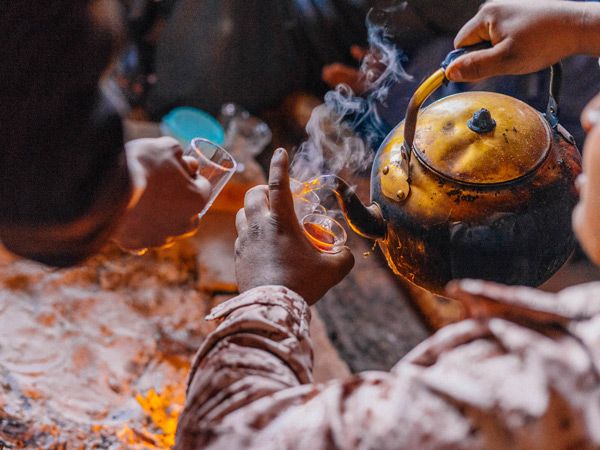
a Bedouin man pouring traditional tea into a cup
Sip sweet Bedouin tea in the red sands of Jordan’s Wadi Rum. (Image: Tahra-May Berdai/Getty Images)

With 20,000 inscriptions etched onto the canyon walls, the ‘ancient graffiti’ here shows not only the development of early alphabets, says Ali, but the evolution of human thought. The history feels as alive and present as this moment right now, as my guide fashions the word hummus into a verb and serves it all up with sweet Bedouin tea.
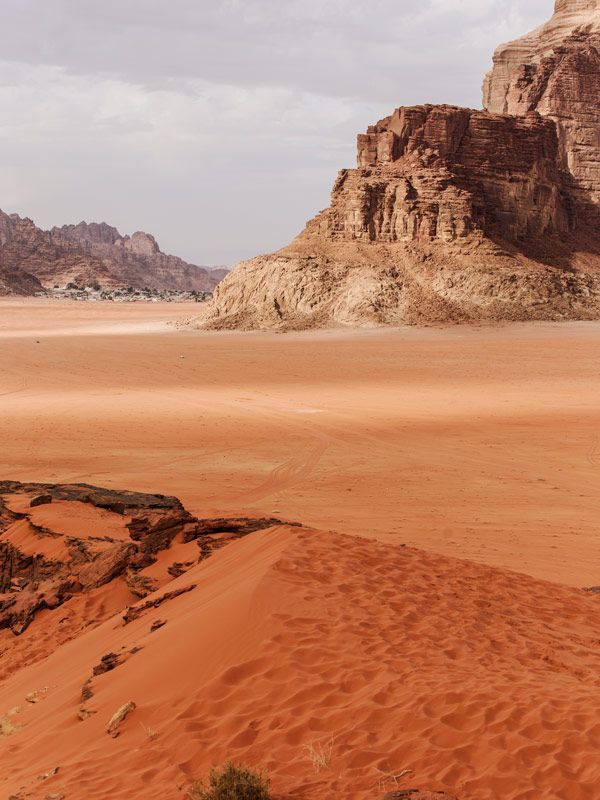
the Wadi Rum desert in Jordan
Explore the vast, otherworldly landscape of the Wadi Rum desert. (Image: Edyta Bartkiewicz/ Getty Images)

Weekly travel news, experiences
insider tips, offers,
and more.

5. Explore the archaeological wonders of AlUla

Travelling with: Sarah Reid

I came for the elaborate Nabataean tombs of Hegra, the sister city to Jordan’s Petra. But I quickly learned that Saudi Arabia’s showpiece World Heritage site isn’t the only reason to visit the remote desert oasis of AlUla. There are also the ruins of Dadan, once the capital of the Dadan and Lihyan kingdoms more than 2000 years ago, and the inscriptions of Jabal Ikmah, an open-air library from the same period.
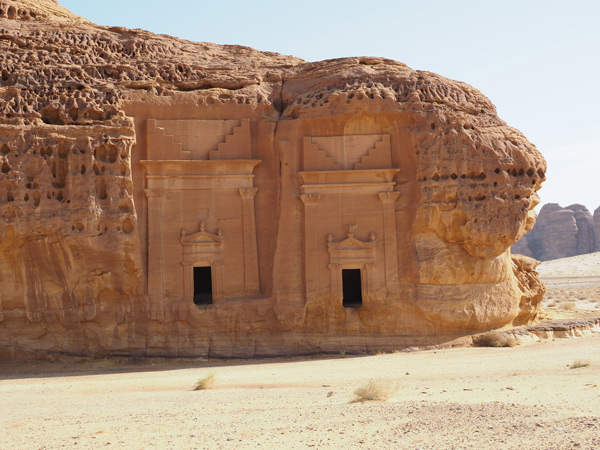
Nabataean tombs of Hegra
Nabataean tombs of Hegra have been preserved for thousands of years. (Sarah Reid)

AlUla Old Town, meanwhile, dates from the 12th century. There’s much to see and do, as well as luxe accommodation offerings like Our Habitas AlUla and its off-the-beaten-path Airstream caravans. There’s also a raft of new hotels on the horizon, including three Aman Resorts.
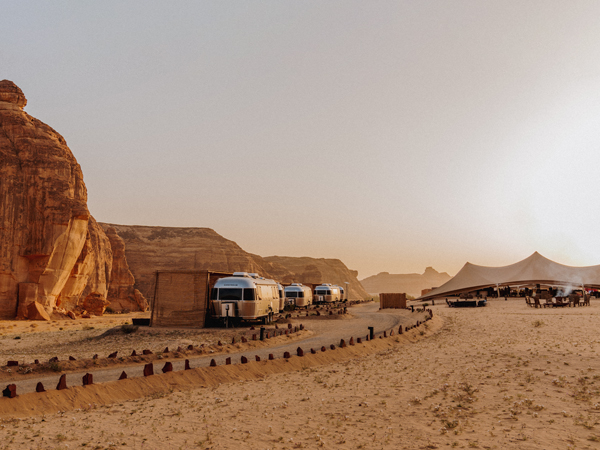
The airstream caravan camp Alula in Saudi Arabia
Opt for a luxe stay in the desert in Airstream caravans by Habitas AlUla (Image: Erika Hobart)
This round-up of cultural experiences is part of our curated list of 100 Cultural Experiences, explore the full list here.

Want to see more stories from International Traveller in your Google search results?

  1. Click here to set International Traveller as a preferred source.
  2. Tick the box next to "International Traveller". That's it.
hero media

BREAKING: Australia lowers travel warning for Middle Eastern countries

In big news, the Australian government has officially changed its travel advice for five Middle Eastern countries from ‘do not travel’ (Level 4) to ‘reconsider your need to travel’ (Level 3). Here’s what it means for travellers.

Australia has downgraded its travel advice for five Middle Eastern countries, including Bahrain, Israel, Kuwait, Qatar and the United Arab Emirates. However, some areas within Israel remain a ‘do not travel status’.

The announcement comes ahead of the USA and Iran’s formal signing of a peace deal on Friday, and is expected to have a significant positive impact on travellers’ confidence.

In a joint media release published this morning, Minister for Foreign Affairs Penny Wong and Assistant Foreign Affairs Minister Matt Thistlethwaite said that, while the security situation in the Middle East could rapidly change or decline, the Department of Foreign Affairs and Trade (DFAT) has assessed the conditions and judged it appropriate to change Bahrain, Israel, Kuwait, Qatar and the United Arab Emirates to a Level 3 or ‘reconsider your need to travel’.

What does this mean for travellers?

passport
The announcement comes ahead of the formal signing of a peace deal between the USA and Iran. (Credit: Unsplash/Kit Formerley Convertkit)

With Level 4 locations highly unlikely to be covered by travel insurers, travellers from Australia can now travel through and to the Arabian Peninsula with travel insurance protection. The change clears a major hurdle for Australians transiting through the Middle East to reach the United Kingdom, Europe, India and Africa. These travellers will no longer face some of the complications that the Level 4 warning created for transit travel, particularly those related to insurance.

As a result, we may soon be seeing a surge in travellers finally setting off on the trips they have been postponing as a result of the Middle East conflict.

There could also be some welcome relief for travellers’ wallets. Middle Eastern carriers such as Qatar Airways and Emirates account for a significant share of Australia–Europe/UK flight capacity, and when concerns about regional conflict prompted many travellers to avoid Gulf transit hubs, demand shifted to alternative routes via Singapore, Bangkok and other Asian cities. This meant prices for flights transiting through Asia increased. As confidence in those Middle Eastern connections returns, increased competition between airlines could help keep a lid on airfares – particularly on popular Europe-bound routes.

middle east travel
The change in travel advice could see a surge in travellers’ confidence. (Credit: Unsplash/Rocker Sta)

Smartraveller states that Level 3 or ‘reconsider your need to travel’ means avoiding or postponing non-essential travel, and taking extra precautions to protect yourself against security and health risks. These destinations are still classed as unstable, with DFAT warning that circumstances can shift abruptly.

The government urges travellers to obtain travel insurance and ensure they have carefully read the product conditions so they understand what is and isn’t covered. Not all travel insurance policies may cover Level 3 locations.

DFAT continues to advise ‘do not travel’ to Iran, Iraq, Lebanon, Palestine, Syria and Yemen, and ‘reconsider your need to travel’ to Jordan, Oman and Saudi Arabia. The body will continue to monitor the conditions closely and keep all Smartraveller advisories under review.