hero media

Hotel Review: The Fleece Cirencester, UK

A historical coaching inn in a picture-perfect location filled with English charm is as much an attraction as the surrounding countryside.

If you are planning on exploring the Cotswolds, that most English of areas made up of achingly gorgeous towns and villages constructed from honey-hued stone and festooned during the spring and summer months with hanging baskets groaning under the weight of pretty blooms, staying at a chain hotel presents the ultimate buzz kill. When surrounded by so much loveliness the place you retire to at the end of the day should be equally delightful. It should be somewhere like The Fleece.

Details

The Fleece Cirencester 
Market Place, Cirencester, Gloucestershire, UK

First Impressions

Situated in the heart of historic Cirencester, the traditional coaching inn dates back to 1651 (it’s said King Charles II used the building as a hiding place when fleeing Oliver Cromwell’s army after the Battle of Worcester) and now features 28 boutique rooms, as well as a convivial pub.


The small reception desk is reached via said pub, a fact that isn’t quite clear and required a lot of hand signalling through the window that you can glimpse it through. Once in possession of our room key we head up the original winding staircase (helpful hint: pack light), passing landings that branch off down higgledy-piggledy corridors lined with lovely vintage botanical and bird prints.
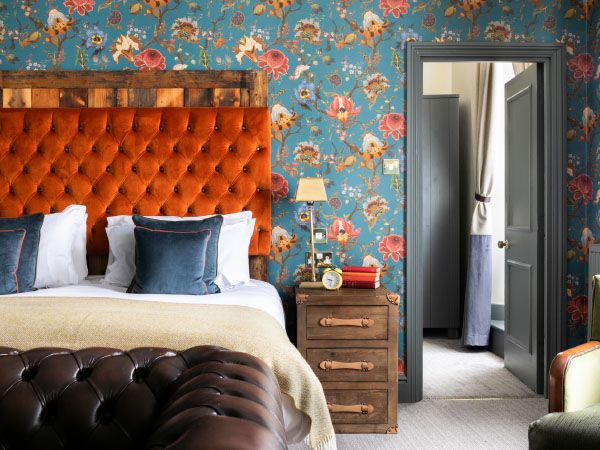
Pretty floral wallpaper adorns the suites

The room

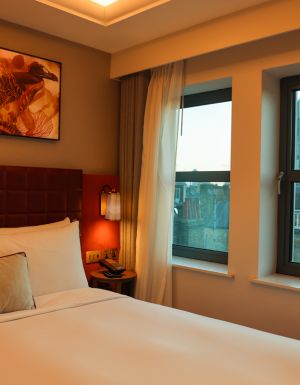
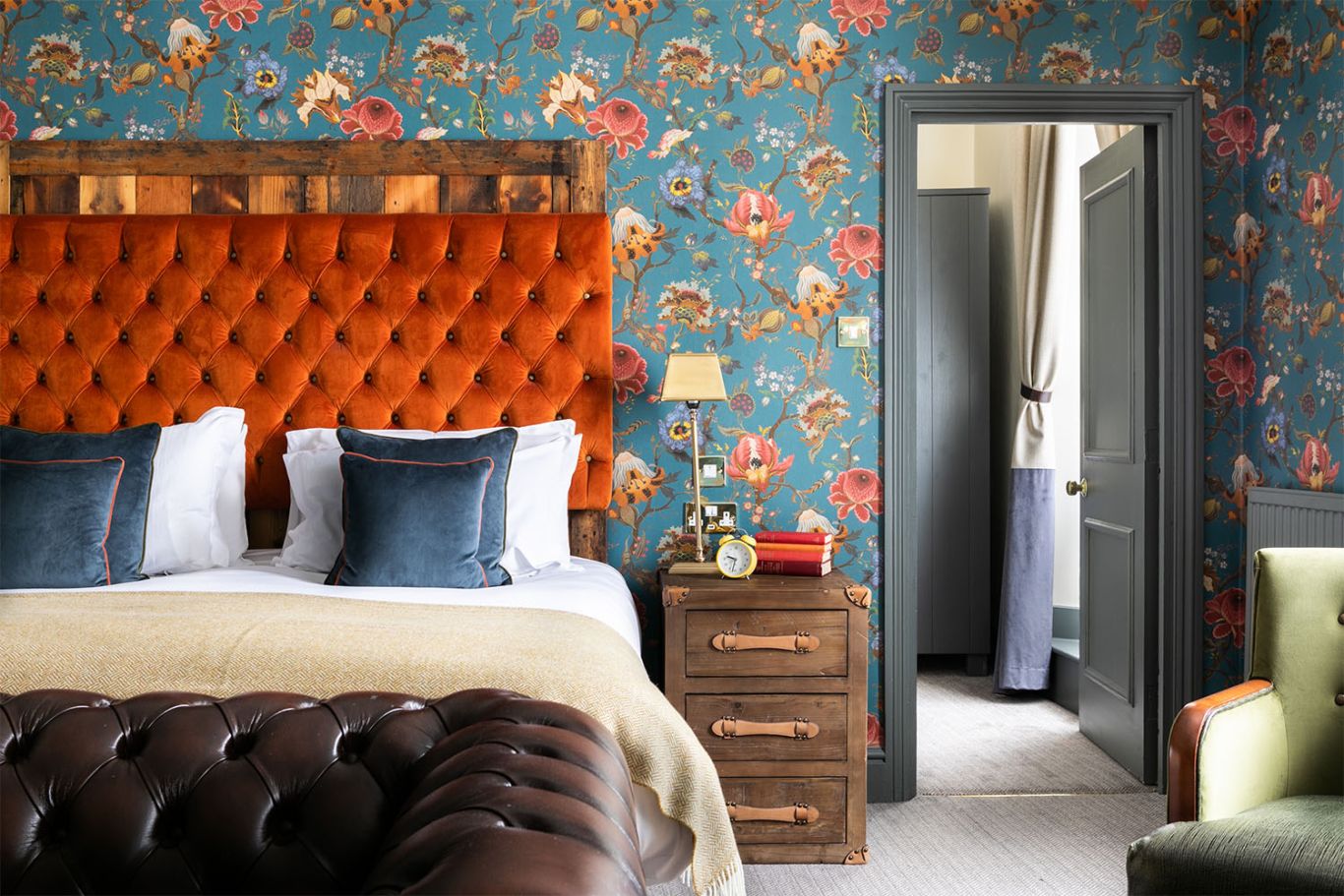
Our Signature Room is on the top floor and is well proportioned and decorated with English whimsy: pretty wallpaper, leather club chairs, mounted hunting skulls, a tufted bedhead, a generous bathroom with brass fittings, and a bust of a ram dressed in its best suit. There are cute inclusions like English-made oaty biscuits on the tea and coffee tray and a little jar of rhubarb and custard boiled lollies to dip into.


When added to the original beamed ceilings and leadlight windows, it’s all impossibly cute.
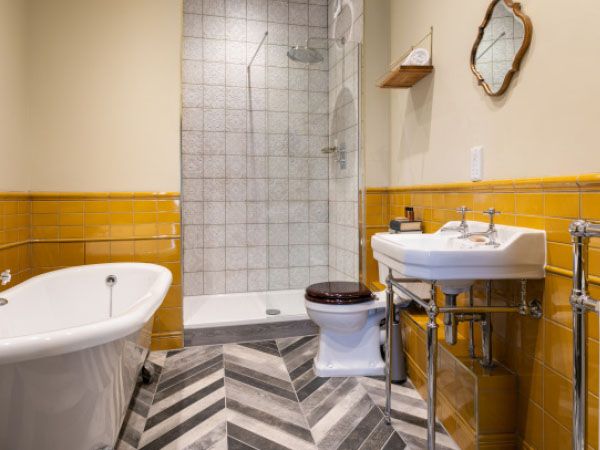
A roll-top bath is essential after long country walks

The food

We can’t get a table in the pub for dinner as it is so popular with locals and visitors, but breakfast the next morning in the pretty, country-chic breakfast room is delicious, with a menu that includes a full English with optional black pudding or a bacon butty; there are also gluten-free options.


We leave feeling like our stay at The Fleece was as much a part of the experience of exploring this lovely corner of the English countryside as visiting Blenheim Palace (an easy drive away) or Stowe-on-the-Wold, both of which are equally delightful if a little less whimsical.
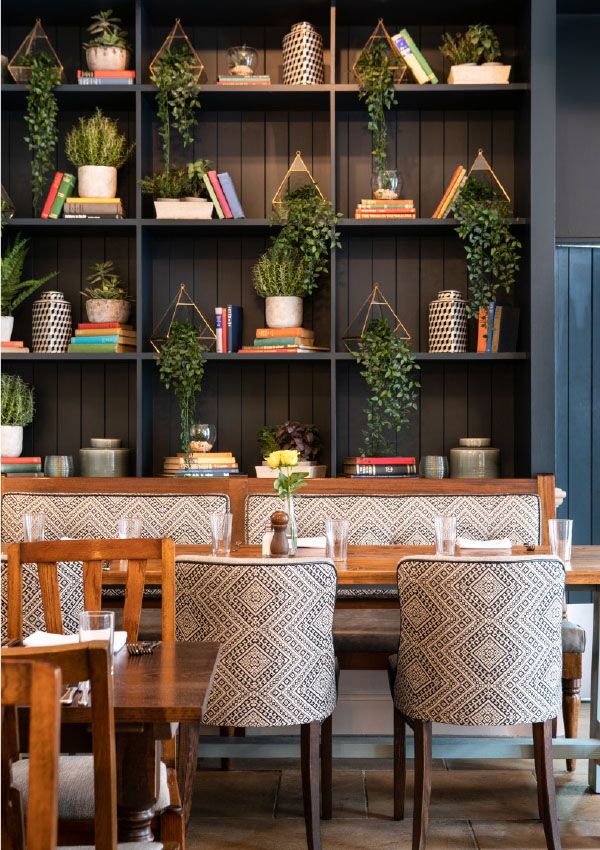
Lots of greenery in the chic breakfast room

The verdict

Brimming with design whimsy, steeped in history and delightfully situated, this is the kind of place that the term ‘chocolate box pretty’ was coined for.

Location: 8/10

Situated right in the heart of the historic town centre with the Cotswolds on the doorstep.

Weekly travel news, experiences
insider tips, offers,
and more.

Style/character: 9/10

The whole property is decorated in a warm, charming English style that presents as quirky and funky rather than twee.

Service: 6/10

Low-key, friendly and efficient; the staff serving breakfast could be a little friendlier though.

Rooms: 9/10

The Signature rooms are individually decorated with statement wallpapers, plush furnishings, generous bathrooms and lovely little touches.

Food and drink: 7/10

The breakfast menu includes a full English breakfast, with optional black pudding. A request for gluten-free bread was accommodated without fuss.

Want to see more stories from International Traveller in your Google search results?

  1. Click here to set International Traveller as a preferred source.
  2. Tick the box next to "International Traveller". That's it.
hero media

What the European heatwave means for your summer travel plans

Temperatures are soaring this summer, breaking records across Europe and the UK. 

Euro summer is a feeling like no other. But when a heatwave hits? The dream trip quickly turns into a sweaty mess. Extreme heat is sweeping Europe and the UK this week, with record-high temperatures impacting travel plans across the continent.

And while Australian summers are typically hotter in absolute temperature, many European cities aren’t equipped for high temperatures, resulting in unbearable weather.

Why is it so hot in Europe?

Signs of a hot summer loomed in May, when the mercury hit unprecedented spring highs. Now, extreme high temperature warning alerts have been issued in countries such as Spain, Italy, France, England, the Netherlands and Germany.

France saw its hottest day on record on Wednesday, with an average temperature of 30°C across the day and night. This surpasses the average temperature for June, which is 15°C to 25°C. Dozens of people have died, including 40 from drowning.

In Spain, 212 deaths have been linked to the heatwave.

The UK recorded its hottest June day ever on Wednesday with temperatures soaring to 36.1°C. In an article published by the Met Office – the UK’s national meteorological service – Professor Stephen Belcher CBE, Met Office Chief Scientist, shared his concerns about June’s heat. “To see temperatures like this in the UK in June is sobering. Events like this bring home the implications of climate change, with very high temperatures and humidity bringing significant health implications from heat stress, as well as impacts to a range of sectors such as transport, energy and water supply,” he said.

Heatwaves are becoming increasingly common in Europe and the UK, neither of which is prepared for such extremes. The World Meteorological Organization reported that in 2025, at least 95% of Europe experienced above-average annual temperatures and that the continent was heating up twice as fast as the global average.

How travel is impacted

A pharmacy sign displaying 40 degrees Celcius
A pharmacy broadcasting local weather data. (Credit: Getty/Dragoncello)

During a heatwave, power grids, water systems and transport networks can be affected, resulting in disrupted itineraries for travellers. In France, power outages have left thousands without electricity and early closures have been implemented for two of Paris’s biggest attractions, the Eiffel Tower (early afternoon rather than late at night) and the Louvre (two hours early). Eurostar cancelled its London to Paris and Paris to London services from the 22nd to the 25th, and major UK rail companies have been advising travellers to avoid using trains where possible, or to travel during early hours.

If a heatwave is predicted, being flexible with your itinerary and having fully refundable/changeable tickets is key, as extreme heat can force the cancellation of outdoor activities, impact rail and flight services and change the opening hours of sites and eateries.

Why does summer in Europe often feel hotter than summer in Australia?

people swimming in the Canal Saint-Martin in Paris
People swimming in the Canal Saint-Martin in Paris to cool off. (Credit: Rachael Thompson)

With some of the highest UV levels in the world, Australians are no strangers to the heat, adapting well to intense weather. But our infrastructure is largely equipped to withstand soaring temperatures with climate-responsive passive design, refrigerated air conditioning or evaporative coolers, as well as swimming spots aplenty.

Buildings in Northern and Western Europe and the UK, however, are constructed to retain heat and handle frosty winters. The lack of universal air conditioning means it generally feels hotter even though the temperature on your app might not look it. During a heatwave, it can feel like you’re in a sauna as cities act like heat traps.

How to stay cool and prepare for another heatwave

Relief is expected across Europe and the UK later this week, but more heatwaves are still possible in the coming months. Summer heat typically peaks in July and August.

Public transport often doesn’t have air conditioning, and buses in particular can be swelteringly hot. If you’re heading outside or your accommodation has no air conditioning, it’s worth buying a spray bottle and a handheld fan from a pharmacy or tourist stand. Check ahead of time if restaurants and cafes have air conditioning and make a booking in advance. The highest temperatures typically hit between 3pm and 6pm, so aim to head outdoors outside of these hours.

Rising temperatures invite travellers to enter a more intentional era of seeing the world. Now more than ever is the time to embrace lower-impact “coolcations” and off-season getaways.