hero media

Review: Le Negresco, Nice, France

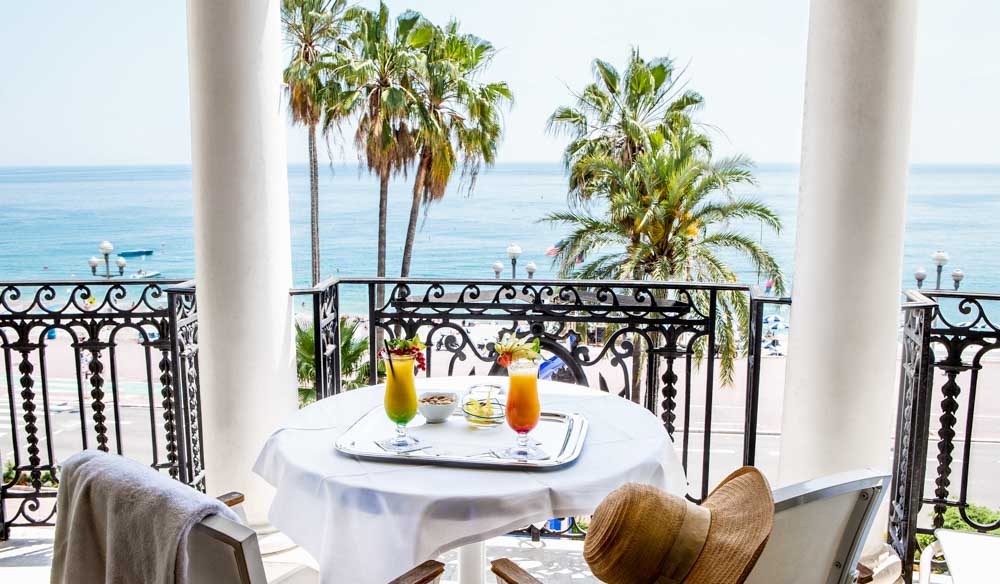
Le Negresco, a grand old Belle Époque hotel, is the perfect venue for a girls’ weekend in Nice, finds Louise Reynolds.


Moments after entering our room, my friend and I exchange a look before bursting into fits of excited giggles.

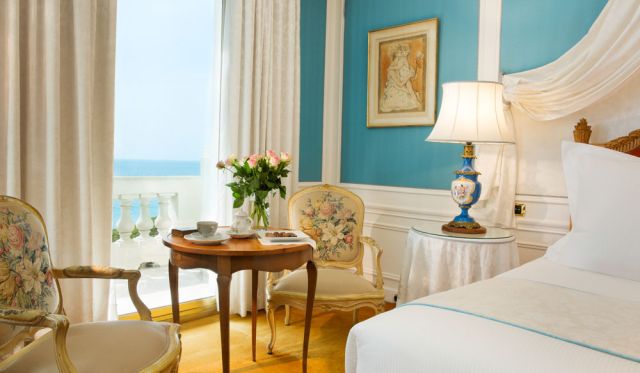
We survey the space, taking in the black lacquer beds with their embroidered canopies, the strawberry pink walls embossed with roses and the view of azure waters filling the window. It’s like being in a palace.
France nice luxury vintage nice Belle Époque hotel Le Negresco
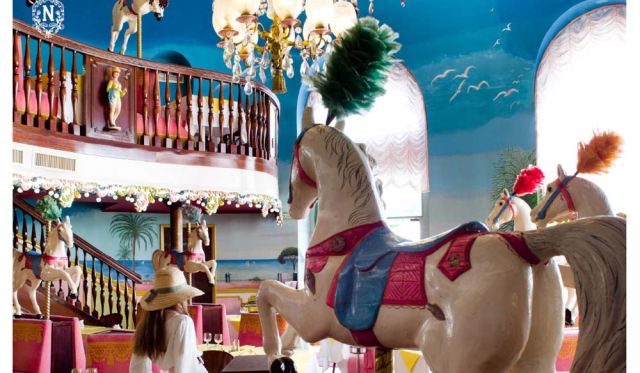
Antiques from an 18th-century fairground adorn the whimsical La Rotonde Brasserie, Le Negresco, Nice (photo: Grégoire Gardette).

Perhaps the French Riviera’s most famous hotel, Le Negresco is packed with enough antiques and artworks in its 124 rooms and suites, hallways and restaurants to fill a museum.

The hotel’s signature pink dome has dominated the Promenade des Anglais in Nice for more than a century. Opening in 1913, it was commandeered as a hospital during the First World War and struggled to survive the post-war downturn in Riviera tourism, before it experienced a renaissance when purchased by the Augier family in 1957.

Current owner, and top-floor resident, the nonagenarian Jeanne Augier, set about making Le Negresco the must-be-seen-at destination for royalty, movie stars, artists and musicians in the 1960s and ’70s. The guest list included Monaco’s Prince Rainier III and Grace Kelly, Salvador Dalí and The Beatles.

And now here I am on a girls-only Riviera luxury escape with an old friend. A girls’ escape needs food. We head to the wood-panelled bar to enjoy a high tea of smoked salmon and cucumber sandwiches and decadent sweet treats.
France nice luxury vintage nice Belle Époque hotel Le Negresco
Le Negresco is all about vintage luxury, Le Negresco, Nice (photo: Christophe Bielsa).

Our breakfast the next morning is taken in the whimsical La Rotonde Brasserie, which is decorated with the wooden horses of an 18th-century merry-go-round. The renowned two-Michelin starred restaurant Le Chantecler is sadly beyond our budget.

Not surprisingly, a stay in this French historic monument doesn’t come cheap – the most expensive suites go for thousands of dollars per night. By committing several months in advance and paying up-front, we secured our entry-level room for around $400 per night.

That’s still at the top of the range in Nice, but worth it for what is a splurge of the once-in-a-lifetime variety.

Le Negresco won’t suit everyone though. Travellers looking for an ultra-modern, sleek hotel with cloud-like beds and high-tech gadgets should stay elsewhere; stay (and pay) here for the style and the experience, which for us is unforgettable.

There are no fits of giggles at check-out, when my friend and I are both genuinely sad to leave.


Details: Le Negresco, Nice, France

Le Negresco, 37 Promenade des Anglais, Nice, France.

The IT Verdict: A one-of-a-kind Belle Époque treasure at the heart of the French Riviera, it will suit those who are looking for vintage luxury and are happy to pay for it.

Location: 10 / 10 An unbeatable position on the Promenade des Anglais and close to old Nice.

Style / character: 9 / 10 We loved the gaudy, in-your-face décor and furnishings.

Service: 10 / 10 Impeccable service from attentive and dedicated staff.

Rooms: 8 / 10 Entry-level rooms are compact but character-filled.

Food and drink: 9 / 10 From bar snacks to haute cuisine.

Value for money: 7 / 10 Classic luxury comes with a high price tag. Book ahead to secure the best rates.


All IT reviews are conducted anonymously and our writers pay their own way – so we experience exactly what you would.

Want to see more stories from International Traveller in your Google search results?

  1. Click here to set International Traveller as a preferred source.
  2. Tick the box next to "International Traveller". That's it.
hero media

What the European heatwave means for your summer travel plans

Temperatures are soaring this summer, breaking records across Europe and the UK. 

Euro summer is a feeling like no other. But when a heatwave hits? The dream trip quickly turns into a sweaty mess. Extreme heat is sweeping Europe and the UK this week, with record-high temperatures impacting travel plans across the continent.

And while Australian summers are typically hotter in absolute temperature, many European cities aren’t equipped for high temperatures, resulting in unbearable weather.

Why is it so hot in Europe?

Signs of a hot summer loomed in May, when the mercury hit unprecedented spring highs. Now, extreme high temperature warning alerts have been issued in countries such as Spain, Italy, France, England, the Netherlands and Germany.

France saw its hottest day on record on Wednesday, with an average temperature of 30°C across the day and night. This surpasses the average temperature for June, which is 15°C to 25°C. Dozens of people have died, including 40 from drowning.

In Spain, 212 deaths have been linked to the heatwave.

The UK recorded its hottest June day ever on Wednesday with temperatures soaring to 36.1°C. In an article published by the Met Office – the UK’s national meteorological service – Professor Stephen Belcher CBE, Met Office Chief Scientist, shared his concerns about June’s heat. “To see temperatures like this in the UK in June is sobering. Events like this bring home the implications of climate change, with very high temperatures and humidity bringing significant health implications from heat stress, as well as impacts to a range of sectors such as transport, energy and water supply,” he said.

Heatwaves are becoming increasingly common in Europe and the UK, neither of which is prepared for such extremes. The World Meteorological Organization reported that in 2025, at least 95% of Europe experienced above-average annual temperatures and that the continent was heating up twice as fast as the global average.

How travel is impacted

A pharmacy sign displaying 40 degrees Celcius
A pharmacy broadcasting local weather data. (Credit: Getty/Dragoncello)

During a heatwave, power grids, water systems and transport networks can be affected, resulting in disrupted itineraries for travellers. In France, power outages have left thousands without electricity and early closures have been implemented for two of Paris’s biggest attractions, the Eiffel Tower (early afternoon rather than late at night) and the Louvre (two hours early). Eurostar cancelled its London to Paris and Paris to London services from the 22nd to the 25th, and major UK rail companies have been advising travellers to avoid using trains where possible, or to travel during early hours.

If a heatwave is predicted, being flexible with your itinerary and having fully refundable/changeable tickets is key, as extreme heat can force the cancellation of outdoor activities, impact rail and flight services and change the opening hours of sites and eateries.

Why does summer in Europe often feel hotter than summer in Australia?

people swimming in the Canal Saint-Martin in Paris
People swimming in the Canal Saint-Martin in Paris to cool off. (Credit: Rachael Thompson)

With some of the highest UV levels in the world, Australians are no strangers to the heat, adapting well to intense weather. But our infrastructure is largely equipped to withstand soaring temperatures with climate-responsive passive design, refrigerated air conditioning or evaporative coolers, as well as swimming spots aplenty.

Buildings in Northern and Western Europe and the UK, however, are constructed to retain heat and handle frosty winters. The lack of universal air conditioning means it generally feels hotter even though the temperature on your app might not look it. During a heatwave, it can feel like you’re in a sauna as cities act like heat traps.

How to stay cool and prepare for another heatwave

Relief is expected across Europe and the UK later this week, but more heatwaves are still possible in the coming months. Summer heat typically peaks in July and August.

Public transport often doesn’t have air conditioning, and buses in particular can be swelteringly hot. If you’re heading outside or your accommodation has no air conditioning, it’s worth buying a spray bottle and a handheld fan from a pharmacy or tourist stand. Check ahead of time if restaurants and cafes have air conditioning and make a booking in advance. The highest temperatures typically hit between 3pm and 6pm, so aim to head outdoors outside of these hours.

Rising temperatures invite travellers to enter a more intentional era of seeing the world. Now more than ever is the time to embrace lower-impact “coolcations” and off-season getaways.