hero media

This luxury landmark is the only place to stay in Bordeaux

Despite a three-day migraine, this five-star gem still made me fall in love with Bordeaux.

Many hotels feel like they’re simply placed into a city. Mondrian Bordeaux Les Carmes, however, is a natural part of it. Seamlessly blending in with Bordeaux’s historic charm, thanks to the sensitive restoration and transformation by renowned architect Philippe Starck of a 19th-century wine cellar, it pays homage to the wine city with top-tier service, sumptuous interiors and excellent dining.

Despite having a migraine during the entirety of my stay, I can comfortably say this hotel is one of my favourites. Here’s why…

Location
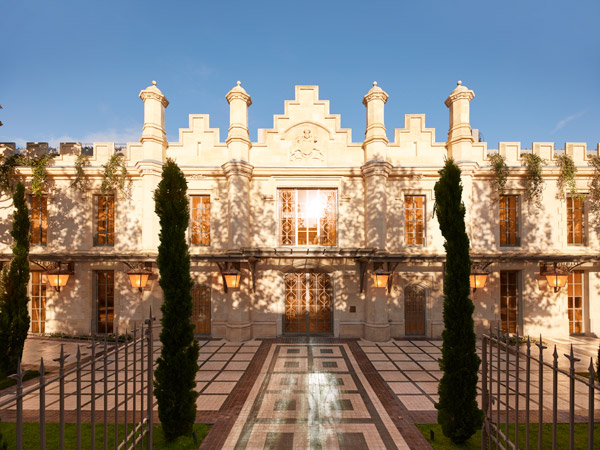
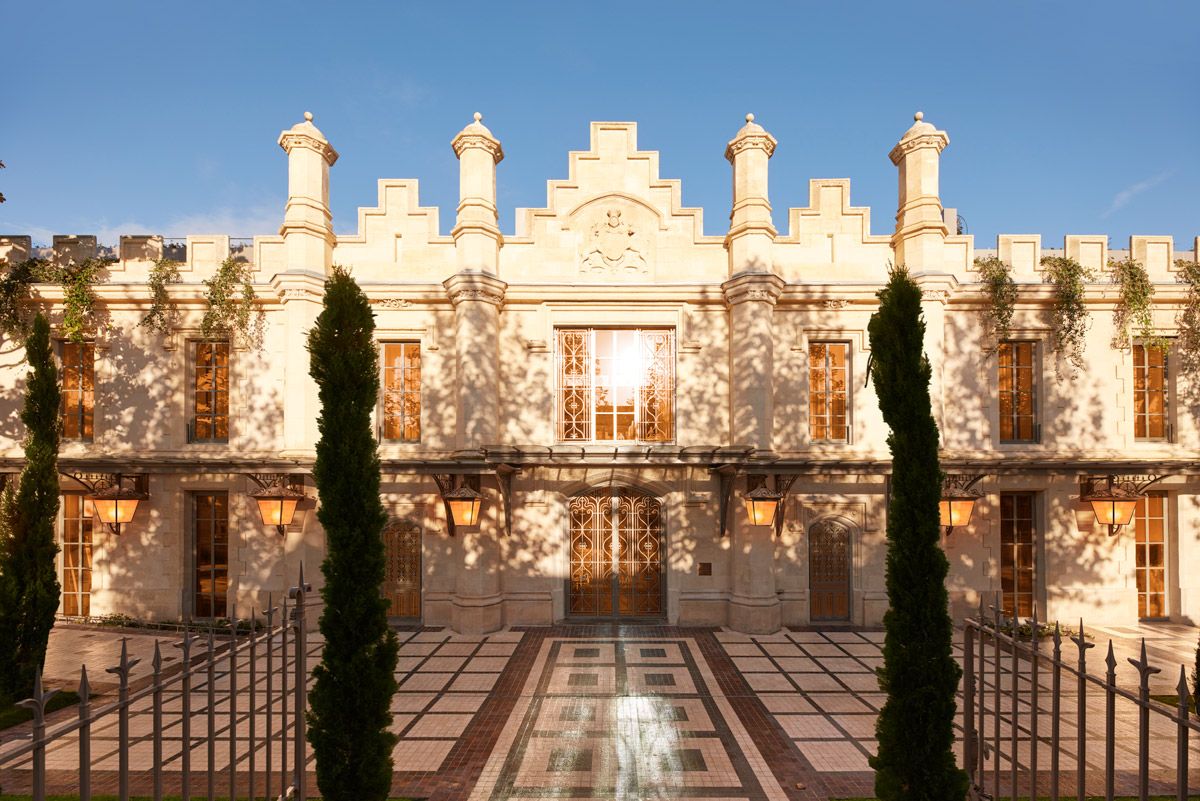
the exterior of Mondrian Bordeaux Les Carmes
The 19th-century wine cellar, now a five-star hotel, is situated outside the city centre. (Image: Gaëlle Le Boulicaut)

The Mondrian Bordeaux Les Carmes elegantly resides in the city’s historic Chartrons district. This ancient 14th-century neighbourhood is named after the Chartreux monks who settled in the area during this time. During the 17th to 19th centuries, it was a wine trade hub where many British, Irish, German and Dutch merchants resided. Today, this charming area is lined with neoclassical facades and brimming with antique stores, world-class restaurants and art galleries.

If you’re visiting on a Sunday, dropping into the Quai des Chartrons market is a must. There are dozens of stalls selling local produce, artisanal goods, street food, wine and crafts to explore.

Mondrian Bordeaux Les Carmes is approximately half an hour’s walk to the city centre or a 10-minute drive, and a 20-minute drive from Bordeaux-Saint-Jean station and Bordeaux Airport.

Style and character
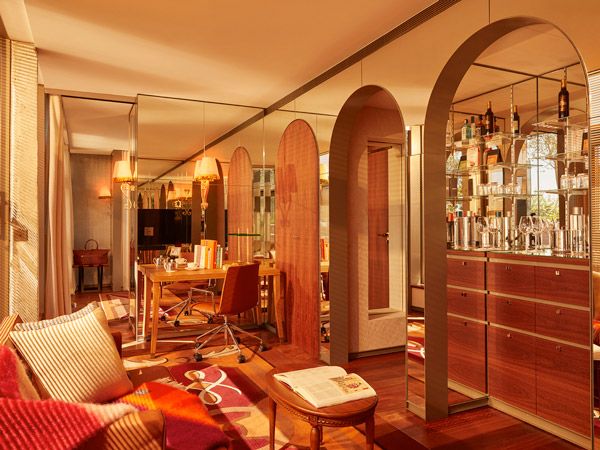
the interior of Mondrian Bordeaux Les Carmes
The historic yet stylish hotel is awash with warm tones and a mix of modern and antique furnishings. (Image: Gaëlle Le Boulicaut)

Warm and welcoming yet elevated and chic, The Mondrian Bordeaux Les Carmes has been designed to French perfection by JeanFrançois Le Gal (firm Advento) and Phillip Starck. The sense of arrival is palpable, with guests greeted by a neo-Gothic building with a light-coloured Bordeaux stone facade and an expansive arched glass door.

Inside, Starck has married Bordeaux charm with Japanese design elements. The accommodation is swathed in comforting warm tones, with soft, diffused lighting from candelabra-inspired lamps, lanterns, and pagoda-style fixtures. A materials palette of leather, wood, stone and concrete is softened by plush carpets and rugs and boiled wool curtains, while an eclectic mix of modern furnishings is balanced with antique pieces. The result is a harmonious dialogue between old and new that feels sympathetic to Bordeaux.

Facilities
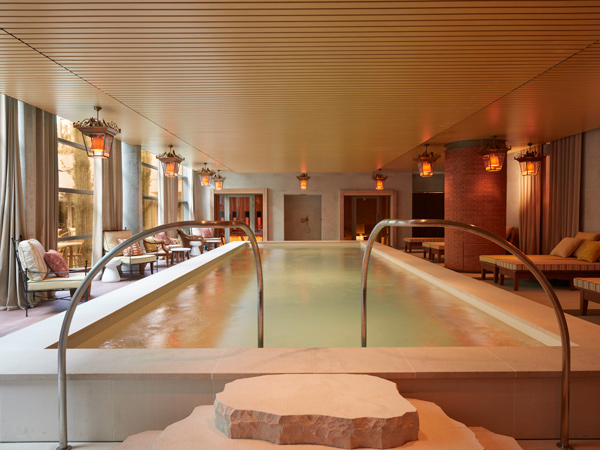
the indoor heated swimming pool at Mondrian Bordeaux Les Carmes
Find your zen in the heated indoor pool and spa. (Image: Gaëlle Le Boulicaut)

Mondrian Bordeaux Les Carmes has a luxurious indoor heated swimming pool, spa, hammam, sauna and fitness room, as well as an onsite restaurant and bar.

The hotel’s sister property and winery, Château Les Carmes Haut-Brion, dates back to the early 19th century and is a 20-minute drive away or a 45-minute tram ride. In 2016, Phillip Starck and Luc Arsène-Henry designed new winery facilities on the property, and visitors are encouraged to take a tour and try their delicious red blends.

Rooms
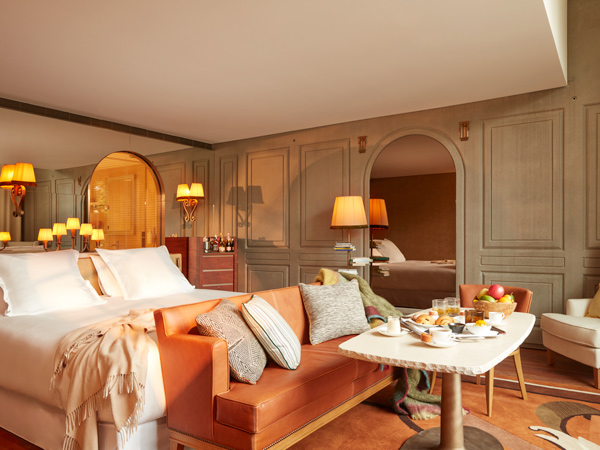
a look inside one of the suites at Mondrian Bordeaux Les Carmes
The accommodation also offers suites generously sized for families. (Image: Gaëlle Le Boulicaut)

The 97 rooms and suites are spacious and romantic, ranging from the cosy Superior room to the expansive Mondrian Terrace Suite. I stayed in a street-facing Premier King, which was quiet, luxurious and at 30 square metres, offered plenty of room.
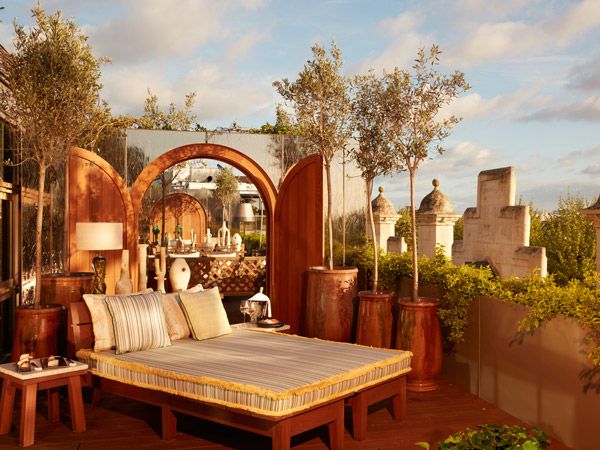
a king-size bed at the Mondrian Terrace Suite
The Mondrian Terrace Suite features a king-size bed and a private terrace. (Image: Gaëlle Le Boulicaut)

Rooms feel considered, and upon arriving, I was delighted to find a plate of cannelés (a Bordeaux classic), cookies, small cakes and a bowl of fresh fruit waiting for me. A floor lamp featured a clever built-in bookshelf stocked with French and English titles.

Each room is stocked with MALIN + GOETZ bath products and a minibar that, much like the rest of the hotel experience, feels tailored for special moments – think elevated snacks and drinks such as Ruinart Champagne.

Food & Drink
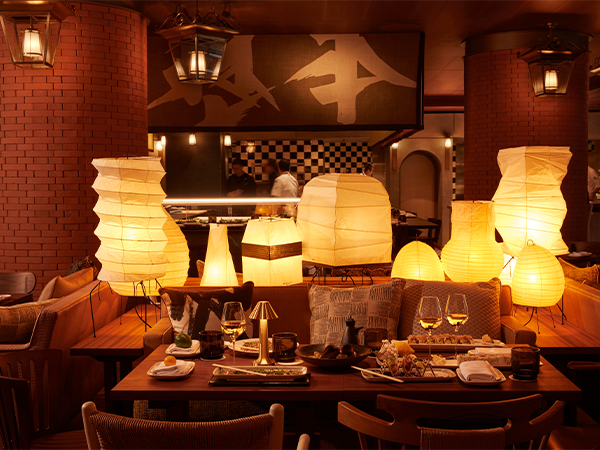
Japanese lanterns lit up inside Morimoto Bordeaux
Morimoto Bordeaux blends Japanese culinary artistry with Western flavours.

Bordeaux is celebrated for its exceptional cuisine, so having a renowned chef lead the hotel kitchen feels essential. But rather than leaning into the local cuisine, Mondrian Bordeaux Les Carmes brought on celebrated Japanese chef Masaharu Morimoto, who has created a menu that  blends Japanese culinary artistry with Western flavours.

The menu spans sashimi, nigiri, sushi rolls and mains such as duck fried rice and tonkatsu. I recommend trying the fish tacos, crab croquettes and the vegetable bao buns if they’re on the menu. For dessert, strawberry confit and sorbet with white sesame grenache and caramelised puff pastry won’t disappoint.
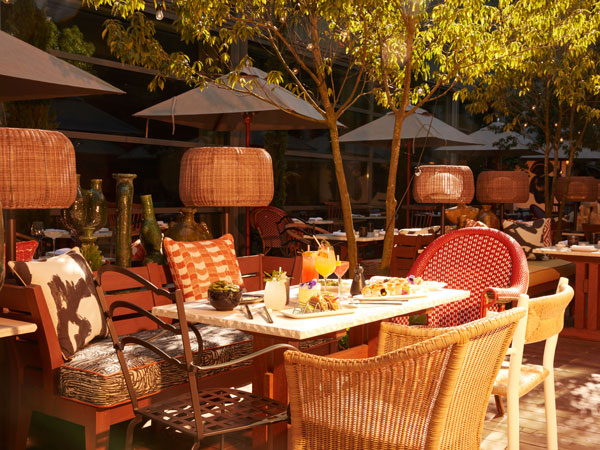
outdoor dining with cocktails at Mondrian Bordeaux Les Carmes
Settle in for sunset cocktails. (Image: Gaëlle Le Boulicaut)

The extensive bar menu covers the usual suspects, but it’s worth turning your attention to the traditional Japanese alcohols and the Japanese-inspired cocktails such as the ‘Jasmin Frost’ with Pentire Adrift, green tea, and jasmine infusion, honey chamomile syrup and orange blossom.

A buffet breakfast is served each morning.

Weekly travel news, experiences
insider tips, offers,
and more.

Does Mondrian Bordeaux Les Carmes have access for guests with disabilities?

There are adapted rooms on each floor of the hotel to meet the needs of guests with disabilities.

Is Mondrian Bordeaux Les Carmes family-friendly?

Mondrian Bordeaux Les Carmes doesn’t market itself as a family-centric hotel, and its design-led nature exudes a more adults-only retreat vibe. However, there are family suites and adjoining rooms available.

Details

Best for: Design-savvy travellers and couples.

Address: 81 Cours du Médoc 3300 Bordeaux, France

Rate: From 300 euros

Want to see more stories from International Traveller in your Google search results?

  1. Click here to set International Traveller as a preferred source.
  2. Tick the box next to "International Traveller". That's it.
Rachael Thompson
Rachael Thompson is a freelance travel journalist, editor and hotel addict based in the UK. She was formerly International Traveller's Evergreen Editor and was responsible for the foundational content ahead of its website relaunch, as well as managing and growing the brand’s destination guides. With a background in design and travel media, Rachael is dedicated to creating content that is as much informational as it is beautiful. She began her career at Belle magazine, before taking up editorial roles at Homes to Love and Bed Threads. Next on her travel wish list is Malta.
View profile and articles
hero media

What the European heatwave means for your summer travel plans

Temperatures are soaring this summer, breaking records across Europe and the UK. 

Euro summer is a feeling like no other. But when a heatwave hits? The dream trip quickly turns into a sweaty mess. Extreme heat is sweeping Europe and the UK this week, with record-high temperatures impacting travel plans across the continent.

And while Australian summers are typically hotter in absolute temperature, many European cities aren’t equipped for high temperatures, resulting in unbearable weather.

Why is it so hot in Europe?

Signs of a hot summer loomed in May, when the mercury hit unprecedented spring highs. Now, extreme high temperature warning alerts have been issued in countries such as Spain, Italy, France, England, the Netherlands and Germany.

France saw its hottest day on record on Wednesday, with an average temperature of 30°C across the day and night. This surpasses the average temperature for June, which is 15°C to 25°C. Dozens of people have died, including 40 from drowning.

In Spain, 212 deaths have been linked to the heatwave.

The UK recorded its hottest June day ever on Wednesday with temperatures soaring to 36.1°C. In an article published by the Met Office – the UK’s national meteorological service – Professor Stephen Belcher CBE, Met Office Chief Scientist, shared his concerns about June’s heat. “To see temperatures like this in the UK in June is sobering. Events like this bring home the implications of climate change, with very high temperatures and humidity bringing significant health implications from heat stress, as well as impacts to a range of sectors such as transport, energy and water supply,” he said.

Heatwaves are becoming increasingly common in Europe and the UK, neither of which is prepared for such extremes. The World Meteorological Organization reported that in 2025, at least 95% of Europe experienced above-average annual temperatures and that the continent was heating up twice as fast as the global average.

How travel is impacted

A pharmacy sign displaying 40 degrees Celcius
A pharmacy broadcasting local weather data. (Credit: Getty/Dragoncello)

During a heatwave, power grids, water systems and transport networks can be affected, resulting in disrupted itineraries for travellers. In France, power outages have left thousands without electricity and early closures have been implemented for two of Paris’s biggest attractions, the Eiffel Tower (early afternoon rather than late at night) and the Louvre (two hours early). Eurostar cancelled its London to Paris and Paris to London services from the 22nd to the 25th, and major UK rail companies have been advising travellers to avoid using trains where possible, or to travel during early hours.

If a heatwave is predicted, being flexible with your itinerary and having fully refundable/changeable tickets is key, as extreme heat can force the cancellation of outdoor activities, impact rail and flight services and change the opening hours of sites and eateries.

Why does summer in Europe often feel hotter than summer in Australia?

people swimming in the Canal Saint-Martin in Paris
People swimming in the Canal Saint-Martin in Paris to cool off. (Credit: Rachael Thompson)

With some of the highest UV levels in the world, Australians are no strangers to the heat, adapting well to intense weather. But our infrastructure is largely equipped to withstand soaring temperatures with climate-responsive passive design, refrigerated air conditioning or evaporative coolers, as well as swimming spots aplenty.

Buildings in Northern and Western Europe and the UK, however, are constructed to retain heat and handle frosty winters. The lack of universal air conditioning means it generally feels hotter even though the temperature on your app might not look it. During a heatwave, it can feel like you’re in a sauna as cities act like heat traps.

How to stay cool and prepare for another heatwave

Relief is expected across Europe and the UK later this week, but more heatwaves are still possible in the coming months. Summer heat typically peaks in July and August.

Public transport often doesn’t have air conditioning, and buses in particular can be swelteringly hot. If you’re heading outside or your accommodation has no air conditioning, it’s worth buying a spray bottle and a handheld fan from a pharmacy or tourist stand. Check ahead of time if restaurants and cafes have air conditioning and make a booking in advance. The highest temperatures typically hit between 3pm and 6pm, so aim to head outdoors outside of these hours.

Rising temperatures invite travellers to enter a more intentional era of seeing the world. Now more than ever is the time to embrace lower-impact “coolcations” and off-season getaways.