hero media

How to spend a week in Biarritz, France

Nice, Cannes and the rest of the Cote d’Azur get most of the spotlight when it comes to summering in France, but this beachy surf town on the Basque Coast is another way to soak in the sun (and beaches and amazing French food!)

Biarritz boasts a unique mix of culture and energy. There’s the fantastic French food and wine, but also the culinary influences of Spain and regional Basque tastes. There’s the elegant atmosphere of a French coastal retreat, mixed with the laid-back atmosphere of a surf town.

Day 1

Check-in at Regina Experimental

The Regina Experimental is a grand, historic hotel. One look at the white-washed, ornate exterior will tell you that. The hotel first welcomed guests in 1907, serving as a playground for the fashionable and wealthy through the Roaring Twenties.
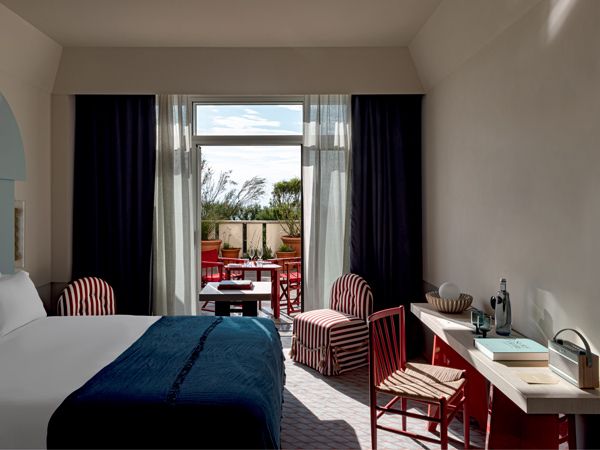
a look inside one of the rooms at Regina Experimental
The white-washed rooms have modern furniture with colourful and bold patterns.

The occupation of the Nazis and the crash of Wall Street, among other things, ushered in less happy years for the hotel. But more recently it’s restored to its former glory – with a new playful, funky twist.
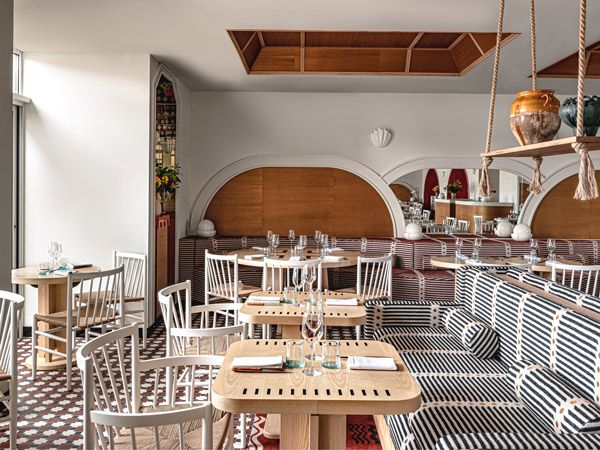
the restaurant at Regina Experimental
The Regina Experimental had a makeover with a quirky twist.

The central lobby space is decked with colourful, bold patterns and a wide array of modern furniture for lounging about. Topped with a huge glass roof, the hotel is filled with light and, on Friday and Saturday evenings, the sounds of the piano.
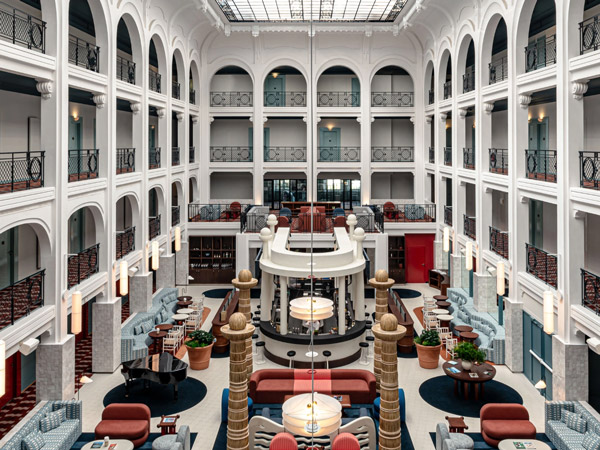
the lobby of Regina Experimental
There’s a timeless feel from the moment you enter the grand lobby.

The staff is incredibly warm, helpful and friendly. Book an ocean-view room and enjoy looking out over the iconic Biarritz lighthouse from your balcony.
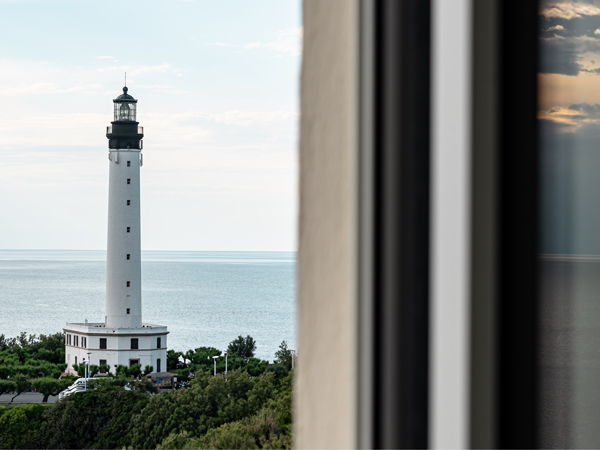
Biarritz lighthouse from the balcony, Regina Experimental
See the iconic Biarritz lighthouse from your balcony.

Dinner at Frenchie

After you get settled in (and perhaps take one of the many coastal walks just outside the hotel’s front door) don’t miss dinner at Frenchie. The patio is a great place to enjoy a pre-dinner drink and watch the sunset.
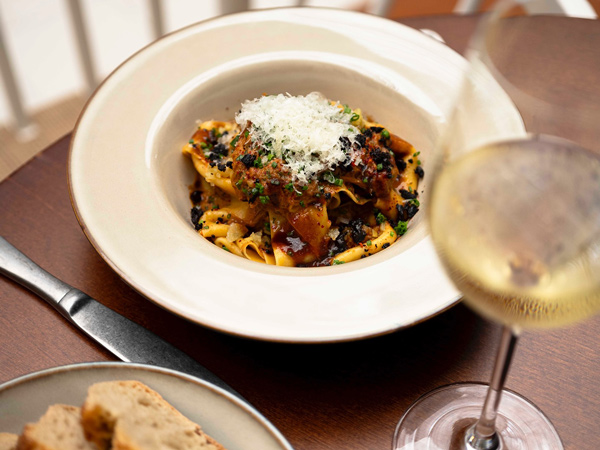
a close-up of a dish at Frenchie, Biarritz
Bask in local Basque flavours at Frenchie.

Like the hotel, the experience at Frenchie is deeply rooted in the region, while infusing its own playful personality. Local Basque flavours, such as Espelette chilli pepper, Gascon black pork and Basque sheep cheese, tie the meal together from start to finish. I’m still daydreaming about the monkfish, doused with shellfish and herring roe beurre blanc and dotted with sweet passion fruit gel.
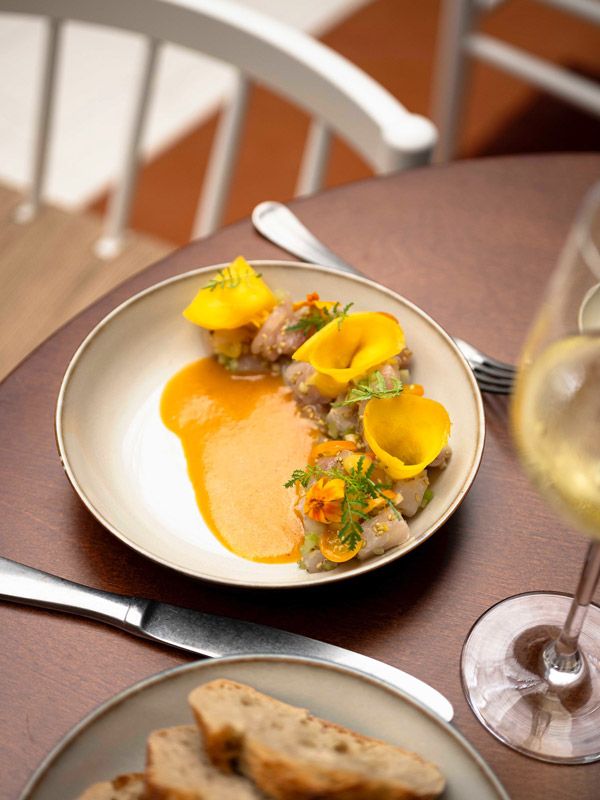
food and drinks on the table at Frenchie, Biarritz
Frenchie serves up dishes that highlight regional fare.

Tip: One of the best times to visit Biarritz is in September when the summer crowds have lessened, but the weather is just as lovely. Plus, this is typically a great month for the swells, if you are a surfer.

Day 2

Explore the heart of Biarritz

Head into the heart of Biarritz to explore. One of Biarritz’s free shuttles stops just outside the hotel.
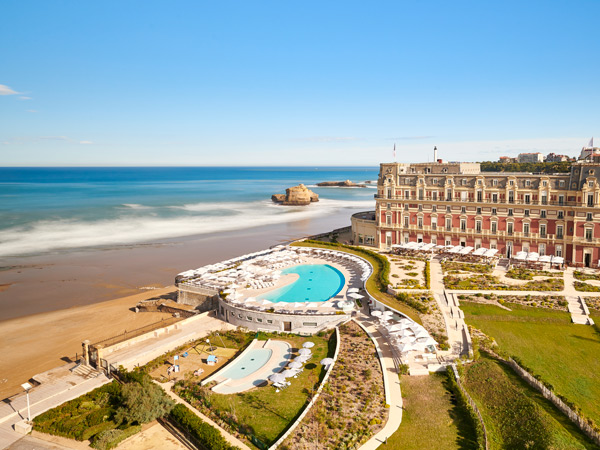
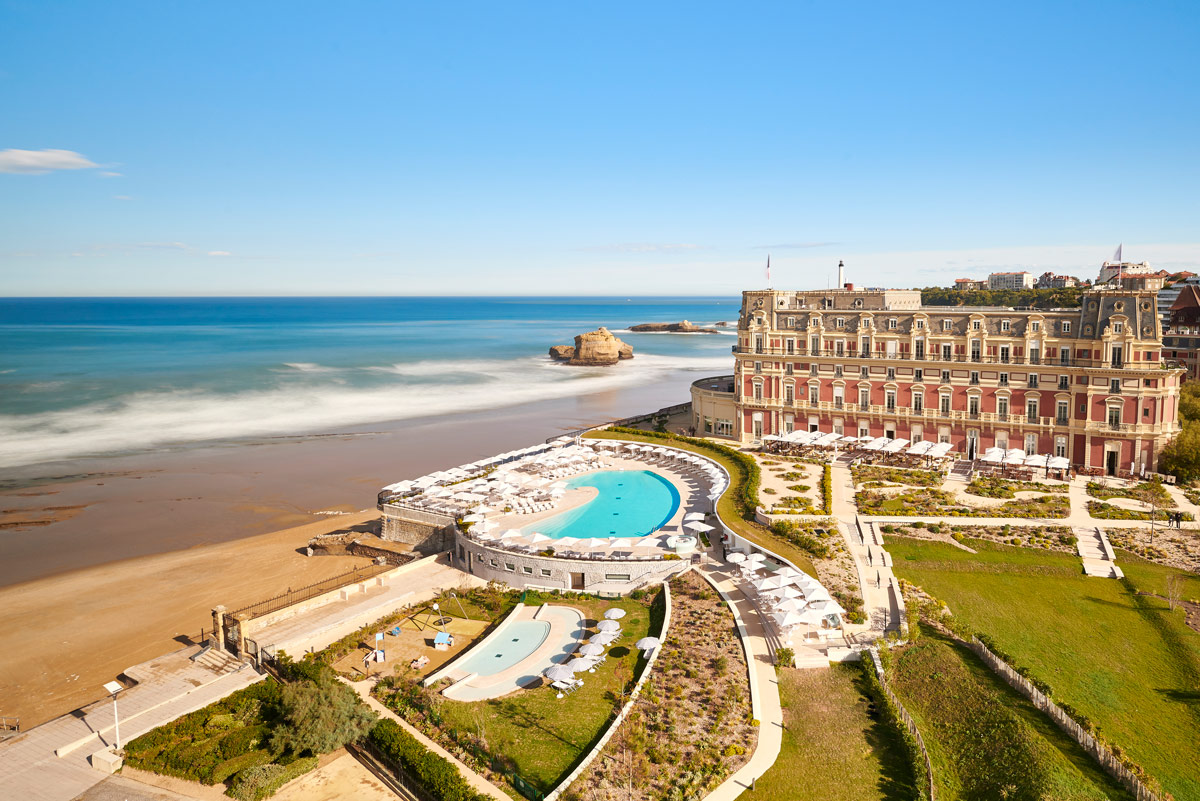
an aerial view of Hôtel du Palais, Biarritz, France
Sleep in elegance right next to the ocean at Hôtel du Palais.

Alternatively, the walk is an easy 15 minutes along the coast, where you’ll be able to pass the famous, imposing Hôtel du Palais, which Napoleon III built during 1855 for his wife.
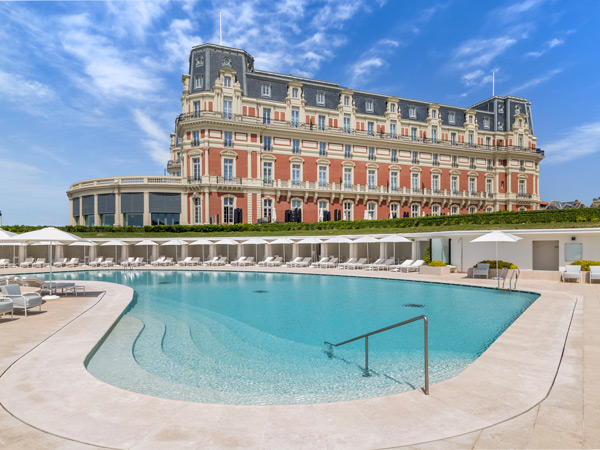
the pool at Hôtel du Palais, Biarritz, France
Take a dip in the pool before or after an ocean sojourn.

In town, check out Fadead Vintage for some cool shopping and indulge in a long lunch at Le Pim’pi Bistrot, for a classic, French bistro experience.
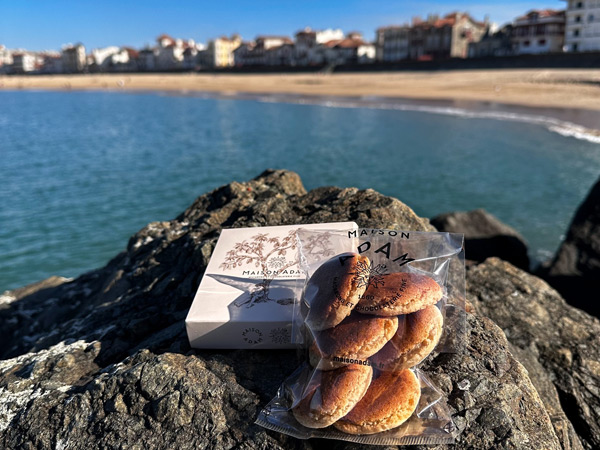
Maison Adam sweet treats against the backdrop of the ocean in Biarritz
Unique treats from Maison Adam will satisfy every kind of sweet tooth.

For sweet treats, stop at Maison Adam. Walk out to Rocher de la Vierge, a rocky outcrop which makes you feel like you are in the middle of the sea – the perfect place to be for sunset.
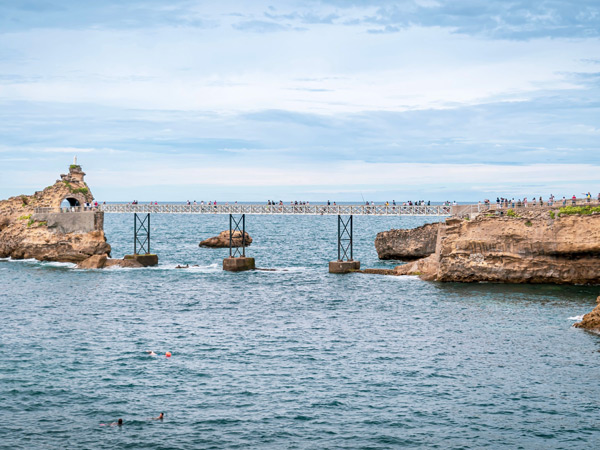
the rocky outcrop at Rocher de la Vierge
Swim or walk Rocher de la Vierge for picturesque views of the bay. (Image: Getty/Wirestock)

Day 3

Enjoy Biarritz’s famous beaches

Biarritz is best known for its beaches and surf culture, so you’ll have plenty of choices of where to soak up the sun.
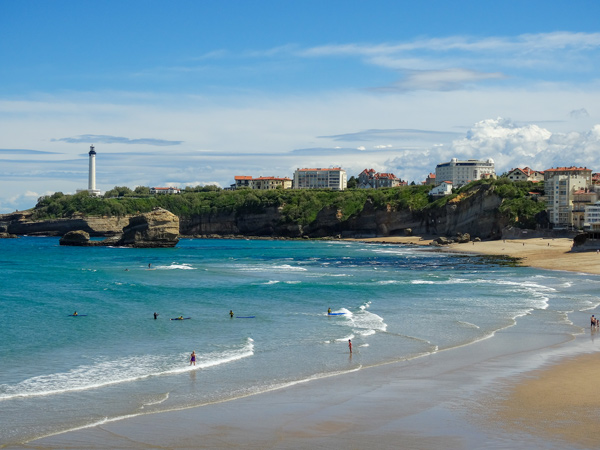
the seafront in Biarritz, France
Hang 10 at the beaches in Biarritz. (Image: Bruno Chanet/Regional Tourism Committee of New Aquitaine)

Plage du Port Vieux (Old Port Beach) is a small beach tucked in a cove – perfect for being in the middle of all the action, while still having quick access to a cocktail.
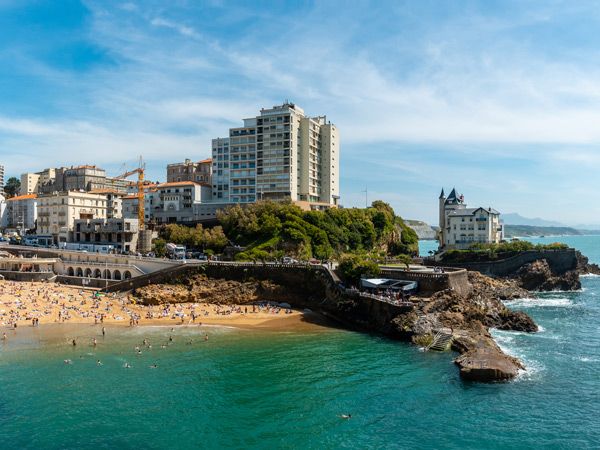
the Plage du Port Vieux (Old Port Beach)
Or enjoy a refreshing swim in Port Vieux beach. (Image: Getty/Wirestock)

Marinella Beach (or really any of the beaches further north in Anglet) provides a never-ending sandy horizon and plenty of room to spread out. You can even take a surf lesson if you get tired of dozing on the sand.
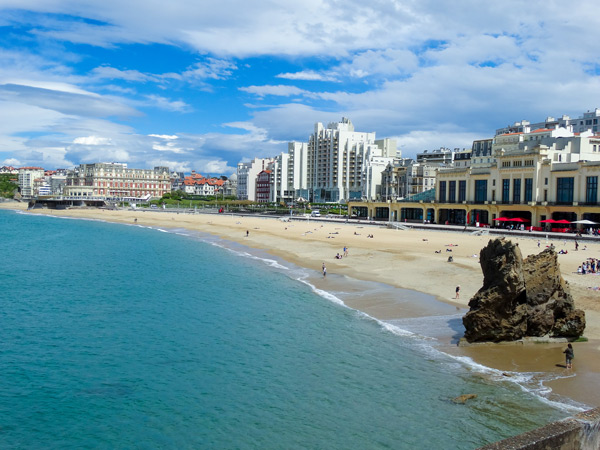
the seafront in Biarritz, France
Spend a day lazing on one of the many sandy beaches. (Image: Bruno Chanet/Regional Tourism Committee of New Aquitaine)

Sample Biarritz’s culinary scene

There are so many fabulous restaurants in town that it is difficult to narrow it down. For most, having a reservation is always a good idea. Aiete is a small and unassuming space, so when the food hits the table, it really hits above its weight, packed with big and bold flavours.
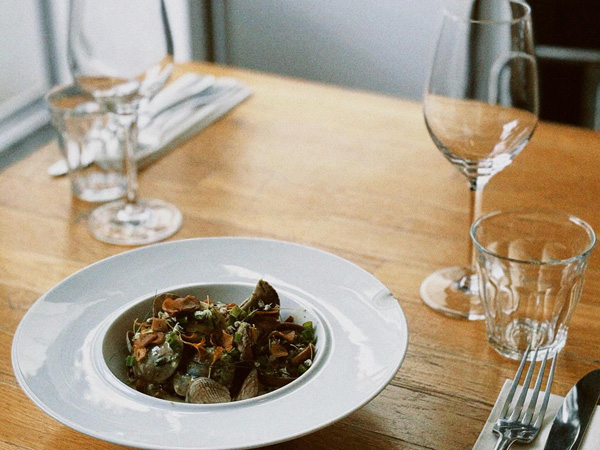
dining at Aiete, Biarritz
Dine on seasonal fare at an affordable price.

AHPE is a Michelin Bib Gourmand pick (meaning: incredible food at an affordable price) that focuses on seasonal fare, with a flair for fermentation.
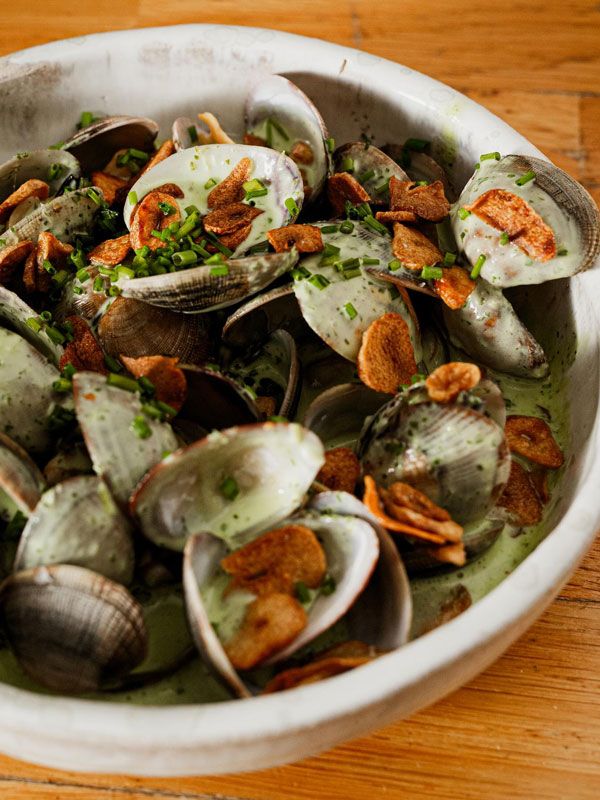
a close-up of food at Aiete, Biarritz
The menu at Aiete embodies the culinary riches of Biarritz.

Day 4

Check in to Le Garage

Just across the street from Regina Experimental, the hotel’s sister property Le Garage fully taps into the retro, funky heartbeat of Biarritz. The building has past lives as an aero club and an automobile garage for vintage cars.
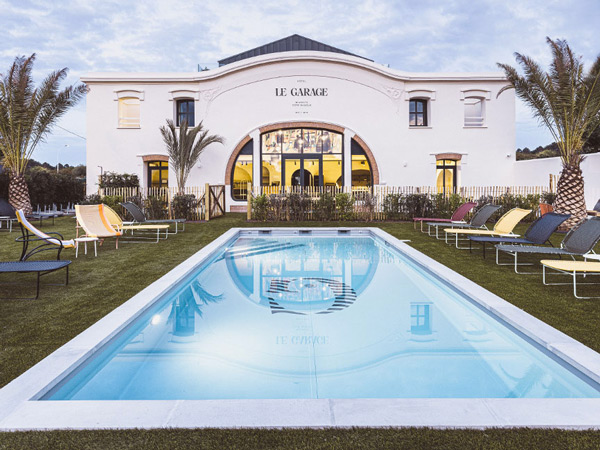
the hotel exterior of Le Garage with an outdoor pool
The retro-style hotel Le Garage is fringed by a serene pool.

I highly recommend ordering a wide selection of small plates (especially the roasted carrots with carrot hummus) and lounging by the pool. There’s a whole menu for gin and tonics – I went with the elderflower tonic and local gin.
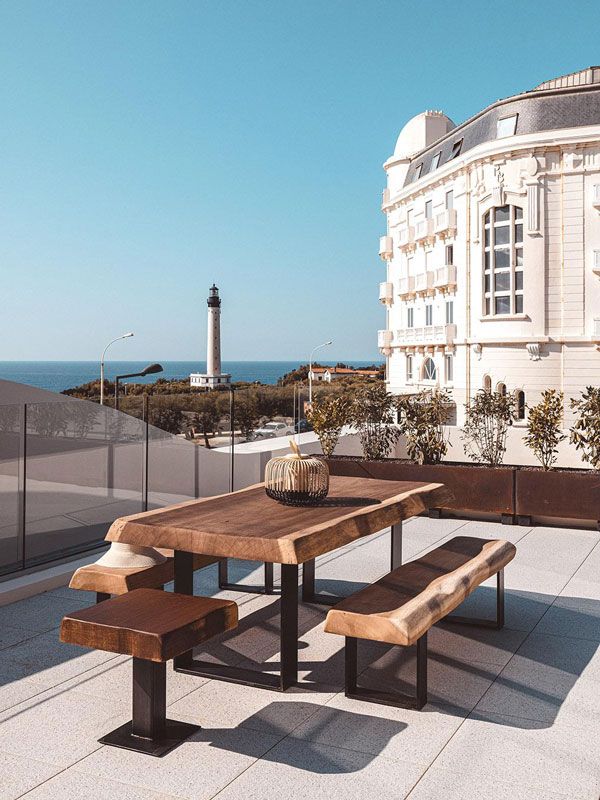
the Biarritz lighthouse as seen from Le Garage hotel
Take in tranquil views of the surrounding landscape.

Weekly travel news, experiences
insider tips, offers,
and more.

Tapas bar

If you want to take the party elsewhere, head to Le Bar Jean, where you can sample tapas, pintxos and paella until very late at night.

Day 5

Visit an underwater wine cellar

If you want to see the surrounding Basque coast, there’s no better way than driving to Egiategia, a unique underwater wine cellar in Saint-Jean-de-Luz.
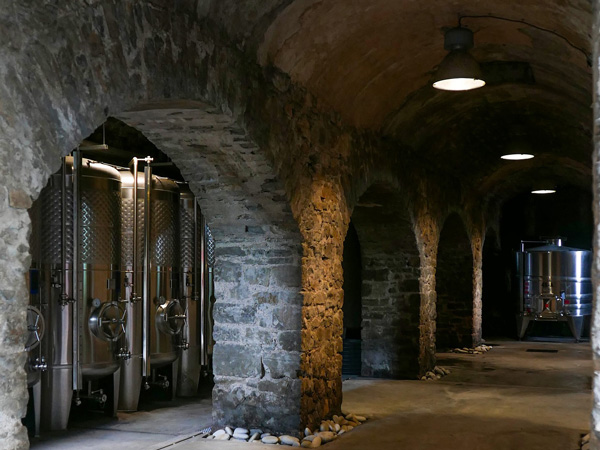
the underwater wine cellar at Egiategia, Biarritz
Egiategia is renowned for underwater winemaking.

Just a thirty-minute drive from Biarritz, this winery harnesses the power of the ocean – its pressure, darkness, consistent temperature and rocking motion – to distil its wines.
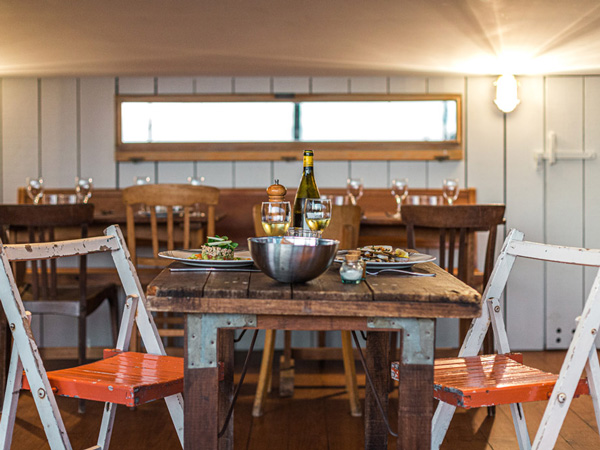
dining at Ostalamer, Biarritz
Pull up a chair to feast on incredible seafood at Ostalamer.

On the way back, book dinner at Ostalamer or Heteroclito, both known for their incredible seafood and fantastic ocean views.
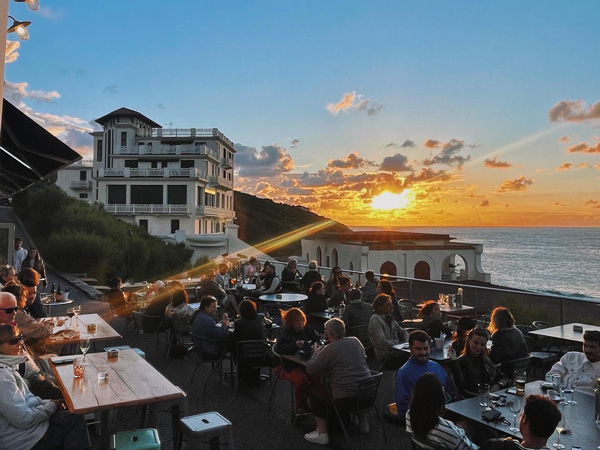
al fresco dining with ocean views at Heteroclito, Biarritz
Have a sundowner at Heteroclito while you take in the ocean views.

Day 6

Snack at a local market

Today is your last chance to sample all of the local dishes you haven’t had a chance to taste yet. Take your time wandering around Les Halles de Biarritz, a covered market with every manner of fish, meat, cheese, bread and snacks for sale.

Dinner at Cheri Bibi

Be sure to make a reservation in advance to sample this poster child for Biarritz cool. It’s always packed with a very trendy-looking crowd, who flock for their simple, fresh, rotating menu and laid-back environment.
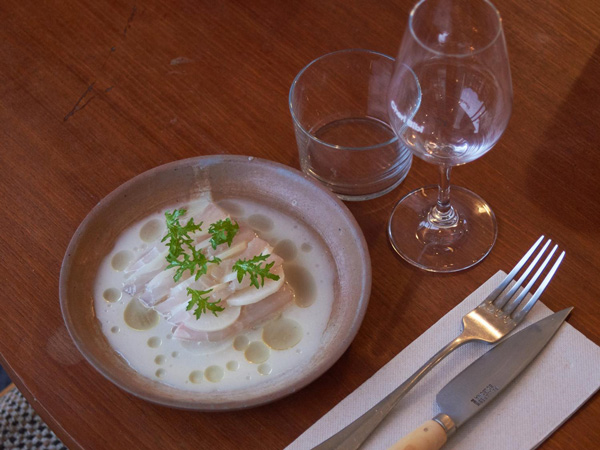
dinner at Cheri Bibi
Relish a night in with dinner at Cheri Bibi.

The prices are shockingly good for this level of quality. And you can pick your own bottle from the wine shop side of the restaurant.
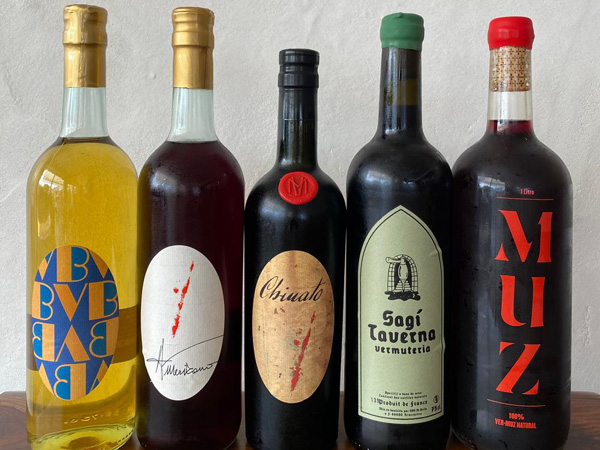
an array of wine bottles at Cheri Bibi
Pick your own bottle from their signature wines.

Want to see more stories from International Traveller in your Google search results?

  1. Click here to set International Traveller as a preferred source.
  2. Tick the box next to "International Traveller". That's it.
hero media

What the European heatwave means for your summer travel plans

Temperatures are soaring this summer, breaking records across Europe and the UK. 

Euro summer is a feeling like no other. But when a heatwave hits? The dream trip quickly turns into a sweaty mess. Extreme heat is sweeping Europe and the UK this week, with record-high temperatures impacting travel plans across the continent.

And while Australian summers are typically hotter in absolute temperature, many European cities aren’t equipped for high temperatures, resulting in unbearable weather.

Why is it so hot in Europe?

Signs of a hot summer loomed in May, when the mercury hit unprecedented spring highs. Now, extreme high temperature warning alerts have been issued in countries such as Spain, Italy, France, England, the Netherlands and Germany.

France saw its hottest day on record on Wednesday, with an average temperature of 30°C across the day and night. This surpasses the average temperature for June, which is 15°C to 25°C. Dozens of people have died, including 40 from drowning.

In Spain, 212 deaths have been linked to the heatwave.

The UK recorded its hottest June day ever on Wednesday with temperatures soaring to 36.1°C. In an article published by the Met Office – the UK’s national meteorological service – Professor Stephen Belcher CBE, Met Office Chief Scientist, shared his concerns about June’s heat. “To see temperatures like this in the UK in June is sobering. Events like this bring home the implications of climate change, with very high temperatures and humidity bringing significant health implications from heat stress, as well as impacts to a range of sectors such as transport, energy and water supply,” he said.

Heatwaves are becoming increasingly common in Europe and the UK, neither of which is prepared for such extremes. The World Meteorological Organization reported that in 2025, at least 95% of Europe experienced above-average annual temperatures and that the continent was heating up twice as fast as the global average.

How travel is impacted

A pharmacy sign displaying 40 degrees Celcius
A pharmacy broadcasting local weather data. (Credit: Getty/Dragoncello)

During a heatwave, power grids, water systems and transport networks can be affected, resulting in disrupted itineraries for travellers. In France, power outages have left thousands without electricity and early closures have been implemented for two of Paris’s biggest attractions, the Eiffel Tower (early afternoon rather than late at night) and the Louvre (two hours early). Eurostar cancelled its London to Paris and Paris to London services from the 22nd to the 25th, and major UK rail companies have been advising travellers to avoid using trains where possible, or to travel during early hours.

If a heatwave is predicted, being flexible with your itinerary and having fully refundable/changeable tickets is key, as extreme heat can force the cancellation of outdoor activities, impact rail and flight services and change the opening hours of sites and eateries.

Why does summer in Europe often feel hotter than summer in Australia?

people swimming in the Canal Saint-Martin in Paris
People swimming in the Canal Saint-Martin in Paris to cool off. (Credit: Rachael Thompson)

With some of the highest UV levels in the world, Australians are no strangers to the heat, adapting well to intense weather. But our infrastructure is largely equipped to withstand soaring temperatures with climate-responsive passive design, refrigerated air conditioning or evaporative coolers, as well as swimming spots aplenty.

Buildings in Northern and Western Europe and the UK, however, are constructed to retain heat and handle frosty winters. The lack of universal air conditioning means it generally feels hotter even though the temperature on your app might not look it. During a heatwave, it can feel like you’re in a sauna as cities act like heat traps.

How to stay cool and prepare for another heatwave

Relief is expected across Europe and the UK later this week, but more heatwaves are still possible in the coming months. Summer heat typically peaks in July and August.

Public transport often doesn’t have air conditioning, and buses in particular can be swelteringly hot. If you’re heading outside or your accommodation has no air conditioning, it’s worth buying a spray bottle and a handheld fan from a pharmacy or tourist stand. Check ahead of time if restaurants and cafes have air conditioning and make a booking in advance. The highest temperatures typically hit between 3pm and 6pm, so aim to head outdoors outside of these hours.

Rising temperatures invite travellers to enter a more intentional era of seeing the world. Now more than ever is the time to embrace lower-impact “coolcations” and off-season getaways.