hero media

Everything you need to know before visiting Japan 

Neon-lit yet serene, fast-paced yet unhurried, cutting-edge yet steeped in tradition – Japan is a country of compelling contradictions, one that exerts an almost magnetic pull on both first-time visitors and seasoned travellers alike.

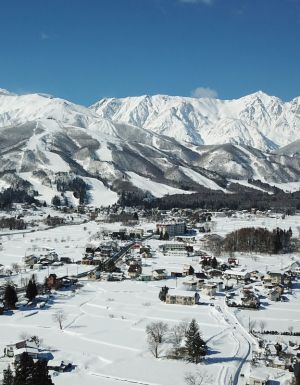
I can say this with complete certainty: for curious, experience-driven travellers, a first trip to Japan rarely just meets expectations – it surpasses them. I was fortunate to spend five weeks criss-crossing the country by Shinkansen, and I’ve been plotting my return ever since. Some days, I still catch myself thinking, what I would give to be back in Japan right now. From the powdery slopes of Nozowa Onsen and the irresistible takoyaki of Osaka, to cycling between world-class art installations on Naoshima and belting out karaoke high above Tokyo’s neon skyline, Japan resists easy definition – its spirit is far too rich to distil into a few words.

While Japan is famously polite, safe, welcoming and easy to navigate, there are still several practicalities to consider before you arrive – from visas and currency to electrical adapters, seasons, and the best time to visit. To help you make the most of your trip, we’ve compiled a comprehensive, no-nonsense guide to covering everything you need to know before stepping off the plane, so you can confidently focus on what matters: experiencing Japan at its most extraordinary.

Does an Australian need a visa for Japan?
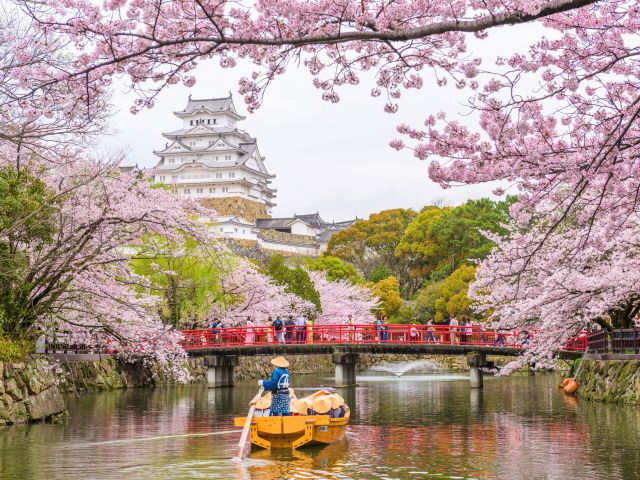
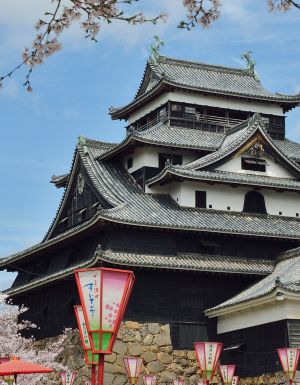
Himeji Castle in spring
In spring, cherry trees bloom in a sea of pink against the Himeji Castle’s white walls. (Credit: Getty/Sean Pavone)

You’ve booked your flight and sorted your travel insurance – but one question often remains: do you need a visa?

Thankfully, Australian passport holders can enter Japan visa-free for short stays up to 90 days, provided you have a valid passport and a return or onward ticket.

As entry requirements can change, it’s always worth checking the Australian Government’s Smartraveller website closer to your departure date to ensure you have the latest information.

What currency do they use in Japan and how should I pay?
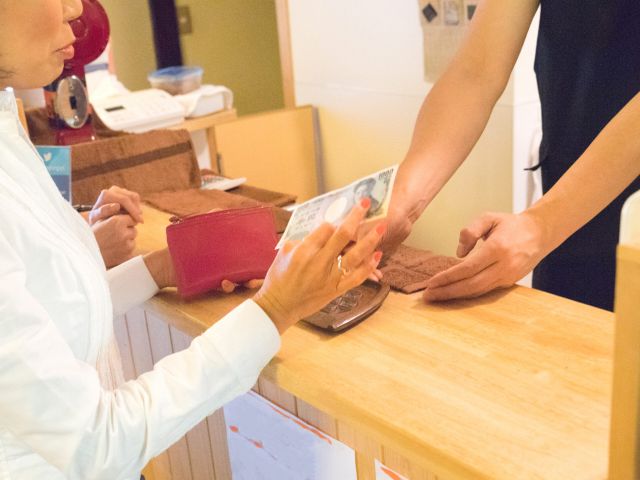
paying cash in a Japanese cafe
Cash remains essential for daily transactions in Japan. (Credit: Getty/Rossella De Berti)

The currency in Japan is the Japanese Yen.

Cash may be fading from everyday use in Australia, but in Japan it remains firmly part of daily life. Credit cards and travel cards are widely accepted in major cities, yet cash is still preferred in many settings – particularly in smaller shops, local eateries, and temples. Even if you plan to rely on plastic, it pays to carry some yen, as cash-only venues are still common. Tipping is not part of Japanese culture – no matter how attentive their service – and may even be politely declined. As of 2024, new banknotes have entered circulation, but both old and new notes are accepted nationwide.

When making payments, putting your cash on the presented money tray (karuton) instead of handing it directly to staff is common practice.

What phrases do I need to know?
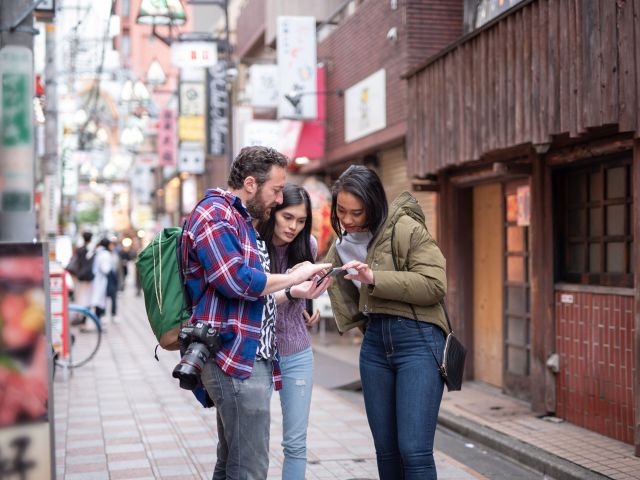
tourists in Tokyo
The streets of Tokyo are safe and easy to navigate. (Credit: Getty/monzenmachi)

Like any international destination, learning a few basic phrases can go a long way – and in Japan, even small efforts are warmly appreciated. Arigatō, or the more formal arigatō gozaimasu, is simple to master and makes a meaningful impression. That said, you don’t need to speak Japanese to get by. Cities are clearly signposted, and many restaurants offer picture menus, making ordering easy.

Sure, translation apps like Google Translate are useful, but there’s still so much value in staying present and embracing genuine human connection. For a more immersive experience, consider hiring a private translator. We did so when visiting a sumo training stable, and it not only elevated the experience, but it also ended with a keepsake that now hangs proudly in our home.

Etiquette and customs

slippers at the door
Upon entering a Japanese home, remove your shoes neatly, facing the door. (Credit: Getty/Nancykennedy)

Speaking of making a meaningful impression, embracing local customs will elevate your experience in Japan. Compared to Australia – outside of lively nightlife districts and karaoke bars – Japan is noticeably quieter, and visitors can expect to follow suit as a sign of respect.  Think of it as a quiet carriage etiquette, applied more broadly.

Some cultural cues may feel unfamiliar: blowing your nose in public is considered impolite, while slurping your ramen is a sign of enjoyment and satisfaction. The most striking difference, however, is Japan’s indoor shoes-off culture. Rooted in tradition, shoes are removed to protect delicate tatami flooring and maintain cleanliness, with slippers often provided for indoor use.

Eating while walking is generally considered rude.

How do I get around in Japan?
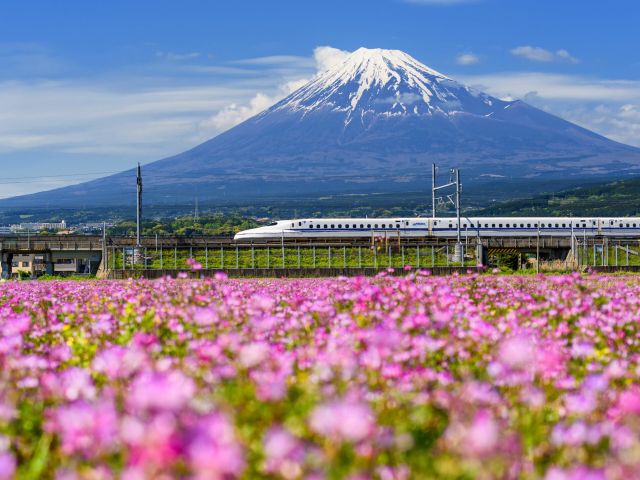
Shinkansen bullet train in Japan
Getting around Japan via the bullet train is incredibly efficient. (Credit: Getty/blanscape)

One of Japan’s most impressive, world-class feats of infrastructure is the Shinkansen – better known as the bullet train. Exceptionally punctual, spotless and surprisingly efficient, it not only connects all major cities, but it effectively traces the length of the country. We even swapped a flight from Hiroshima to Tokyo for another journey on the Shinkansen, drawn by its comfort and ease – and we didn’t regret it for a second.

Beyond intercity travel, Japan Rail services and local buses are reliable. While some networks are beginning to introduce contactless tap-and-go payments, coverage remains relatively consistent. A prepaid tap-and-go IC travel card, like Suica or PASMO, is still the most seamless option, saving you from buying individual tickets each time, or being caught out where card payments aren’t accepted.

Taxis, too, are impeccably clean and highly professional, and easy to hail in most cities. While trains remain the most efficient way to get around, taxis come into their own late at night or for shorter trips. Most licensed taxi rear doors are automated, so it’s considered both polite and practical not to touch them.

Uber is available, though it functions more as a taxi-booking service than a cheaper rideshare alternative.

Weekly travel news, experiences
insider tips, offers,
and more.

Is tap water safe to drink in Japan?
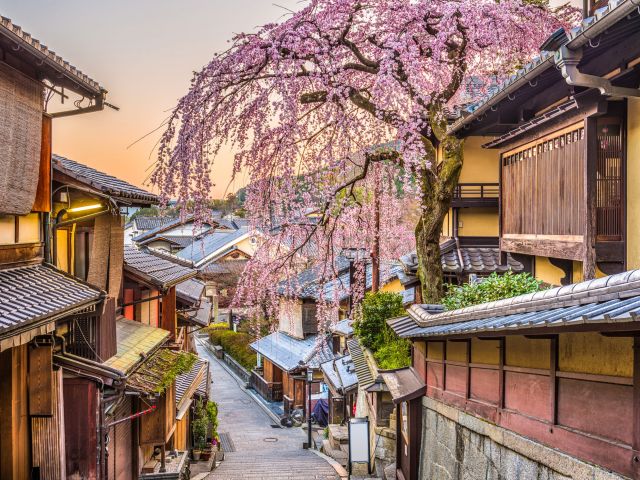
Kyoto, Japan in spring
Boiling water with a kettle is a common practice in ryokans or traditional houses. (Credit: Getty/Sean Pavone)

When it comes to drinking water, Australia sets the bar high, so it’s understandable travellers may be cautious abroad. In Japan, however, tap water is entirely safe to drink. The country boasts some of the highest water qualities in the world – and the taste reflects it. Clean, chilled, and less mineral-heavy than back home, it often tastes closer to bottled water straight from the tap.

What type of power plug is used in Japan?

hand inserting a power plug
Don’t forget to grab Type A and B plugs before your trip. (Credit: Getty/years)

Sure, adapters are readily available at airports, but they can often cost a pretty penny, so shopping around for the best price is worth it. Unlike Australia, which uses Type I power plugs, Japan primarily uses Type A (two-pin) and Type B (three-pin) plugs, so be sure to grab one before your trip – or a universal one.

When is the best time to visit Japan?
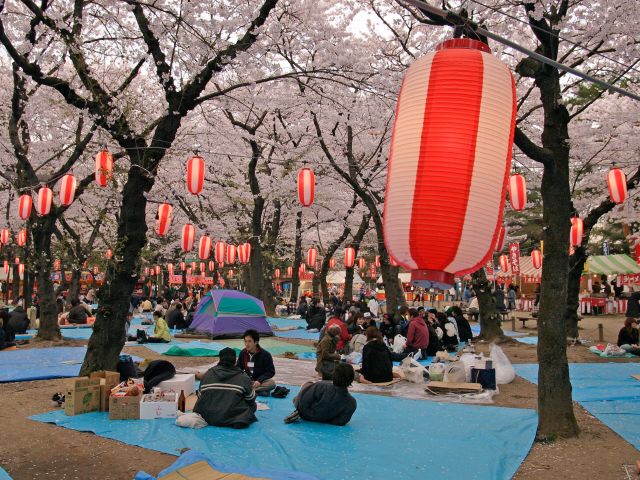
picnic at a cherry blossom festival in Japan
The Hanami tradition in Sendai celebrates the beauty of the sakura season. (Credit: Getty/mura)

First things first: there’s no wrong time to visit Japan. When you travel ultimately depends on the kind of holiday or outdoor adventure you’re after.

Spring is arguably the most iconic, thanks to the cherry blossom season. But timing is everything – hanami, the annual tradition of viewing the blooms, typically lasts just a couple of weeks and draws large crowds. Expect mild days and cooler evenings across April and May, with similarly pleasant conditions in autumn (September to November) when the country bursts with red, orange and yellow leaves.

If the idea of soaking in a tranquil onsen or savouring pork buns after carving through fresh powder appeals, winter is pretty hard to beat.

Want to see more stories from International Traveller in your Google search results?

  1. Click here to set International Traveller as a preferred source.
  2. Tick the box next to "International Traveller". That's it.
hero media

These community homestays are changing how travellers experience Nepal

    After youth-led protests in 2025, this year Nepal elected a 35-year-old former rapper as Prime Minister. In a country where tourism is its biggest industry, what’s next for travellers? 

    In 1986, Nepal changed its clock. It had used India Standard Time since 1920 so, to differentiate, it wound its clock 15 minutes ahead of, not behind, its big-brother neighbour. Boss move. “Nepal is strongly opposed to the idea that our identity is connected to India,” says Community Homestay Network (CHN) guide Bikal Khanal.  

    Tharu dance
    Tharu dance is traditionally set to hand drums. (Credit: Kate Lewis)

    Today, Nepal is the only independent country with a 45-minute deviation to universal time; an oddity that’s become a symbol of national pride. The quirk is nearly as endearing as Kathmandu’s Tribhuvan airport where carved varnished wood and shiny red bricks rule. One sign points to a ‘Travelator’ and another to a ‘Grievance Handling Desk’ while visas are noisily stamped at customs for US dollars, cash only. When am I?  

    Nepal gray langur
    Spot the endemic Nepal gray langur. (Credit: Simon Urwin)

    The 15 or 45 minute anomaly sees me tap out completely on timezone calculations. Why bend my brain calculating if it’s quarter to or quarter past elsewhere when I’m in the honking here and now of Kathmandu where the air is high-altitude crisp, the prayer flags flutter and the street dogs howl?  

    How tourism is changing in Nepal

    Bardiya National Park
    Bardiya National Park is rich with wildlife. (Credit: Simon Urwin)

    India is not the only association many Nepalis would like to shake. With eight of the world’s 10 tallest mountains, including Mount Everest and Annapurna, Nepal has long attracted mountaineers and trekkers, and expedition numbers are continuing to rise.  

    Tourism is one of the country’s biggest sources of foreign currency, so this growth is not negative, per se. But according to Ang Tshering Lama, who co-founded Phaplu Mountain Bike Club, being reduced to a mere trekking destination is limiting.  

    “Trekking is just one layer of our identity,” says Ang. “When it becomes the dominant narrative, it limits how we’re seen and how we see ourselves.” Nepal’s recent success, however, in diverting trekkers to less-trafficked areas such as Manaslu mofuntain, where visitor numbers rose by 117 per cent last year, offers hope that tourism can diversify even more radically.   

    Local men in Bhada village
    Local men in Bhada village. (Credit: Simon Urwin)

    The founder of CHN, Shiva Dhakal, wants that change. “The whole idea of the Community Homestay Network is to promote experiences outside of trekking,” he says. “Community tourism changes lives and helps kids stay home instead of coming to the city or migrating to the Middle East.”  

    Ang grew up seeing people leave, “not because they wanted to but because there weren’t enough opportunities to stay”, he states. Yet from remote villages to living traditions; food, art, music and emerging subcultures, “there’s so much that’s not being seen.” 

    CHN is opening some of those doors. It doesn’t own, or fund, any homes. Rather, it promotes homestays to travellers on a single, slick platform, while fostering entrepreneurship in places where women, marginalised castes, Indigenous people and the youth stand to benefit the most.  

    A new generation demanding more

    Dalla Town Hall
    Dalla Town Hall, where volunteers discuss anti-poaching tactics. (Credit: Bheem Thapa)

    The future prospects of next-gen Nepalis can no longer be ignored. On a Kathmandu tour with 33-year-old guide Monica K.C, we pass buildings torched in the September 2025 ‘Gen Z protests’, including the Supreme Court and Parliament House. Seventy-two people died. “They were anti-corruption protests,” says Monica. “Politicians’ children are living a lavish life but the airports are crowded with youngsters leaving to find work.”  

    We stop in ‘little Tibet’ at the wondrous sixth-century Boudha Stupa. “The wheel of life is Buddhism in a nutshell,” says Monica. “Things such as hate, ignorance and anger keep you rotating around the wheel, so you must follow the principles of Buddhism to detach. If you can’t, there’s no nirvana for you.”  

    Boudha Stupa's prayer wheels
    Boudha Stupa’s prayer wheels are used to recite Buddhist prayers. (Credit: Kate Lewis)

    In a sun-drenched twist to the usual temple visit, we ascend the stupa’s sloping plinth and roam its whitewashed dome. Tendrils of diaphanous prayer flags stream from a steeple-like structure where the Buddha’s unblinking eyes stare out. No nirvana for you… 

    bouda stupa prayer flags
    Tibetan-style prayer flags embellish the whitewashed dome of Bouda Stupa, a Buddhist temple. (Credit: Kate Hennessy)

    The dome is delightfully free of guard rails or chiding from security. There is, however, a stern ‘No TikTok’ sign, perhaps in response to the youth’s newly flexed power. The booted-out Prime Minister, K.P. Sharma Oli, was replaced in a resounding election victory in March by 35-year-old Balendra Shah of the Rastriya Swatantra Party (RSP) – a former rapper and mayor of Kathmandu. The RSP’s manifesto indicates tourism is a priority, and that Nepal’s cultural identity in areas such as gastronomy will be strengthened.  

    Boudha Stupa vendors
    Vibrant souvenir shops and cafes around Boudha Stupa. (Credit: Kate Hennessy)

    A more confronting stop awaits at Pashupatinath Temple. Today is Bala Chaturdashi, a Hindu festival where thousands of devotees gather to honour their dead ancestors. Vendors hauling foam mattresses do a lucrative trade as people set up for a night of vigil. This includes burning the bodies of recently deceased relatives on bamboo pyres in the Bagmati River, which flows into the sacred Ganges.  

    A woman at annual Hindu festival Bala Chaturdashi
    A woman at annual Hindu festival Bala Chaturdashi, in Kathmandu. (Credit: Kate Hennessy)

    Wrapped in a shroud, the bodies are positioned with their heads facing north to the Himalayas where Lord Shiva resides. They’re covered with flowers and straw and set alight by male family members.  

    Hours later, the ashes are swept into the river where devotees will take a holy dip the next day. As much as Monica assures us it’s not voyeuristic to watch, I struggle to do so. “Here you see the reality of life because everyone ends up there,” she says, gesturing to the river.  

    Life unfiltered in the Terai region

    tharu woman
    Tharu woman and master weaver Parbati Chaudhary in Bhada Village. (Credit: Bheem Thapa)

    The reality of life needs processing time, which the western Terai region delivers in spades. The Terai is largely separated from India by the Karnali River and Bardiya National Park, where elephants, rhinos and the elusive Bengal tiger roam.  

    Once a nomadic tribe, the Indigenous Tharu people are now the largest ethnic group here. “They didn’t know their daily life was interesting for international travellers but they’re starting to understand now,” says CHN founder Shiva.  

    safari through Bardiya National Park
    Take a Jeep safari through Bardiya National Park. (Credit: Bheem Thapa)

    We fly Buddha Air to Dhangadhi airport and drive five hours to stay in Tharu homes. The journey to Bhada village is a blur of roadside fruit stalls, traffic-stopping sacred cows and fields sown with wheat, rice, mustard, spinach, cauliflower and potatoes. Nepal’s agriculture feeds only Nepal.  

    Marigolds
    Marigolds are an important part of Hindu rituals. (Credit: Simon Urwin)

    “The only thing we export is young people,” says our guide Bikal. As the light dims and we plunge evermore rural, mysterious mounds of compacted hay – some house-sized – loom like the creatures from Where The Wild Things Are. Even our trusty driver gets flummoxed by a dirt road that abruptly ends and we find ourselves hurtling across a paddock.  

    On arrival, some are ferried to mud-walled cottages greened by gourd creepers, with thatched roofs and rustic-chic mosquito nets. Myself and two others are ushered to the home of corner store owner, mechanic and mushroom farmer Man Kumar Chilaruwa and his wife Rajkumari.  

    community homestay entrance
    A warm welcome at a community homestay. (Credit: Simon Urwin)

    They escort us to a bunker-esque back building with steel doors and a folding security gate, behind which is gleaming linoleum, dolphin-printed tiles and a shower cavity that must be gingerly stepped through to reach the toilet.  

    The ceiling lights emit a rainbow of colours (the bathroom light gets stuck in, frankly, a quite frightening red). We’re nevertheless touched that our hosts invested in all this bling when the average salary is around $275 a month.  

    In the coming days, we participate in Tharu traditions such as making moonshine, dancing, weaving straw handicrafts and gold-panning. We’re fed well with staples of rice, mustard greens, lentil pancakes, daal, curried chicken and tomato chutney served on antibacterial saal leaves.  

    food at community homestay
    Dig in. (Credit: Kate Hennessy)

    Sonara community homestay president Indradevi Tharu tells us river snails are often served, and the boiled and pickled flesh of rats hunted in the rice fields. “Perhaps next time?” we say and all have a laugh.  

    The power of community homestays 

    community homestay owners in Nepal
    Barda community homestay owners Parbati Chaudhary and Ram Krishni Devi Chaudhary. (Credit: Simon Urwin)

    Immersing Western visitors in foreign cultural practices is not new. But with the Tharu, I never get that uneasy sensation that I’m being performed for. Despite being the only tourists, there’s no ‘othering’; just warm, composed and ultra-dignified welcomes. Like we’ve always been here.  

    “I love to have travellers in my village so I can see the world,” says local woman Parbati Chaudhary. “Why would I travel the world when the world comes to me?” 

    The graceful acceptance the Tharu offer, as well as the slow pace, works miracles on my frazzled nervous system. One day I even take a nap on a vacant homestay bed. 

    Sonara community room
    An authentic stay in the Sonara community. (Credit: Kate Hennessy)

    Roosters strut and goats bray as we sit on the ground in al fresco kitchens, rolling rice flour into cylinders steamed to make dhikri (dumplings). When water is needed, we fetch it using a hand-operated pump as a family of ducks strolls by, side-eying us like curious neighbours.  

    Animal lovers will delight in Tharu villages. Kind and resourceful inventions are everywhere, such as snacking stations where two posts lean together, with leafy boughs dangling on rope for baby goats to forage from.  

    CHN’s CEO, Aayusha Prasain, nods knowingly when one in our group says she cried when she left her host, Shayam Chaudhary, in Bhada. Shayam’s 17-year-old son, Prashant, had translated, which deepened the connection.  

    “Community tourism turns travel into a relationship, not a transaction,” says Aayusha. “It places decision-making power in the hands of local communities, especially women and youth.” Since 2018, CHN has hosted more than 4000 travellers from 52 countries in 408 households, and estimates women’s participation has increased by 381 per cent.  

    Elephant watch
    Elephant watch. (Credit: Simon Urwin)

    In the Bardiya community, where vexing human-animal conflict has been a balancing act for decades due to elephants raiding crops, long-time homestay operator Salik Ram Chaudhary says young people keep the older ones on their toes.  

    Gathering greens
    Gathering greens. (Credit: Bheem Thapa)

    “We can’t keep homestays stagnant,” he says. “We have to upgrade our service and redefine our product or young people won’t see it as an attractive business. If we can keep evolving with this travelling trend we’re confident the youths will stay and continue it.” 

    Back in Kathmandu, Monica explains that after the deaths of young protestors in September, a determination had spread to not let their sacrifice be in vain. “We want to keep holding the government accountable,” she says. “We don’t know what situation we’re facing, but we’re ready to face it.”  

    Interested in Nepal but prefer to experience it in total comfort? Read our guide to luxury travel in Nepal