hero media

13 Japan foodie experiences to rival the Tokyo fish market

From a tempting tempura bar in an old Kyoto geisha district to bustling markets and barbecue joints in the ‘nation’s kitchen’, Osaka, here are some tried and tested experiences to fill the gap left by the relocation of one of Japan’s favourite foodie spots, Tsukiji Market.

Taste buds in Japan and around the world were saddened at the closure of the famed Tsukiji Market (also referred to as the ‘inner market’) on 6 October 2018. Although the outer market remains open for business, it has been argued that the soul of Tsukiji departed when the inner market relocated to Toyosu and reopened as Toyosu Market. Many die-hard foodies have lamented that it’s just not quite the same experience.


Fortunately, Japan is positively teeming with gastronomic delights to fill the void. Your stomach is in for a treat with these epicurean indulgences.

Kagoshima
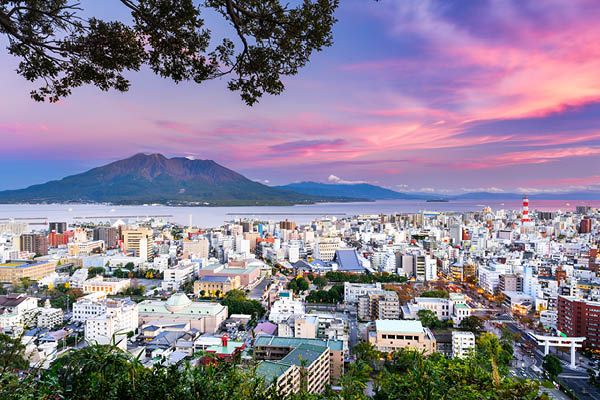
Kagoshima Japan
Kagoshima is a peaceful prefecture located in the most southern tip of the Japan. They are best known for their raw chicken dish, considered a delicacy in Japan.

1. Kumasotei

Kumasotei restaurant is in Kagoshima, a peaceful prefecture located in the most southern tip of the country. One of the specialties in this part of Japan is undoubtedly their raw chicken dish. And there’s absolutely no need to be squeamish – Japanese culture respects and reveres all of its ingredients, including chickens; they’re local, free range, and sourced from one of the top-trusted farmers in the area. Preparation is done with exacting measures and why it can be served like beef tartare or carpaccio. Considered a delicacy, the jidori no tataki has an incredibly mild taste and texturally, it is reminiscent of a plump scallop. It’s certainly one of those ultimate eating experiences and if anything, will open up flavour doorways and change perceptions about so-called ‘boundaries’ of food.
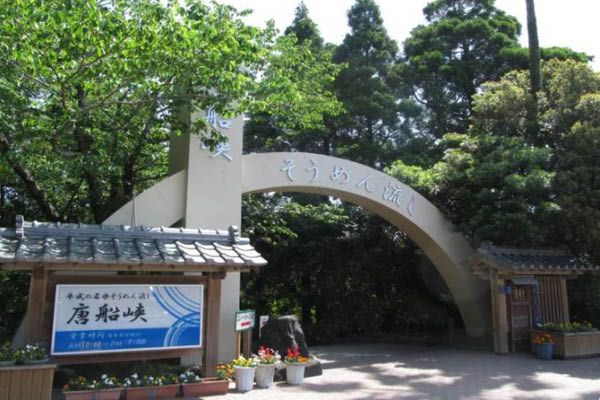
 

Tosenkyo Somen Nagashi in Ibusuki
Play with your food at Tosenkyo Somen Nagashi in Ibusuki.

2. Tosenkyo Somen Nagashi

A popular choice in the summertime, Tosenkyo Somen Nagashi in Ibusuki is where you’re encouraged to play with your food. Nagashi-somen is the signature item of this restaurant and refers to the noodles you ‘catch’ with your chopsticks as they float by in transparent circulating ‘whirlpool’ trays provided at each table. Traditionally, the noodles would have flowed through a bamboo tube – but this circulating tray was invented here and is a more effective method of delivery when it comes to handling the large volume of diners. The cool water in the whirlpool comes from the nearby natural Tosen Gorge springs (which sits at a refreshing 13°C year-round). It’s a fun and unique experience where you gather the noodles in your bowl and enjoy umami-enriched broth. The meal is rounded out with additional house specialties such as salt-crusted trout, fried fish cakes, and seaweed wrapped sticky rice.
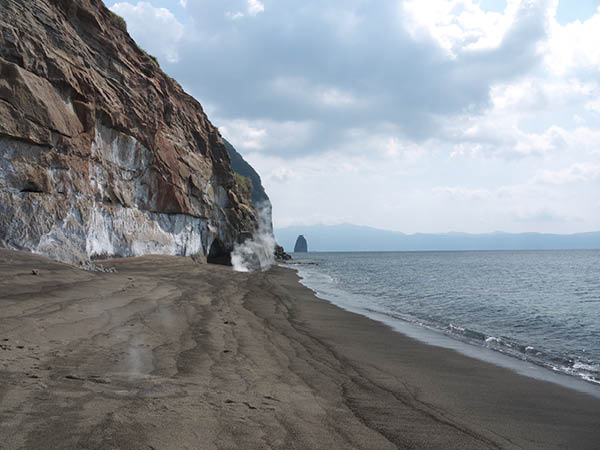
Ibusuki Coast
The food isn’t the only reason to visit Ibusuki – there is also this coastline.


Kyoto

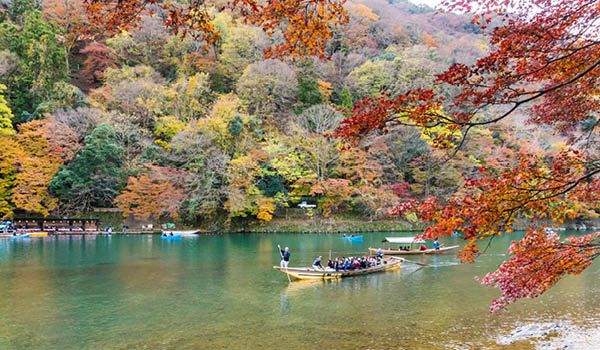
Arashiyama in Kyoto
Take in the natural beauty of the district of Arashiyama in Kyoto.

3. Nishiki Market

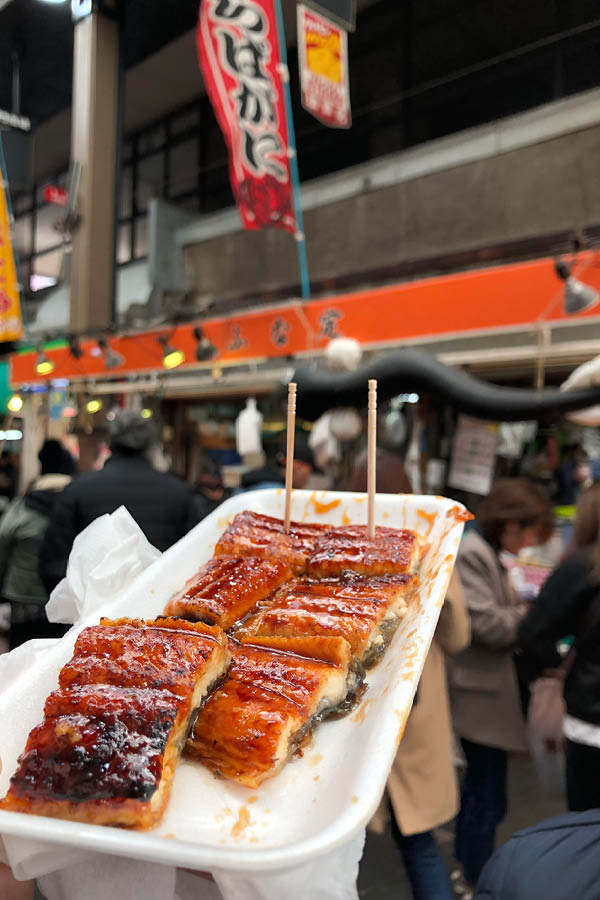
Nishiki Market captivates all the senses. There’s an onslaught of heady aromas and jaw-dropping sights: everything from grilled meats to heady stews. Come hungry and with about two to three hours to spare as you immerse yourself in this magical market haven. Your best bet is to simply wander and take note of sights and smells as they catch your senses. Two tips: do NOT come during rush hour (11.45am until around 1pm). If you can hold off stomach pangs, it’s a much more pleasant experience when it’s not overflowing with people. A second tip is that if you want to save money, don’t purchase the ready-made sashimi platters from any of the vendors. Instead, head to the closest supermarket within Nishiki and get yourself a buxom slab of glistening o-toro (fatty tuna) and have the fishmonger slice it for you. Then devour with reckless abandon outside. There’s really no room to linger and lounge so it’s best to wander and eat at the same time. Skewers easily solve the ‘no utensil’ issue, with a prime and palate-pleasing example being the fatty unctuous morsels of grilled eel. Shimmering with sweet teriyaki sauce, the sweet and meaty texture is edible euphoria.
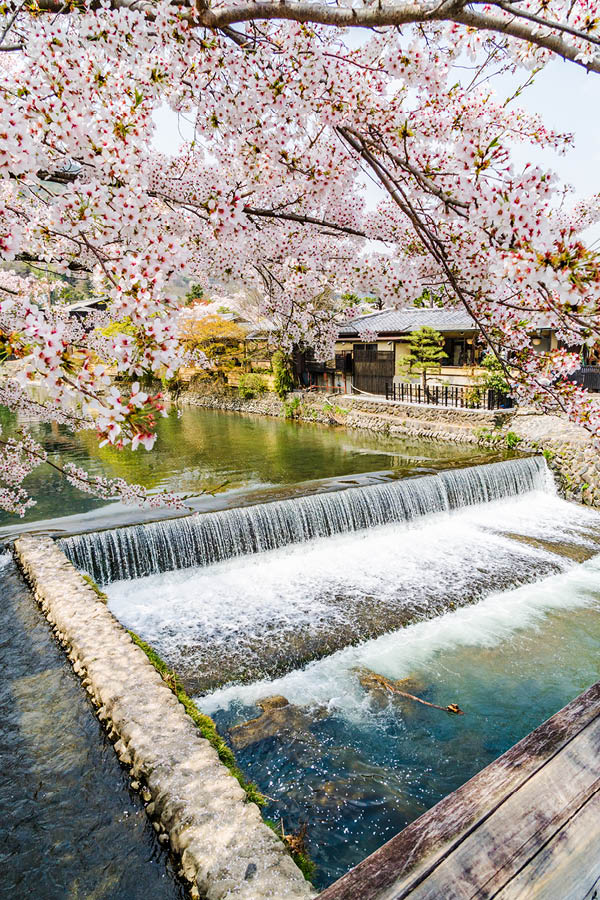
The cherry blossoms of Arashiyama in Kyoto
The cherry blossoms of Arashiyama in Kyoto bloom in spring.

4. Shoraian

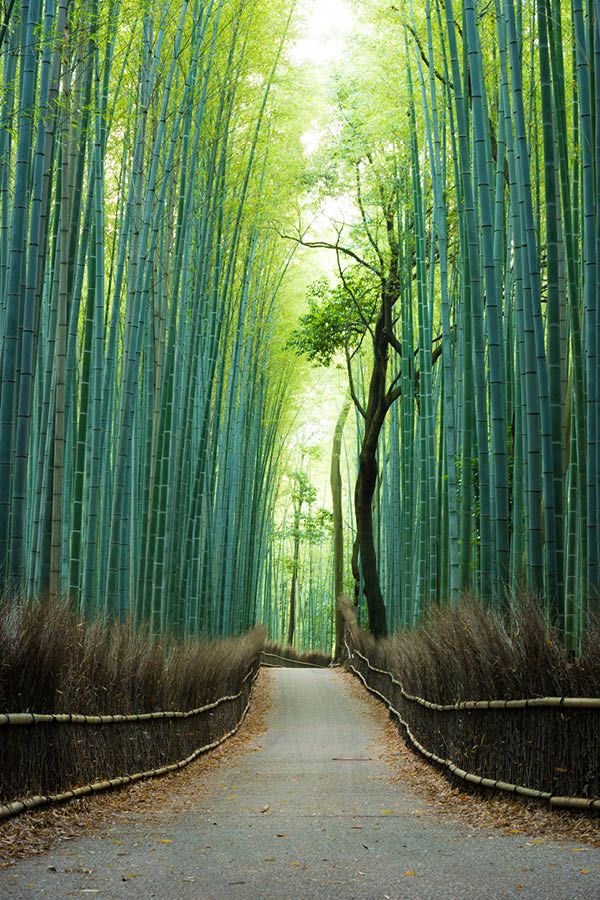
Shoraian is in the district of Arashiyama, approximately 30 minutes west of central Kyoto. The area is famous for natural beauty and its top sight, the Arashiyama Bamboo grove with its otherworldly, towering stalks. Afterwards, people head to Shoraian for the ultimate in tofu tasting. Yes, even the most staunchest of carnivores will be wooed by this cuisine that’s done with a lot of kokoro, or heart. It’s perhaps one of the few places in the world where tofu (a very much underrated ingredient) is treated with the utmost respect, care and preparation. This relatively humble food is prepared in many creative ways best showcased through its kaiseki (multi-course Japanese dinner). Standouts include tofu ice-cream and agedashi tofu (deep-fried tofu nestled in dashi broth).
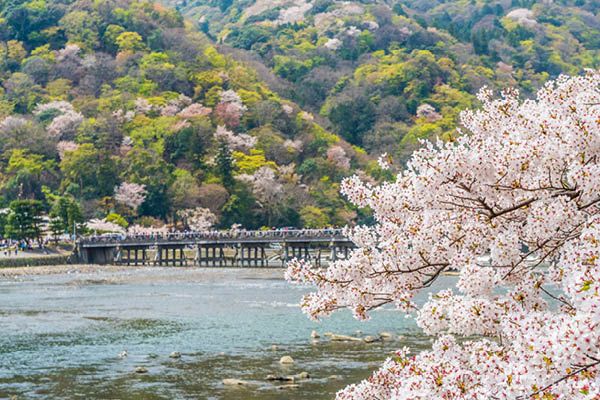
Arashiyama
Food, cherry blossoms and this view! There are so many reasons to explore Arashiyama.
Bamboo Grove in Arashiyama.
The magical Bamboo Grove in Arashiyama.

5. Tempura Endo Yasaka

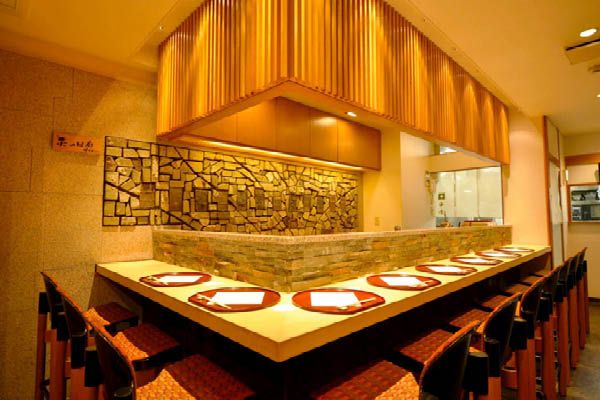
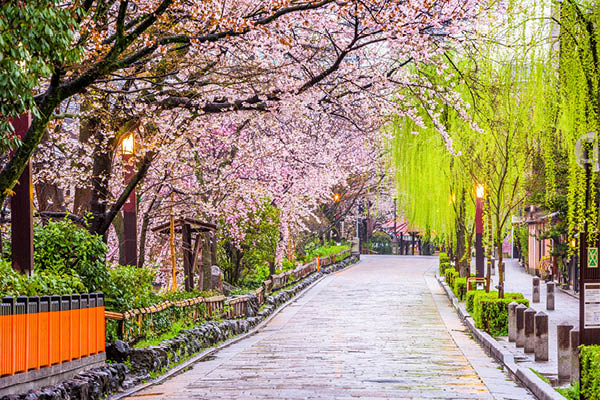
Tempura Endo Yasaka is situated in Gion, one of Kyoto’s most famous geisha districts, and boasts not only a sublime dining space, but a rich history too. Over a century old, the sukiya-style building was once an ochaya ‘teahouse’ where geishas would party into the wee hours of the morning. Today, it welcomes diners with tempura bars, authentic tatami rooms and Japanese gardens. Kyoto-style tempura is the must-order here, ideally via its tempura tasting menu. The batter is ethereally light and crispy – which is the perfect vehicle to house locally sourced freshwater fish, mountain-grown vegetables, and its most famous dish, the sweetcorn tempura.
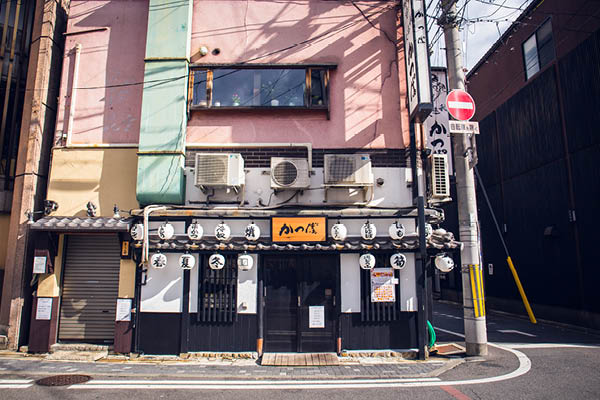
Tempura Endo Yasaka
Visit the Tempura Endo Yasaka in Gion, one of Kyoto’s most famous geisha districts.
Kyoto's Gion district
Walk through the beautiful paths of Kyoto’s Gion district.

6. Chifaja Karasuma Bukkoji

Chifaja Karasuma Bukkoji – the words ‘buffet’ and ‘All You Can Eat’ (AYCE) can sometimes be a red flag for foodies and epicureans in other parts of the world, but in Japan, it’s positively fine fare and incredibly well priced. After all, where else can you get ACYE kuroge wagyu (sourced from the Miyazaki prefecture) at around 4400 Japanese yen, or $55, for dinner?


At Chifaja, you channel your inner barbecue master and grill all of your own meats, choosing from an impressive list – everything from standard cuts such as skirt and tenderloin to organ options such as heart and intestines. With over 75 items to choose from, you can also get your fill of local dishes such as choregi salad (with homemade wasabi dressing), its famous beef tendon stew and black wagyu tartare. Another pro tip: Wear your stretchy spandex pants for this feast.

Osaka

7. Kuromon Ichiba Market
Kuromon Ichiba Market 
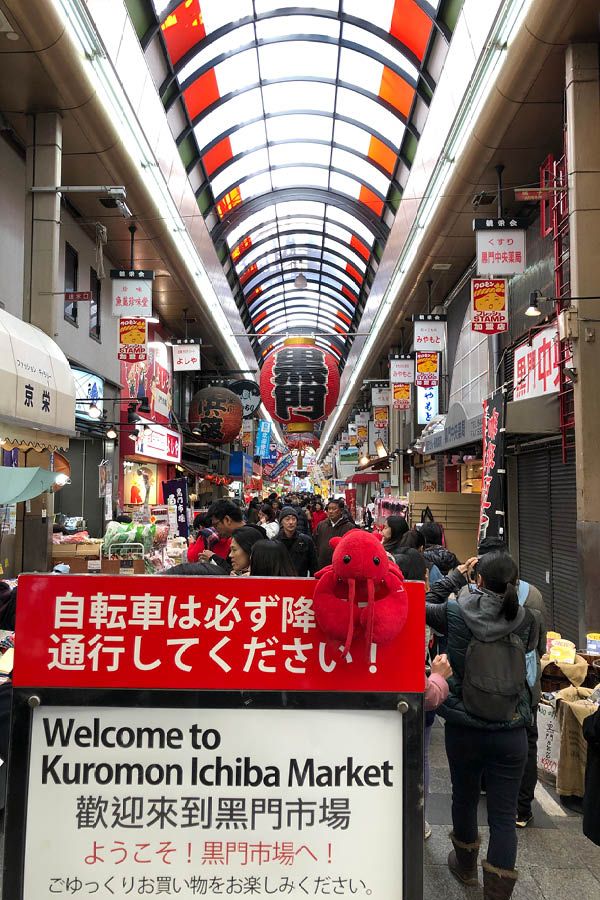
The famous Kuromon Ichiba Market has over 30,000 visitors per day on average.

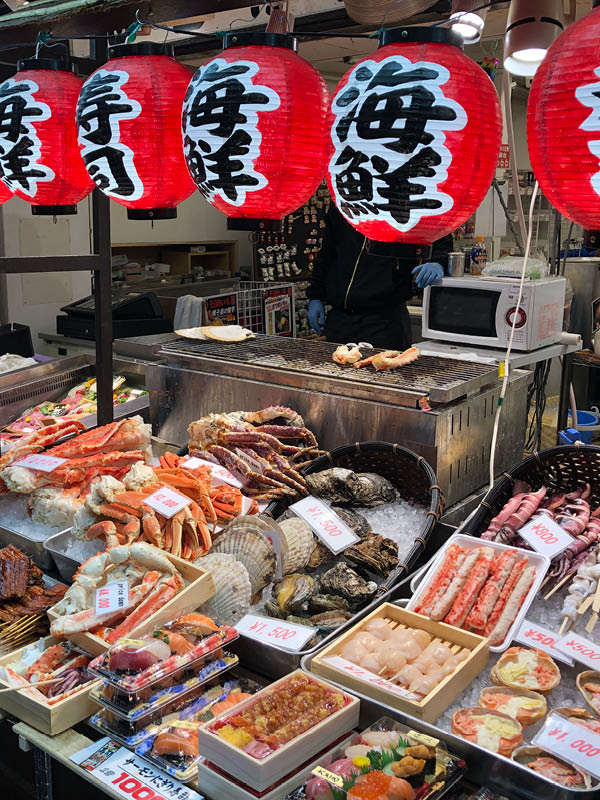
Kuromon Ichiba Market is over 100 years old but with its youthful spirit, you’d never know it. The hustle and bustle of the crowds (on average, over 30,000 visitors per day) and the boisterous energy that emanates from its friendly and smiling vendors is one of the many draws. But it’s obvious people come here for unparalleled fresh delicacies such as treasure troves of sea urchin (uni), fried Ezo abalone, freshly shucked raw oysters and whole grilled octopus. It’s ideal to come in for a wander and make a mental checklist of everything you want to eat. Queues are often inevitable but if you can avoid rush hour, it’s a more pleasant experience to visit between 2pm–4pm. Best of all, many of the stalls can prepare and cook meats and seafood for you on the spot.
Kuromon Ichiba Market
Kuromon Ichiba Market is stocked full with Japan’s freshest delicacies.
Kuromon Ichiba Market
Best of all, many of the stalls can prepare and cook meats and seafood for you on the spot.

8. Tenka

Tenka, inside the Hilton Osaka Hotel, is the best kind of teppanyaki ‘dinner and a show’ meal where chefs exhibit their deft artistry and skills as they prepare grilled dishes before your eyes. It’s also one of the more romantic date night options with the Nishi Umeda cityscape greeting you upon entry. Request a seat by the counter in front of the chefs and let your taste buds be whisked away on a multi-coursed journey of seafood and pristine meats such as kobe and wagyu. Standout creations include sautéed foie gras on braised Japanese beef cheeks; and grilled spiny lobster finished with herbal-earthy lemongrass sauce.
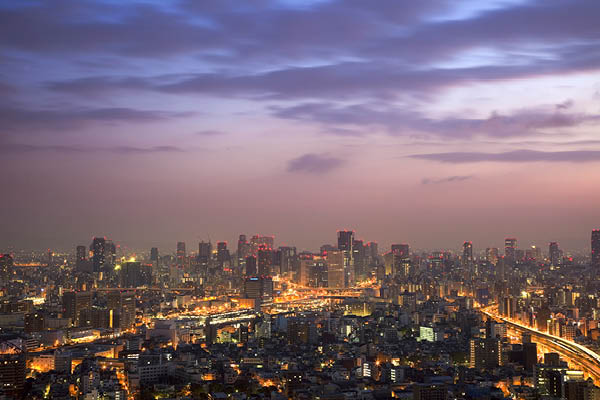
Nishi Umeda Cityscape
Not only do you get superb food at Tenka, you also get stunning views of the Nishi Umeda cityscape.


9. Olympia

Olympia was made for the Gods, eating champions, and well, foodies. Located inside Hotel New Hankyu, this is another (extremely) popular AYCE spot that locals and visitors flock to. It anticipates the crowds by designating appointment cards for dining. Pro tip? Get your hotel concierge to make all arrangements and a reservation in advance so you can avoid disappointment and any potential language barriers upon arrival. It’s sensory and stomach overload, so have a sort of game plan in mind (e.g. pass on the simple salads and say yes to the sublime sashimi) and watch out for specialties that debut at certain times throughout the evening which include tuna tataki (cut and prepared straight from the massive hanging fish on display), monster salmon rolls, seafood paella and an unforgettable dessert ‘smoke and sound’ show.

Weekly travel news, experiences
insider tips, offers,
and more.

Tohoku
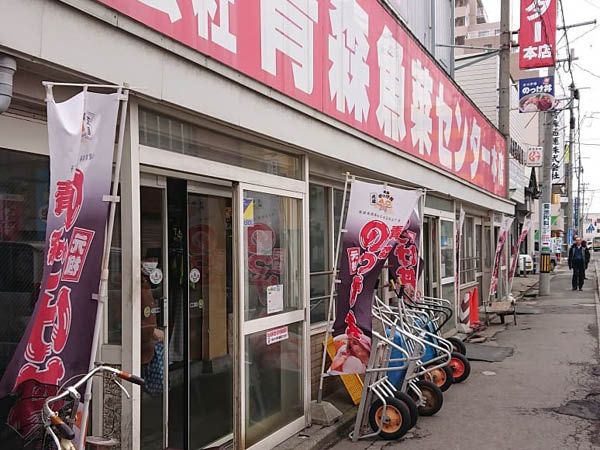
Furukawa Fish Market
The entry into the Furukawa Fish Market.

10. Furukawa Fish Market

Furukawa Fish Market (also referred to as Aomori Gyosai Center) is located in Aomori City (the northern tip of the mainland), and overlooks the stunning Sea of Japan. Here, the specialty is a seafood donburi dish called nokkedon; it is essentially a rice bowl topped with local seafood, shellfish, crab, seaweed, roe and fish. Think of the experience as a choose-your-own appetite adventure. You purchase meal tickets and exchange them for ingredients. Beginning with the ‘foundation’, white rice, from there you’re encouraged to wander and explore the vast market and fill your bowl with goodies such as Aomori’s lush scallops (a crowd-pleaser), tuna, ika menchi (squid mince), charcoal fish and crispy tempura.

Hiroshima
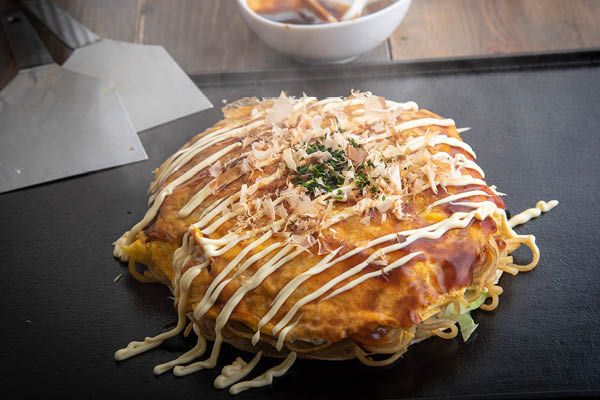
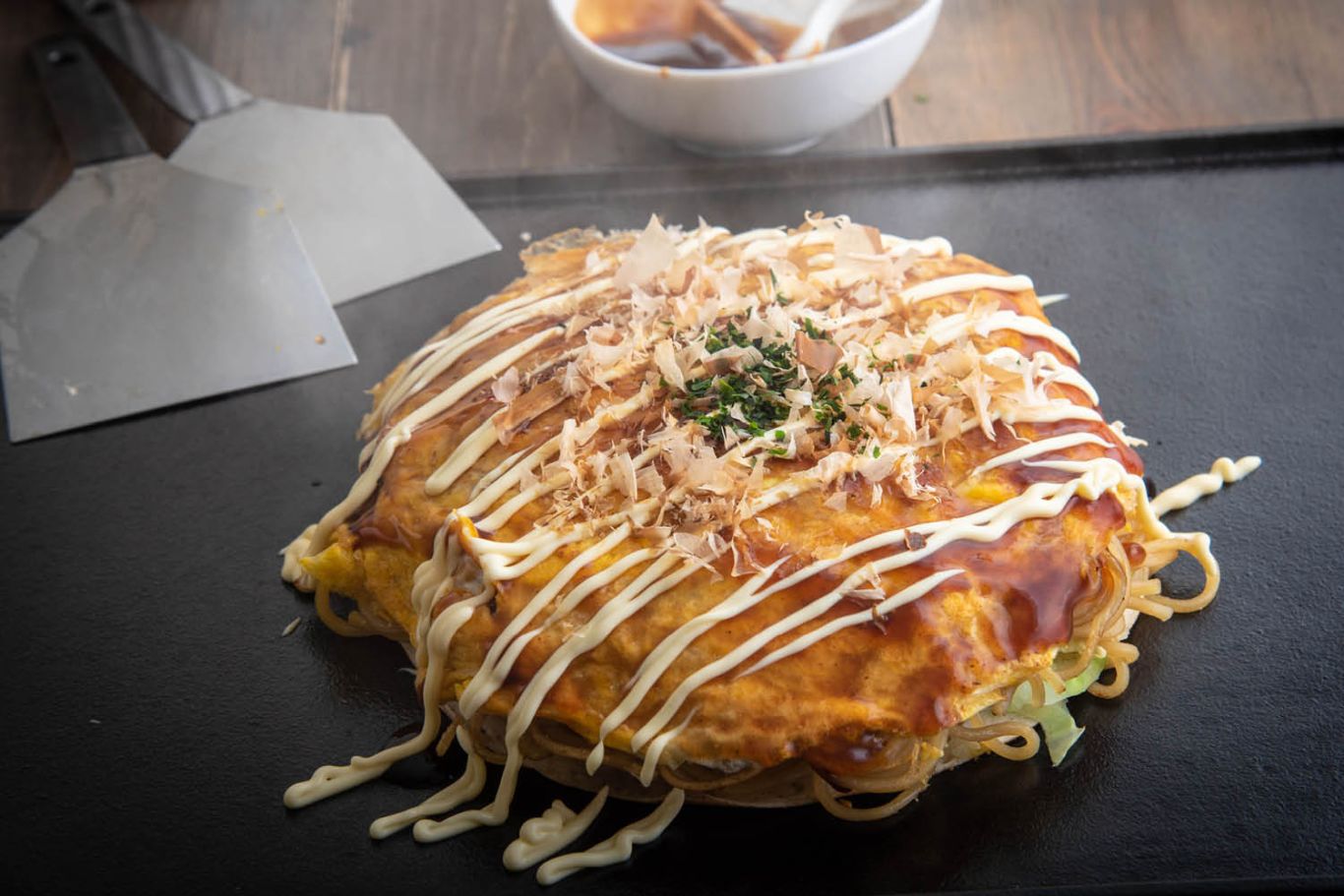
Hiroshima style Japanese pancake okonomi
The The famous Hiroshima style Japanese savoury pancake, okonomi, is a a mouthwatering experience not to be missed.

11. Nagataya

You’ll have to forgive and overlook the fact that Nagataya is a fully fledged ‘touristy’ spot, but despite the onslaught of visitors snapping selfies here, it’s worth the wait for the famous made-to-order okonomiyaki. This beloved dish is akin to a savoury pancake with toppings of your choice. Instead of pancake batter, the bottom of the creation is composed of noodles (soba or udon) – from there, it’s layered with an endless combination of toppings and ingredients. With this spot being so popular, lines are unavoidable during rush-hour meal times but the staff here are extremely proficient at managing this. While in line, you’re given a menu to place your order prior to getting a seat. And by the time you do sit down, the fresh and hot food arrives promptly. Another of this restaurant’s clever features is the ingenious personal flat-tops provided to all diners. Because of the sheer size of the okonomiyaki (it is, perhaps, larger than your head), you couldn’t possibly eat it quick enough before it gets cold. With the sizzling flat-top, you’re welcome to enjoy at your own pace, cutting off hot, fresh pieces as you go. If it’s your first time dining here, the best choice is the obvious one – the ‘original’, which features pork, squid, shrimp and is topped with squid chips, a mountain of green onion and a raw egg on top. And if you’re feeling indulgent, add gooey cheese into the mix.
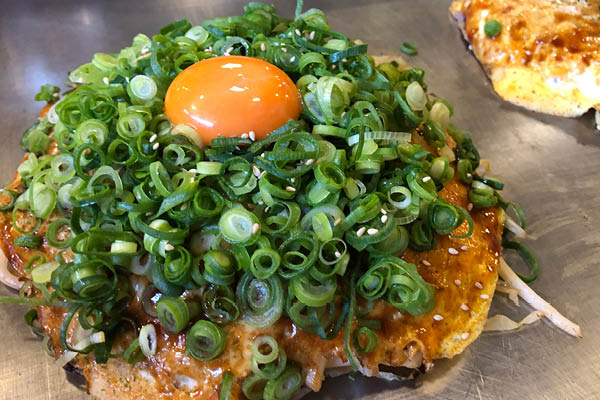
okonomiyaki
There are an endless list of toppings you can have on the okonomiyaki.


Tokyo

12. Shinjuku Kappo Nakajima

Shinjuku Kappo Nakajima
For a Michelin star dining experience, you must eat at Shinjuku Kappo Nakajima in Tokyo.

Shinjuku Kappo Nakajima is an intimate and welcoming restaurant, but first – you’ll have to find it. Tucked away down one of the labyrinth of streets, the one-Michelin star spot is located in a non-descript alleyway and down a flight of stairs. But once inside, you’re transported to an oasis of zen, and greeted by the master-chef himself: Sadaharu Nakajima, whose family culinary legacy stretches back to 1931, when his grandfather Teijiro Nakajima opened an eatery in Ginza. Aside from the servers, you’ll likely be the only English speaker and surrounded by a sea of locals – an excellent indication that you’re the right spot. There’s no menu, rather you’re given an omakase (meaning ‘I’ll leave it up to you’, AKA chef’s choice) multi-course experience. Everything is dictated by the seasons and what chef and his team brings in fresh from the market every day, but highlights can include supple skewers of octopus, miso-marinated salmon belly, and delicate tofu custard with seaweed.

Fukuoka

13. Chikae
Chikae
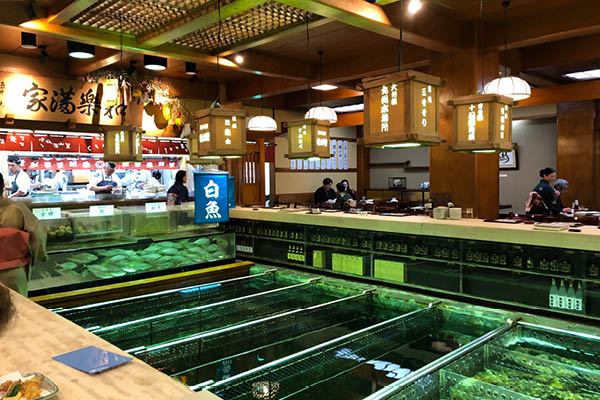
Choose your dinner from Chikae’s rows of ikesu (tanks).

Opened in 1961, it’s a popular choice among locals for good reason: the standout feature of Chikae’s restaurant is the sprawling rows of ikesu (tanks) in the centre of the room which are literally swimming with fish, shellfish and crab. You choose your ‘catch’ and watch it transformed into ikizukuri, where chefs slice the fish and present is as sashimi at the table in its ‘original form’. In other words, it’ll look as though it jumped up out of the water and onto your plate. It really doesn’t get fresher than this. And if you truly want to channel your inner dining-daredevil at the same time, add blowfish/pufferfish (AKA fugu) to your meal. Not to worry, at most- you *may* get the mildest buzz/tingle on your tongue or lips from enjoying the fish; the poisonous components (ovaries, kidneys, skin, eyes, liver and intestines) have been skillfully removed by the chefs (who must undergo rigorous examinations to procure a licence in order to be allowed to prepare it).
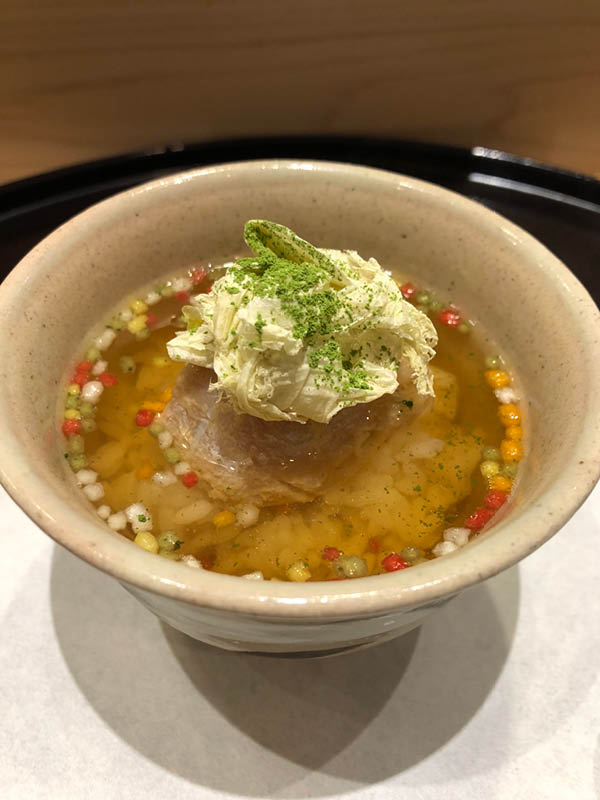
Dinner doesn’t get fresher than this.


Planning a trip to Japan? Red our guide to everything you need to know about Japan before you go.

Want to see more stories from International Traveller in your Google search results?

  1. Click here to set International Traveller as a preferred source.
  2. Tick the box next to "International Traveller". That's it.
hero media

These community homestays are changing how travellers experience Nepal

    After youth-led protests in 2025, this year Nepal elected a 35-year-old former rapper as Prime Minister. In a country where tourism is its biggest industry, what’s next for travellers? 

    In 1986, Nepal changed its clock. It had used India Standard Time since 1920 so, to differentiate, it wound its clock 15 minutes ahead of, not behind, its big-brother neighbour. Boss move. “Nepal is strongly opposed to the idea that our identity is connected to India,” says Community Homestay Network (CHN) guide Bikal Khanal.  

    Tharu dance
    Tharu dance is traditionally set to hand drums. (Credit: Kate Lewis)

    Today, Nepal is the only independent country with a 45-minute deviation to universal time; an oddity that’s become a symbol of national pride. The quirk is nearly as endearing as Kathmandu’s Tribhuvan airport where carved varnished wood and shiny red bricks rule. One sign points to a ‘Travelator’ and another to a ‘Grievance Handling Desk’ while visas are noisily stamped at customs for US dollars, cash only. When am I?  

    Nepal gray langur
    Spot the endemic Nepal gray langur. (Credit: Simon Urwin)

    The 15 or 45 minute anomaly sees me tap out completely on timezone calculations. Why bend my brain calculating if it’s quarter to or quarter past elsewhere when I’m in the honking here and now of Kathmandu where the air is high-altitude crisp, the prayer flags flutter and the street dogs howl?  

    How tourism is changing in Nepal

    Bardiya National Park
    Bardiya National Park is rich with wildlife. (Credit: Simon Urwin)

    India is not the only association many Nepalis would like to shake. With eight of the world’s 10 tallest mountains, including Mount Everest and Annapurna, Nepal has long attracted mountaineers and trekkers, and expedition numbers are continuing to rise.  

    Tourism is one of the country’s biggest sources of foreign currency, so this growth is not negative, per se. But according to Ang Tshering Lama, who co-founded Phaplu Mountain Bike Club, being reduced to a mere trekking destination is limiting.  

    “Trekking is just one layer of our identity,” says Ang. “When it becomes the dominant narrative, it limits how we’re seen and how we see ourselves.” Nepal’s recent success, however, in diverting trekkers to less-trafficked areas such as Manaslu mofuntain, where visitor numbers rose by 117 per cent last year, offers hope that tourism can diversify even more radically.   

    Local men in Bhada village
    Local men in Bhada village. (Credit: Simon Urwin)

    The founder of CHN, Shiva Dhakal, wants that change. “The whole idea of the Community Homestay Network is to promote experiences outside of trekking,” he says. “Community tourism changes lives and helps kids stay home instead of coming to the city or migrating to the Middle East.”  

    Ang grew up seeing people leave, “not because they wanted to but because there weren’t enough opportunities to stay”, he states. Yet from remote villages to living traditions; food, art, music and emerging subcultures, “there’s so much that’s not being seen.” 

    CHN is opening some of those doors. It doesn’t own, or fund, any homes. Rather, it promotes homestays to travellers on a single, slick platform, while fostering entrepreneurship in places where women, marginalised castes, Indigenous people and the youth stand to benefit the most.  

    A new generation demanding more

    Dalla Town Hall
    Dalla Town Hall, where volunteers discuss anti-poaching tactics. (Credit: Bheem Thapa)

    The future prospects of next-gen Nepalis can no longer be ignored. On a Kathmandu tour with 33-year-old guide Monica K.C, we pass buildings torched in the September 2025 ‘Gen Z protests’, including the Supreme Court and Parliament House. Seventy-two people died. “They were anti-corruption protests,” says Monica. “Politicians’ children are living a lavish life but the airports are crowded with youngsters leaving to find work.”  

    We stop in ‘little Tibet’ at the wondrous sixth-century Boudha Stupa. “The wheel of life is Buddhism in a nutshell,” says Monica. “Things such as hate, ignorance and anger keep you rotating around the wheel, so you must follow the principles of Buddhism to detach. If you can’t, there’s no nirvana for you.”  

    Boudha Stupa's prayer wheels
    Boudha Stupa’s prayer wheels are used to recite Buddhist prayers. (Credit: Kate Lewis)

    In a sun-drenched twist to the usual temple visit, we ascend the stupa’s sloping plinth and roam its whitewashed dome. Tendrils of diaphanous prayer flags stream from a steeple-like structure where the Buddha’s unblinking eyes stare out. No nirvana for you… 

    bouda stupa prayer flags
    Tibetan-style prayer flags embellish the whitewashed dome of Bouda Stupa, a Buddhist temple. (Credit: Kate Hennessy)

    The dome is delightfully free of guard rails or chiding from security. There is, however, a stern ‘No TikTok’ sign, perhaps in response to the youth’s newly flexed power. The booted-out Prime Minister, K.P. Sharma Oli, was replaced in a resounding election victory in March by 35-year-old Balendra Shah of the Rastriya Swatantra Party (RSP) – a former rapper and mayor of Kathmandu. The RSP’s manifesto indicates tourism is a priority, and that Nepal’s cultural identity in areas such as gastronomy will be strengthened.  

    Boudha Stupa vendors
    Vibrant souvenir shops and cafes around Boudha Stupa. (Credit: Kate Hennessy)

    A more confronting stop awaits at Pashupatinath Temple. Today is Bala Chaturdashi, a Hindu festival where thousands of devotees gather to honour their dead ancestors. Vendors hauling foam mattresses do a lucrative trade as people set up for a night of vigil. This includes burning the bodies of recently deceased relatives on bamboo pyres in the Bagmati River, which flows into the sacred Ganges.  

    A woman at annual Hindu festival Bala Chaturdashi
    A woman at annual Hindu festival Bala Chaturdashi, in Kathmandu. (Credit: Kate Hennessy)

    Wrapped in a shroud, the bodies are positioned with their heads facing north to the Himalayas where Lord Shiva resides. They’re covered with flowers and straw and set alight by male family members.  

    Hours later, the ashes are swept into the river where devotees will take a holy dip the next day. As much as Monica assures us it’s not voyeuristic to watch, I struggle to do so. “Here you see the reality of life because everyone ends up there,” she says, gesturing to the river.  

    Life unfiltered in the Terai region

    tharu woman
    Tharu woman and master weaver Parbati Chaudhary in Bhada Village. (Credit: Bheem Thapa)

    The reality of life needs processing time, which the western Terai region delivers in spades. The Terai is largely separated from India by the Karnali River and Bardiya National Park, where elephants, rhinos and the elusive Bengal tiger roam.  

    Once a nomadic tribe, the Indigenous Tharu people are now the largest ethnic group here. “They didn’t know their daily life was interesting for international travellers but they’re starting to understand now,” says CHN founder Shiva.  

    safari through Bardiya National Park
    Take a Jeep safari through Bardiya National Park. (Credit: Bheem Thapa)

    We fly Buddha Air to Dhangadhi airport and drive five hours to stay in Tharu homes. The journey to Bhada village is a blur of roadside fruit stalls, traffic-stopping sacred cows and fields sown with wheat, rice, mustard, spinach, cauliflower and potatoes. Nepal’s agriculture feeds only Nepal.  

    Marigolds
    Marigolds are an important part of Hindu rituals. (Credit: Simon Urwin)

    “The only thing we export is young people,” says our guide Bikal. As the light dims and we plunge evermore rural, mysterious mounds of compacted hay – some house-sized – loom like the creatures from Where The Wild Things Are. Even our trusty driver gets flummoxed by a dirt road that abruptly ends and we find ourselves hurtling across a paddock.  

    On arrival, some are ferried to mud-walled cottages greened by gourd creepers, with thatched roofs and rustic-chic mosquito nets. Myself and two others are ushered to the home of corner store owner, mechanic and mushroom farmer Man Kumar Chilaruwa and his wife Rajkumari.  

    community homestay entrance
    A warm welcome at a community homestay. (Credit: Simon Urwin)

    They escort us to a bunker-esque back building with steel doors and a folding security gate, behind which is gleaming linoleum, dolphin-printed tiles and a shower cavity that must be gingerly stepped through to reach the toilet.  

    The ceiling lights emit a rainbow of colours (the bathroom light gets stuck in, frankly, a quite frightening red). We’re nevertheless touched that our hosts invested in all this bling when the average salary is around $275 a month.  

    In the coming days, we participate in Tharu traditions such as making moonshine, dancing, weaving straw handicrafts and gold-panning. We’re fed well with staples of rice, mustard greens, lentil pancakes, daal, curried chicken and tomato chutney served on antibacterial saal leaves.  

    food at community homestay
    Dig in. (Credit: Kate Hennessy)

    Sonara community homestay president Indradevi Tharu tells us river snails are often served, and the boiled and pickled flesh of rats hunted in the rice fields. “Perhaps next time?” we say and all have a laugh.  

    The power of community homestays 

    community homestay owners in Nepal
    Barda community homestay owners Parbati Chaudhary and Ram Krishni Devi Chaudhary. (Credit: Simon Urwin)

    Immersing Western visitors in foreign cultural practices is not new. But with the Tharu, I never get that uneasy sensation that I’m being performed for. Despite being the only tourists, there’s no ‘othering’; just warm, composed and ultra-dignified welcomes. Like we’ve always been here.  

    “I love to have travellers in my village so I can see the world,” says local woman Parbati Chaudhary. “Why would I travel the world when the world comes to me?” 

    The graceful acceptance the Tharu offer, as well as the slow pace, works miracles on my frazzled nervous system. One day I even take a nap on a vacant homestay bed. 

    Sonara community room
    An authentic stay in the Sonara community. (Credit: Kate Hennessy)

    Roosters strut and goats bray as we sit on the ground in al fresco kitchens, rolling rice flour into cylinders steamed to make dhikri (dumplings). When water is needed, we fetch it using a hand-operated pump as a family of ducks strolls by, side-eying us like curious neighbours.  

    Animal lovers will delight in Tharu villages. Kind and resourceful inventions are everywhere, such as snacking stations where two posts lean together, with leafy boughs dangling on rope for baby goats to forage from.  

    CHN’s CEO, Aayusha Prasain, nods knowingly when one in our group says she cried when she left her host, Shayam Chaudhary, in Bhada. Shayam’s 17-year-old son, Prashant, had translated, which deepened the connection.  

    “Community tourism turns travel into a relationship, not a transaction,” says Aayusha. “It places decision-making power in the hands of local communities, especially women and youth.” Since 2018, CHN has hosted more than 4000 travellers from 52 countries in 408 households, and estimates women’s participation has increased by 381 per cent.  

    Elephant watch
    Elephant watch. (Credit: Simon Urwin)

    In the Bardiya community, where vexing human-animal conflict has been a balancing act for decades due to elephants raiding crops, long-time homestay operator Salik Ram Chaudhary says young people keep the older ones on their toes.  

    Gathering greens
    Gathering greens. (Credit: Bheem Thapa)

    “We can’t keep homestays stagnant,” he says. “We have to upgrade our service and redefine our product or young people won’t see it as an attractive business. If we can keep evolving with this travelling trend we’re confident the youths will stay and continue it.” 

    Back in Kathmandu, Monica explains that after the deaths of young protestors in September, a determination had spread to not let their sacrifice be in vain. “We want to keep holding the government accountable,” she says. “We don’t know what situation we’re facing, but we’re ready to face it.”  

    Interested in Nepal but prefer to experience it in total comfort? Read our guide to luxury travel in Nepal

    Foodie Experiences In Japan To Rival Tsukiji Market