hero media

The ultimate guide to Torres Del Paine National Park

There are some national parks that are in the essential- to-see-before-you-die category: Yosemite (USA), or Zhangjiajie National Forest Park (China), for example. And then, there’s Torres del Paine in Chile’s Patagonia region.

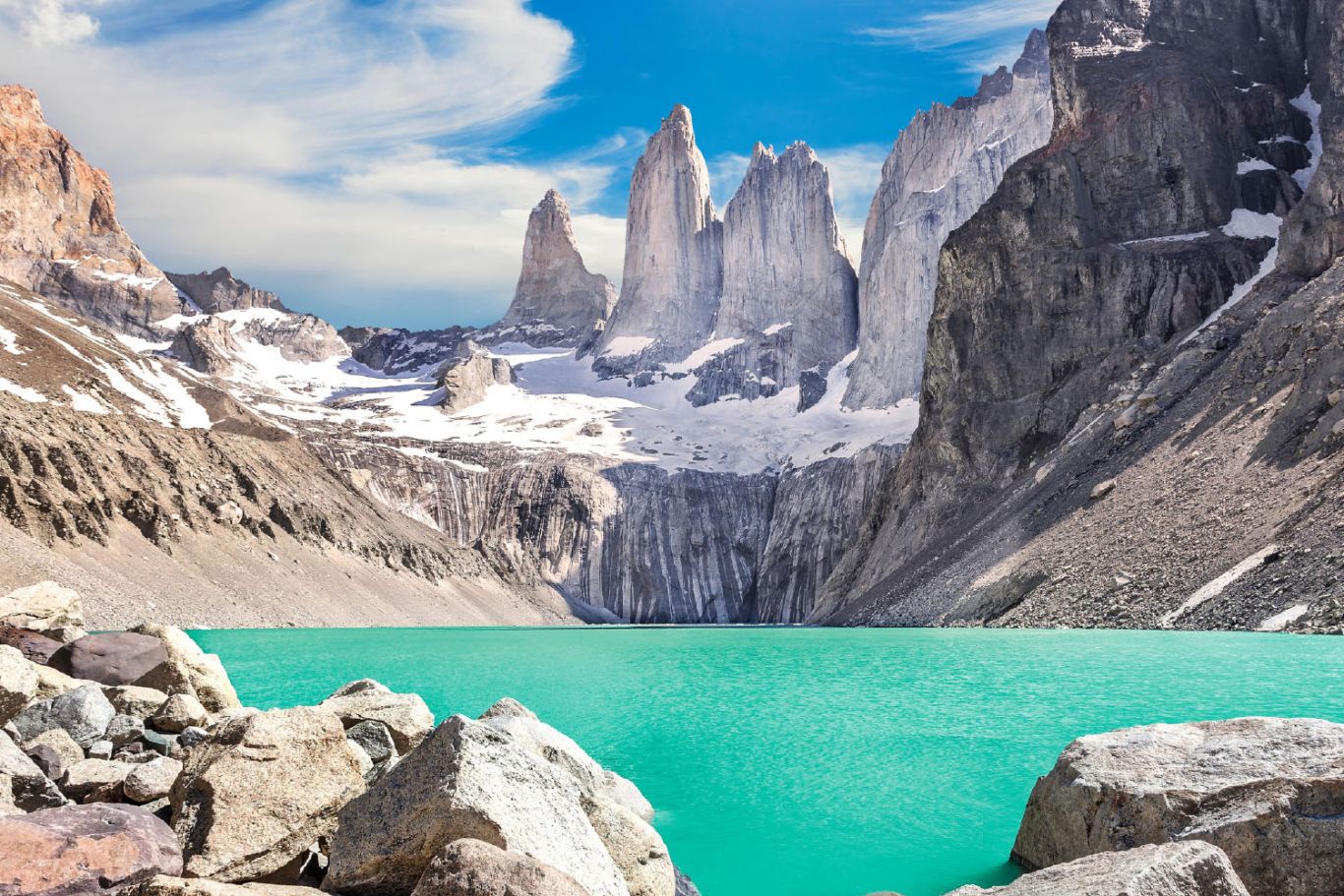
Part of a vast wilderness area, it straddles the ice fields at the foot of the Andes and incorporates immense glaciers, clear turquoise lakes, expansive grasslands and forests, and a dramatic mountainscape so iconic, it probably already feels familiar to you from magazine pages such as these.

The three famous, immense buttresses of rock, the park’s namesake Torres del Paine, are a pilgrimage for hikers the world over. Then there are the big cats, the largest flying animal on the planet and incredibly rare and unusual deer to be photographed. Dust off your boots and get packing!

When to go

Although you may get hit with heavy crowds suring peak season, the best time to visit Chilean Patagonia is in Summer, November to early March.

What to see

Torres del Paine

The centrepiece of the park is the mountain range of the Cordillera Paine (‘paine’ meaning blue and pronounced ‘pine-ay’), flanked by glaciers and crowned with imposing peaks of black granite, the pick of which are the eponymous spires. Hike to their base and take as many photos as you can.

Lake Sarmiento

An impressive view of the entirety of the Cordillera Paine can be had from the shores of this vast lake. Its banks have curious white rocks at the water’s edge, which are in fact thrombolites – colonies of bacteria some 10,000 years old, betraying how ancient this place is.

Grey Glacier

There aren’t many places on the planet that enable you to get this close to the end point of a glacier this size. At six kilometres wide, Grey Glacier is one of the biggest in the Torres del Paine.


You can get near it on foot by walking up the side of Lake Grey (pictured) as part of the ‘O’ Circuit, or take a boat to its blue-and-white face that is slowly disappearing into the lake. If you’re lucky you’ll see the glacier ‘calving’, as house-sized slabs of ice break off and disappear under the water. Book a boat trip with Hotel Lago Grey.
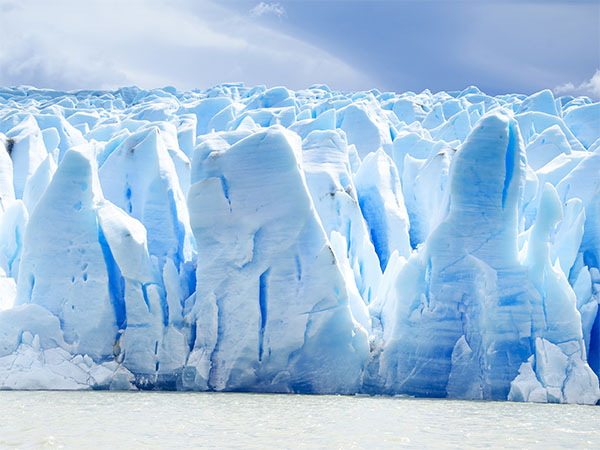
Torres Del Paine Grey Glacier
Grey Glacier in all it’s glory

French Valley

Walking the length of the French Valley and back is a breathtaking stretch of the circum-Cordillera Paine hiking trail, that leads you through forest and grasslands, flanked by some of the park’s tallest peaks, glaciers flowing down their sides. The trail ends at French Lookout, which puts you at the centre of a staggering amphitheatre of mountains. It’s also the base of the range’s highest peak, the point-like Paine Grande, at 2884 metres. Draped on the side of the mountain is the park’s other must-see glacier, the French Glacier.

Hike the peaks

This is what you come to this national park for: hiking around the iconic mountains of the Cordillera Paine. Do a guided trek of the eight-day ‘O’ circuit, or the highlight reel ‘W’ circuit, which takes four days.

Amarga lagoon

Head to this lake to capture Torres del Paine’s knife-like buttresses of rock reflected in its crystal-clear waters. If you’re really lucky, there will be a posse of bright-pink flamingos wading in the shallows to boot.

Salto grande

To get a sense of the power that the glaciers and mountains of the national park are able to generate, walk to this 10-metre-high waterfall that delivers raging meltwater from Lake Nordenskjöld to Lake Pehoé.
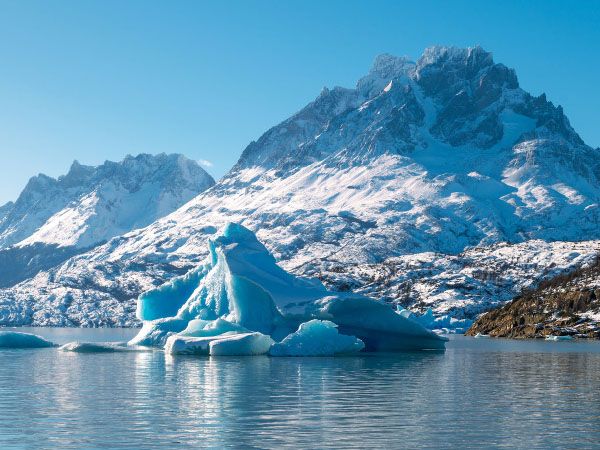
Torres Del Paine national park
The wilderness of ice fields of Torres del Paine National Park

Weekly travel news, experiences
insider tips, offers,
and more.

Animal spotting

Up in the Andes and the surrounding wilderness of ice fields of Torres del Paine National Park, there’s a rich menagerie of iconic and unusual wildlife to keep an eye out for.

Guanaco

Herds of these llama-like shaggy beasts provide a staple diet for the resident pumas, and the subsequent leftovers are enjoyed by the condors. If they don’t like your presence they will let you know by spitting at you. Nice.

Darwin’s Rheas

This species of ratite (flightless birds like our very own emu) stands up to a metre tall, making it easy to spot grazing on the steppes. Its name comes from when good ol’ Charles was dining on one and thought it unique enough to send the remains back to London to be studied.

Puma

The best way to spot the king of the park is to look for condors circling overhead, which means one of these elusive animals has made a kill. If you really want to get a good look at this cat, you’re best off coming in winter when they follow the herds of guanaco, which come down from the mountains to feed on the plains.

Andean Condor

A giant of the animal kingdom, the Andean condor is the largest flying bird on the planet when taking into account its wingspan and weight. A member of the vulture family, its wrinkly head ensconced in a fluffy white collar, it’s able to spot the remains of animals from on high.

Want to see more stories from International Traveller in your Google search results?

  1. Click here to set International Traveller as a preferred source.
  2. Tick the box next to "International Traveller". That's it.
hero media

8 grand journeys across Latin America

    From camping along alpine meadows in Patagonia to cruising the Amazon, these are the best Latin America journeys to tick off your bucket list.

    1. The Q Circuit in Patagonia

    Travelling with: Emma Ventura

    the Torres del Paine mountains in Patagonia, Chile
    A turquoise lake surrounded by snow-capped peaks at Patagonia’s Torres del Paine National Park. (Image: Getty/ MBPROJEKT_Maciej_Bledowski)

    Tolkienian peaks, pristine lakes and snow-bloated rivers are highlights for most visitors spending a couple of days in Chile’s Torres del Paine National Park. But for the more intrepid, the real rewards come from a 10-day solo circumnavigation of the Q Circuit, camping along tracks that become more sparsely trodden the further you head into the park’s astonishingly diverse landscape – think glacial passes and granite spires, alpine meadows and forest paths. Five-star lodges might provide a break from Patagonia’s infamously feisty weather, but there’s nothing like carrying your own kit, a chance encounter with an elusive puma, and a crackling wood stove in a remote refugio for delivering the kind of fulfilment that money just can’t buy.

    2. The jungles of Central America

    Travelling with: Megan Arkinstall

    women traversing the Mistico Hanging Bridges in La Fortuna, Costa Rica
    The Mistico Hanging Bridges in La Fortuna are perched above the forest floor.

    Emerging from the seas millions of years ago, the isthmus that is Central America is a tropical sanctuary of jungle-clad volcanoes, thunderous waterfalls and mist-shrouded rainforests, fringed by coral reefs. At its heart, Costa Rica is the land of pura vida (pure life), a tiny country that is home to six per cent of the world’s biodiversity – think toucans, macaws, anteaters, tapirs, jaguars, sloths – with verdant rainforest carpeting more than half the country. It’s a land to explore on two feet, two wheels and with two paddles. Do all three on Intrepid Travel’s eight-day Costa Rica: Hike, Bike & Raft tour and G Adventures’ 16-day Costa Rica Adventure.

    a toucan in the rainforest of Costa Rica
    A rainbow-billed toucan in the rainforest of Costa Rica. (Image: Getty/Freder)

    3. Dance across Latin America

    Travelling with: Elizabeth Whitehead

    samba dancing in the street, Brazil
    Put on your dancing shoes in Latin America. (Image: Getty/Pollyana Ventura)

    Don your tassels and get flirty cha cha-ing in Havana. Feel the heat dancing Argentine tango at a milonga in Buenos Aires. Hear the pulse of percussion as you samba in Rio. In Latin America, movement is an expression of culture, celebration and passion. You don’t have to be a professional to partake, and there are plenty of dance schools where foreigners can learn the basics. It’s easy as one-step, two-step, cha-cha-cha.

    4. Hike to Colombia’s Lost City

    Travelling with: Sarah Reid

    the terraces of Lost City, Colombia
    The Lost City is Colombia’s best-kept secret. (Image: Getty/Charly Boillot)

    Reaching the ancient ciudad perdida (‘Lost City’) of Teyuna hidden within the steamy jungles of northern Colombia is a surreal moment, amplified by the challenging three-to-five-day return trek to get there. Built by the Indigenous Tairona People around 800 CE, this labyrinthine complex of stone staircases and circular platforms has only been partly excavated since treasure looters stumbled upon it in 1972. Limited tourism infrastructure adds to the Indiana Jones vibe. Intrepid Travel’s new Lost City Trekking in Colombia tour includes a respectful visit to a Wiwa community to learn more about their Tairona Ancestors and traditional way of life.

    5. The Galápagos Islands

    Travelling with: Carla Grossetti

    the Observation Lounge at the top of the Silversea ship
    Visit the remote Galápagos Islands on a Silversea cruise.

    Expect the brackish air around the Galápagos Islands to be mixed with the gritty odour of bird droppings and pungent tang of sea lion BO. Twist your binoculars until the black eye of the giant Galápagos tortoise fills the other end, and you might imagine yourself to be quite the adventurer centuries after the inhabitants of these islands inspired Charles Darwin’s theory of evolution. Get onboard a cruise with operators like Silversea, HX Expeditions, Celebrity Cruises and Metropolitan Touring to see the remote archipelago of 19 islands loom into view just 900 kilometres off the coast of mainland Ecuador.

    a blue-footed booby on the Galapagos Islands
    A blue-footed booby on the Galapagos Islands. (Image: Getty/Bruce Campos)

    6. Pantanal, Brazil

    Travelling with: Carla Grossetti

    a Jaguar walking on the banks of a river, South Pantanal, Brazil
    Spot a jaguar in the world’s largest tropical wetland. (Image: Getty/ Dgwildlife)

    Brazil’s Pantanal, the world’s largest tropical wetland and a UNESCO World Heritage site, is reportedly one of the best places on Earth to spot jaguars. This vast landscape of flooded plains and savannahs also shelters more than 650 species of birds (such as the toucan and hyacinth macaw) as well as various reptiles including the yellow anaconda and cold-blooded caiman (a type of crocodilian). Add capybaras, giant anteaters, maned wolves, giant river otters and South American tapirs to your wildlife bingo card, too. And find a tour that includes piranha fishing, if you dare.

    7. Salar de Uyuni in Bolivia

    Travelling with: Carla Grossetti

    the salt flats in Bolivia
    Immerse yourself in the world’s largest salt flats. (Image: Getty/ Olga Gavrilova)

    Bolivia’s Salar de Uyuni covers more than 10,500 square kilometres, making it the world’s largest salt flats. The salt flats of Uyuni were formed more than 40,000 years ago when several prehistoric lakes dried up and left a bed of rich minerals behind. Stay at Luna Salada, where the walls and furnishings are made from dense bricks of packed salt, so you can immerse yourself in this ethereal landscape. Visit southern Bolivia during the dry season when the salt crystallises into mesmerising shapes and patterns.

    8. The iconic sites of Peru

    Travelling with: Megan Arkinstall

    scarlet macaws at a cliff in the Amazon
    The Amazon is home to diverse birdlife such as wild scarlet macaws.

    Hiking the Andes. Cruising the Amazon. It’s the stuff of legends. From the vast expanses of Lake Titicaca to the archaeological wonder of Machu Picchu to the Amazon Basin, one of the greatest remaining wildernesses on Earth, you can stitch Peru’s epic sites together on tour with andBeyond or Abercrombie & Kent. To sweeten the experience, both luxury operators are launching new state-of-the-art vessels on the Amazon River in September 2025 and July respectively.

    the superior suite onboard andBeyond Amazon Explorer
    Stay in a superior suite onboard andBeyond Amazon Explorer.