hero media

It’s Puffin season! Here’s where to spot them in Scotland

Scotland’s windswept coast is puffin-packed once more.

Between April and August each year, hundreds of thousands of Atlantic puffins return to Scotland’s shores to breed. Known for their distinctive bright beaks and feathers, these seabirds have kindled affection in the hearts of Scots and visitors alike. The Scottish coast’s remote, rugged islands and steep cliffs inacessible to predators offer ideal conditions for puffins to nest and raise their chicks – which very well may be the most adorable thing you’ll ever lay eyes on.

Locally known as ‘Tammy Norries’, puffins spend the majority of their lives out at sea, returning to their life-long land base only to breed. They are exceptionally loyal creatures, mating for life and often even returning to the same burrow each year.

With the warmer months upon us, it’s the perfect time to set out on a Scottish adventure in search of these endearing and charismatic birds. Read on to discover the best places to see puffins in Scotland.

Orkney
puffins scotland
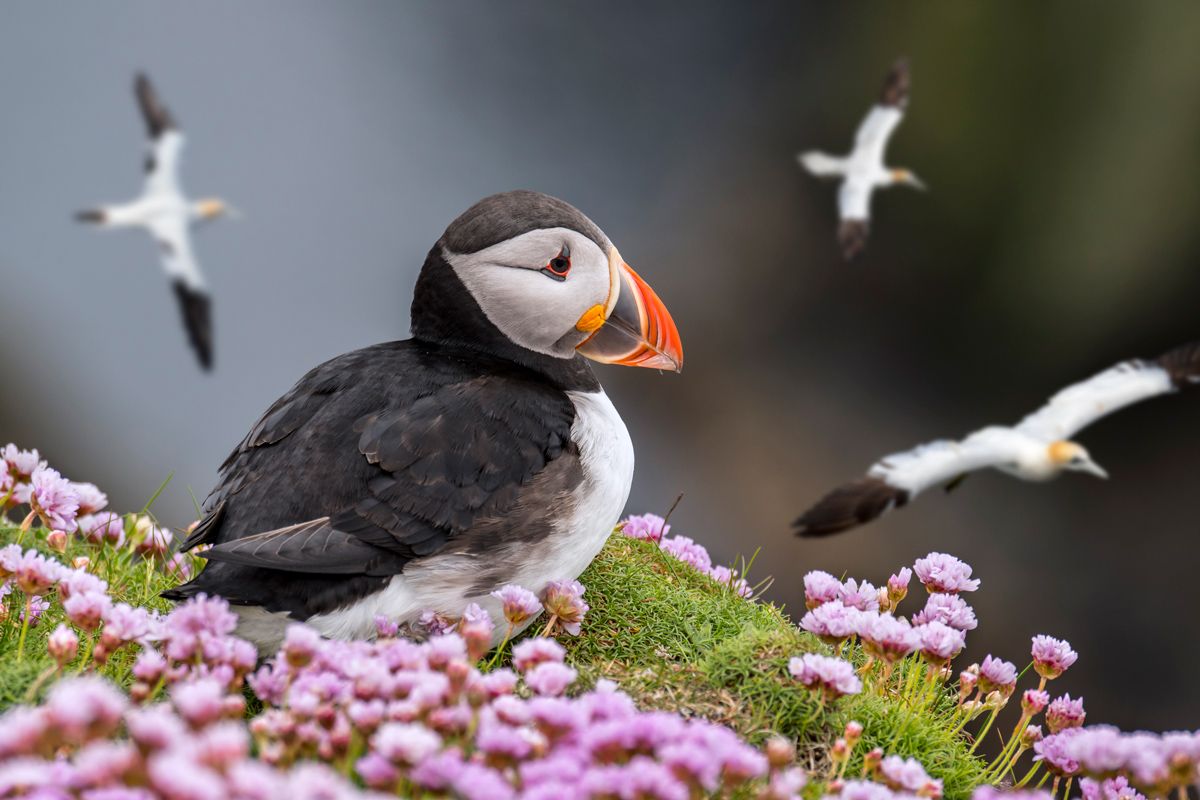
Spring and summer are the best times to see puffins in Scotland. (Credit: Unsplash/Phil Robson)

The archipelago of Orkney offers several spectacular vantage points for viewing puffins, with the most famous and accessible being the Castle o’ Burrian on the island of Westray. Here, hundreds of puffins dot the grassy ledges of the sea stack, making it an unforgettable place to watch them dive and dart back to their burrows.

If you’re keen to maximise your puffin sightings, the new Ultimate Puffin Experience with Wild Orkney Walks, which takes small groups from Kirkwall to Westray along a clifftop path, is a stellar way to deepen your knowledge of these fascinating birds. 

Isle of May
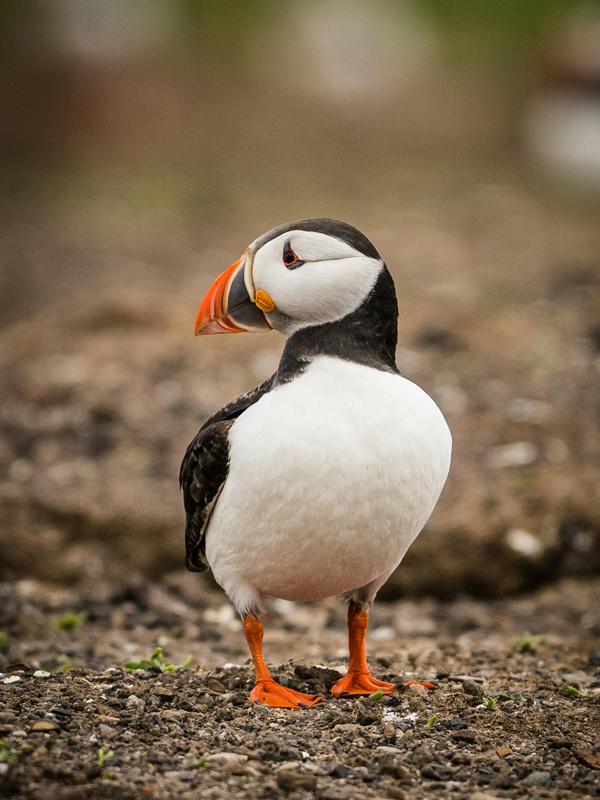
where to see puffins in scotland
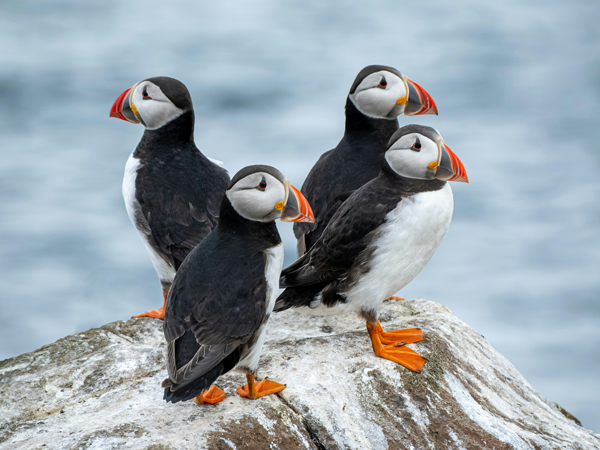
Puffins are creatures of habit, often returning to the same burrow every year. (Credit: Unsplash/Jonny Gios)

The Isle of May is squarely one of the best places to see puffins in Scotland, thanks to its 100,000-strong colony of breeding puffins – the largest on the country’s east coast. Hop on a boat trip from the Scottish Seabird Centre in North Berwick or the fishing village of Anstruther in Fife to catch the action. 

Shetland
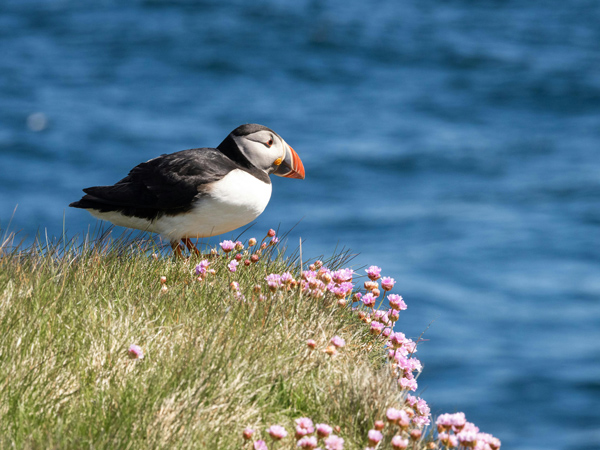
puffin in Shetland scotland
Shetland’s grassy cliffs make the perfect breeding grounds for puffins. (Credit: Pexels/Adam Stuart Clark)

The Shetland Islands’ rugged cliffs, weathered with nooks and crevices, make the ideal home for puffins to gather in numbers. Sumburgh Head offers easy access, while the dramatic cliffs of Hermaness National Nature Reserve are a haven for large colonies of puffins and other breeding birds such as fulmars.

Can’t get enough of Scotland’s adorable animals? The Puffins & Ponies tours with Shetland Explorer Tours combine two of Shetland’s most loved native creatures into a single four-hour experience, with highlights including Sumburgh Head Lighthouse and the Mousa viewpoint. 

Dunnet Head
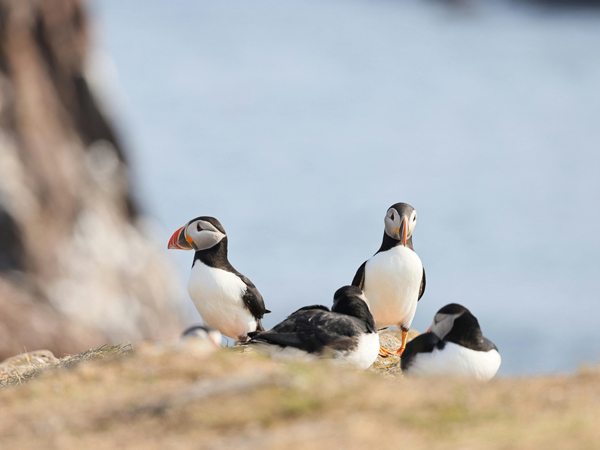
puffins in scotland
Dunnet Head is one of the only places on mainland Scotland where you can regularly see puffins. (Credit: Pexels/Teyi)

Teetering on what feels like the edge of the world at the northermost point of mainland Scotland, Dunnet Head is a veritable dreamland for birdwatchers. Although it’s located high up in the Scottish Highlands, it is one of the few places in the country where visitors can reliably spot puffins on the mainland. The DIY Puffin Tour by Seawolf Tours is a self-guided experience that includes viewing guidance such as the best times to see the puffins and maps to their burrows.  

Inner Hebrides
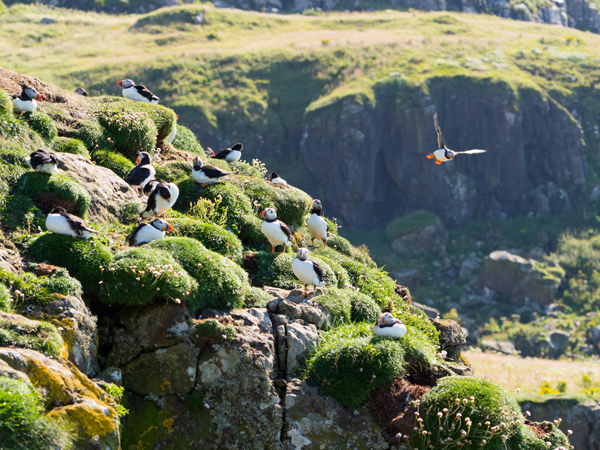
puffins Island of Mull.
Admire the adorable birds on the Island of Mull. (Credit: Unsplash/M Zonderling)

Comprising more than 35 islands, the Inner Hebrides along the west coast of Scotland delivers fantastic puffin viewing – especially on the uninhabited Isle of Lunga. The archipelago offers the opportunity both for island-hopping and puffin spotting. Take a wildlife trip with operators such as Staffa Tours, who take guest from Tobermory to the Island of Mull, and Turas Mara, running trips from Oban or Ulva Ferry to the Island of Mull. These blend landings on Lunga for up-close puffin encounters with visits to the jaw-dropping island of Staffa and mystical Fingal’s Cave.

Handa Island

Each spring, tens of thousands of seabirds migrate to the beguiling sandstone cliffs of Handa Island. Managed by the Scottish Wildlife Trust, the reserve is one of the best places to see puffins in Scotland and is accessible by a quick, 10-minute ferry from Tarbet. Hike the loop trail around the island and look out for puffins as well as razorbills, guillemots and kittiwakes, plus otters, dolphins and minke whales.

Want to see more stories from International Traveller in your Google search results?

  1. Click here to set International Traveller as a preferred source.
  2. Tick the box next to "International Traveller". That's it.
Eleanor Edström
Eleanor Edström is International Traveller’s Associate Editor. El began her career writing for national magazines including Signature Luxury Travel & Style and Vacations & Travel, and has since developed a soft spot for wild landscapes, thoughtful design and the human stories that bring them to life. She holds an honours degree in English and philosophy from the University of Sydney, and has lived abroad in both Switzerland and France – ostensibly to sharpen her French, though the pastries made a strong supporting case. One day, she hopes to swim with humpback whales off the coast of Mo'orea.
View profile and articles
hero media

What the European heatwave means for your summer travel plans

Temperatures are soaring this summer, breaking records across Europe and the UK. 

Euro summer is a feeling like no other. But when a heatwave hits? The dream trip quickly turns into a sweaty mess. Extreme heat is sweeping Europe and the UK this week, with record-high temperatures impacting travel plans across the continent.

And while Australian summers are typically hotter in absolute temperature, many European cities aren’t equipped for high temperatures, resulting in unbearable weather.

Why is it so hot in Europe?

Signs of a hot summer loomed in May, when the mercury hit unprecedented spring highs. Now, extreme high temperature warning alerts have been issued in countries such as Spain, Italy, France, England, the Netherlands and Germany.

France saw its hottest day on record on Wednesday, with an average temperature of 30°C across the day and night. This surpasses the average temperature for June, which is 15°C to 25°C. Dozens of people have died, including 40 from drowning.

In Spain, 212 deaths have been linked to the heatwave.

The UK recorded its hottest June day ever on Wednesday with temperatures soaring to 36.1°C. In an article published by the Met Office – the UK’s national meteorological service – Professor Stephen Belcher CBE, Met Office Chief Scientist, shared his concerns about June’s heat. “To see temperatures like this in the UK in June is sobering. Events like this bring home the implications of climate change, with very high temperatures and humidity bringing significant health implications from heat stress, as well as impacts to a range of sectors such as transport, energy and water supply,” he said.

Heatwaves are becoming increasingly common in Europe and the UK, neither of which is prepared for such extremes. The World Meteorological Organization reported that in 2025, at least 95% of Europe experienced above-average annual temperatures and that the continent was heating up twice as fast as the global average.

How travel is impacted

A pharmacy sign displaying 40 degrees Celcius
A pharmacy broadcasting local weather data. (Credit: Getty/Dragoncello)

During a heatwave, power grids, water systems and transport networks can be affected, resulting in disrupted itineraries for travellers. In France, power outages have left thousands without electricity and early closures have been implemented for two of Paris’s biggest attractions, the Eiffel Tower (early afternoon rather than late at night) and the Louvre (two hours early). Eurostar cancelled its London to Paris and Paris to London services from the 22nd to the 25th, and major UK rail companies have been advising travellers to avoid using trains where possible, or to travel during early hours.

If a heatwave is predicted, being flexible with your itinerary and having fully refundable/changeable tickets is key, as extreme heat can force the cancellation of outdoor activities, impact rail and flight services and change the opening hours of sites and eateries.

Why does summer in Europe often feel hotter than summer in Australia?

people swimming in the Canal Saint-Martin in Paris
People swimming in the Canal Saint-Martin in Paris to cool off. (Credit: Rachael Thompson)

With some of the highest UV levels in the world, Australians are no strangers to the heat, adapting well to intense weather. But our infrastructure is largely equipped to withstand soaring temperatures with climate-responsive passive design, refrigerated air conditioning or evaporative coolers, as well as swimming spots aplenty.

Buildings in Northern and Western Europe and the UK, however, are constructed to retain heat and handle frosty winters. The lack of universal air conditioning means it generally feels hotter even though the temperature on your app might not look it. During a heatwave, it can feel like you’re in a sauna as cities act like heat traps.

How to stay cool and prepare for another heatwave

Relief is expected across Europe and the UK later this week, but more heatwaves are still possible in the coming months. Summer heat typically peaks in July and August.

Public transport often doesn’t have air conditioning, and buses in particular can be swelteringly hot. If you’re heading outside or your accommodation has no air conditioning, it’s worth buying a spray bottle and a handheld fan from a pharmacy or tourist stand. Check ahead of time if restaurants and cafes have air conditioning and make a booking in advance. The highest temperatures typically hit between 3pm and 6pm, so aim to head outdoors outside of these hours.

Rising temperatures invite travellers to enter a more intentional era of seeing the world. Now more than ever is the time to embrace lower-impact “coolcations” and off-season getaways.