hero media

This new luxury sleeper train is the most stylish way to travel across the UK

This luxury train showcases England like you’ve never seen it before.

The Britannic Explorer, A Belmond Train, is the new sleeper train redefining luxury travel in the UK. Set to launch in July, it will showcase the UK’s lesser-known, yet breathtaking landscapes such as Cornwall, Wales and the Lake District.

This new addition to the Belmond fleet complements the rugged Scottish routes of the Royal Scotsman and the day excursions offered by The British Pullman (including its unique murder mystery trips!)

A cabin onboard the luxurious Britannic Explorer.

Embracing the old-world romance, the Britannic Explorer is reviving a Golden era of the rail travel with its luxurious design, onboard three-Michelin-star chef  (Simon Rogan, one of the UK’s most lauded culinary talents) and decadent wellness spa. On these journeys, passengers don suits and cocktail dresses for meals inspired by the landscapes they are traversing.
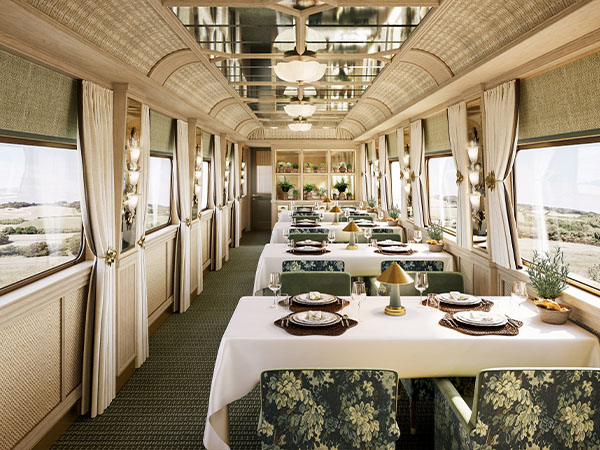
Watch the scenery roll past as you dine on a menu curated by a three-Michelin-starred chef, Simon Rogan.

Guests clink glasses in the vintage-style observation car at the rear, taking in scenic views as they travel in supreme comfort. Or simply watch the scenery stream by from the luxurious interior of their cabin. The Britannic Explorer promises a journey that’s as luxurious as it is scenic, reviving the sophisticated spirit of classic train travel for those eager to explore England’s hidden gems. Prices for this once-in-a-lifetime experience start at £6300 per passenger.

Here’s what we know about the itineraries so far:

Where does The Britannic Explorer go?

There are currently three different itineraries, all departing from London.

Cornwall
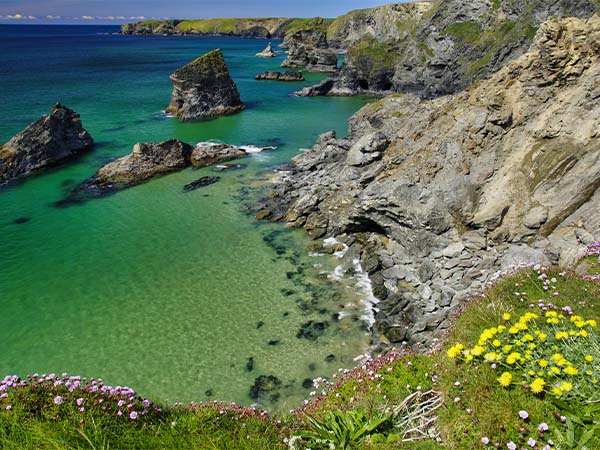
The Britannic Explorer will travel to the rugged coasts of Cornwall. (Image: Unsplash/Piotr Guzik)

Cornwall on the south-west coast of England is known for its rugged coastline, sandy beaches and picturesque moorlands. Dubbed the ‘English Riviera’, the region is known for it’s charming seaside towns and resorts. The Britannic Explorer‘s three-day itinerary ferries passengers along the Cornish coast in luxury, taking in sea views before stopping in a dazzling array of seaside towns for excursions such as private gallery tours, exclusive boat tours, guided hikes and local wine tastings.

Wales
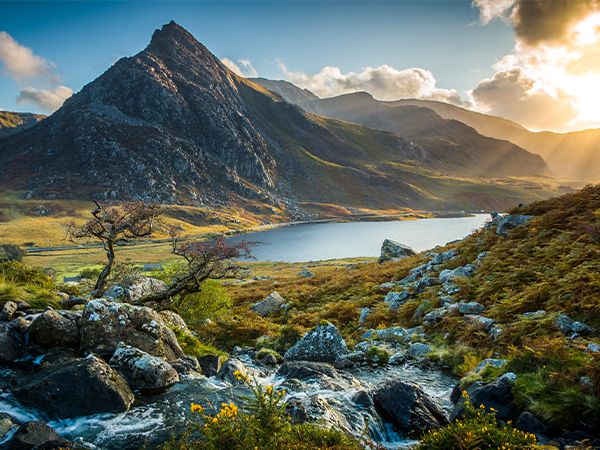
Snowdonia National Park
The picturesque Snowdonia National Park. (Image: Getty/Schroptschop)

At the beginning of 2025, International Traveller dubbed Wales a must-visit destination for the year ahead, owing in part to its largely untapped scenery. The Britannic Explorer takes passengers right into the heart of Wales (or ‘Cymru’ as it’s known to locals), taking in the incomparable beauty of Snowdonia National Park and quaint, creative towns like Machynlleth. The journey is bookended by a sumptuous lunch onboard on the final day, accompanied by the beauty of the Cotswolds as the train heads back to London.

The Lake District
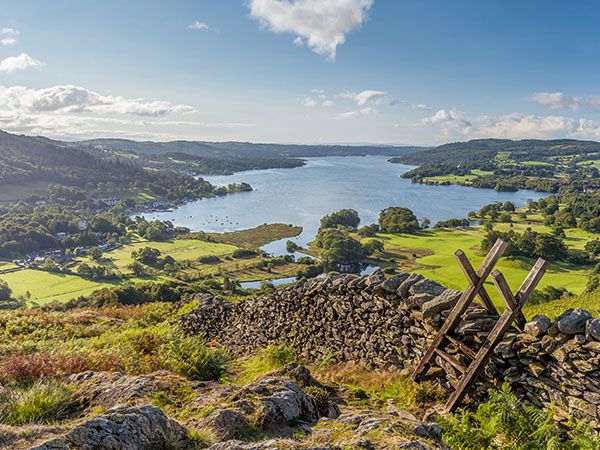
Many of England’s most celebrated literary figures emerged from the Lake District. (Image: Getty/alex_west)

Some of England’s most celebrated writers and poets, such as William Wordsworth, John Ruskin, and Beatrix Potter, hailed from the Lake District in the country’s far north. This region, arguably one of the most idyllic in all of Europe, inspired their romantic sensibilities with its lush green hills, quaint stone cottages and shimmering lakes. The Britannic Explorer offers passengers a chance to immerse themselves in these very landscapes. The journey includes an excursion to the Victorian mansion where Beatrix Potter spent her summers, allowing guests to witness the breathtaking scenery both from the comfort of the train and through a well-curated off-train itinerary.

Want to see more stories from International Traveller in your Google search results?

  1. Click here to set International Traveller as a preferred source.
  2. Tick the box next to "International Traveller". That's it.
hero media

What the European heatwave means for your summer travel plans

Temperatures are soaring this summer, breaking records across Europe and the UK. 

Euro summer is a feeling like no other. But when a heatwave hits? The dream trip quickly turns into a sweaty mess. Extreme heat is sweeping Europe and the UK this week, with record-high temperatures impacting travel plans across the continent.

And while Australian summers are typically hotter in absolute temperature, many European cities aren’t equipped for high temperatures, resulting in unbearable weather.

Why is it so hot in Europe?

Signs of a hot summer loomed in May, when the mercury hit unprecedented spring highs. Now, extreme high temperature warning alerts have been issued in countries such as Spain, Italy, France, England, the Netherlands and Germany.

France saw its hottest day on record on Wednesday, with an average temperature of 30°C across the day and night. This surpasses the average temperature for June, which is 15°C to 25°C. Dozens of people have died, including 40 from drowning.

In Spain, 212 deaths have been linked to the heatwave.

The UK recorded its hottest June day ever on Wednesday with temperatures soaring to 36.1°C. In an article published by the Met Office – the UK’s national meteorological service – Professor Stephen Belcher CBE, Met Office Chief Scientist, shared his concerns about June’s heat. “To see temperatures like this in the UK in June is sobering. Events like this bring home the implications of climate change, with very high temperatures and humidity bringing significant health implications from heat stress, as well as impacts to a range of sectors such as transport, energy and water supply,” he said.

Heatwaves are becoming increasingly common in Europe and the UK, neither of which is prepared for such extremes. The World Meteorological Organization reported that in 2025, at least 95% of Europe experienced above-average annual temperatures and that the continent was heating up twice as fast as the global average.

How travel is impacted

A pharmacy sign displaying 40 degrees Celcius
A pharmacy broadcasting local weather data. (Credit: Getty/Dragoncello)

During a heatwave, power grids, water systems and transport networks can be affected, resulting in disrupted itineraries for travellers. In France, power outages have left thousands without electricity and early closures have been implemented for two of Paris’s biggest attractions, the Eiffel Tower (early afternoon rather than late at night) and the Louvre (two hours early). Eurostar cancelled its London to Paris and Paris to London services from the 22nd to the 25th, and major UK rail companies have been advising travellers to avoid using trains where possible, or to travel during early hours.

If a heatwave is predicted, being flexible with your itinerary and having fully refundable/changeable tickets is key, as extreme heat can force the cancellation of outdoor activities, impact rail and flight services and change the opening hours of sites and eateries.

Why does summer in Europe often feel hotter than summer in Australia?

people swimming in the Canal Saint-Martin in Paris
People swimming in the Canal Saint-Martin in Paris to cool off. (Credit: Rachael Thompson)

With some of the highest UV levels in the world, Australians are no strangers to the heat, adapting well to intense weather. But our infrastructure is largely equipped to withstand soaring temperatures with climate-responsive passive design, refrigerated air conditioning or evaporative coolers, as well as swimming spots aplenty.

Buildings in Northern and Western Europe and the UK, however, are constructed to retain heat and handle frosty winters. The lack of universal air conditioning means it generally feels hotter even though the temperature on your app might not look it. During a heatwave, it can feel like you’re in a sauna as cities act like heat traps.

How to stay cool and prepare for another heatwave

Relief is expected across Europe and the UK later this week, but more heatwaves are still possible in the coming months. Summer heat typically peaks in July and August.

Public transport often doesn’t have air conditioning, and buses in particular can be swelteringly hot. If you’re heading outside or your accommodation has no air conditioning, it’s worth buying a spray bottle and a handheld fan from a pharmacy or tourist stand. Check ahead of time if restaurants and cafes have air conditioning and make a booking in advance. The highest temperatures typically hit between 3pm and 6pm, so aim to head outdoors outside of these hours.

Rising temperatures invite travellers to enter a more intentional era of seeing the world. Now more than ever is the time to embrace lower-impact “coolcations” and off-season getaways.

This new luxury sleeper train is the stylish way to travel the UK