hero media

Montreux, Switzerland; Essential city guide

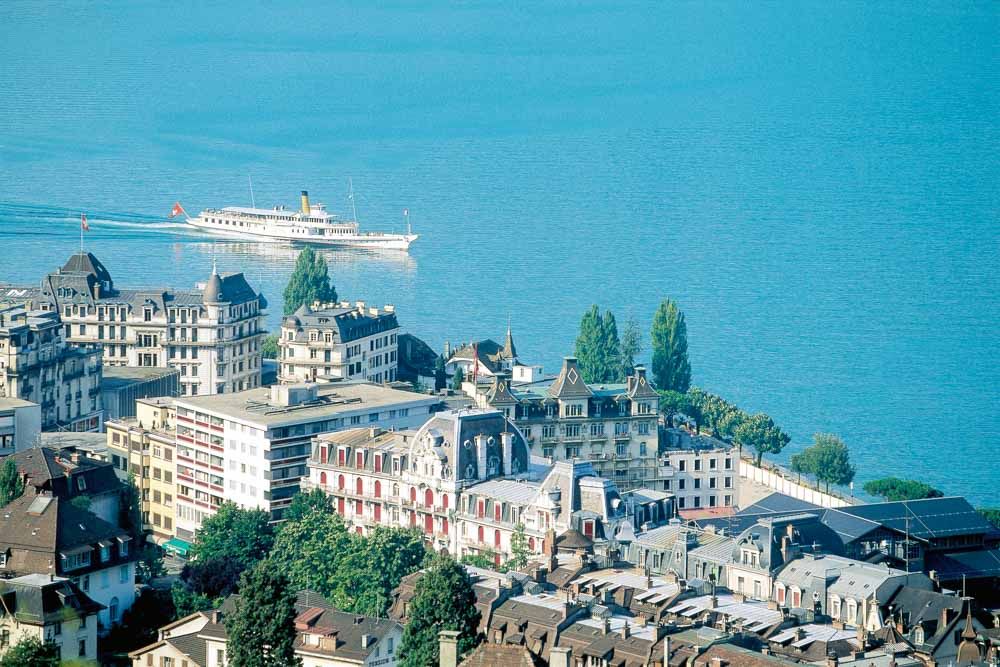
A grand, aristocratic 19th-century resort town with a balmy microclimate and extraordinary lake and mountain scenery, but it also has its raffish side. Brian Johnston reveals all in our Montreaux city guide.

Known for

Its jazz festival, Chillon Castle, and lakeside living

Eat streets

Head onto the main street to find the warm trattoria-style eatery La Rouvenaz, a favourite with locals. It specialises in wood-fired pizzas and pastas, as well as seafood dishes, and has both a wine and gelato bar.

Of course, you could always sacrifice an arm and a leg for a two-Michelin-star meal at Le Pont de Brent, where Swiss and French specialties are dished up in a charming country house in the hills above town.

Out & about

The rack railway (sbb.ch) that hauls passengers from Montreux to the 2042-metre Rochers-de-Naye peak isn’t for the fainthearted as it winds ever higher above the lake, with increasingly glorious views over the surrounding Alps.

July’s three-week annual Montreux Jazz Festival sees the world’s top guitarists, jazz singers and blues and rock artists take to various stages located around the city for one of the world’s foremost music festivals.

Insider’s secret

Though a statue of one-time Montreux resident Freddie Mercury stands prominently on the lakefront, it’s surprising how many people miss the terrific Queen Studio Experience, perhaps because it’s tucked obscurely into the casino.

Queen recorded seven albums here, and this shrine of memorabilia is illuminating; you can even mix your own track. mercuryphoenixtrust.com

Retail reconnaissance

Montreux is a relatively small city, but its main drag of Grand’Rue has no end of upmarket fashions, watches and chocolates.

There’s also a covered food market on the waterfront that runs on Fridays, with the adjacent small Forum mall featuring lots of fashion and gift stores worth browsing.

The essential experience

One of the best ways to see the real beauty of Montreux’s surroundings is on foot. Take a stunningly beautiful 40-minute walk along flower-lined lakeshore promenades to the Château of Chillon and take in the snow-covered panorama of the mountains that dwarf it.

Weekly travel news, experiences
insider tips, offers,
and more.

Caffeine hit

Zurcher has been tempting well-heeled customers for more than 130 years. linger over lemon tarts, chocolate cakes and layered pastries oozing indecent quantities of cream.

Stay & play

Affordable

Montreux Youth Hotel is perhaps Switzerland’s best budget retreat, with a great near-lakeshore setting, convivial dining room, colourful décor and room choices including doubles and dorms.

Moderate

What Eurotel Montreux’s rooms lack in personality, it more than makes up for with its friendly service and magnificent lake views. Its Safran Restaurant terrace combines fabulous outlooks with great local fish dishes.

Luxe

Fairmont Le Montreux Palace is a yellow-and-white Belle-Époque pile that has been setting the tone since 1906. Three restaurants, one lakeshore wellness centre and perhaps a million geraniums all combine beautifully.

Want to see more stories from International Traveller in your Google search results?

  1. Click here to set International Traveller as a preferred source.
  2. Tick the box next to "International Traveller". That's it.
hero media

What the European heatwave means for your summer travel plans

Temperatures are soaring this summer, breaking records across Europe and the UK. 

Euro summer is a feeling like no other. But when a heatwave hits? The dream trip quickly turns into a sweaty mess. Extreme heat is sweeping Europe and the UK this week, with record-high temperatures impacting travel plans across the continent.

And while Australian summers are typically hotter in absolute temperature, many European cities aren’t equipped for high temperatures, resulting in unbearable weather.

Why is it so hot in Europe?

Signs of a hot summer loomed in May, when the mercury hit unprecedented spring highs. Now, extreme high temperature warning alerts have been issued in countries such as Spain, Italy, France, England, the Netherlands and Germany.

France saw its hottest day on record on Wednesday, with an average temperature of 30°C across the day and night. This surpasses the average temperature for June, which is 15°C to 25°C. Dozens of people have died, including 40 from drowning.

In Spain, 212 deaths have been linked to the heatwave.

The UK recorded its hottest June day ever on Wednesday with temperatures soaring to 36.1°C. In an article published by the Met Office – the UK’s national meteorological service – Professor Stephen Belcher CBE, Met Office Chief Scientist, shared his concerns about June’s heat. “To see temperatures like this in the UK in June is sobering. Events like this bring home the implications of climate change, with very high temperatures and humidity bringing significant health implications from heat stress, as well as impacts to a range of sectors such as transport, energy and water supply,” he said.

Heatwaves are becoming increasingly common in Europe and the UK, neither of which is prepared for such extremes. The World Meteorological Organization reported that in 2025, at least 95% of Europe experienced above-average annual temperatures and that the continent was heating up twice as fast as the global average.

How travel is impacted

A pharmacy sign displaying 40 degrees Celcius
A pharmacy broadcasting local weather data. (Credit: Getty/Dragoncello)

During a heatwave, power grids, water systems and transport networks can be affected, resulting in disrupted itineraries for travellers. In France, power outages have left thousands without electricity and early closures have been implemented for two of Paris’s biggest attractions, the Eiffel Tower (early afternoon rather than late at night) and the Louvre (two hours early). Eurostar cancelled its London to Paris and Paris to London services from the 22nd to the 25th, and major UK rail companies have been advising travellers to avoid using trains where possible, or to travel during early hours.

If a heatwave is predicted, being flexible with your itinerary and having fully refundable/changeable tickets is key, as extreme heat can force the cancellation of outdoor activities, impact rail and flight services and change the opening hours of sites and eateries.

Why does summer in Europe often feel hotter than summer in Australia?

people swimming in the Canal Saint-Martin in Paris
People swimming in the Canal Saint-Martin in Paris to cool off. (Credit: Rachael Thompson)

With some of the highest UV levels in the world, Australians are no strangers to the heat, adapting well to intense weather. But our infrastructure is largely equipped to withstand soaring temperatures with climate-responsive passive design, refrigerated air conditioning or evaporative coolers, as well as swimming spots aplenty.

Buildings in Northern and Western Europe and the UK, however, are constructed to retain heat and handle frosty winters. The lack of universal air conditioning means it generally feels hotter even though the temperature on your app might not look it. During a heatwave, it can feel like you’re in a sauna as cities act like heat traps.

How to stay cool and prepare for another heatwave

Relief is expected across Europe and the UK later this week, but more heatwaves are still possible in the coming months. Summer heat typically peaks in July and August.

Public transport often doesn’t have air conditioning, and buses in particular can be swelteringly hot. If you’re heading outside or your accommodation has no air conditioning, it’s worth buying a spray bottle and a handheld fan from a pharmacy or tourist stand. Check ahead of time if restaurants and cafes have air conditioning and make a booking in advance. The highest temperatures typically hit between 3pm and 6pm, so aim to head outdoors outside of these hours.

Rising temperatures invite travellers to enter a more intentional era of seeing the world. Now more than ever is the time to embrace lower-impact “coolcations” and off-season getaways.

Montreaux, Switzerland essential city guide - International Traveller