hero media

This European capital has been named the world’s most colourful city

If colour can affect your mood, then these vibrant cities are guaranteed to boost it.

Colour plays a powerful role in how we experience the world. It can impact our emotions, alter our energy levels and even shape our memories. And when it comes to travel, colour doesn’t just influence how a place looks. It defines how that place feels, and how we remember it when we leave.

So inevitably, the next question is: where do you go for a guaranteed mood boost? A new global study by travel insurance specialist JustCover has the answer, analysing cities around the world to determine the most vibrant of all. Here’s where to book – and how a trip there could alter your brain chemistry.

And the world’s most colourful city is…
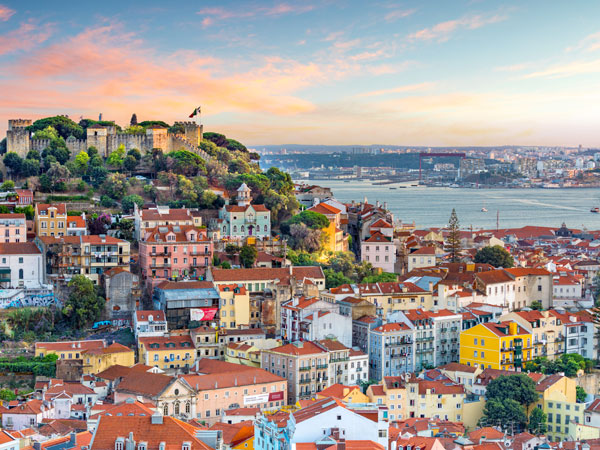
Lisbon, Portugal
Portugal’s capital city of Lisbon has been crowned the world’s most colourful. (Credit: Getty Images/Sean3810)

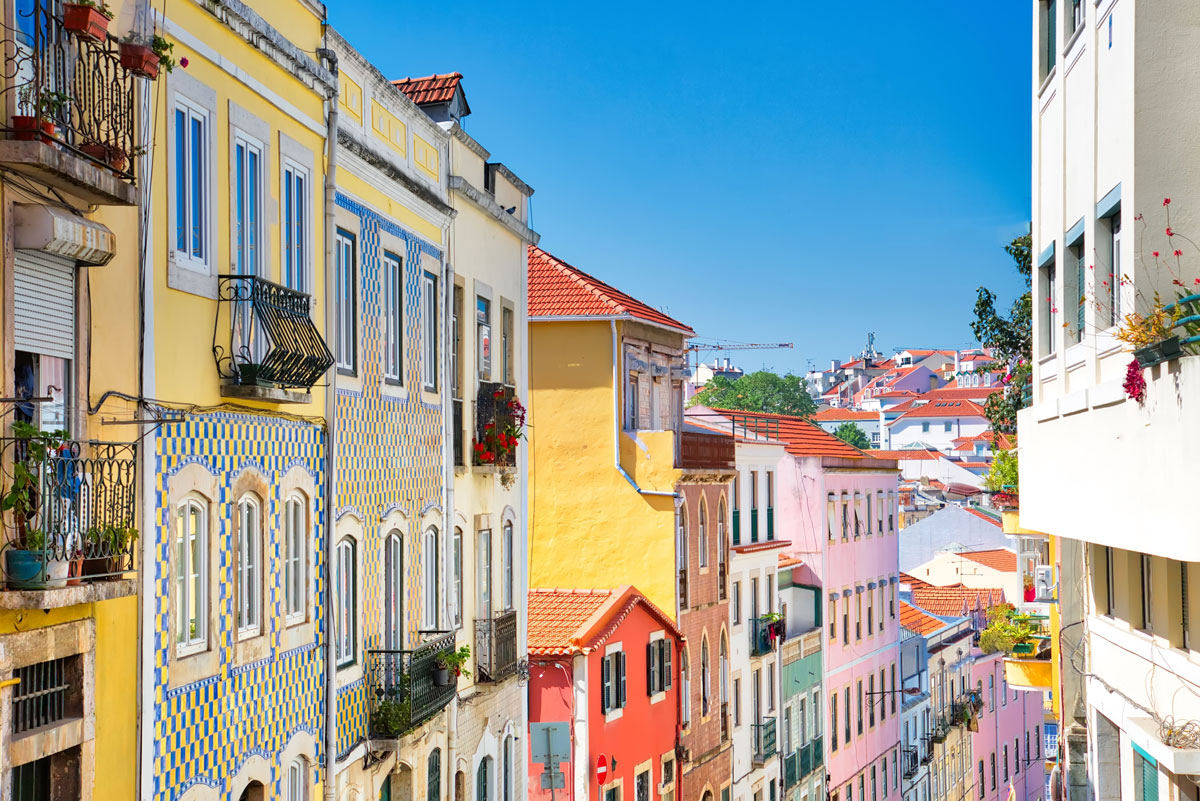
According to JustCover, the most colourful city in the world is Lisbon – and if you’ve ever been, you’ll agree. The Portuguese capital mirrors a painter’s palette in the middle of a masterpiece. Colours in every shade are splashed across the urban landscape, from building facades and street murals to ornate shopfronts and traditional azulejos (ceramic tiles).

While undeniably pleasing to the eye, Lisbon’s canvas of colour is more than just a pretty backdrop; it is intricately woven into the city’s historical and cultural fabric. Introduced during the Moors’ 711AD invasion of the Iberian Peninsula – much of which we now know as Spain and Portugal – azulejos swiftly became a cornerstone of Portuguese architecture.
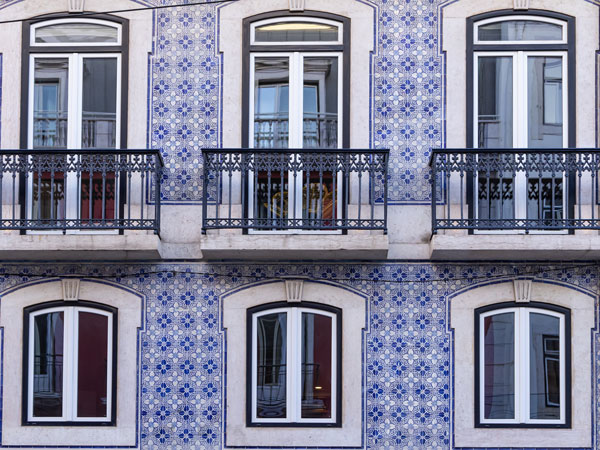
Lisbon, Portugal
Azulejo-clad facades are a staple of Portuguese architecture. (Credit: Getty Images/Emily M Wilson)

Often hand-painted in vibrant colours and geometric patterns, they slowly began to transform the city from a place of function to a living mosaic. Paired with buildings painted in pastel to reflect sunlight and keep interiors cool, Lisbon slowly evolved into a city defined by colour.

After it was freed from Moorish rule in 1147, this visual identity only deepened. Bold street art, embellished interiors and decorative flourishes were added to celebrate a renewed sense of pride and independence. Today, canary-yellow trams trundle up streets. Azulejo-clad exteriors shimmer in the sun. Blooming bougainvillea spills over balconies. And Lisbon’s legacy is not just seen, but felt.

How colour can change the way you travel
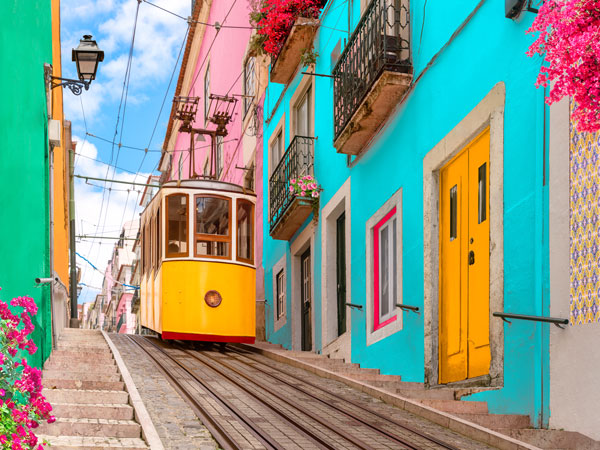
Lisbon, Portugal
Lisbon is known the world over for its bold and rich colour palette. (Credit: Getty Images/Armando Oliveira)

Does colour really have the power to shape our travel experiences? Scientists have long been researching its psychological effects, concluding that colour plays a measurable role in how we think and feel. It can influence everything from our mood to our memory, with specific shades even linked to different emotional responses.

Scientific papers like Neurophysiological and psychological effects of color and ceiling height in learning spaces identify colour as a key environmental cue that can alter our mood, stress and overall emotional state.
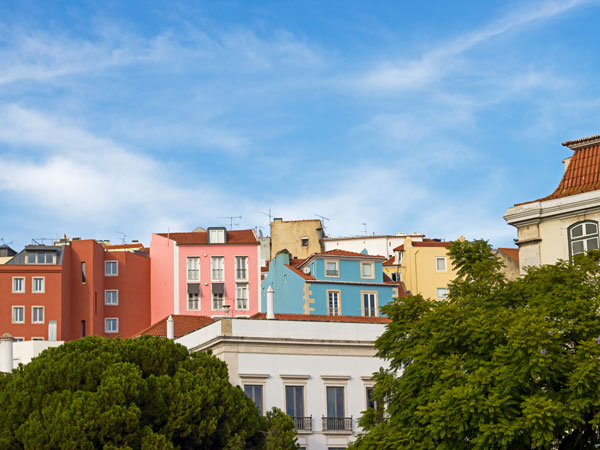
Lisbon, Portugal
The colours of a city can impact the memories we create there. (Credit: Getty Images/Alan Phillips)

As the study notes, “cold colours such as green and blue have been associated with emotional stability and comfort. Conversely, warm colours like red and yellow have also been found to elicit positive emotional reactions. Elements such as brightness, saturation and harmony significantly contribute to how individuals emotionally perceive a space."

In practice, this means the colours of a destination can shape the way we move through it, explaining why some places leave more of an impression. In a city like Lisbon, its warm tones and rich contrasts can spark feelings of joy and enhance our sense of adventure, making for a more memorable trip.
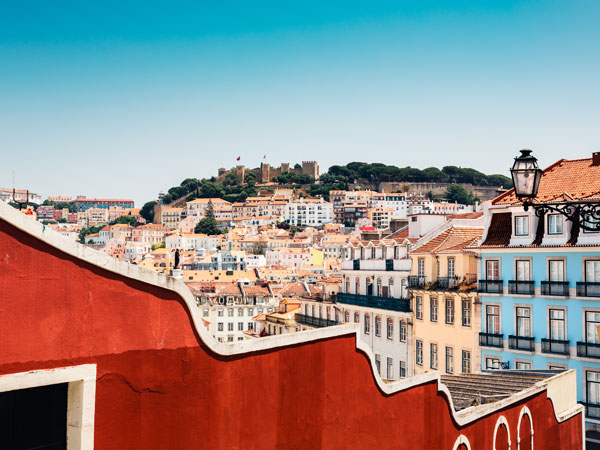
Lisbon, Portugal
Lisbon’s warm, rich hues invoke a positive emotional reaction. (Credit: Getty Images/Borchee)

But colour doesn’t just influence our emotions, it can define a destination. According to Dr Vien Cheung, Associate Professor of Colour and Imaging Science at the University of Leeds, its significance goes far beyond simple aesthetics. “In societies across the world, colour has extensive historical, cultural and symbolic attachments," he explains.

Nowhere is this more evident than in Lisbon. From centuries-old azulejo designs to vivid streetscapes, the city’s colours are a reflection of its rich cultural history. Whether it’s a sun-washed pastel or a freshly painted pattern, identity is embedded in every stroke of the paintbrush. A reminder of the past and a celebration of the future.

Weekly travel news, experiences
insider tips, offers,
and more.

The top 10 – and how it was determined

To establish the rankings, JustCover analysed 78 iconic global destinations known for their colours. Three high-quality, unedited photos were selected for each: one aerial shot and two street-level shots. Differentiated by architecture or scenery characteristic of each destination, the images were then compared using advanced colour analysis technology.
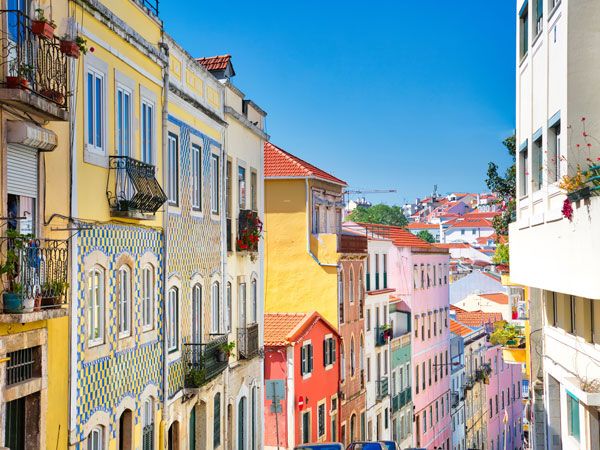
Lisbon, Portugal
Lisbon received a vibrancy score of 100, the highest possible. (Credit: Getty Images/Elijah Lovkoff)

Visual variation across each city was measured by the number of unique RGB (red, green, blue) values identified within each image. The combined colour count across all three images then produced a total vibrancy score, which was used to rank each destination. With over 2.5 million unique colours identified and a vibrancy score of 100, Lisbon came out on top.

The top 10, ranked

1. Lisbon, Portugal: 100
2. Kuala Lumpur, Malaysia: 94.5
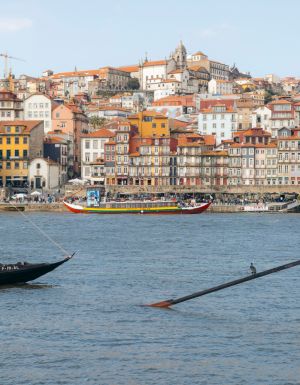
3. Porto, Portugal: 91.6
4. Cartagena, Colombia: 91.4
5. Rio de Janeiro, Brazil: 89.1
6. Guanajuato, México: 71.2
7. Havana, Cuba: 70.6
8. Hanoi, Vietnam: 69.0
9. New Orleans, USA: 67.1
10. Medellín, Colombia: 65.7

Want to see more stories from International Traveller in your Google search results?

  1. Click here to set International Traveller as a preferred source.
  2. Tick the box next to "International Traveller". That's it.
Taylah Darnell
Taylah Darnell is International Traveller's Writer & Producer. She has been passionate about writing since she learnt to read, and this life-long love of words inspired her to study a Bachelor of Communication majoring in Creative Writing at the University of Technology Sydney, where she completed two editorial internships. After graduating, she began her full-time career in publishing at Ocean Media before scoring her dream job with Australian Traveller. Now as Writer & Producer, Taylah passionately works across both digital platforms and print titles. When she's not wielding a red pen over magazine proofs, you can find Taylah among the aisles of a second-hand bookshop, following a good nature trail or cheering on her EPL team at 3am. While she's fairly certain nothing can top witnessing the northern lights in Norway, she'd love to explore Scotland and Ireland next.
View profile and articles
hero media

What the European heatwave means for your summer travel plans

Temperatures are soaring this summer, breaking records across Europe and the UK. 

Euro summer is a feeling like no other. But when a heatwave hits? The dream trip quickly turns into a sweaty mess. Extreme heat is sweeping Europe and the UK this week, with record-high temperatures impacting travel plans across the continent.

And while Australian summers are typically hotter in absolute temperature, many European cities aren’t equipped for high temperatures, resulting in unbearable weather.

Why is it so hot in Europe?

Signs of a hot summer loomed in May, when the mercury hit unprecedented spring highs. Now, extreme high temperature warning alerts have been issued in countries such as Spain, Italy, France, England, the Netherlands and Germany.

France saw its hottest day on record on Wednesday, with an average temperature of 30°C across the day and night. This surpasses the average temperature for June, which is 15°C to 25°C. Dozens of people have died, including 40 from drowning.

In Spain, 212 deaths have been linked to the heatwave.

The UK recorded its hottest June day ever on Wednesday with temperatures soaring to 36.1°C. In an article published by the Met Office – the UK’s national meteorological service – Professor Stephen Belcher CBE, Met Office Chief Scientist, shared his concerns about June’s heat. “To see temperatures like this in the UK in June is sobering. Events like this bring home the implications of climate change, with very high temperatures and humidity bringing significant health implications from heat stress, as well as impacts to a range of sectors such as transport, energy and water supply,” he said.

Heatwaves are becoming increasingly common in Europe and the UK, neither of which is prepared for such extremes. The World Meteorological Organization reported that in 2025, at least 95% of Europe experienced above-average annual temperatures and that the continent was heating up twice as fast as the global average.

How travel is impacted

A pharmacy sign displaying 40 degrees Celcius
A pharmacy broadcasting local weather data. (Credit: Getty/Dragoncello)

During a heatwave, power grids, water systems and transport networks can be affected, resulting in disrupted itineraries for travellers. In France, power outages have left thousands without electricity and early closures have been implemented for two of Paris’s biggest attractions, the Eiffel Tower (early afternoon rather than late at night) and the Louvre (two hours early). Eurostar cancelled its London to Paris and Paris to London services from the 22nd to the 25th, and major UK rail companies have been advising travellers to avoid using trains where possible, or to travel during early hours.

If a heatwave is predicted, being flexible with your itinerary and having fully refundable/changeable tickets is key, as extreme heat can force the cancellation of outdoor activities, impact rail and flight services and change the opening hours of sites and eateries.

Why does summer in Europe often feel hotter than summer in Australia?

people swimming in the Canal Saint-Martin in Paris
People swimming in the Canal Saint-Martin in Paris to cool off. (Credit: Rachael Thompson)

With some of the highest UV levels in the world, Australians are no strangers to the heat, adapting well to intense weather. But our infrastructure is largely equipped to withstand soaring temperatures with climate-responsive passive design, refrigerated air conditioning or evaporative coolers, as well as swimming spots aplenty.

Buildings in Northern and Western Europe and the UK, however, are constructed to retain heat and handle frosty winters. The lack of universal air conditioning means it generally feels hotter even though the temperature on your app might not look it. During a heatwave, it can feel like you’re in a sauna as cities act like heat traps.

How to stay cool and prepare for another heatwave

Relief is expected across Europe and the UK later this week, but more heatwaves are still possible in the coming months. Summer heat typically peaks in July and August.

Public transport often doesn’t have air conditioning, and buses in particular can be swelteringly hot. If you’re heading outside or your accommodation has no air conditioning, it’s worth buying a spray bottle and a handheld fan from a pharmacy or tourist stand. Check ahead of time if restaurants and cafes have air conditioning and make a booking in advance. The highest temperatures typically hit between 3pm and 6pm, so aim to head outdoors outside of these hours.

Rising temperatures invite travellers to enter a more intentional era of seeing the world. Now more than ever is the time to embrace lower-impact “coolcations” and off-season getaways.