hero media

Padua, Italy city guide: everything you need to know

Never heard of Padua? You need it on your bucket list…

This vibrant northern Italian city has a venerable history that has seen Trojans, Romans and some headlining astronomers walk its ancient cobbled streets over the millennia.


Padua is known for

The university, Giotto’s frescoes, galileo galilei


Padua‘s Eat streets

Pizzeria Al Duomo’s pizza is considered the best in the city, while Gelateria Artigianale da Bruno has award-winning gelato for afters (Via Montà, 83).

For something a little more upmarket, Antica Trattoria Zaramella, is a local institution that has two Michelin stars for its traditional dishes.

Gran Caffè Diemme is another firm favourite for its food and welcoming staff, on the lovely Piazza dei Signori.


Out and about in Padua

Supposedly founded in 1183BC by the Trojan prince Antenor, Padua owes much of its reputation to the frescoes of Giotto, the glory days of the Renaissance, residents of the likes of Galileo and Copernicus, and William Shakespeare’s The Taming of the Shrew, which was largely set here.

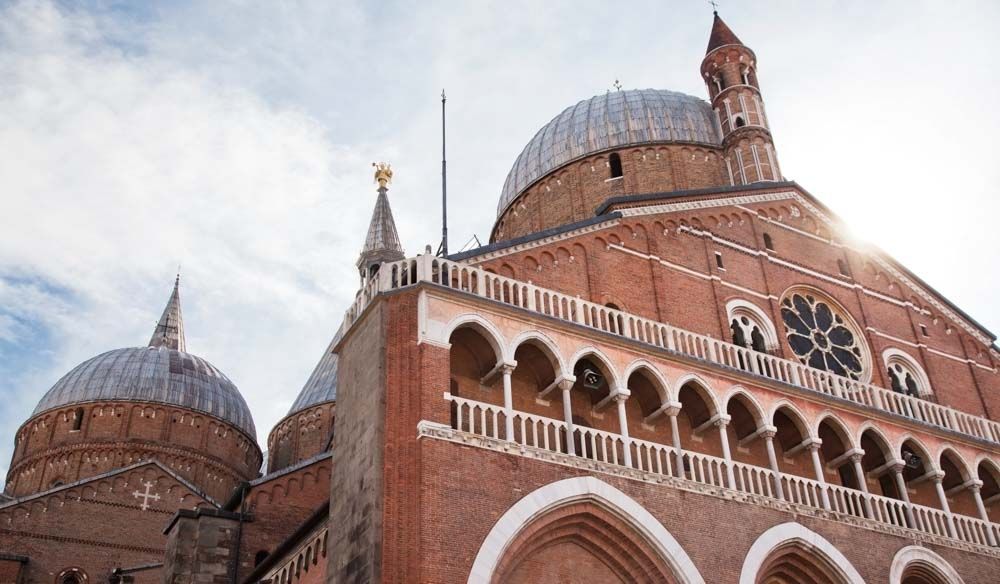
When exploring the city, start at Scrovegni Chapel, with Giotto’s masterpiece fresco cycle telling the story of Jesus and the Virgin Mary; there are more works by Giotto, as well as Donatello, in the Basilica of Saint Anthony of Padua.

The Palazzo della Ragione is a vast medieval hall, built in 1218 with a beautiful painted wooden ceiling.

And the Museum of Jewish Padova in the restored ‘German’ synogogue tells the Jewish story in Padua.

Insider’s secret

On the weekend Paduans escape to the Euganean Hills just south of the city to bask in the bucolic surrounds, scattered with castles, farms and wineries open for tastings.

Retail reconnaissance

There have been markets at Prato della Valle since 1775; each Saturday stalls selling everything from fashion to flowers pop up, with an antique market held on the third Sunday of the month (turismopadova.it).

The ultimate experience

The University of Padua, the second oldest in Italy, is steeped in history: take a guided tour of the Palazzo Bo at its heart and see the spectacular wooden anatomical theatre inaugurated in 1595, and the Aula Magna, the great hall where Galileo taught.

Weekly travel news, experiences
insider tips, offers,
and more.

Caffeine hits

Caffé Pedrocchi (Via VIII Febbraio, 15, 35122) is an attraction in itself, with a 200-year history of serving up coffee to the great and good of Padua. The pastries are to die for too!
Caffeine (Via Rome, 94/96, 35122) is a luxe cafe-cum-bar with a big menu and a funky vibe.

Where to Stay & play in Pauda, Italy


Affordable

A quirky family-run hotel with colour-themed rooms (Red Passion, Orange Life, Blue Dream, White Truth), Hotel al Fagiano is close to the city’s historic heart.

Moderate

Hotel al Prato is a light, bright boutique hotel of 16 rooms, housed in a restored 16th century building on the Prato della Valle, the largest piazza in Italy.

Luxe

Beyond its gloriously restored exterior, Methis Hotel & Spa is a haven of muted tones and modern chic.

Want to see more stories from International Traveller in your Google search results?

  1. Click here to set International Traveller as a preferred source.
  2. Tick the box next to "International Traveller". That's it.
hero media

What the European heatwave means for your summer travel plans

Temperatures are soaring this summer, breaking records across Europe and the UK. 

Euro summer is a feeling like no other. But when a heatwave hits? The dream trip quickly turns into a sweaty mess. Extreme heat is sweeping Europe and the UK this week, with record-high temperatures impacting travel plans across the continent.

And while Australian summers are typically hotter in absolute temperature, many European cities aren’t equipped for high temperatures, resulting in unbearable weather.

Why is it so hot in Europe?

Signs of a hot summer loomed in May, when the mercury hit unprecedented spring highs. Now, extreme high temperature warning alerts have been issued in countries such as Spain, Italy, France, England, the Netherlands and Germany.

France saw its hottest day on record on Wednesday, with an average temperature of 30°C across the day and night. This surpasses the average temperature for June, which is 15°C to 25°C. Dozens of people have died, including 40 from drowning.

In Spain, 212 deaths have been linked to the heatwave.

The UK recorded its hottest June day ever on Wednesday with temperatures soaring to 36.1°C. In an article published by the Met Office – the UK’s national meteorological service – Professor Stephen Belcher CBE, Met Office Chief Scientist, shared his concerns about June’s heat. “To see temperatures like this in the UK in June is sobering. Events like this bring home the implications of climate change, with very high temperatures and humidity bringing significant health implications from heat stress, as well as impacts to a range of sectors such as transport, energy and water supply,” he said.

Heatwaves are becoming increasingly common in Europe and the UK, neither of which is prepared for such extremes. The World Meteorological Organization reported that in 2025, at least 95% of Europe experienced above-average annual temperatures and that the continent was heating up twice as fast as the global average.

How travel is impacted

A pharmacy sign displaying 40 degrees Celcius
A pharmacy broadcasting local weather data. (Credit: Getty/Dragoncello)

During a heatwave, power grids, water systems and transport networks can be affected, resulting in disrupted itineraries for travellers. In France, power outages have left thousands without electricity and early closures have been implemented for two of Paris’s biggest attractions, the Eiffel Tower (early afternoon rather than late at night) and the Louvre (two hours early). Eurostar cancelled its London to Paris and Paris to London services from the 22nd to the 25th, and major UK rail companies have been advising travellers to avoid using trains where possible, or to travel during early hours.

If a heatwave is predicted, being flexible with your itinerary and having fully refundable/changeable tickets is key, as extreme heat can force the cancellation of outdoor activities, impact rail and flight services and change the opening hours of sites and eateries.

Why does summer in Europe often feel hotter than summer in Australia?

people swimming in the Canal Saint-Martin in Paris
People swimming in the Canal Saint-Martin in Paris to cool off. (Credit: Rachael Thompson)

With some of the highest UV levels in the world, Australians are no strangers to the heat, adapting well to intense weather. But our infrastructure is largely equipped to withstand soaring temperatures with climate-responsive passive design, refrigerated air conditioning or evaporative coolers, as well as swimming spots aplenty.

Buildings in Northern and Western Europe and the UK, however, are constructed to retain heat and handle frosty winters. The lack of universal air conditioning means it generally feels hotter even though the temperature on your app might not look it. During a heatwave, it can feel like you’re in a sauna as cities act like heat traps.

How to stay cool and prepare for another heatwave

Relief is expected across Europe and the UK later this week, but more heatwaves are still possible in the coming months. Summer heat typically peaks in July and August.

Public transport often doesn’t have air conditioning, and buses in particular can be swelteringly hot. If you’re heading outside or your accommodation has no air conditioning, it’s worth buying a spray bottle and a handheld fan from a pharmacy or tourist stand. Check ahead of time if restaurants and cafes have air conditioning and make a booking in advance. The highest temperatures typically hit between 3pm and 6pm, so aim to head outdoors outside of these hours.

Rising temperatures invite travellers to enter a more intentional era of seeing the world. Now more than ever is the time to embrace lower-impact “coolcations” and off-season getaways.

Padua, Italy city guide: what you need to know | International Traveller