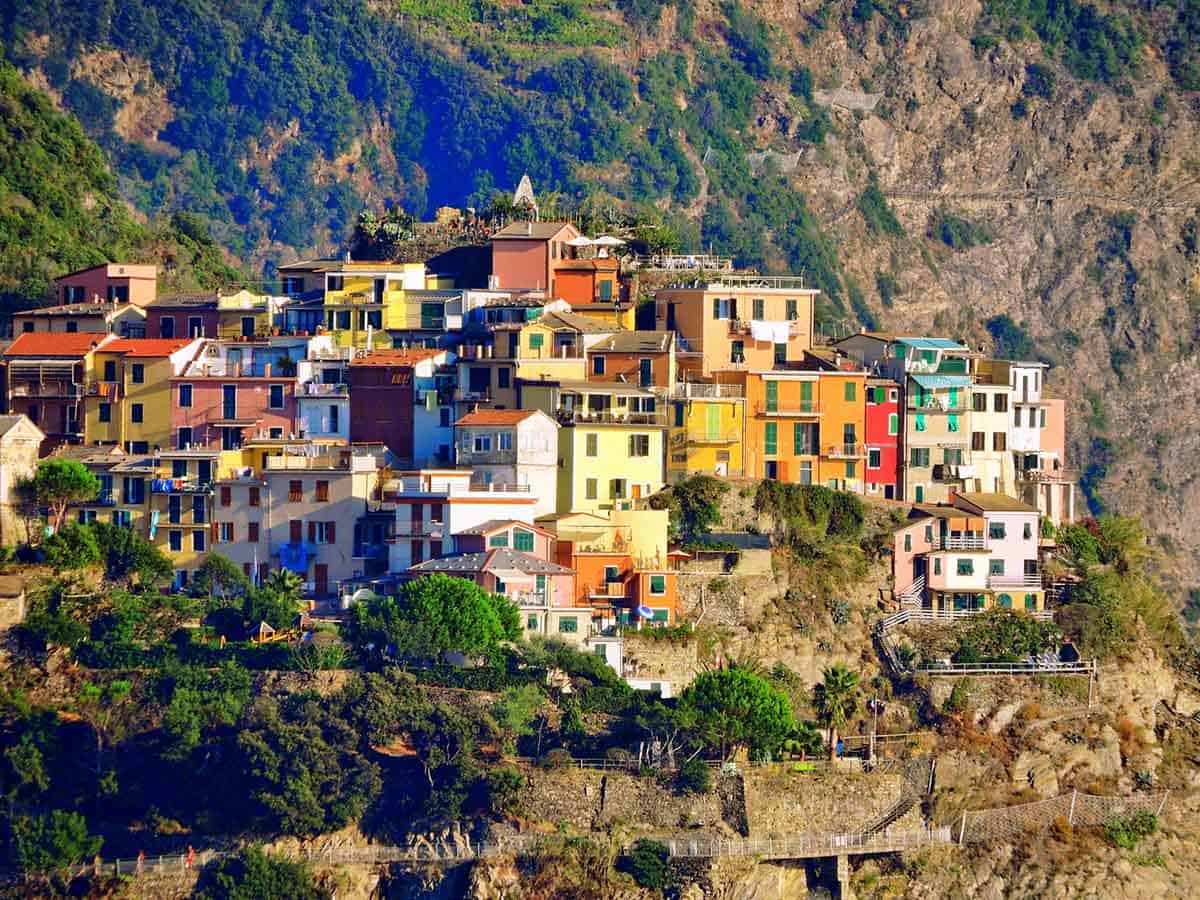

Stretching for 12 kilometres on the Italian Riviera, the Cinque Terre and its five colourful villages make for an enchanting Mediterranean escape. Here’s everything you need to know.
Dramatically built into the cliffs of the Italian Riviera, the five villages of the Cinque Terre comprise a colourful hodgepodge of buildings that overlook the Ligurian Sea. The region’s mountainous terrain meant the villages were isolated from the rest of Italy for centuries, and while they’re more accessible these days they remain charmingly traffic-free, connected only by a 19th century-built railway that runs from the nearby city of La Spezia.
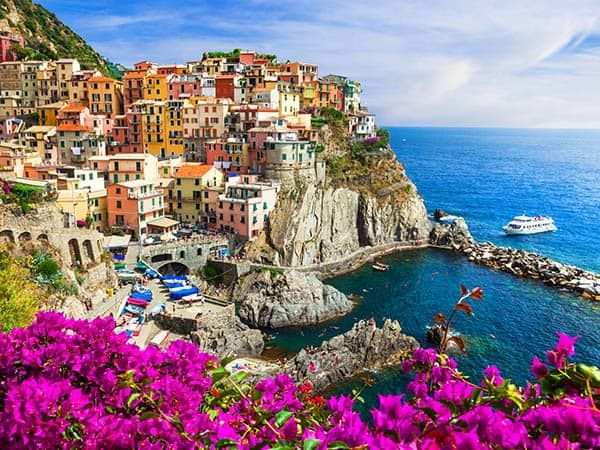
Visitors spend languid days wandering the steep and narrow cobbled laneways, relaxing around the small harbours that are filled with colourful fishing boats, swimming in the aquamarine waters and sunbathing on rocks that line the rugged coast, and feasting on authentic Italian cuisine that is centred around local produce, such as pesto and anchovies.
Listed by UNESCO for its scenic and cultural values and also declared a national park, the Cinque Terre is not only aesthetically beautiful but also authentically Italian. It is a place where the same families have lived for centuries, and traditions – such as the local dialect, fishing, winemaking, and dry-stone masonry – are nurtured.
The five villages of Cinque Terre
Monterosso
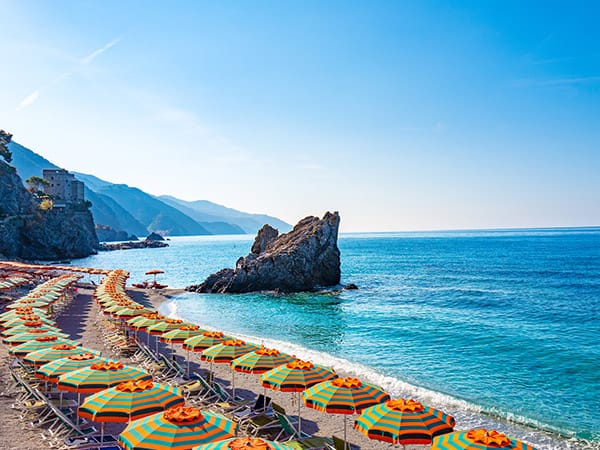
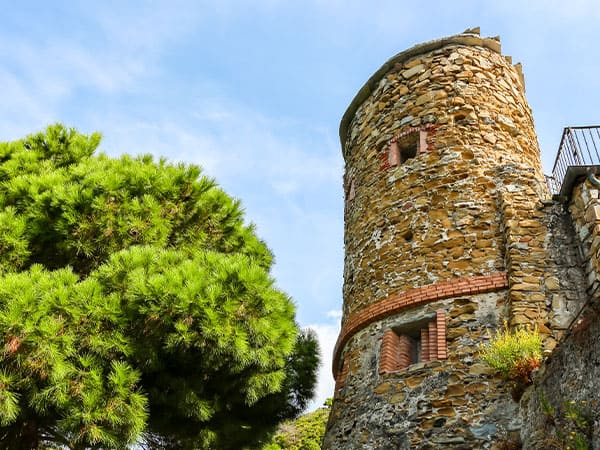
The northern-most village of the Cinque Terre is the largest of the five but no less charming. Known for its lemon trees and anchovies, Monterosso is split into an old and new town, separated by a pedestrian tunnel that runs under the medieval Tower of Aurora, which is now home to an atmospheric restaurant. The old section is dominated by the ruins of the ancient fortress and castle, and the 17th century Church of San Francesco, from which there are spectacular views of the ocean. Monterosso is the only village with a large ‘sandy’ beach (it’s a mix of sand and pebbles) blanketed in striped umbrellas that are available to rent.
Vernazza
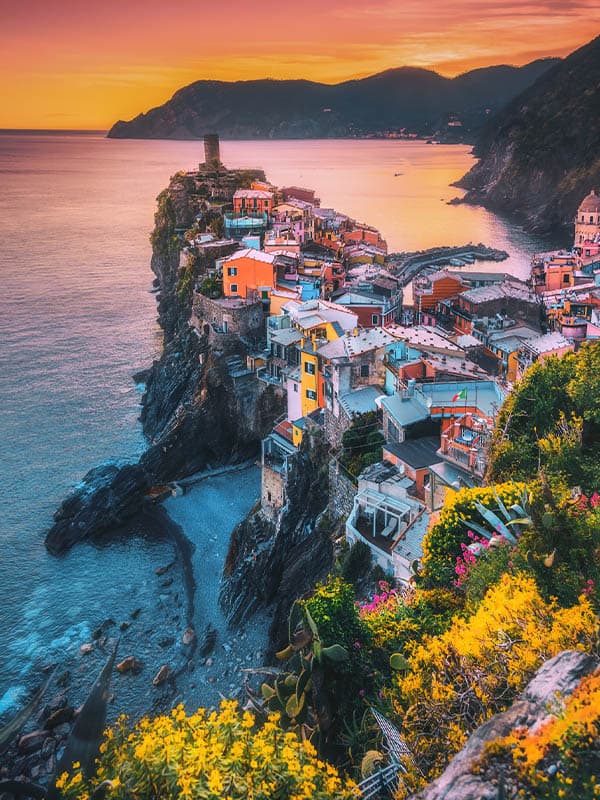
The smallest and steepest village of Vernazza is often described as the prettiest of the five. It has one main street that runs from the train station down to the sea, which is lined with cafes and shops. The village has the only natural port and pier in the Cinque Terre and a couple of small beaches, while grapes and olives grow on the surrounding terraced hills. Visitors can climb Bel Forte Tower for spectacular views and to dine at the restaurant; its surrounding rocky cliffs double as a platform for thrill-seekers to dive off into the sea.
Corniglia
The tiny hamlet of Corniglia is the middle village of the Cinque Terre and is the only one that’s not built on the sea. In fact, the village is perched 100 metres above, on a rocky promontory, and is surrounded by rolling vineyards. From the railway station, visitors need to climb some 380 steps to get here – as such, Corniglia is far quieter, and some say more traditional than its sea-dwelling neighbours. The Belvedere di Santa Maria lookout affords panoramic views of the five villages of the Cinque Terre.
Manarola
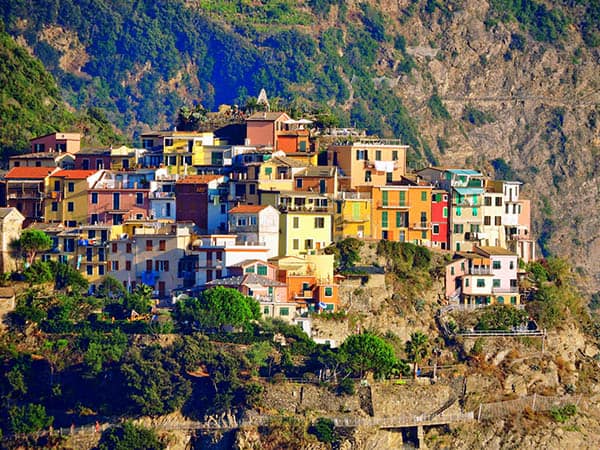
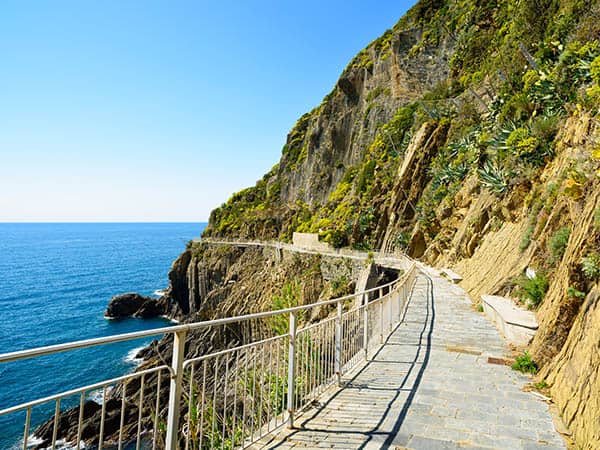
Manarola is the most famous winemaking village in the Cinque Terre producing two whites but is most renowned for its sweet dessert wine, sciacchetra. The village has a tiny harbour but no beach, so you’ll often see swimmers lazing about on the surrounding rocks. The old town has a small piazza with restaurants and shops and a medieval stone church. It’s also the starting (or finishing) point for the Via dell’Amore walkway, ‘Path of Love’, which is set to reopen in 2023, 10 years after it was damaged by a rockslide. The walkway connects Manarola with its neighbour Riomaggiore and makes up part of the Blue Trail.
Riomaggiore
Cinque Terre’s southernmost village is the closest to La Spezia. Riomaggiore’s pastel-coloured buildings are tightly clustered in a ravine, and its town is quite small with narrow and steep alleyways. The main street is filled with restaurants and shops, and it has buildings that date back to medieval times, including the 13th century Castello di Riomaggiore. It has a small, rocky harbour with crystal-clear water, while above the village the landscape is green with olive groves and vineyards.
Things to do in Cinque Terre
Soak up the sun and sea
Whether it be at Monterosso’s sandy beach, where you can set up for the day under a rented umbrella, or one of the other village’s sparkling harbours, taking a dip in Cinque Terre’s aquamarine water is the perfect antidote to the hot Mediterranean sun. Or soak up views of the magnificent Cinque Terre from the sea on a relaxing cruise or a kayak tour, where you can explore caves and coves.

Sample the wine
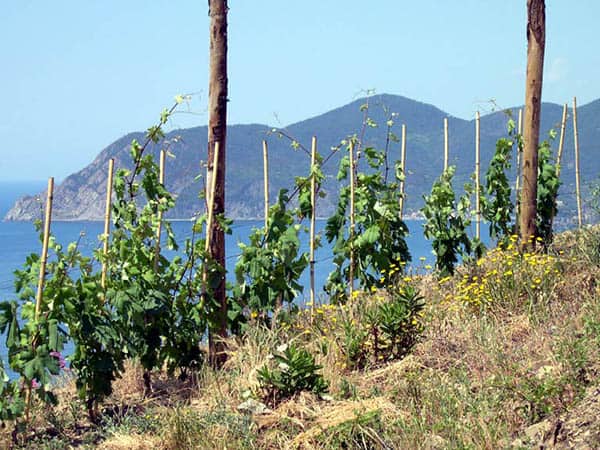
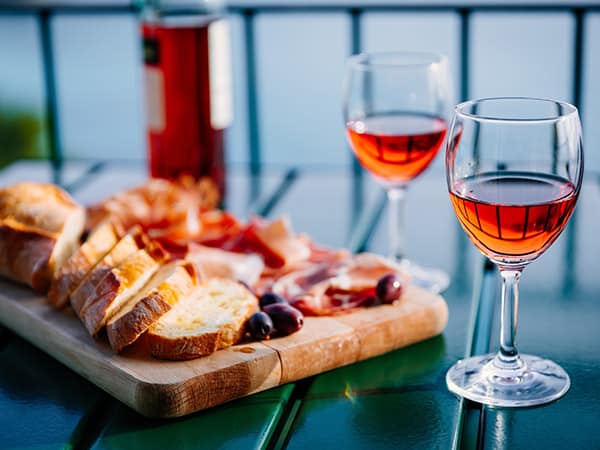
Against all topographical odds, Cinque Terre is a verdant winemaking region. Its terraced vineyards were constructed by way of ancient dry-stone walls that continue to be maintained by skilful stonemasons. The region is famous for its light and dry white Cinque Terre DOC, but also produces Sciacchetra, a sweet dessert wine. Be sure to sample these drops at one of the many vineyard’s cellar doors, or at the local restaurants or wine stores throughout the villages.
Weekly travel news, experiences
insider tips, offers, and more.
Dine on local produce
The menus of the Cinque Terre are packed full of local ingredients that are grown in the surrounding countryside and created passionately by hand. Liguria is the birthplace of pesto and the gourmands of the region make it with their own locally grown basil; try it on pasta and with a drizzle of Cinque Terre olive oil. Seafood is plentiful and fresh in the Cinque Terre; the local specialty of Monterosso, anchovies, is cooked many ways – marinated, salted, deep fried. And when it comes to snacks, there’s nothing better than focaccia, which also originated in Liguria. In Cinque Terre, it’s eaten with olive oil and salt, or flourished with onions, olives, tomato, pesto and other delicious morsels.
Hike the Blue Trail
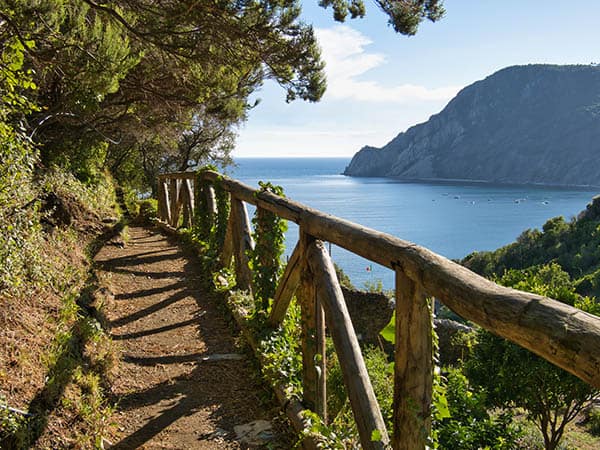
There are more than 120 kilometres of marked hiking trails throughout the scenic Cinque Terre National Park. The most popular trail is The Blue Trail, which takes you the entire 12-kilometre Cinque Terre coast, cutting through vineyards and olive groves, over rocky terrain, up steep steps, with views of the sparkling sea a constant. The trail can be done in either direction between Monterosso and Riomaggiore, but remember the Via dell’Amore section between Manarola and Riomaggiore is closed until 2023 for significant repairs, so currently visitors can only walk between Monterosso and Corniglia. (There is a fee to access the Blue Trail.)
What you need to know before you go
Getting to Cinque Terre
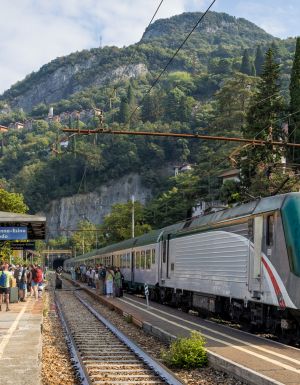
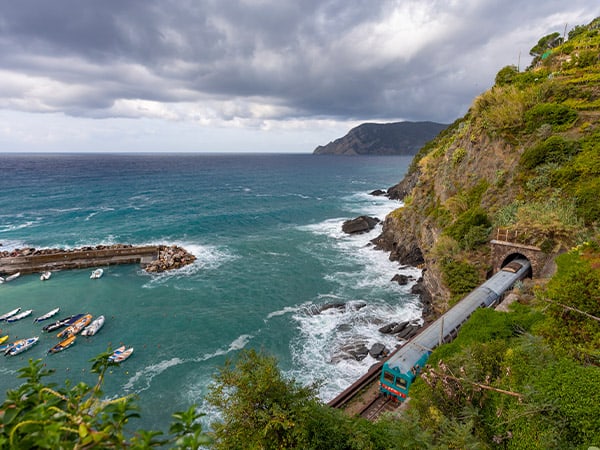
There are trains from Pisa, Florence and Rome to La Spezia, from where you’ll need to transfer to the Cinque Terre Express, the train that connects each of the five villages.
Where to stay in Cinque Terre
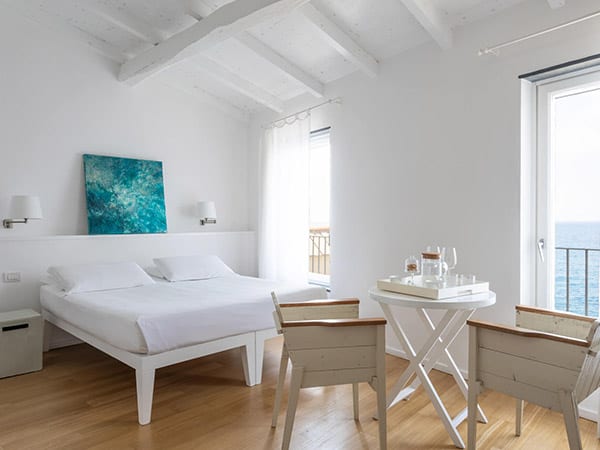
The medieval villages of the Cinque Terre aren’t home to many traditional hotels but there are some gems, such as the grand Porto Roca, which has a private beach, infinity pool and restaurant in Monterosso; simple and modern La Mala, which boasts incredible ocean views in Vernazza; and the charmingly styled Torretta Lodge in Manarola. There are also many quaint guesthouses, B&Bs and holiday homes available. See the Cinque Terre National Park website for more.
Want to see more stories from International Traveller in your Google search results?
- Click here to set International Traveller as a preferred source.
- Tick the box next to "International Traveller". That's it.