hero media

Review: Clontarf Castle Hotel, Dublin

With visions of grandeur playing in her head, Jennifer Pinkerton has a castle-lite experience in a new take on an old classic.


Arriving there

“Where to, my lady?"


“Clontarf Castle, forthwith!" I instruct the Dublin cabby.


Bluster aside I’m feeling a wee bit sheepish about my night at the castle. Is it a tad touristy?


Indeed it is, as confirmed by the sea of American accents and peak caps filling the hotel foyer.


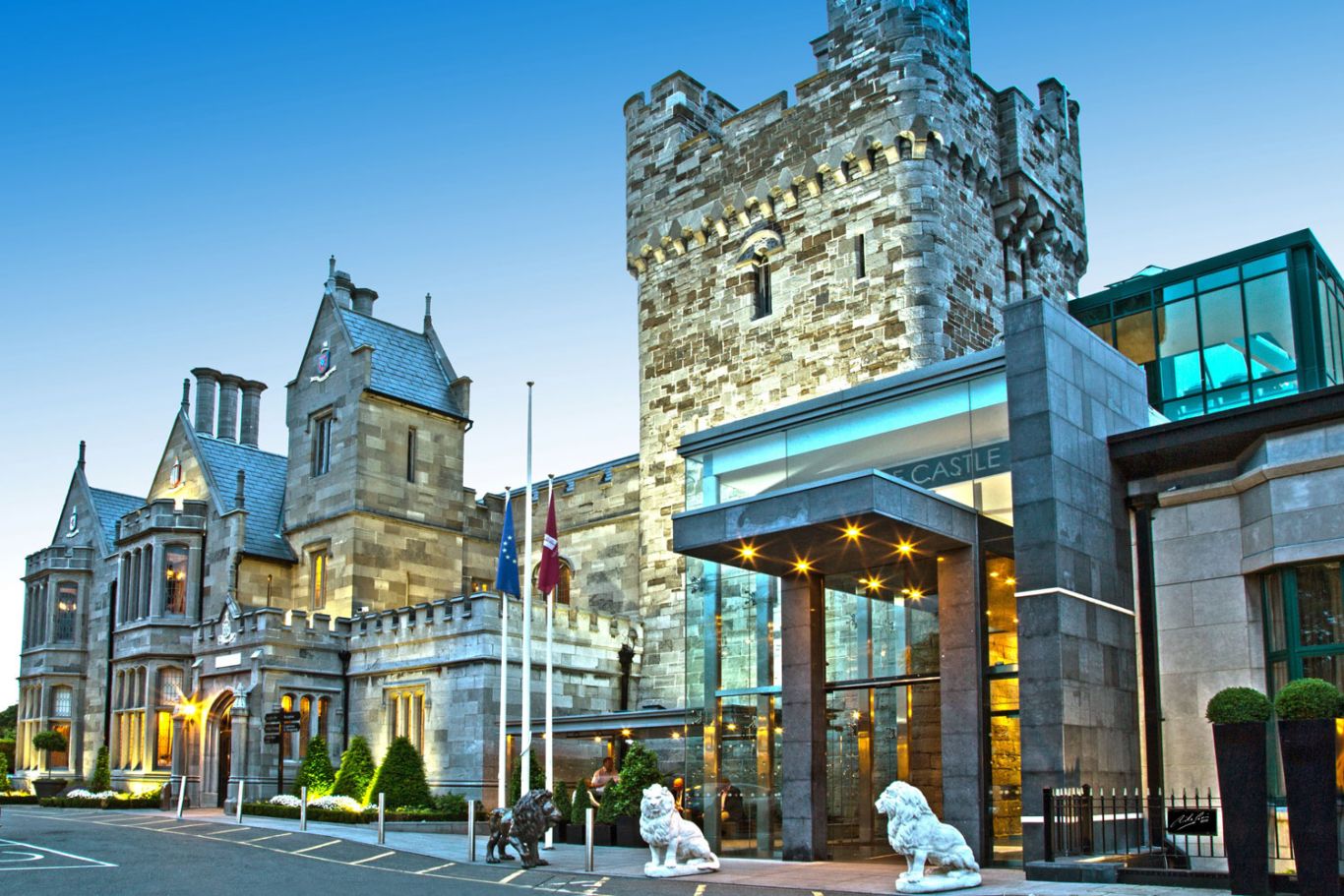
I scan the stone lions, mounted deer heads and suits of armour around me. Regal-looking furniture collects under glass ceilings. Saxophone jazz drifts overhead. A backlit panel behind reception displays neat lines of antique keys.
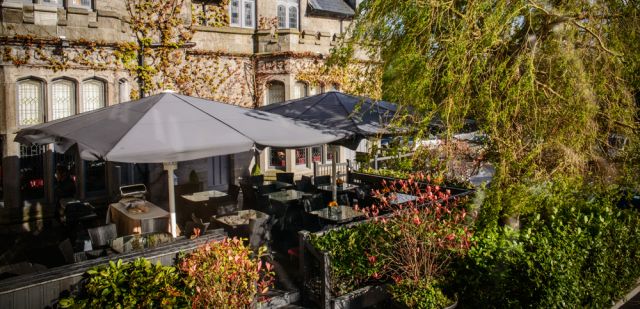
Relaxing outdoor area at Clontarf Castle Hotel
Relaxing outdoor area at Clontarf Castle Hotel.

Hotel history

It’s clear the architect’s brief for the hotel’s seven-year-old renovation was to let the light in and mix old structures with new. And it works, without looking forced.


Boxy glass walls complement rather than overshadow the original castle – which I note is quite small, by castle standards that is.


“Am I staying in the posh castle bit of the hotel?" I ask, channeling my best Kath and Kim. No, I’ll reside in the ‘new’ section of the building. In fact we all will, the Americans and I.


“The only parts of the hotel in the original castle are Knight’s Bar and the Fahrenheit Grill, " explains the Polish receptionist with immaculate manners. (While American accents proliferate, Irish accents are in short supply among staff – a reminder of an ongoing economic slump seeing workers trek overseas.)

The room

I haul my luggage to the first floor and feel my breath rise in excitement upon seeing the sign ‘Viking Suite’ on the door in front of me.


Alas, I’m in the wrong corridor. But my own ‘Executive Room’ is not without charm.


The space, about five metres-squared, holds a four-poster bed and has an extra add-on section, much like a smoking room. The lemon-and maroon-coloured furniture all looks new, as does the bathroom. It even boasts one of those flat, wide showerheads I so adore.


Before my brainpower fades with the daylight, I gather my satchel and trip downstairs to poke around.
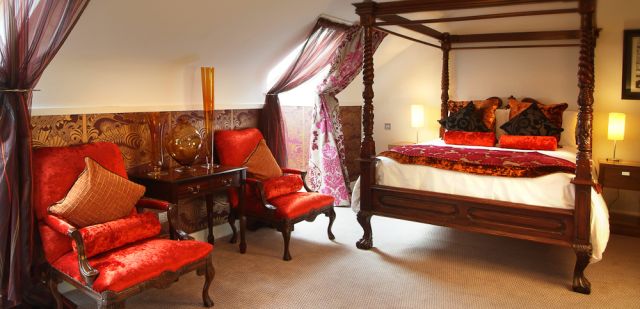
Inside a guest suite at Clontarf Castle Hotel in Dublin, Ireland
Inside a guest suite at Clontarf Castle Hotel in Dublin, Ireland.

The decor

At the entrance to Knight’s Bar hangs a framed issue of The Irish Penny Journal dated September 1840.


A sketch of Clontarf Castle accompanies the text: “There are few things that afford us a higher pleasure than to observe … the splendour of [our] public buildings, for they are sure evidences of the advance of civilization."


A voice like a low flute trills behind me. “Want me to take a picture of ye?"


It’s 73-year-old local Brian Healey. He’s standing just shy of the pub doors, lighting up a smoke.


“I remember having my photo taken in this exact spot when I was a young fella, " he says. “This place was a show venue then."


From the unprompted history lesson I learn Clontarf Castle was first built in 1172 as part of Dublin’s inner defense line, but the building has had several incarnations since then: a family home, a cabaret venue and, since 1998, a four-star hotel.
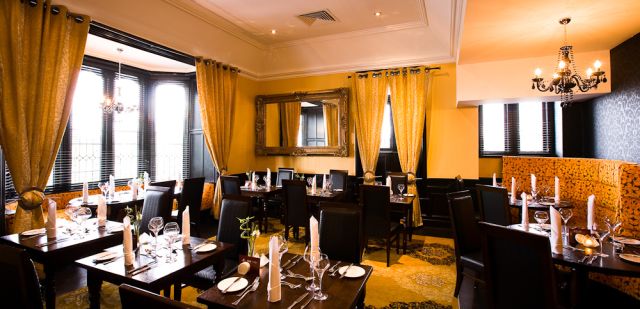
Fahrenehit Annex restaurant at Clontarf Castle Hotel, Dublin
Fahrenehit Annex restaurant at Clontarf Castle Hotel, Dublin.

For reasons I don’t quite understand, Brian insists on giving me a parting gift – a lighter etched with the slogan ‘Cusack’s. A unique maritime pub’.

The bar and cafe

The Knight’s Bar, I discover, doesn’t quite match its billing as a place “evoking a feeling of medieval romance".


That said, it is sweet. With an ornate ceiling, fireplace, stained glass windows, studded leather chairs and, my favourite touch, a carved gothic backdrop behind the bar, it’s close in feel to an old hunting club.


What’s more medieval are the spaces linking the bar with the hotel foyer: orange-lit holes-in-the-wall; cosy spots for a pint.


The next morning I find myself in the hotel’s pretty café, the Fahrenheit Grill. It feels like a church attic. Lacquered black beams line its walls and frontage, a tangle of history and luxury.


Amid whispering honeymooners, I happily polish off my buffet breakfast.


It’s here that my castle experience begins to find form. This is indulgence, but the approachable kind – ‘castle chill’ if you will. Kath and Kim, I’m afraid, just wouldn’t fit in.


Weekly travel news, experiences
insider tips, offers,
and more.

Details

Clontarf Castle Hotel
Castle Avenue, Clontarf Dublin 3, Ireland

• Getting there


From Dublin Airport, take the M1 towards the city centre, turn left at the first set of traffic lights onto Collins Avenue. Continue to the end of the road to a T-junction where it intersects with the Howth Road and bear left. The second set of traffic lights take a sharp right onto Castle Avenue, and you’ll find the entrance to Clontarf Castle Hotel at the first roundabout on the right hand side.

• The IT Verdict


“The castle’s history and eateries are loaded with colour but I was looking forward to sleeping in a castle, not just dining in one.
But the hotel wing is sweet, comfy and low-key. It’s a good value pick for couples or older family groups in a great location."

• Notes

Jennifer paid $230 for an Executive Suite.

Want to see more stories from International Traveller in your Google search results?

  1. Click here to set International Traveller as a preferred source.
  2. Tick the box next to "International Traveller". That's it.
hero media

What the European heatwave means for your summer travel plans

Temperatures are soaring this summer, breaking records across Europe and the UK. 

Euro summer is a feeling like no other. But when a heatwave hits? The dream trip quickly turns into a sweaty mess. Extreme heat is sweeping Europe and the UK this week, with record-high temperatures impacting travel plans across the continent.

And while Australian summers are typically hotter in absolute temperature, many European cities aren’t equipped for high temperatures, resulting in unbearable weather.

Why is it so hot in Europe?

Signs of a hot summer loomed in May, when the mercury hit unprecedented spring highs. Now, extreme high temperature warning alerts have been issued in countries such as Spain, Italy, France, England, the Netherlands and Germany.

France saw its hottest day on record on Wednesday, with an average temperature of 30°C across the day and night. This surpasses the average temperature for June, which is 15°C to 25°C. Dozens of people have died, including 40 from drowning.

In Spain, 212 deaths have been linked to the heatwave.

The UK recorded its hottest June day ever on Wednesday with temperatures soaring to 36.1°C. In an article published by the Met Office – the UK’s national meteorological service – Professor Stephen Belcher CBE, Met Office Chief Scientist, shared his concerns about June’s heat. “To see temperatures like this in the UK in June is sobering. Events like this bring home the implications of climate change, with very high temperatures and humidity bringing significant health implications from heat stress, as well as impacts to a range of sectors such as transport, energy and water supply,” he said.

Heatwaves are becoming increasingly common in Europe and the UK, neither of which is prepared for such extremes. The World Meteorological Organization reported that in 2025, at least 95% of Europe experienced above-average annual temperatures and that the continent was heating up twice as fast as the global average.

How travel is impacted

A pharmacy sign displaying 40 degrees Celcius
A pharmacy broadcasting local weather data. (Credit: Getty/Dragoncello)

During a heatwave, power grids, water systems and transport networks can be affected, resulting in disrupted itineraries for travellers. In France, power outages have left thousands without electricity and early closures have been implemented for two of Paris’s biggest attractions, the Eiffel Tower (early afternoon rather than late at night) and the Louvre (two hours early). Eurostar cancelled its London to Paris and Paris to London services from the 22nd to the 25th, and major UK rail companies have been advising travellers to avoid using trains where possible, or to travel during early hours.

If a heatwave is predicted, being flexible with your itinerary and having fully refundable/changeable tickets is key, as extreme heat can force the cancellation of outdoor activities, impact rail and flight services and change the opening hours of sites and eateries.

Why does summer in Europe often feel hotter than summer in Australia?

people swimming in the Canal Saint-Martin in Paris
People swimming in the Canal Saint-Martin in Paris to cool off. (Credit: Rachael Thompson)

With some of the highest UV levels in the world, Australians are no strangers to the heat, adapting well to intense weather. But our infrastructure is largely equipped to withstand soaring temperatures with climate-responsive passive design, refrigerated air conditioning or evaporative coolers, as well as swimming spots aplenty.

Buildings in Northern and Western Europe and the UK, however, are constructed to retain heat and handle frosty winters. The lack of universal air conditioning means it generally feels hotter even though the temperature on your app might not look it. During a heatwave, it can feel like you’re in a sauna as cities act like heat traps.

How to stay cool and prepare for another heatwave

Relief is expected across Europe and the UK later this week, but more heatwaves are still possible in the coming months. Summer heat typically peaks in July and August.

Public transport often doesn’t have air conditioning, and buses in particular can be swelteringly hot. If you’re heading outside or your accommodation has no air conditioning, it’s worth buying a spray bottle and a handheld fan from a pharmacy or tourist stand. Check ahead of time if restaurants and cafes have air conditioning and make a booking in advance. The highest temperatures typically hit between 3pm and 6pm, so aim to head outdoors outside of these hours.

Rising temperatures invite travellers to enter a more intentional era of seeing the world. Now more than ever is the time to embrace lower-impact “coolcations” and off-season getaways.

Review: Clontarf Castle Hotel, Dublin