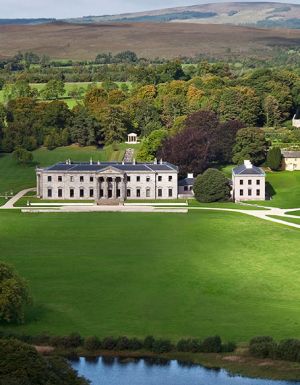

When you look beyond the incredible nature and fascinating history on the island of Ireland, there’s a whole range of unexpected reasons to visit.
It’s no secret that Ireland is a magical place to visit. From the uniquely fascinating natural wonders, like the hexagonal basalt columns that make up Giant’s Causeway, to the modern and ancient historical significance of places like Dublin and Newgrange, plenty of well-known attractions rightly entice travellers every year. But there are also plenty of surprising things to do in Ireland that many would never have expected – I know I didn’t.
1. Forage for seaweed
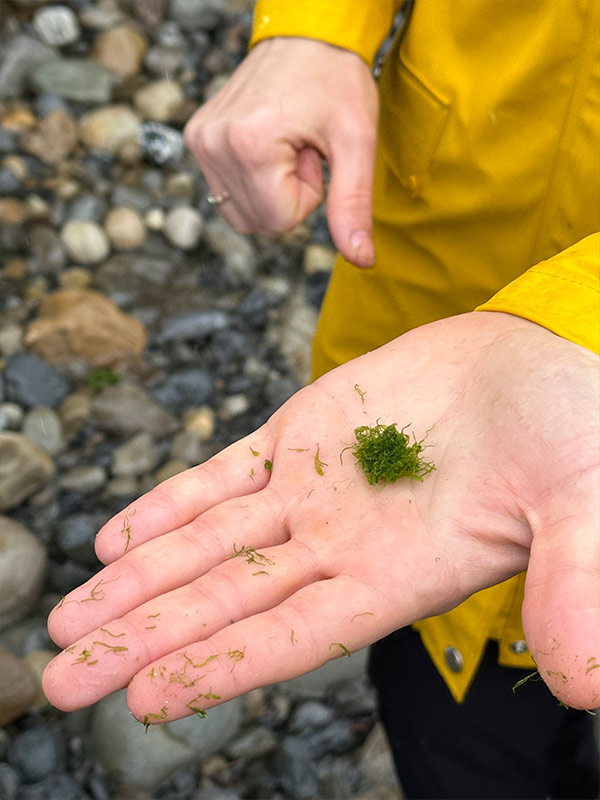
When talking about seaweed in cuisine, most minds would be forgiven for jumping straight to Japan. But seaweed has historically been just as integral in Irish cuisine as it is in Japan’s, particularly the practice of foraging the land for it. So why haven’t most people heard about it?
Because the practice dropped off after the Great Famine and consequent poverty that was experienced on the island of Ireland, when ‘foraging’ suddenly became synonymous with being broke. That is until Covid lockdowns revived the practice of foraging for this natural superfood, as well as other ingredients, like mushrooms.
Discover this ancient practice for yourself on a tour with Nourished In Nature. Find them in Strandhill, County Sligo, and discover the different types of seaweed, what you can do with them (the answer is basically everything from making stir fries to luxuriating in a warm seaweed bath) and the health benefits that make it worth the effort. Also, foraging is just a lot of fun.
2. Bathe in seaweed at a luxury spa
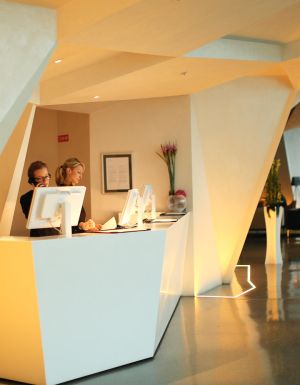
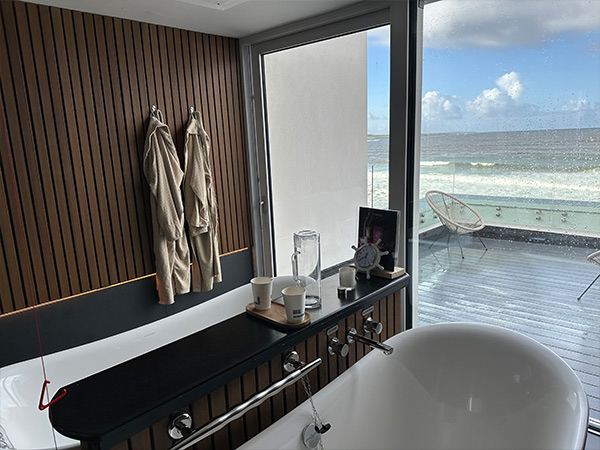
Speaking of seaweed, Ireland has optimised it for beauty products as well. After foraging on Strandhill Beach, treat yourself for your hard work by booking a relaxing seaweed soak at Voya Seaweed Baths. Minimalist design with a hint of the nautical, rooms hold one or two baths that get filled with hot water and seaweed so you can bathe – the seaweed used releases a soft goo, similar to that inside an aloe vera plant, that is guaranteed to leave you with baby-soft skin. As the seaweed works its magic, you can gaze out to the ocean.
There are other spa treatments on offer too – from massages to skin enhancements – and plenty of seaweed-derived beauty products for sale (natural shampoo enthusiasts need to try the hair products).
3. Sleep in a bubble tent
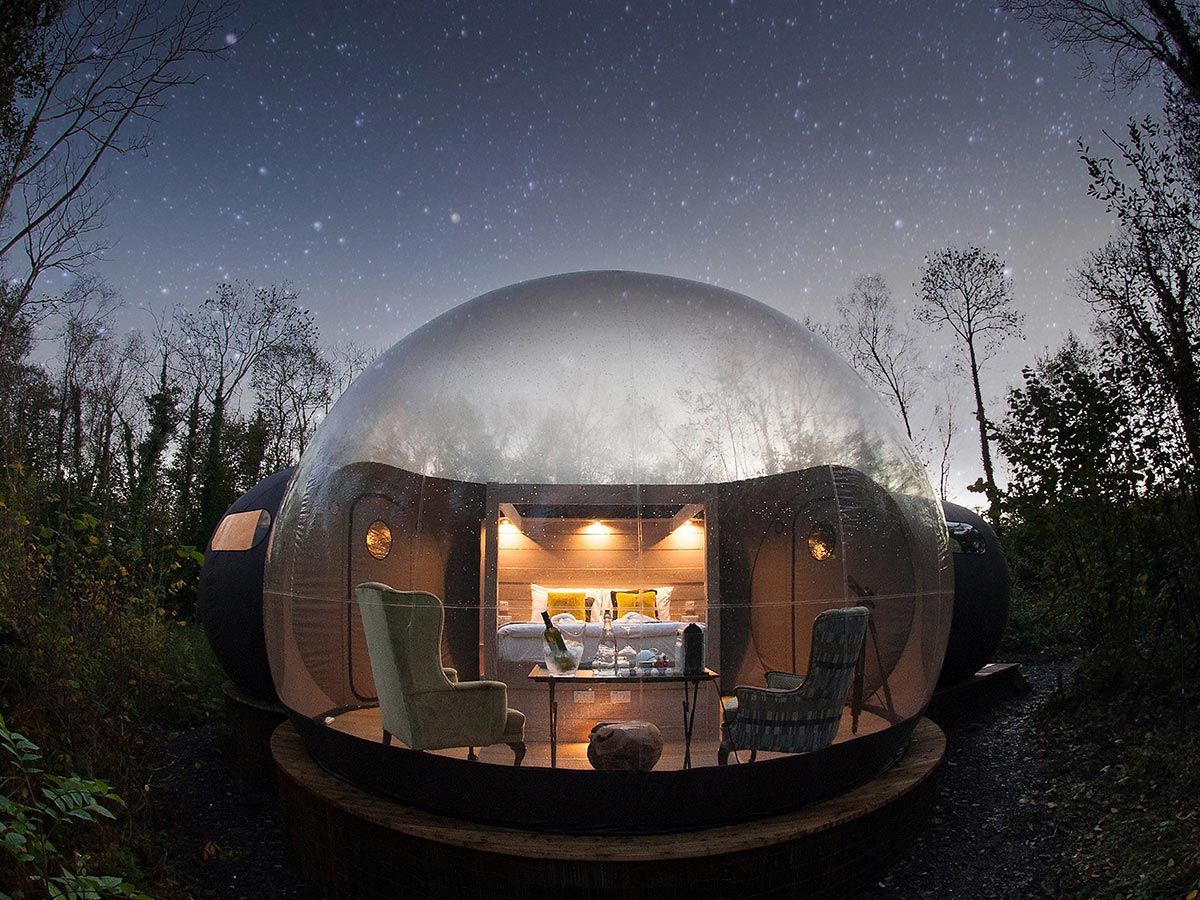
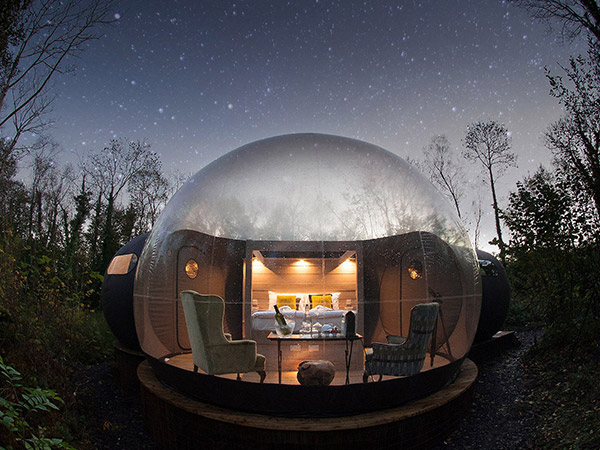
Bubble tents might be popping up all over the world, but did you know you can sleep in your very own in the middle of a classic Irish forest at FinnLough Forest Hideaway?
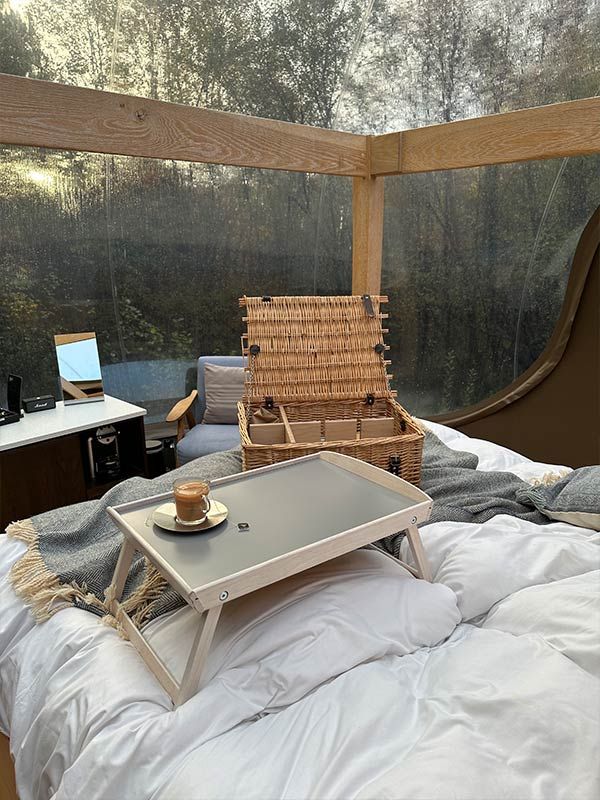
Hidden in a remote location by a lake in Enniskillen, bubble domes are kept private with fences, a limited capacity of 18 bubble domes, three cabins and, of course, the tall protective trees of the forest. Rain or shine, it’s a cosy stay akin to something out of a traditional fairy tale. This ultimate back-to-nature has just enough luxury to make it truly relaxing.
Book dinner at the onsite restaurant, The Barn, where chefs forage and source locally to create a delicious modern Irish menu – do your tastebuds a favour and book the degustation with wine pairing. More casual drinks and lunch dining can be found at The House Bar.
Two onsite spas offer a unique experience embracing hot and cold therapy. Follow the private, two-hour Elements Spa Trail experience to find a series of treatment cabins nestled in the forest, or stop by the Shoreline Spa for private hot tubs and a shared sauna, before diving into the cold and beautiful lake.
4. Taste chocolate made by a 100-year-old order of Nuns
Historic Kylemore Abbey is no secret attraction to visitors to Ireland. Its 2.4-hectare Victorian walled garden, neo-gothic church and beautifully restored Abbey are plenty of reasons to visit.
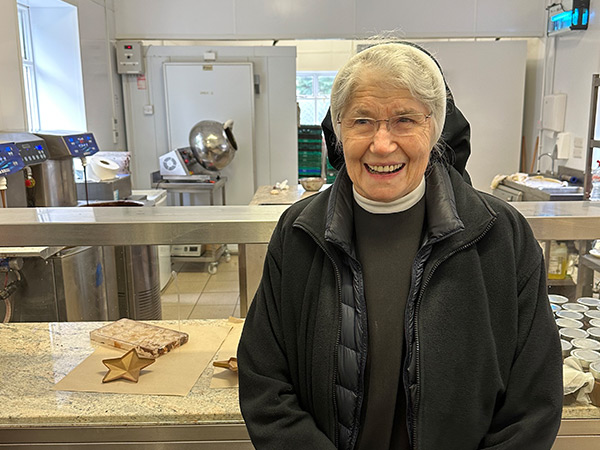
But another reason you may not have heard of is the put-Cadbury-to-shame-delicious chocolate made and sold by the 100-year-old order of Benedictine nuns who call Kylemore home.
In an effort to generate money for the upkeep of Kylemore Abbey, the nuns have been making treats, snacks, soaps, drawings and other arts and crafts for many years. This has meant they’ve also been a big employer of local women.
If you’re lucky, you may even meet Sister Genevieve, a 70-year-old nun from Queensland’s own Rockhampton. Starting her career as a nurse, she switched to being a nun while she was still young and wound up in Ireland after her Queensland monastery shut down. She’s vague on the details, but she’ll tell you that’s because she’s been at Kylemore for so long she can’t remember much before it.
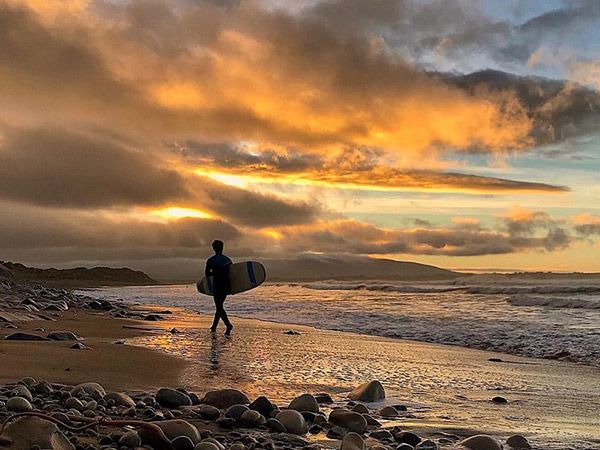
5. Surf some of the world’s best waves
While career surfers will already know about the world-class waves to be found on Ireland’s east coast from Rossnowlaugh Beach in Donegal to Inischeone Beach in Galway, the rest of us remain blissfully unaware.
A 16-mile continental shelf creates quality waves on par with the famed ones of Hawai’i. In fact, professional surfers will travel far and wide just to catch one and enter Ireland’s big surf competitions.
While there are plenty of parallels between Australian and Irish surf culture – fish and chips, pubs and stores selling surf gear and clothing can be found lining nearly every beachfront – the portable beachside saunas and indoor shower and locker facilities keep the experience just different enough. Oh, and the single-digit weather.
6. Visit the original Hellfire Club
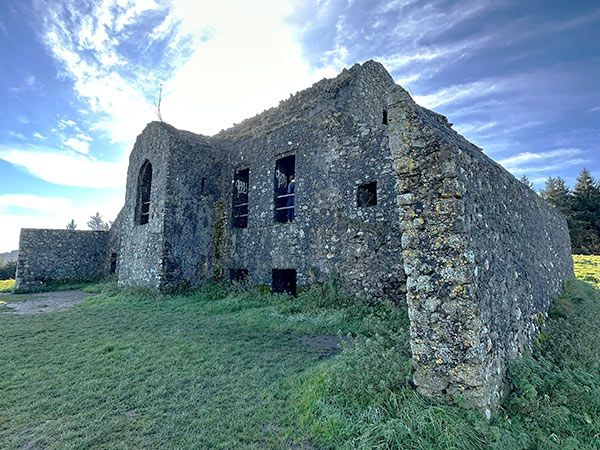
Anyone who likes a spooky story won’t be disappointed in Ireland in general, and neither will anyone who loves history. Combine both by taking the short hike up Montpelier Hill, about half an hour’s drive outside of Dublin.
At the top sits the ruins of the original Hellfire clubhouse, built around 1725 by local politician, William Conolly. Stories of wild behaviour and debauchery, occult practices and demonic manifestations have become part of the local lore until it burned down (somewhat mysteriously) around 1741.
As for the fire itself? Rumours abound from it being set alight for the aesthetic, to one of the members setting a servant on fire after they accidentally spilt a drink.
7. Touch 16th Century books at Armagh Robinson Library
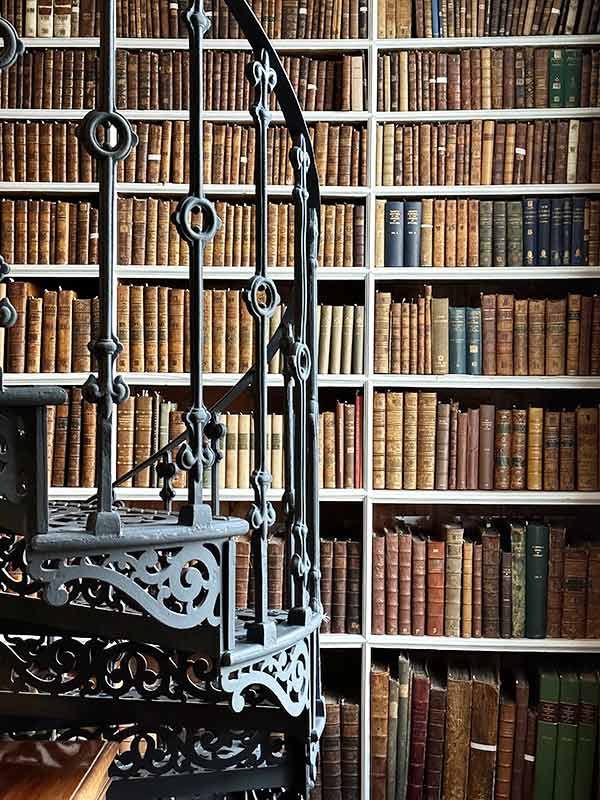
You don’t have to be a huge book nerd to appreciate how rare it is to not only be able to learn what was written as far back as the 16th Century but to be able to touch those books and parchment scrolls with your own (gloved) hands. Yet, that’s exactly what you can do at the Armagh Robinson Library.
Under the guidance of the local Vicar (who lives there with his family), discover historical tomes on every topic under the sun. In fact, if you let them know your interests before going they’ll even pull some books on your preferred subject – an option used by students a lot.
For example, when our group of Australians arrived, they had pulled out old logs of the explorers when they landed in Australia and its surrounds. Admittedly, they’d be very cancelled by today’s standards, but fascinating nonetheless.
8. Pop culture
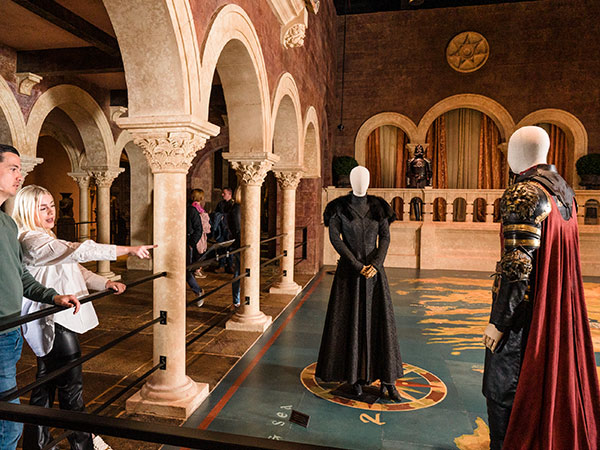
The filming of Game of Thrones may have put Ireland on the pop culture radar, but plenty more movies and TV shows have used this dramatic landscape as filming locations.
Visit the Linen Mill Studios or locations all over Ireland to see Game of Thrones sets, see recognisable spots from The Banshees of Inisherin at Inis Mor and Achill Islands, Star Wars: The Force Awakens was filmed on Skellig Michael in County Kerry. Then, of course, the very excellent Irish TV show, Derry Girls, was made in Derry.
Want to see more stories from International Traveller in your Google search results?
- Click here to set International Traveller as a preferred source.
- Tick the box next to "International Traveller". That's it.