
There is nothing more friendly, fun and inviting than a pint in an Irish pub. These are the best in Dublin.
The classic Irish pub is more than just a watering hole. It’s a community (even if you’ve never met another soul in there before you walked in), it’s a live music venue, it’s a place of predictable but good food and a place to stay warm in a cold country. It’s also just really fun, and one of the best experiences to have in the country. And, when it comes to Dublin pubs, they often have a literary or historical connection that just makes it all the better.
1. John Kavanagh The Gravediggers
Arriving in Dublin, the punk music scene of the 70s suddenly makes more sense – I can’t explain why in words, it’s just a feeling. And nothing is more punk than a much-loved local pub that shares a wall with a cemetery. Founded in 1833 by the Kavanagh family (who still own it), the legend goes that The Gravediggers used to service the gravediggers themselves. All they had to do was knock on a brick in the shared wall three times for a beer to be passed through the railings.
Today, it’s one of the few Dublin pubs where you can find a pint for under 5.50 euro ($8.80), and a place to try classic Irish dishes like coddle. It’s known by locals as the place for the best Guinness (no really, it tastes different from pub to pub, depending on how they store it) and good ‘craic’.
2. The Temple Bar
This area on the south bank of the River Liffey of Dublin’s inner city may be pooh-poohed by some as a tourist trap. I’ll admit that yes, the prices are a little higher than in other parts of Dublin – but in my experience, that price was on par for any drinks you could buy within walking distance of the city centre – and every traditional Irish pub band will have Zombie by The Cranberries in their repertoire (but who’s complaining?). But, let me just say; it’s the friendliest and most fun tourist trap I’ve ever encountered.
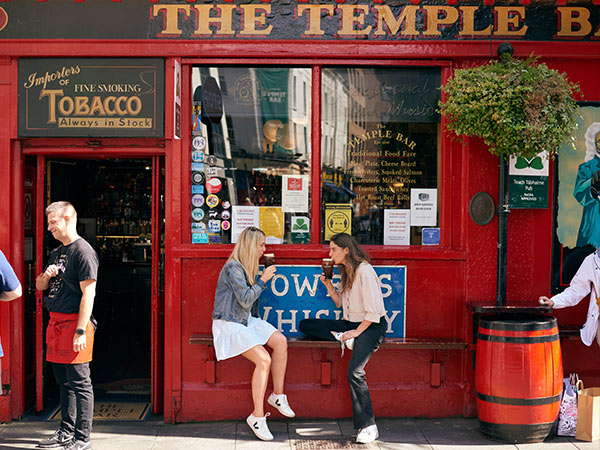
With a huge number of pubs, nightclubs, and restaurants that are very easily within walking distance of each other, the whole area has a vibrant and inviting energy that comes at nightfall. The Temple Bar pub itself is my favourite – you will have to sandwich in but the crowd is happy to make room and mingle. And if you’re there near Christmas the decorations are next level. Other great options include The Stags Head with its moody stained glass windows and taxidermied stag heads, The Porterhouse which is actually a brewhouse and crafts its own beers, and the centrally located The Auld Dubliner, which all crawls will end up at, eventually.

3. The Flowing Tide
Head just outside The Temple Bar area to find The Flowing Tide. Here you’ll find a good injection of local Dubliners, along with an overflow of theatre lovers (and maybe even actors) grabbing a pint before or after a show at nearby theatre, The Abbey. Despite this, you’ll find more room to move (and actually be able to hear each other talking) than The Temple Bar offerings.
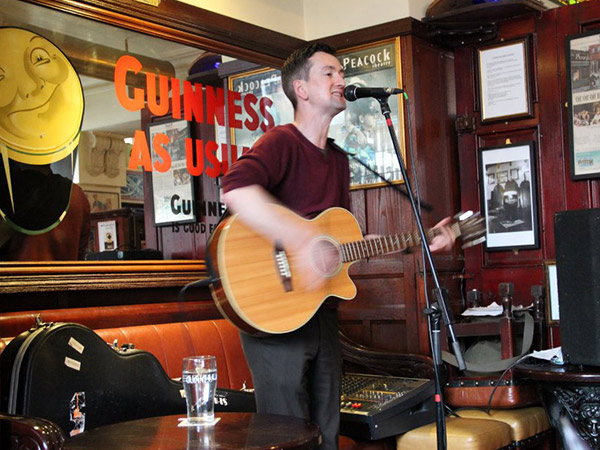
The interior design doesn’t get much more traditional than this – moody dark oak and stained glass windows. But with a nod to its theatre links with decorations. Head downstairs for a more lively vibe and live music (the musician will likely join you at the bar after their set).
4. The Confession Box
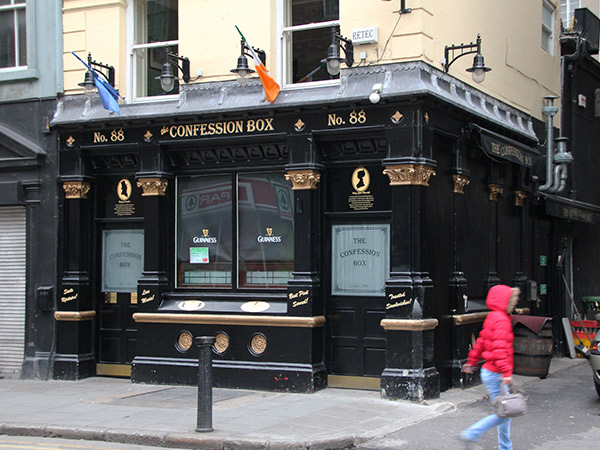
Although it’s located in the heart of Dublin, The Confession Box is often spoken about like a local secret. This homely, historic pub with welcoming staff has a host of locals who call it their regular watering hole, but are just as happy to welcome in travellers in the know. The price of a drink is also very reasonable.
But why the name? Dublin lore has it that the pub – built in the 1800s and originally called the Maid of Erin – was one used by several men who were excommunicated from the Catholic church during the Irish War of Independence as a place to still receive Communion from priests who were sympathetic to the cause.
5. The Long Hall
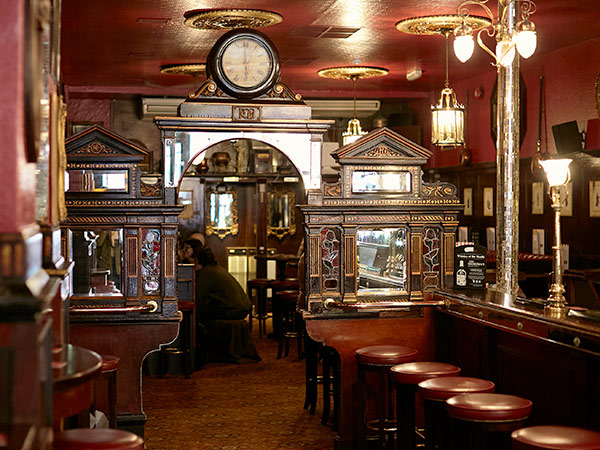
Having been around for over 250 years, The Long Hall holds a place in the hearts of most Dubliners. Not to mention, its fame became wide-reaching when Bruce Springsteen declared it was one of his favourite pubs.
Enjoy a pint of anything from Guinness to smaller craft beers at the glossy wooden bar with its classic red leather bar stools. Retro-looking clocks line the walls to give it even more of a classic feel. As this is also on the tourist trail, it is just about always packed with a crowd, so be prepared to wait for a seat.
6. Devitt’s of Camden Street
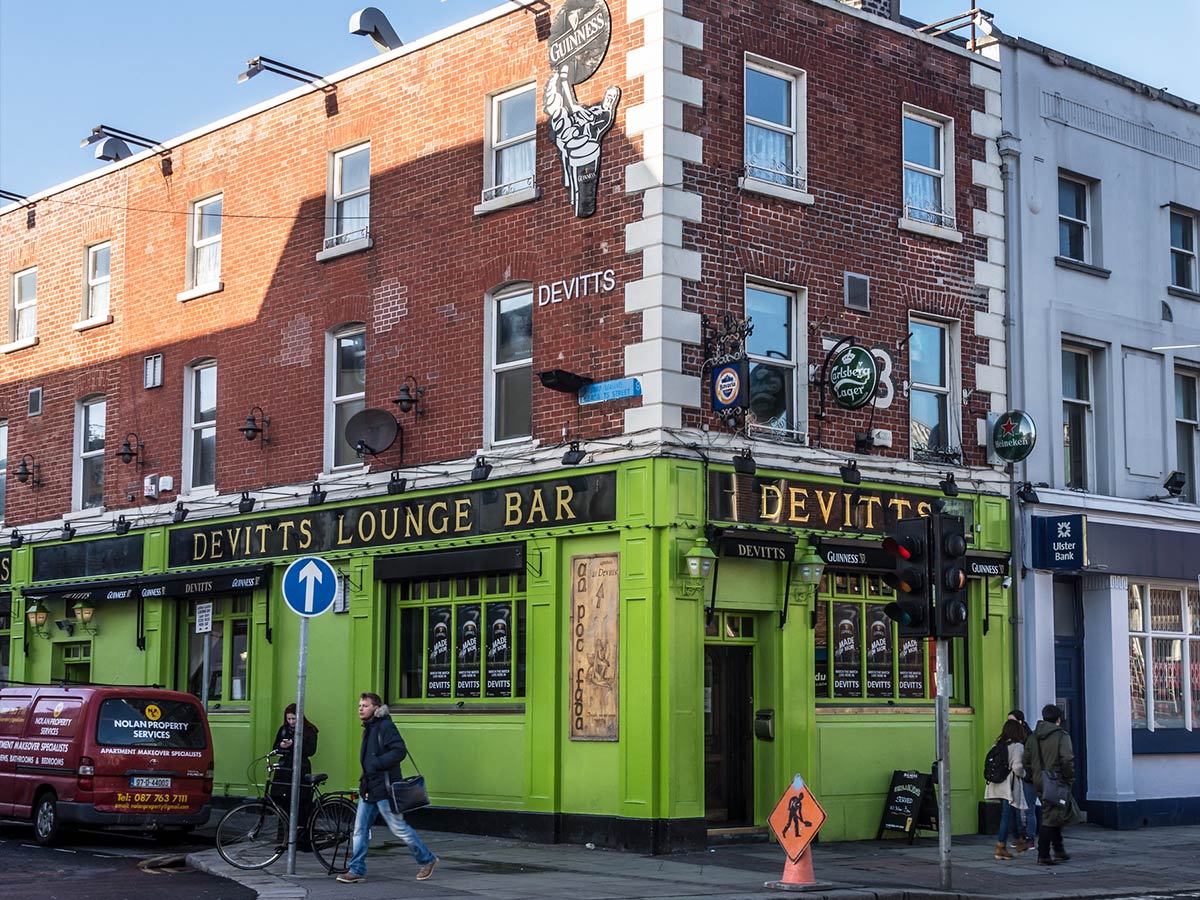
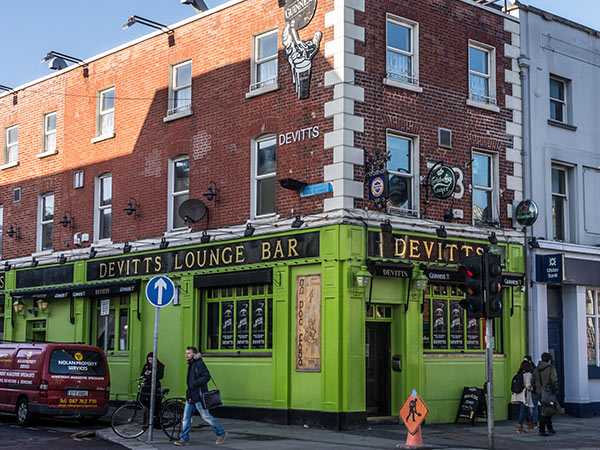
If you’re a little sick of beer, Devitt’s of Camden Street also happens to be very popular for its cocktails. Here, you can enjoy a hearty traditional pub meal – think chowder, fresh fish and chips and sizeable burgers – from their home-cooked menu (the locals rave about how good they are) and listen to live Irish trad and live music while you do it. It’s such a friendly atmosphere that many arrive solo and know they’ll leave with mates. And if not, the walls are decked out in trinkets and framed posters of yore, so there’s always something to look at.
7. Harry Byrnes
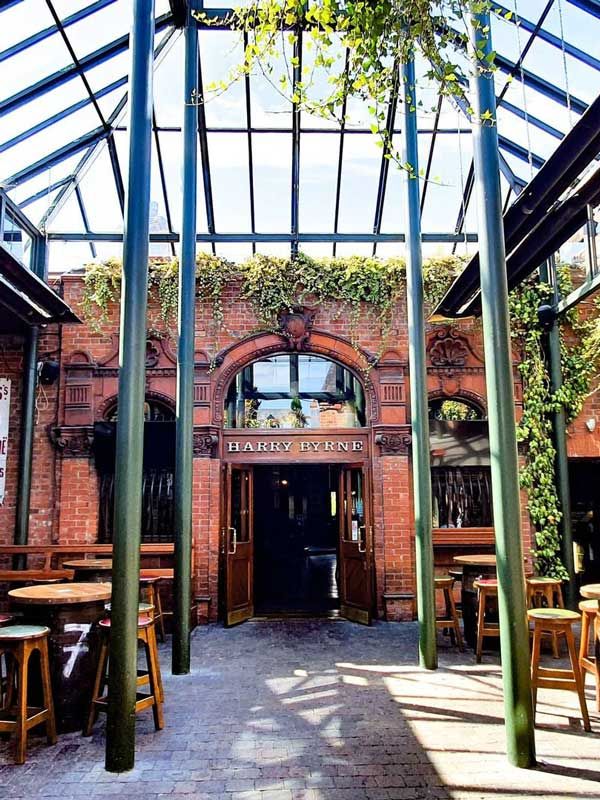
If you’re looking for a tasty pizza or a solid list of vegetarian options Harry Byrnes is a good place to start. This pub is loved for its food and fast service (not to mention friendly service and overflowing ‘craic’. A heated semi-outdoor area gives a good summer option (or head inside in front of a roaring fire over winter) and its location in the leafy Clontarf suburbs makes for a nice setting outside the hustle and bustle of the city centre. It’s also a great option for live music that regularly expands outside the traditional Irish fare.
Weekly travel news, experiences
insider tips, offers, and more.
8. The Cobblestone
While the beer is flowing here, it’s really the live music that wins over fans of The Cobblestone. In fact, the owners have been playing music here for five generations and these days some of the country’s most famous traditional musicians have played on this stage. Expect to hear lively fiddles, Sean-nós (“in the old way") singing and dancing, set dancing and céilidh (literally a gathering or party, but with a more modern association with a general night of fun, music, dancing and friends).
If it’s not enough just to watch, try your own hand at Irish music during the Balaclava Sessions every Wednesday. Two skilled fiddlers take beginners through the basics.
9. Mulligan’s
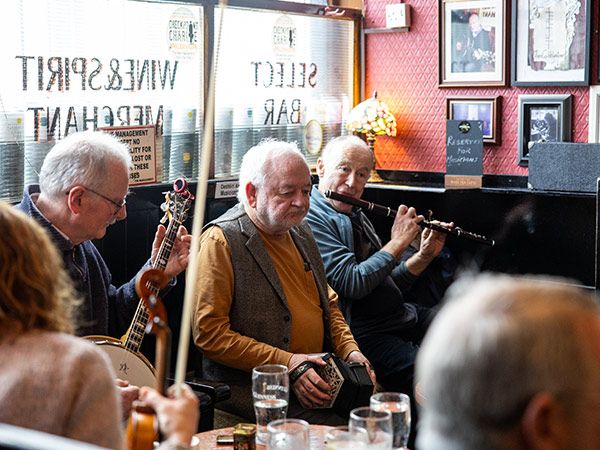
Mulligan’s on Poolbeg Street in Dublin is exactly what you expect from a traditional Irish pub: no-nonsense, good drinks and a decor that makes it feel like you’ve walked back through the ages. It even has bar tenders ready to entertain punters with lively personal tales.
Traditionally, the crowd here has been quite diverse, from local students to journalists from de Valera’s Irish Press Group next door to famous actors knocking off after their performances at the now-demolished Theatre Royal across the road. But despite the eclectic crowd regulars all agree it’s the best pub in Dublin to be able to enjoy good old conversation with the noise and distractions of other pubs.
10. Toners Pub
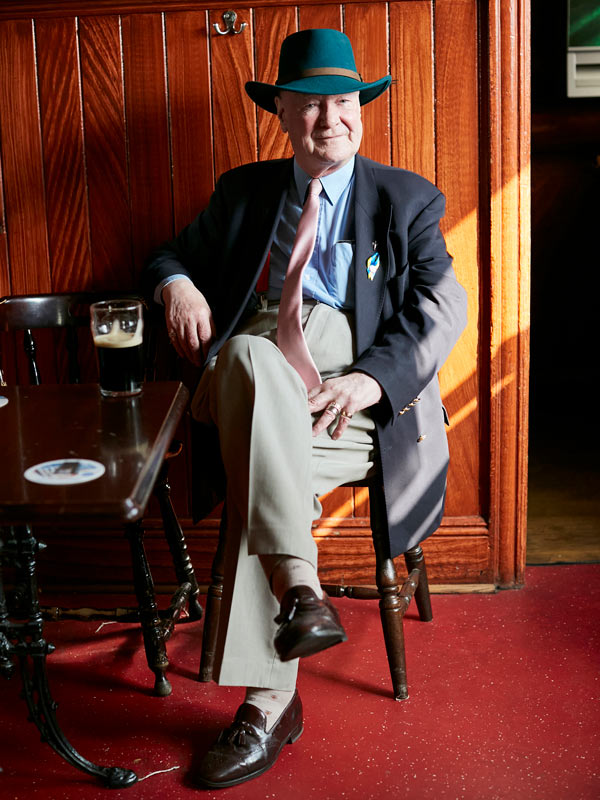
For fans of classic literature, Toners is not only considered one of the best Dublin pubs but is also rumoured to be the only place good enough for W.B. Yeats to partake in a tipple. These days, it’s particularly popular with the after-work crowd looking for a pint or a whiskey, so expect to be standing for a while if this is when you rock up (you can’t book, but arriving early will help your group secure a table). The large beer garden here makes it a unique treat for drinking outdoors during the warmer months.
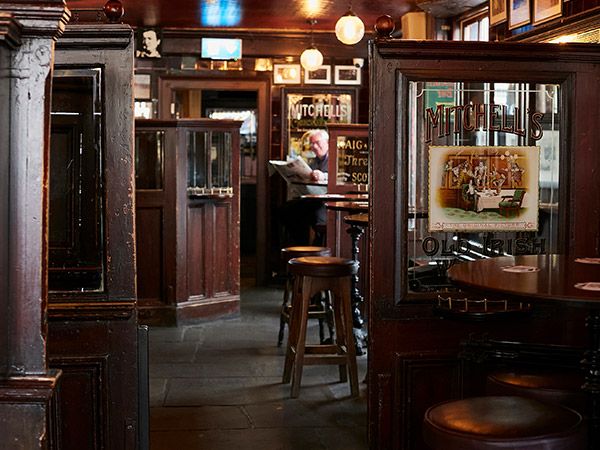
11. Lucky’s
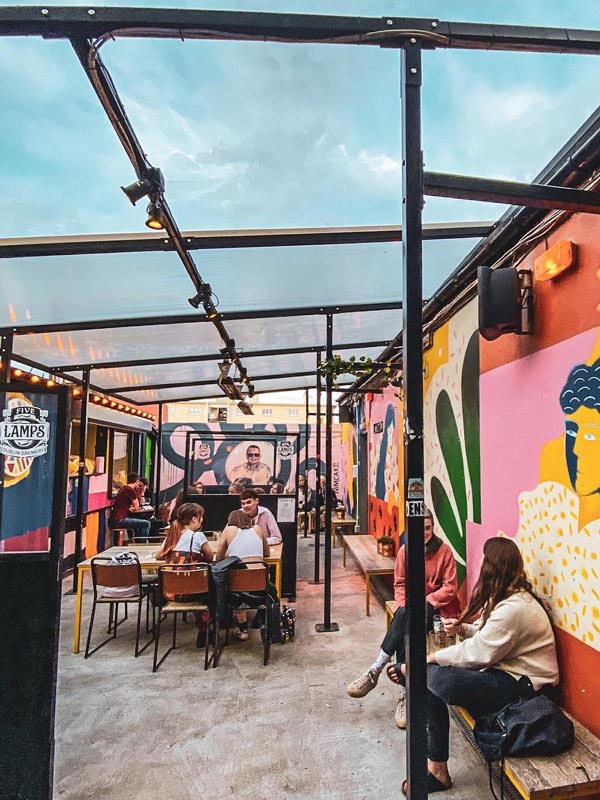
If you’re looking for a pub with a bit more of a modern feel, Lucky’s in the Liberties is the spot for you. Boasting a bit more of a cool, artsy vibe than most Dublin pubs, they’re known for their wider selection of beers and quality wines on tap. Head out the back of the pub for the very popular Coke Lane Pizza – a Dublin food truck known for dishing up some of the city’s best pizza – and bring it inside to enjoy with your pint. As a bonus, you can make a booking here, so a table is assured.
Want to see more stories from International Traveller in your Google search results?
- Click here to set International Traveller as a preferred source.
- Tick the box next to "International Traveller". That's it.