hero media

The verdict is in: This is the best ski resort in the world

The verdict is in: St Anton is the best ski resort in the world… and it doesn’t just have enviable ski terrain… but plenty of other distractions too, finds Brian Johnst on.


I fling back my hotel curtains to kingfisher-blue skies and fanged, white mountains; fir trees glitter with ice like Swarovski sculptures. The first snowploughs are grunting on the slopes and, as I watch, ski lifts lurch into action. It’s another crisp morning in St.Anton, good enough to make me gobble my breakfast and hurry outside, breath puffing in anticipation at another day’s skiing.


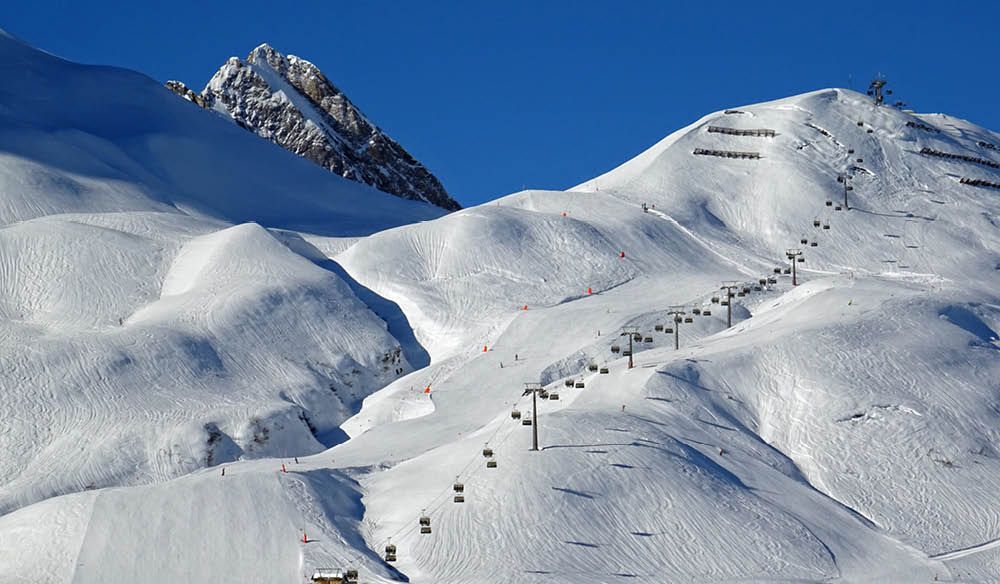
I feel there’s no time to waste in this resort. The Arlberg region of western Austria is a fabled ski destination, with St.Anton its epicentre. Now the new Flexenbahn gondola has linked it to companion resort Lech, creating one of the world’s largest ski areas. With over 85 lifts and 305 kilometres of runs waiting, the sun is barely over the mountain rim before I’m clicking into my skis.


Who can ski there?

The skiing here is generally best for intermediate and advanced skiers (and boarders, who favour the Rendl side of the valley). I get my morning thrills directly above St.Anton and below the 2,812-metre Valluga peak, a combination of graded runs and magnificent off-piste adventures that have me knee-deep in powder and exhilaration. Snow conditions in St.Anton are some of Europe’s best, with consistent powder and a reliable season between mid-December and early April.


What I love is that I’m not just confined to St.Anton. A swoop-worthy run down Plattiwald takes me to Galzig cable car, from whose summit a glorious blue piste swooshes down to St Christoph. As the region’s highest resort at 1800 metres, St Christoph always has good snow, even late in the season – and great lunches at the gnarled, slope-side Hospiz Alm.
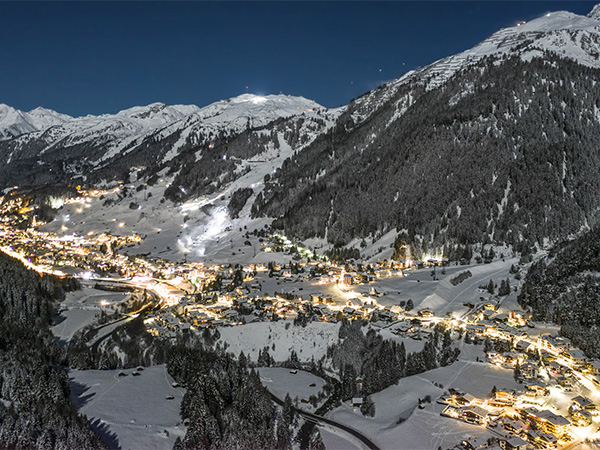
Sunset scenes at St Anton.

What are the runs like?

The treeless, north-facing slopes above Stuben have more fabulously scenic runs. From here my favourite day out is to connect into the White Ring, a 22-kilometre circuit around the slopes above Lech and Zürs. It sits amid utterly magnificent alpine panoramas, provides 5.5 kilometres of vertical descent, and is one of the most deeply satisfying ski circuits anywhere.


I pace myself, never too fast and furious in order to save some evening energy. What sets St.Anton apart from its fellow ski villages is its lively – and occasionally notorious – après-ski scene. By mid-afternoon I’m drifting down towards the music from legendary lower-slope bars such as the MooserWirt and Krazy Kanguruh. As waiters haul 25-kilo trays of beer and schnapps, ski jackets and inhibitions are abandoned as dancing breaks out to Boney M. and ice-hockey anthems. Before long, I’m shimmying on a bench-top and wondering why Gangnam Style ever went out of fashion.
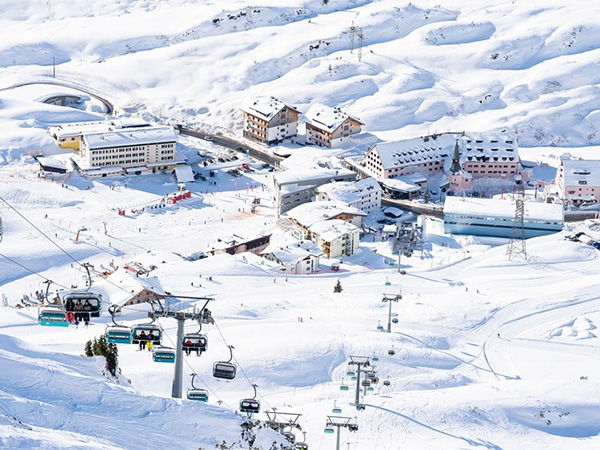
St.Anton pioneered ski tourism and ski techniques.

What else can you do there?

The hardcore and youthfully unattached will later hit St.Anton’s legendary clubbing scene. I prefer the more sedate pleasures of ARLBERG-well.com , the impressive public wellness centre, where steam rooms and saunas de-knot ski legs; a wallow in the heated outdoor pool is beautiful when snow falls. It’s also a pleasure to perambulate along St Anton’s chic high street, where fancy folk plunder boutiques for the latest ski jackets.

Where should you eat?

St.Anton has a sophisticated restaurant scene, but my favourite is Restaurant Museum inside a lovely old chalet surrounded by light-strung Christmas trees. It has great traditional Austrian food such as spicy, boiled-beef Tafelspitz, Frisbee-sized schnitzels and the shredded-pancake dessert Kaiserschmarrn. Between courses I check out the museum’s displays on St.Anton’s ski heritage.
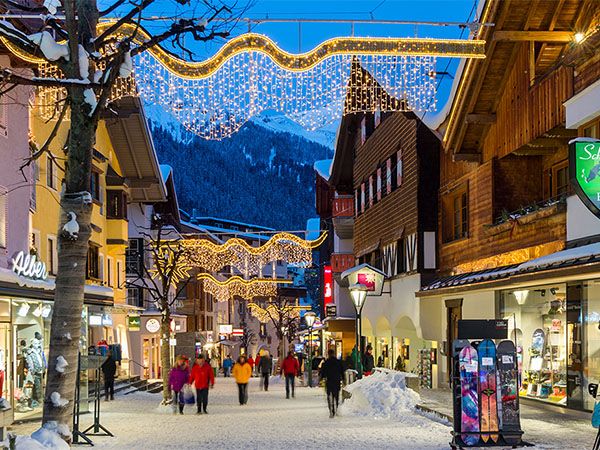
St Anton looks like a European fairy tale.

What about the history?

St.Anton pioneered ski tourism and ski techniques, a theme expanded in its Hall of Fame at Flexenbahn cable-car station. The Austrian resort’s huge influence on winter sports also comes to life in a Wednesday-evening ski show in which 150 actors and ski instructors demonstrate ski styles through history. Then the fireworks go up, my curtains come down, and I’m off to bed happy. Tomorrow is another day, and my ski boots are ready at the door.

Want to see more stories from International Traveller in your Google search results?

  1. Click here to set International Traveller as a preferred source.
  2. Tick the box next to "International Traveller". That's it.
hero media

What the European heatwave means for your summer travel plans

Temperatures are soaring this summer, breaking records across Europe and the UK. 

Euro summer is a feeling like no other. But when a heatwave hits? The dream trip quickly turns into a sweaty mess. Extreme heat is sweeping Europe and the UK this week, with record-high temperatures impacting travel plans across the continent.

And while Australian summers are typically hotter in absolute temperature, many European cities aren’t equipped for high temperatures, resulting in unbearable weather.

Why is it so hot in Europe?

Signs of a hot summer loomed in May, when the mercury hit unprecedented spring highs. Now, extreme high temperature warning alerts have been issued in countries such as Spain, Italy, France, England, the Netherlands and Germany.

France saw its hottest day on record on Wednesday, with an average temperature of 30°C across the day and night. This surpasses the average temperature for June, which is 15°C to 25°C. Dozens of people have died, including 40 from drowning.

In Spain, 212 deaths have been linked to the heatwave.

The UK recorded its hottest June day ever on Wednesday with temperatures soaring to 36.1°C. In an article published by the Met Office – the UK’s national meteorological service – Professor Stephen Belcher CBE, Met Office Chief Scientist, shared his concerns about June’s heat. “To see temperatures like this in the UK in June is sobering. Events like this bring home the implications of climate change, with very high temperatures and humidity bringing significant health implications from heat stress, as well as impacts to a range of sectors such as transport, energy and water supply,” he said.

Heatwaves are becoming increasingly common in Europe and the UK, neither of which is prepared for such extremes. The World Meteorological Organization reported that in 2025, at least 95% of Europe experienced above-average annual temperatures and that the continent was heating up twice as fast as the global average.

How travel is impacted

A pharmacy sign displaying 40 degrees Celcius
A pharmacy broadcasting local weather data. (Credit: Getty/Dragoncello)

During a heatwave, power grids, water systems and transport networks can be affected, resulting in disrupted itineraries for travellers. In France, power outages have left thousands without electricity and early closures have been implemented for two of Paris’s biggest attractions, the Eiffel Tower (early afternoon rather than late at night) and the Louvre (two hours early). Eurostar cancelled its London to Paris and Paris to London services from the 22nd to the 25th, and major UK rail companies have been advising travellers to avoid using trains where possible, or to travel during early hours.

If a heatwave is predicted, being flexible with your itinerary and having fully refundable/changeable tickets is key, as extreme heat can force the cancellation of outdoor activities, impact rail and flight services and change the opening hours of sites and eateries.

Why does summer in Europe often feel hotter than summer in Australia?

people swimming in the Canal Saint-Martin in Paris
People swimming in the Canal Saint-Martin in Paris to cool off. (Credit: Rachael Thompson)

With some of the highest UV levels in the world, Australians are no strangers to the heat, adapting well to intense weather. But our infrastructure is largely equipped to withstand soaring temperatures with climate-responsive passive design, refrigerated air conditioning or evaporative coolers, as well as swimming spots aplenty.

Buildings in Northern and Western Europe and the UK, however, are constructed to retain heat and handle frosty winters. The lack of universal air conditioning means it generally feels hotter even though the temperature on your app might not look it. During a heatwave, it can feel like you’re in a sauna as cities act like heat traps.

How to stay cool and prepare for another heatwave

Relief is expected across Europe and the UK later this week, but more heatwaves are still possible in the coming months. Summer heat typically peaks in July and August.

Public transport often doesn’t have air conditioning, and buses in particular can be swelteringly hot. If you’re heading outside or your accommodation has no air conditioning, it’s worth buying a spray bottle and a handheld fan from a pharmacy or tourist stand. Check ahead of time if restaurants and cafes have air conditioning and make a booking in advance. The highest temperatures typically hit between 3pm and 6pm, so aim to head outdoors outside of these hours.

Rising temperatures invite travellers to enter a more intentional era of seeing the world. Now more than ever is the time to embrace lower-impact “coolcations” and off-season getaways.

St Anton is officially the best ski resort in the world