
Whole families balanced on the back of a single moped and street sweepers napping in the shade of frangipani trees. Clouds of incense billowing out of Taoist temples, seedy karaoke clubs and a skyline that seems to shoot up quicker than bamboo.
Nowhere can Vietnam’s ambitions for its future be felt more clearly than in Ho Chi Minh City, where the pace of life is best described as frenetic. A teeming commercial hub that gobbles up more of the Mekong Delta’s swampland every day, it also has a quieter side – turn down a side street to discover crumbling colonial buildings and tranquil gardens where Buddhist monks feed flocks of catfish for good luck.
Things to see in Ho Chi Minh City
With its fascinating culture, which ranges from suited businessmen sipping egg coffee to elderly fruit sellers wearing conical hats, simply walking around this fast-and-furious city is an experience in itself.
Stalls teeming with unfamiliar herbs, longboats laden with live crabs, and hawkers peddling colourful silks are just a few of the things you can expect at one of the city’s many markets. As much a cultural experience as a shopping opportunity, Ben Thanh Market is one of the oldest and most famous in the country – head early to avoid the crowds and snap up the best bargains.
A stroll through Tao Dan Park past Buddhist temples and over picturesque bridges eventually leads to key monuments such as Reunification Palace and Notre Dame Cathedral. Carry on to the Saigon Central Post Office, a magnificent 19th-century building filled with period features.
Best places to visit in Ho Chi Minh City
Although there are enough things to do in Ho Chi Minh City to last a lifetime, set aside time for a day trip, and you’ll be well rewarded. The Ben Duoc Cu Chi Tunnels are a fascinating labyrinth of underground passageways that served as headquarters for Viet Cong guerrilla fighters during the 1968 Tet Offensive – a guided tour offers a haunting insight into life during the war, though it’s best avoided if you’re claustrophobic.
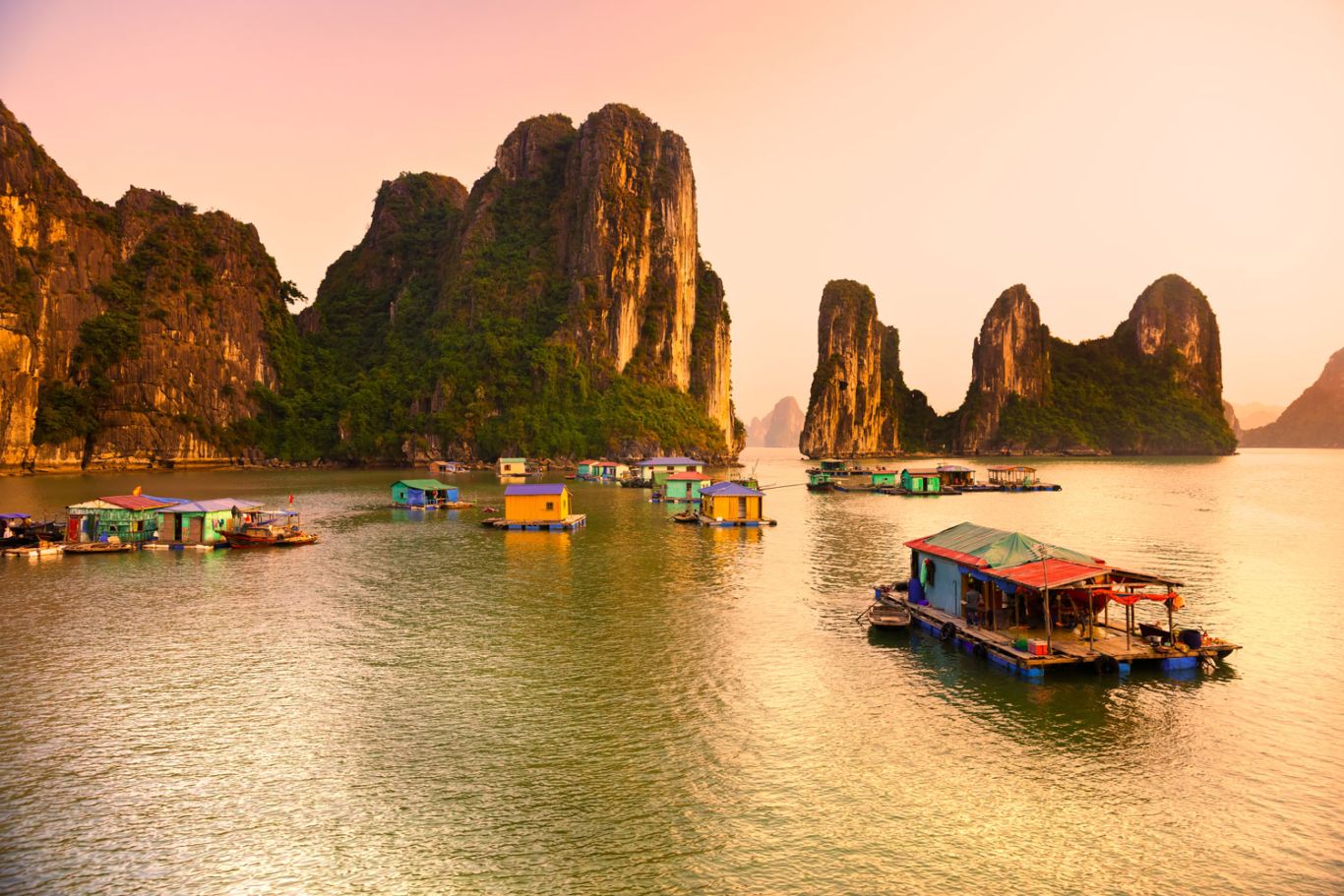
The Mekong Delta can be experienced in a day, but you’re better off spending at least a night there to break up the roughly eight-hour round trip from the city. Known as the rice basket of Vietnam, this watery wonderland is home to hundreds of traditional farms and floating villages where life carries on much as it has for generations.
Brush up on local legends at the Golden Dragon Water Puppet Theatre, where this ancient art form, dating back to the 11th century, sees puppets performing on a water stage accompanied by a live orchestra. The Archbishop’s Palace, built in 1790, is one of the best examples of French colonial architecture in the city – get up early to see mass held there at 6am daily.
Where to stay in Ho Chi Minh City
Wherever you stay, you’re sure to be charmed by the city’s dynamic energy, though in a city this big it’s worth getting a handle on what each district offers before booking. District 1 is the financial and commercial hub, packed with tourist attractions, luxe hotels and international fashion boutiques. District 3 is a little quieter, made up of leafy colonial boulevards peppered with museums and restaurants. District 2 offers a glimpse into how the city’s wealthy live, with quiet streets lined by enormous private mansions, chic cafes and gleaming boutiques.
Hotels: It doesn’t get more ostentatious than The Reverie Saigon, a peacock-coloured, gem-encrusted palace that perfectly captures the mood of Vietnam’s emerging wealthy class – sip a cocktail poolside on furniture designed by B&B Italia before a romantic spa treatment for two.
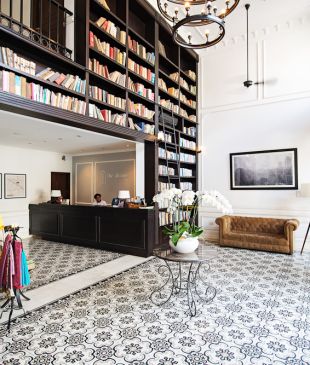
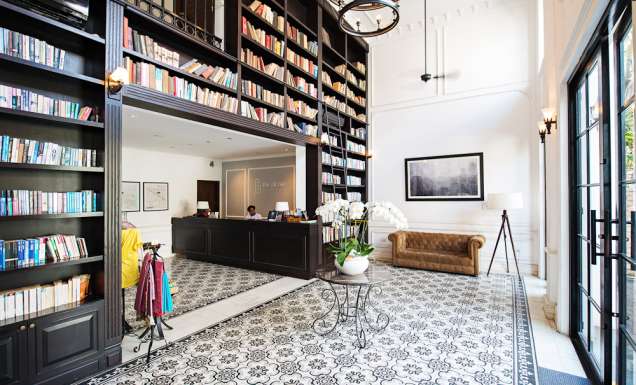
Hostels: With its leafy courtyard paved in vintage tiles and contemporary design details, The Common Room Project could easily be mistaken for a boutique hotel without the price tag, and runs a free cooking class every Thursday evening. Beautifully minimal and filled with light, The Dorm Saigon is an oasis of calm in bustling District 1, with a rooftop cabana terrace and a mid-century-styled lounge.
Guest houses: Owned by a French-speaking Vietnamese family, Ma Maison feels like a slice of Provence in District 3, with soothing pastel bedrooms and shuttered windows. Saigon April Guesthouse, in a prime District 1 location, has a charming, bohemian vibe – some rooms even have terraces with hammocks and a thriving plant collection, and all are air-conditioned with a fridge and kettle.
Best places to eat in Ho Chi Minh City
Given the city’s proximity to the mighty Mekong Delta and the abundance of herbs grown in the misty foothills nearby, it’s no surprise Ho Chi Minh City is a gourmet destination. Think tiny clams fried in lemongrass, coriander and chilli (banh da xuc hen), fermented fish broth soup (bun mam), and mustard leaves curled around chopped mushroom and tofu with a crunchy peanut dipping sauce (cuon diep).
For a roving dinner, head to Van Kiep Street, lined with plastic-stooled stands serving up Vietnamese specialities. For a seafood feast, try Nguyen Thuong Hien, known locally as “Snail Street" – a catch-all term covering everything from lobster to shrimp, crab and conch. Set inside a former opium den, Hoa Tuc serves beautifully presented contemporary Vietnamese food, including a standout lemongrass beef salad with kumquat dressing.
Cultural experiences in Ho Chi Minh City
Nowhere is the city’s complex history more evident than in its many religious and historical monuments. Saigon Notre Dame Cathedral is the last stronghold of Catholicism in this Buddhist city and an impressive reminder of French rule, which lasted more than six decades – admire its neo-Romanesque features, shipped over from Marseille, and relax in the peaceful garden. By contrast, Vinh Nghiem Pagoda is an explosion of colour, with Japanese-Vietnamese architecture, a glittering gold interior and an enormous reclining Buddha statue, set among gardens with hedges cut into perfect spirals.
Reunification Palace is one of the best things to see in the city – this is where Communist forces seized power in 1975, and it’s as if time has stood still ever since, with a cheesy card room, a fascinating maze of war tunnels, and the president’s private suite, complete with elephant’s-foot ornaments.
Not only are they a great escape from the heat, but the city’s museums also offer a fascinating window into its past. The War Remnants Museum is the most visited, documenting the impact of the Vietnam War with unflinching honesty – it’s sometimes criticised for a one-sided perspective, but few exhibits capture the true cost of war so poignantly. The Fine Arts Museum, housed in an elegant butter-yellow colonial building, is worth visiting for the architecture alone, with beautifully tiled corridors, stained glass windows, and a collection spanning back to the 4th century.
Places to shop in Ho Chi Minh City
Consumerism is king in this fast-paced city, and prices are almost always negotiable. Tran Phu Street in District 5 feels like a free art gallery thanks to its huge number of artists’ studios, while Hai Ba Trung (opposite Tan Dinh Market) is an Aladdin’s cave of fabrics that can be turned into a bespoke outfit by a local tailor.
For the city’s most hip shopping, head to a multi-concept space combining an indie bakery, boutique, technology shop and restaurant under one roof, or seek out cutting-edge Vietnamese designer clothes at reasonable prices from one of the city’s effortlessly chic local boutiques, much loved by Saigon’s fashion crowd.
Getting to Ho Chi Minh City
You can fly directly to Ho Chi Minh City from Sydney and Melbourne, and via a single layover from Perth and Brisbane. From the airport, hail a taxi from the rank into the heart of the action – the fare to District 1 is generally in the range of 150,000–200,000 VND, plus a small airport surcharge.
Getting around: Ho Chi Minh City’s long-awaited metro system is finally a reality – Line 1, running from Ben Thanh Market to the eastern suburbs, officially opened in December 2024 after more than a decade of delays, with more lines under construction. Buses remain extremely cheap, if prone to running behind schedule due to traffic; just remember drivers don’t always pull in automatically, so stand and wave to flag them down. For ride-hailing, Grab remains the dominant app, alongside newer electric options like Green SM; both have straightforward English interfaces and accept cash or card. If hailing a taxi from the street, look for Vinasun (white, red and green cars) or Mai Linh (green and white cars), both reliable, reputable operators.