hero media

The big tuskers of Tsavo are making a comeback

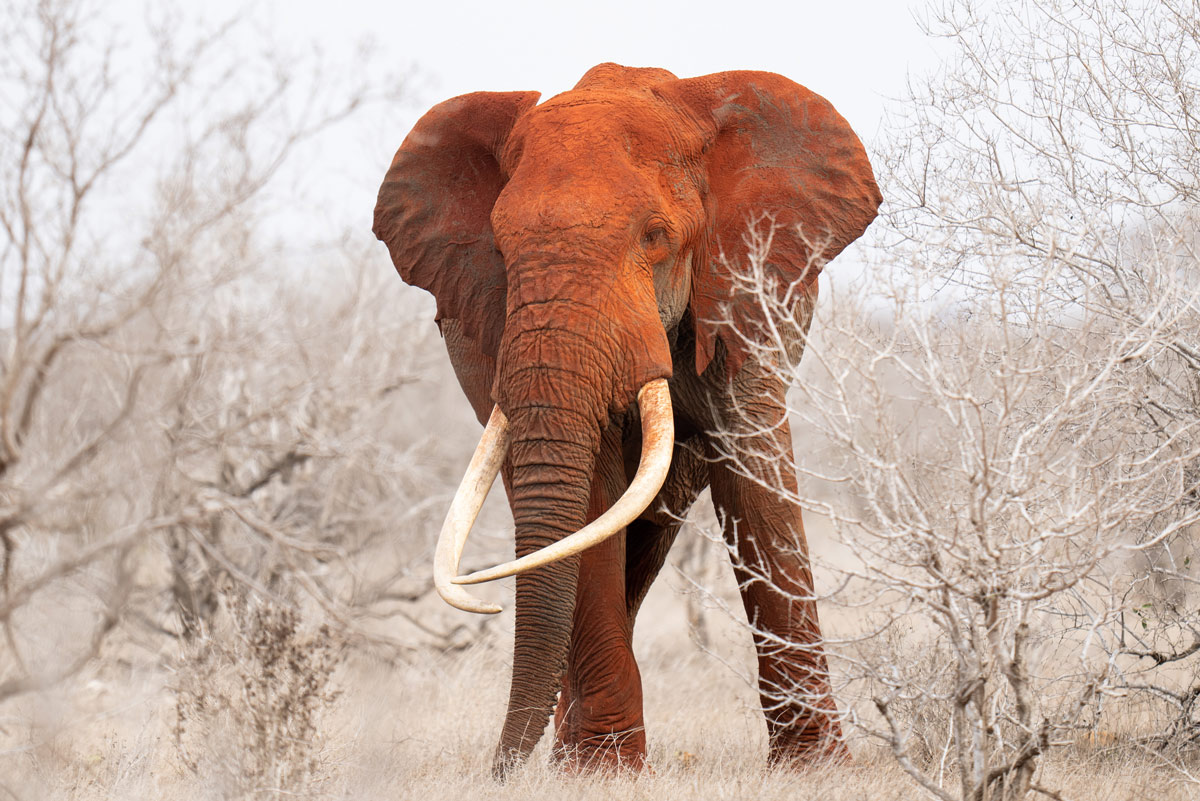
Brought to the brink of extinction, Tsavo East National Park’s fabled big tuskers are making a comeback.

The hunt is over. We have found the big tusker after a days-long search. He sways ankle-deep in love grass, his jowls heavy with ivory. I snare him in my sights, aim the barrel lens and press the shutter. Then I lay my camera aside and lose myself in the majesty of the moment.

The last of Tsavo’s big tuskers

Before me stands one of Tsavo Conservation Area’s eight remaining big tuskers – bull elephants whose tusks weigh more than 50 kilograms each and are so immense they often drag along the ground. Brought to the brink of extinction by trophy hunters and ivory poachers, their genes have been identified in 27 younger members of the area’s 14,000-strong elephant population. Against such odds, the existence of these so-called “emerging tuskers" is miraculous.
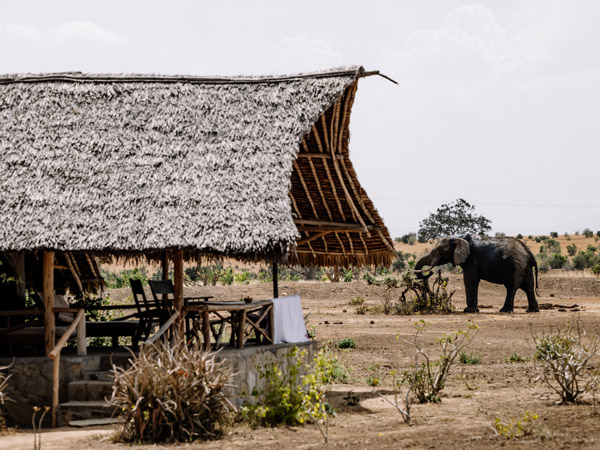
an elephant in a tented safari camp, Tsavo, Kenya
Spot elephants from the tented safari camp.

“These genes are being preserved and maintained," says Nganba Malingi, a guide at Satao Camp in Tsavo East National Park, Kenya. “Patrols are done by air, by road, by foot, monitoring them, collaring them, GPS. And it has been working. Tsavo is a hotbed, an epicentre of the big tuskers, especially Satao Camp."
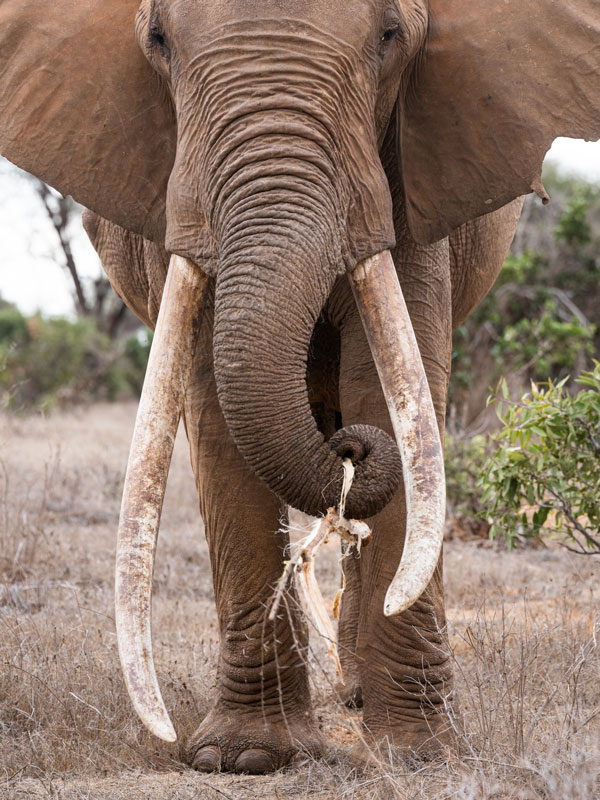
a big tusker in Tsavo East National Park, Kenya
One of the big tuskers of Tsavo East National Park, Kenya. (Image: William Burrard-Lucas)

Where can you find them?

This region is indeed a stronghold for tuskers of all stripes: one-third of Kenya’s elephants live between the contiguous Tsavo East and Tsavo West national parks (which form part of the Tsavo Conservation Area).
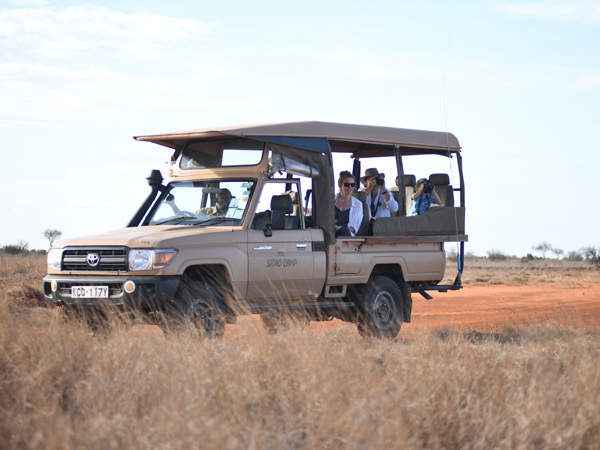
guests on their binoculars, The Big Tusker Safari with Bench Africa
Prepare your binoculars on The Big Tusker Safari with Bench Africa.

The earth reverberates with their footfall; herds appear to move as one, gliding across the horizon like paper cut-outs joined trunk-to-tail. Their hides reflect the colours of this painted landscape: black for the cotton soil, grey for the ashen loam and red for the laterite sod streaking the plains.
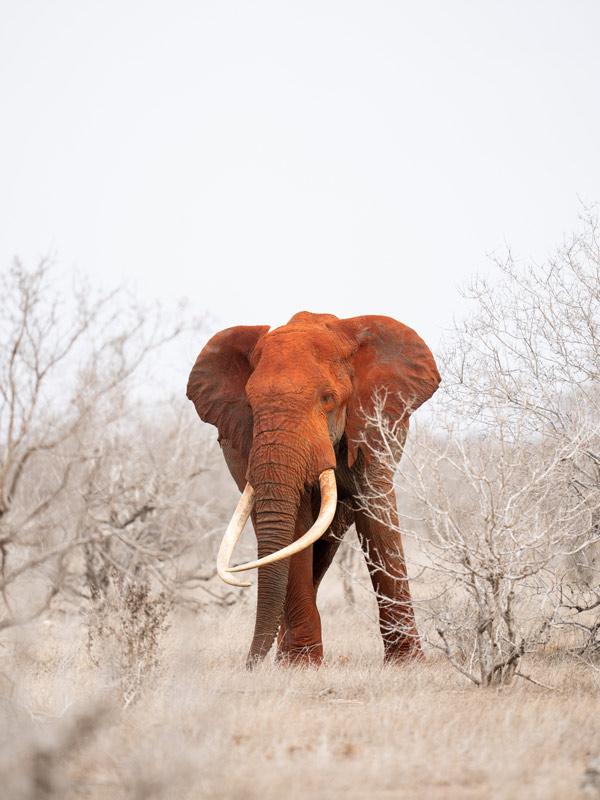
an elephant in Satao Camp
Tsavo’s red laterite soil lends its elephants their distinctive hue. (Image: William Burrard-Lucas)

This camouflage reveals itself close up at dawn as the herd files towards the waterhole at Satao Camp. My tent flaps are open and I can see the elephants from my bed through the tightly zipped mosquito screen. There’s no sign of the lion that woke me in the early hours as he passed by; his mane-haloed face had entered my dreams and lulled me back to sleep.
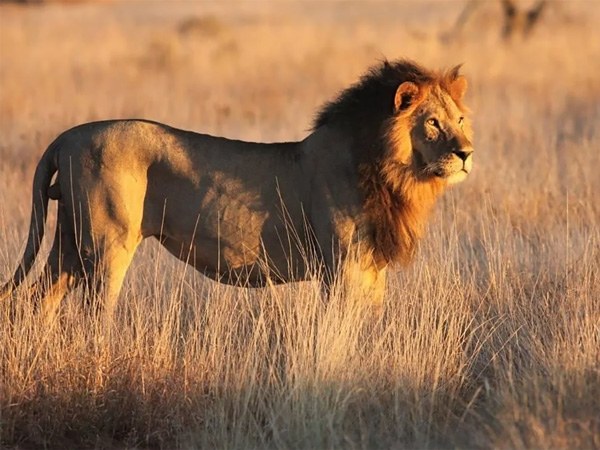
a lion in Satao Camp
Lions are often sighted at Satao Camp.

Living in the wilderness

My askari (guard) has placed refreshments on the deck and I sip coffee in the company of elephants taking their own morning drink.
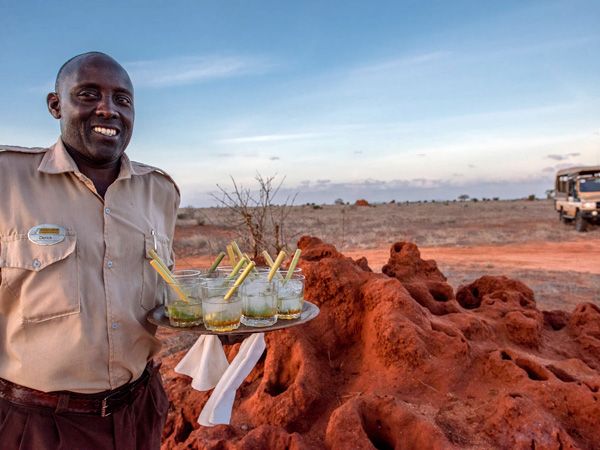
a server holding drinks at Satao Camp
Sundown at Satao Camp. (Image: William Burrard-Lucas)

Though no big tuskers are among them, their gravitas is undisputed; their faces are stained brick-red, their feet shod in patent black cotton soil boots. In the rainy season, up to 1000 elephants will gather here each day, big tuskers among them.
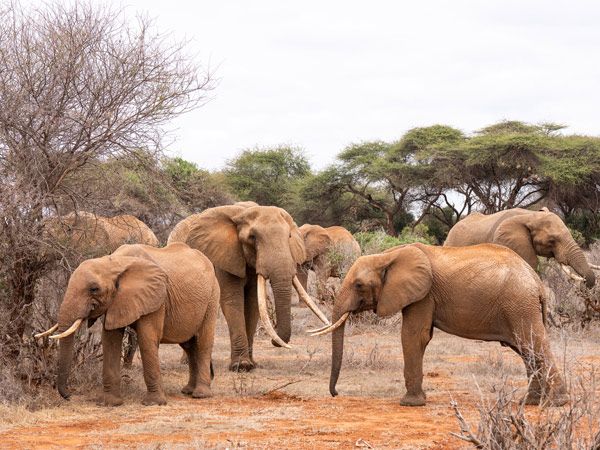
elephants in Satao Camp
The best time to spot animals around Satao Camp is on a game drive at dawn or dusk. (Image: William Burrard-Lucas)

But the rains haven’t broken yet; though I could spend all day watching the passing traffic from the camp’s open-air dining room or watchtower, Nganba tempts me away on a treasure hunt. “It’s a fresh beginning," he says.
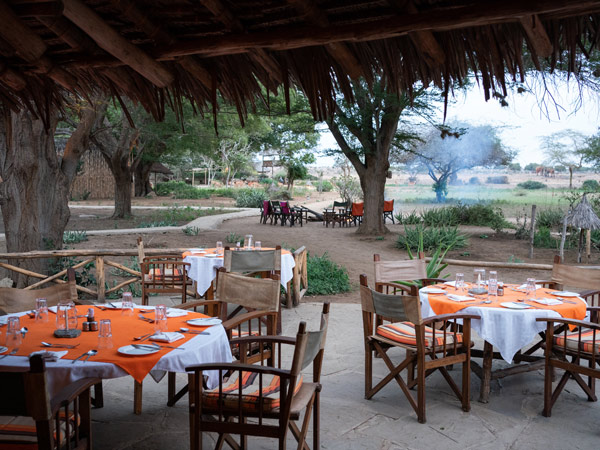
the outdoor dining area at Satao Camp
Look out over the waterhole from the outdoor dining area at Satao Camp. (Image: William Burrard-Lucas)

The rising sun snags on the thorn trees and sets the savannah alight. Oryx emerge from a cloud of dust, their horns crisscrossing like wayward exclamation marks. Masai giraffe – the tallest of the species – crane their necks towards an aircraft gliding overhead. It’s a Kenyan Wildlife Service aerial patrol, part of that collective effort by conservation organisations to revive big tuskers and protect their kin.
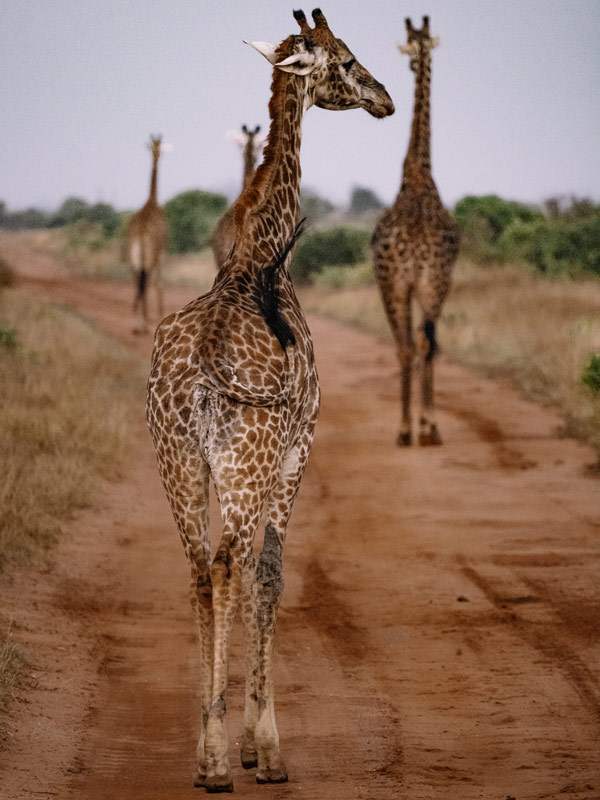
giraffes in Satao Camp
The magnificent mammals are known to hang out around Satao Camp. (Image: William Burrard-Lucas)

Weekly travel news, experiences
insider tips, offers,
and more.

Saving the last big tuskers

As Nganba points out, their work is reaping dividends: poaching has dropped by about 90 per cent; projects initiated by Tsavo Trust, an elephant conservation NGO, have improved economic opportunities for local communities and reduced human-wildlife conflict; and a rescue-and-rehabilitation program run by Sheldrick Wildlife Trust – one of Africa’s oldest conservation organisations – has saved scores of elephants impacted by drought, conflict and poaching. “Tsavo has a future," Nganba says.
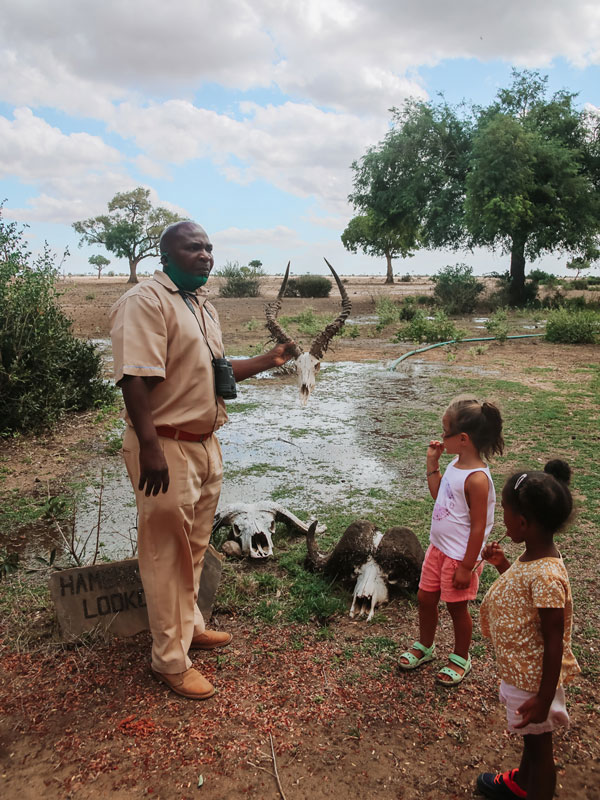
a head of a killed animal in Kenya
Trophy hunting and poaching must end.

He’s idling through riparian habitat, the Taita Hills rising blue beyond the thicket. This is leopard territory, but there’s another loiterer about: an emerging tusker, one of the elite up-and-comers in whom resides the hope of so many. The elephant turns towards us, his tusks mighty cutlasses carving the air. “See how they curve inwards?" Nganba says. “Up, down, this way, that way. They are like fingerprints."

From nowhere, a flock of openbill storks floods the sky. They are a portent, it seems, winged sages foretelling a miraculous rebirth.
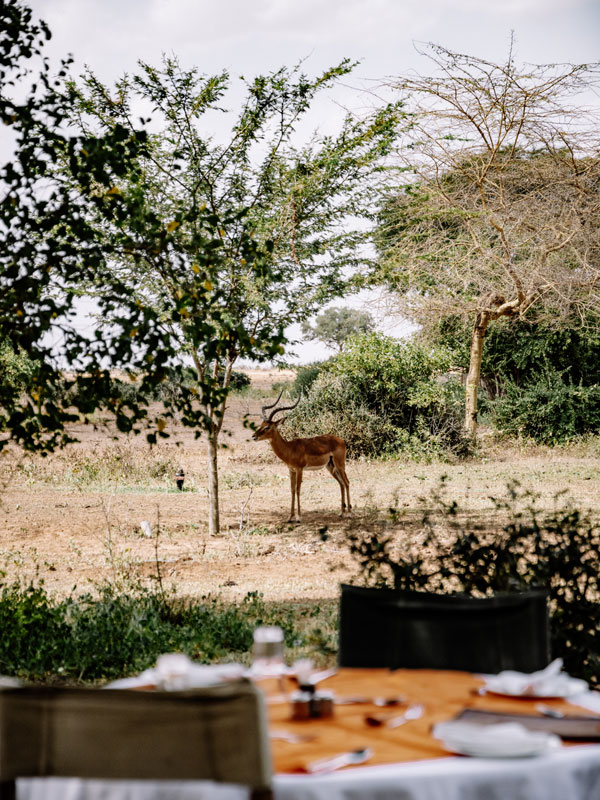
an impala watching on you while enjoying lunch
Impalas watch on as you enjoy lunch under tamarind trees.

Want to see more stories from International Traveller in your Google search results?

  1. Click here to set International Traveller as a preferred source.
  2. Tick the box next to "International Traveller". That's it.
hero media

At the foot of the pyramids, Egypt finally tells its own story

    Ancient Egyptian history has been scattered across the globe for decades, admired, preserved, and studied, but it’s rarely seen where it actually belongs. The newly opened Grand Egyptian Museum (GEM) brings it home.

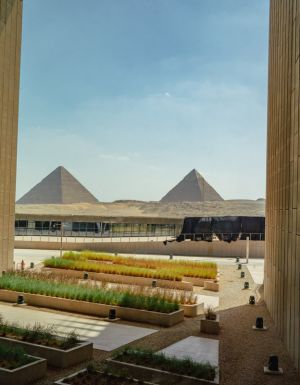
    From a viewing platform inside the Grand Egyptian Museum, the Great Pyramids of Giza rise from the desert, and for a moment, it feels like modern Egypt and ancient Egypt are shaking hands. The museum, grand in name and reality, has been a long time coming—since 1992, to be exact. Towering pharaohs, relics, and entire chapters of civilisation are on display here, all in full view of the pyramids. And because the GEM is the largest archaeological museum in the world dedicated to a single civilisation, it gets to tell Egypt’s story through its own voice, something many overseas institutions, understandably, haven’t quite managed.

    Reshaping Giza

    GEM entrance and gardens
    The GEM holds its own commanding position. (Image: Natasha Bazika)

    You might expect any building beside the Great Pyramids of Giza to fade into the background, but the GEM doesn’t bow to its famous neighbours. Perfectly aligned on the same axis and vast enough to span 70 football fields, the museum is less of an addition to Giza and more of a marker of the shift from a gateway to a cultural district.

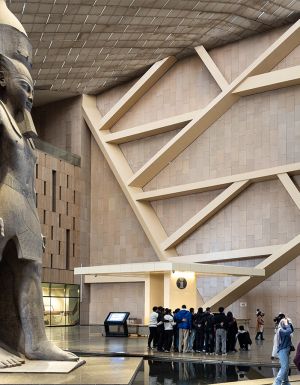
    Inside, hieroglyphs carved from alabaster sweep across the walls and triangles appear everywhere, yet it’s a 3,200-year-old, 11-metre-tall, statue of Ramesses II who commands the room. His scale dictated the soaring atrium ceilings, which pour in natural light, unusual in museums but safe for the stone artefacts displayed.

    Hieroglyphs line the walls of the main entrance of the GEM
    Hieroglyphs line the walls of the main entrance. (Image: Natasha Bazika)

    Unlike many museums, the GEM has really considered how visitors move through it. The six-storey grand staircase leads you chronologically through Egypt’s history, from the Predynastic era to the Coptic period, flanked by statues that grow in scale and complexity as you climb. Elevators and lifts run alongside, keeping the journey accessible to everyone.

    At the top, a viewing wall frames the pyramids before you enter the main gallery to see artefacts rarely seen outside tombs, including the complete contents of Tutankhamun’s tomb, a highlight for many visitors.

    Pharaohs, artefacts and everything in between

    The GEM's showpiece Ramesses II
    The GEM’s showpiece Ramesses II. (Image: Natasha Bazika)

    The GEM holds around 100,000 artefacts across seven millennia, but the experience is entirely modern. Digital panels, QR navigation and clear bilingual signage make self-guided wandering easy, while short, glare-free labels in English, Arabic and braille are colour-coded to move you from broad themes to object-level detail.

    That said, a guide adds context you don’t get from a panel. I was lucky to have Essam Al Ebd Aziz, an Egyptologist, on board a 12-day Uniworld Nile cruise, walk me through some of the museum’s standout pieces.

    Top of the list is, of course, the Tutankhamun exhibit. Almost everything from his tomb, much of it never shown outside the Valley of the Kings, is here, from his golden funerary mask to delicate jewellery and ceremonial objects. But the GEM isn’t just about one boy king.

    GEM entrance is guarded by an 11-metre-tall Ramesses II statue.
    An 11-metre-tall Ramesses II statue guards the entrance. (Image: Natasha Bazika)

    Essam points out the canopic chest of Hetepheres, mother of Khufu, where her organs were stored in alabaster. I loved the forty little marching soldier figurines from the tomb of Mesehti, all lined up and hanging on a wall. And then there’s the statue of Metri, a scribe, with piercing blue eyes carved from lapis lazuli. All these pieces, and thousands more, now sit under one roof. And for the first time, people can see Egypt’s history in one place, told in its own voice, without leaving the shadow of the pyramids. That alone changes everything.