
Explore French Polynesia’s volcanic Marquesas Islands – one of the world’s most remote archipelagoes – aboard a true cargo ship expedition.
WINNER OF THE ASTW Best Cruise Travel Story of 2020
“In years and years no sailing vessel has attempted this traverse, and we found ourselves in the midst of one of the loneliest of the Pacific solitudes … we sighted no sail… no steamer’s smoke above the horizon. A disabled vessel would drift in this deserted expanse for a dozen generations, and there would be no rescue." Jack London, The Cruise of the Snark, 1911.
Onboard a cargo ship to the Marquesas Archipelago
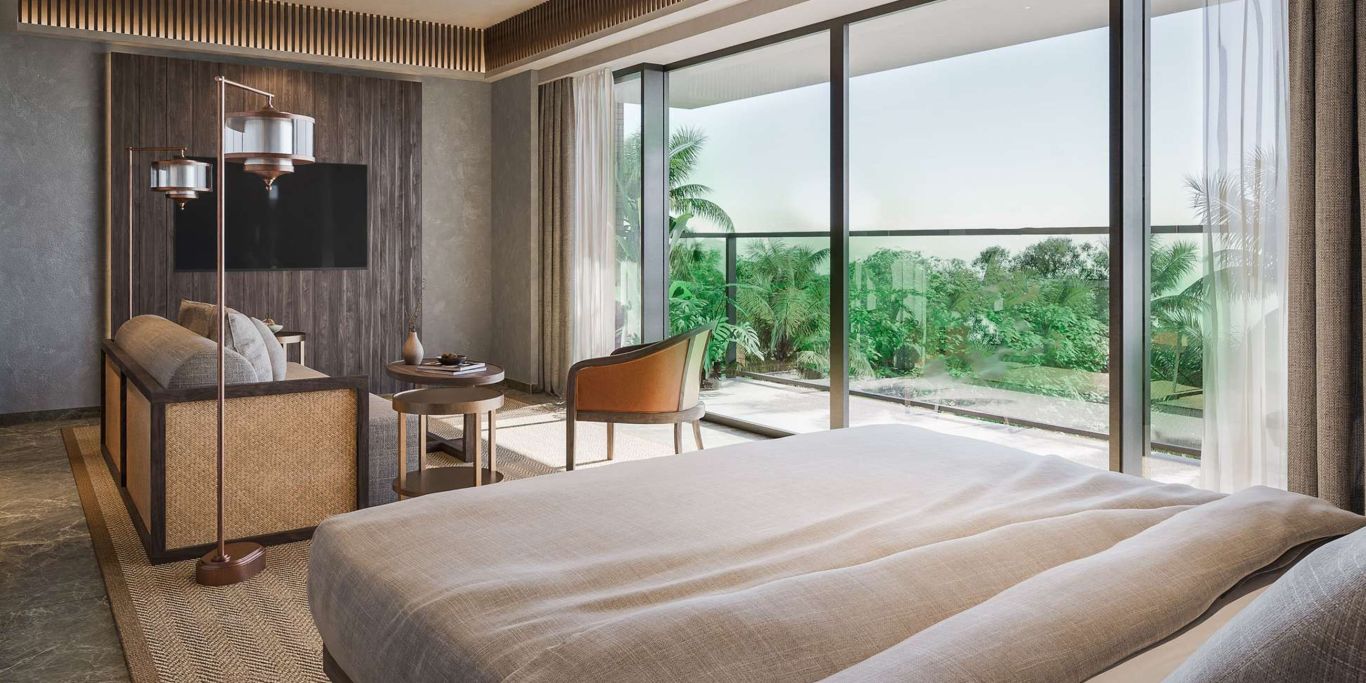
What might Jack London make then of my short temper here in the Owner’s Suite of the M/V Aranui 5 as I try, for the third time, to connect to the worldwide web. Goddammit, the signal was strong 10 minutes ago; how can those satellite waves be so slippery out here amongst this, one of the most remote island archipelagoes on Earth? When London sailed here a century or so ago – across the equator from Hawai‘i aboard his self-made sailing boat The Snark to these mysterious Marquesas Islands – his was a voyage with no precedent. Mine may well be done aboard a luxurious vessel which plies an identical path every three weeks of the year, but even with the three-course meals served up in its fancy dining room and the two 116-centimetre television screens in my super-size-me suite there aren’t many adventures like this one left in the world.
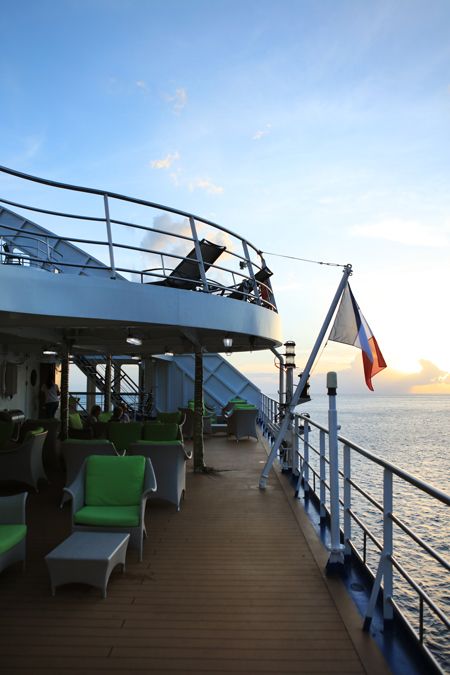
For the Aranui 5 isn’t a cruise ship, it’s a tub whose human cargo is secondary to the supplies it brings to the people of the Marquesas in French Polynesia; it offers one of the last true cargo ship expeditions. When the Aranui 5 departs The Island of Tahiti, it steams its way 1400 kilometres north-east until it reaches these little-known islands 500 kilometres south of the equator. It punches against persistent easterly trade winds, barging its way through the angriest waves the Pacific Ocean can conjure until it finds the 12 tiny islands of the Marquesas Archipelago: the centre of the ancient Polynesian empire.
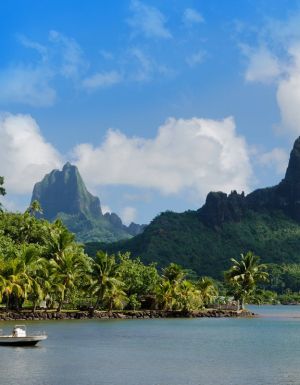
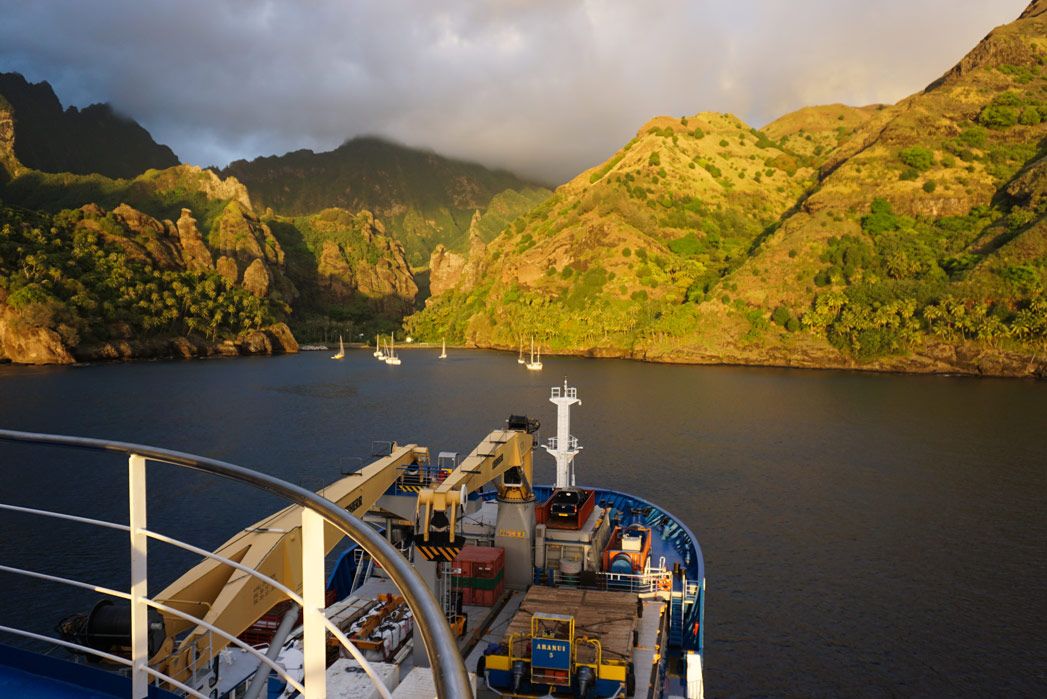
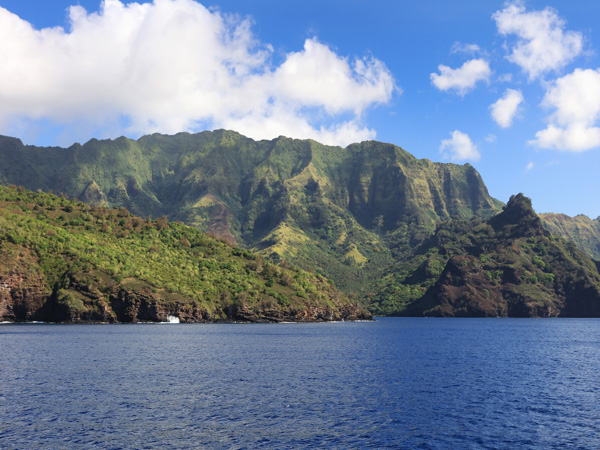
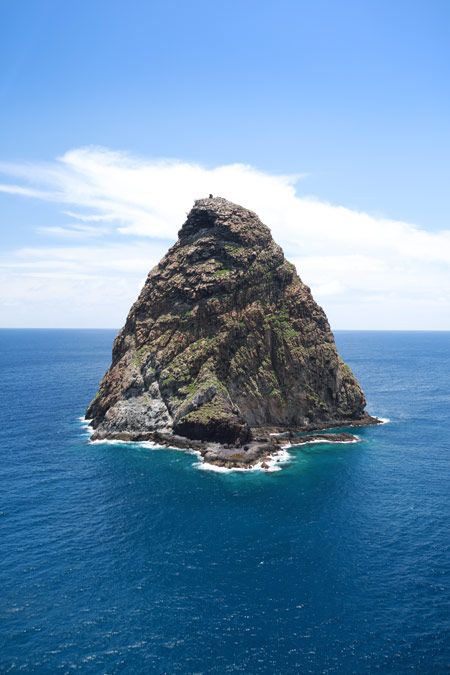
I’ve been here before, a decade ago, aboard the Aranui 5’s predecessor. But even though I experienced these islands on almost the exact same itinerary, I am still not prepared for my first sighting of the Marquesas after three days at sea. There are none of the lagoons here that are usually associated with French Polynesia. Instead, mammoth black-faced volcanic peaks and entire caldera walls fringed by thick jungle and coconut trees plunge into deep, dark valleys shrouded in low cloud offering viewers the wildest island interiors anywhere in the Pacific.
This archipelago of overlooked islands – six of which are inhabited by barely 9000 Polynesians (and a handful of French hermits and government types), the rest are entirely without development – can only really be accessed by boat. Four of these islands have tiny tin shed airports, but the roads, most just dirt or gravel trails that spiral their way up and down deep valleys, are more roller-coaster tracks than sightseeing opportunities. The Aranui 5 stops at every major port of the Marquesas to restock everything from Hinano lager to medical supplies; so as heavily tattooed seamen unload freight on tiny wharves, I use the time to peer into one of the planet’s most private worlds.
The bare necessities at Port Puamau, Hiva Oa Island
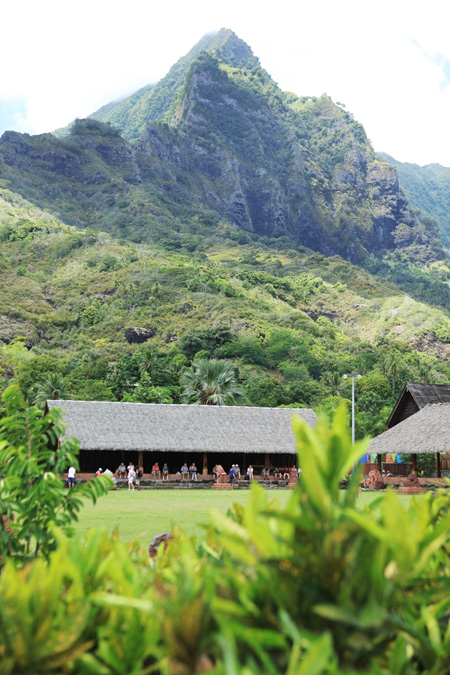
Our first port of call is on the island of Hiva Oa. We anchor in a bay beneath a 1200-metre-high extinct volcano, and I’m passed like luggage onto longboats by Polynesians with arms like banyan tree trunks. Even the busiest port town in the Marquesas has fewer than 500 inhabitants; this one, Puamau, has 300. There are no cafes or bars as we know them – at one cafe I ask for a coffee and am duly handed four mugs: one with a finger-width of instant
coffee, another with sugar, one with milk powder and another with steaming hot water – but food grows free-of-charge beside the narrow dirt and concrete streets of town; mango, guava, dragon eye, star fruit, bananas and tamarinds reach out as I walk by.
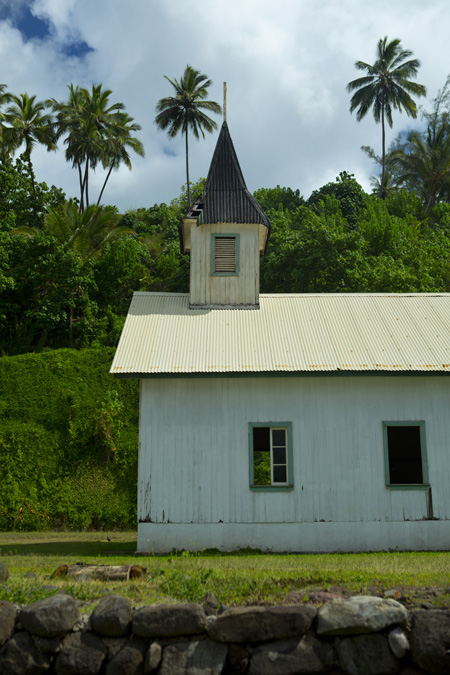
Locals prefer horses over 4WDs in Puamau; they ride them to a Catholic church erected beside the Pacific, dressed up to the nines to keep God happy. Just a few hundred metres
behind town, I discover a forest full of ancient stone walls, altar-like structures, two-metre-high tikis, and carvings and petroglyphs, beside 600-year-old banyan trees sacred to the Marquesan people. It is like this all over the Marquesas – evidence of ancient Polynesian societies exists all through the islands’ hinterlands.
The missionaries who came to save souls – Catholics mostly, a regular supply of them dropped in throughout the 19th and 20th centuries – ‘fixed’ their pagan ways and ended their cannibalistic traditions, moving them away from the sacrificial altars in their forests to a life lived in houses built beside the sea (diseases introduced by missionaries and whalers decimated the population from what was around 100,000 at the time of its discovery
by Europeans at the end of the 16th century, to barely 1500 by the turn of the 20th century). And so the forests on these islands teem with treasure.
A musical welcome to Tahuata Island
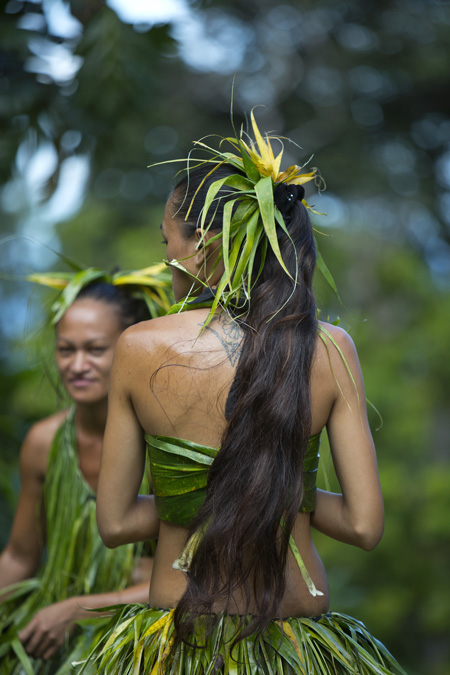
At the next port, on the smallest of the inhabited Marquesas, Tahuata, locals set up handicraft stalls and dance and sing for us. But rather than feeling like manufactured tourism, the singing and dancing feels intimate, like it’s done for family; in the Marquesas nothing feels contrived. With no airport on the island, the next tourists won’t arrive till the next Aranui voyage in three weeks.
In the last precious sunlit moments of a cloudless, still afternoon, I scoop at the flesh of a green coconut with my fingers and feel the kind of contentment one can only find from nature. “Over all the landscape there reigned the most hushed repose, which I almost feared to break, lest, like the enchanted gardens in the fairy tale, a single syllable might dissolve the spell," is how Herman Melville, author of Moby-Dick describes this kind of nature-induced Marquesan euphoria in his 1846 novel Typee.
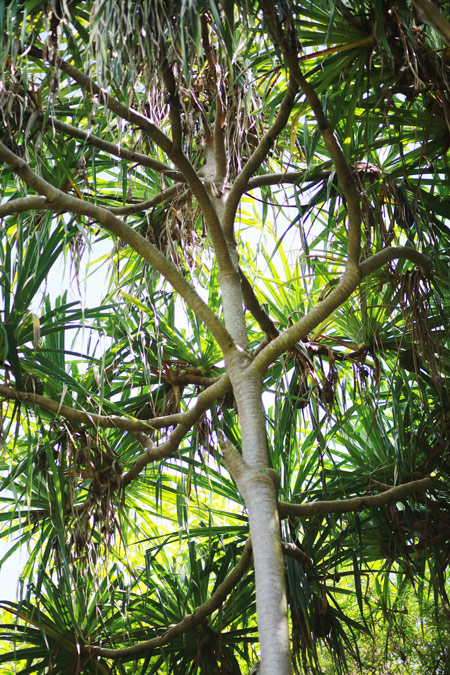
In this town, surly teenagers still stare at their iPhone screens with all the hope and ferocity of their contemporaries in our own world, but little else appears to have changed in the century or so since history’s most celebrated artists and writers came to the Marquesas seeking the ultimate adventure, and escape. Melville ran away from a whaling ship to live with cannibals in the forests of the Marquesas’ largest island, Nuku Hiva, our fourth port of call.
Retracing Herman Melville’s journey on Nuku Hiva
From the port of Taiohae I retrace his 178-year-old journey by 4WD to the Taipivai (Typee) Valley, first ascending a mountain range into a mist forest, before descending and ascending again, passing wild horses gathered at hair-pin corners. We eat pork, fish and vegetables roasted in a traditional underground umu oven, surrounded by waterfalls Melville described in his book. “We stood on the brink of a precipice, over which the dark stream bounded in one final leap of full 300 feet," he wrote. “On either side of the fall, two lofty and perpendicular bluffs buttressed the sides of the enormous cliff."
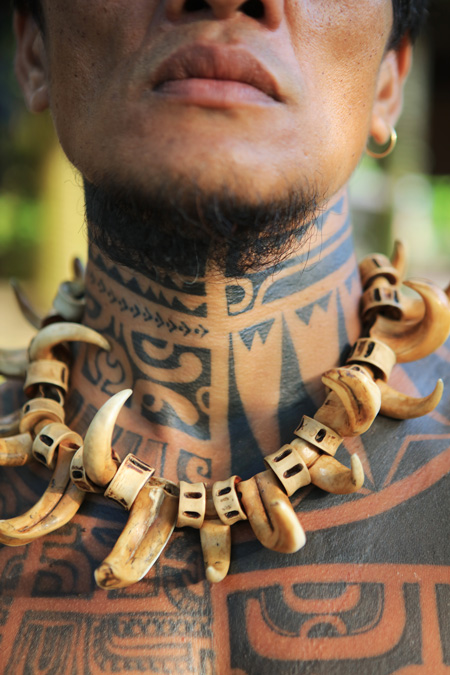
traditional Marquesan tattoo on Tahuatu. (Image: Tahiti Tourisme)
It was Melville who inspired Jack London to venture to Nuku Hiva. “When I was a little boy I read a book … Melville’s “Typee"; and many long hours I dreamed over its pages," London wrote in The Cruise of the Snark. “I resolved there and then … come what would, that when I gained strength and years, I too, would voyage to Typee." It was another visitor, however, who is the Marquesas’ most famed guest. French artist Paul Gauguin came to the island of Hiva Oa seeking inspiration, and to hide from an outside world he despised. He lived in the village of Atuona, in a house dubbed the House of Pleasure, defying priests shocked by his sinful ways (teenage lovers, the encouragement of liquor consumption amongst natives and pornography spread across the walls of his home). The town’s still as quiet as the place described by Gauguin, though I find a fine restaurant with a sweeping bay view and a raw fish dish to die for, and Gauguin’s crushed coral grave in a cemetery above town, beside that of Belgian folk singer, Jacques Brel.
But for all the creative stars who plundered their way to the Marquesas (Robert Louis Stevenson was so inspired by the beauty of this archipelago that he chose to live out his days in Polynesia), it’s the least heralded of them who fascinates me most. Explorer and scientist Thor Heyerdahl (of Kon-Tiki fame) came to live in the forests on the island of Fatu Hiva
in 1936 at the age of 22 with his new wife. He’d never visited the tropics before, he’d never left his native Norway, in fact, before he boarded a ship bound for Tahiti and then rode a copra schooner to Fatu Hiva, our next port of call. He asked the skipper to row them to shore by the town of Omoa, and requested to be picked up from the same spot a year later. “There we could make our experience. Go back to the forests. Abandon modern times. The culture. The civil. Leap thousands of years into the past. To the way of life of early man. To life itself in its fullest and simplest form," he wrote in Fatu-Hiva: Back to Nature.
Experiencing lush remoteness on Fatu Hiva
Fatu Hiva is the most lush and remote of all the archipelago. We make it to anchor under a night sky full of stars. In the light of a three-quarter moon I look across the waters and imagine how it must’ve been for Heyerdahl then. Omoa is surely the Marquesas’ most charming town: piglets and goats run between backyards in a village backed by the black volcanic walls of a long extinct caldera. Though I can’t stay long – I must walk 17 kilometres to the village of Hanavave. The first eight kilometres are a torrid uphill battle along a red mud track, but I’m rewarded with a nine-kilometre descent down a winding mountain pass that cuts its path through steep rock faces looking down on the greenest valley in all the
South Seas, and the still waters of the Bay Of Virgins. This is one of the world’s most iconic
– and remote – sailing anchorages (today there are four yachts anchored here beside the Aranui).
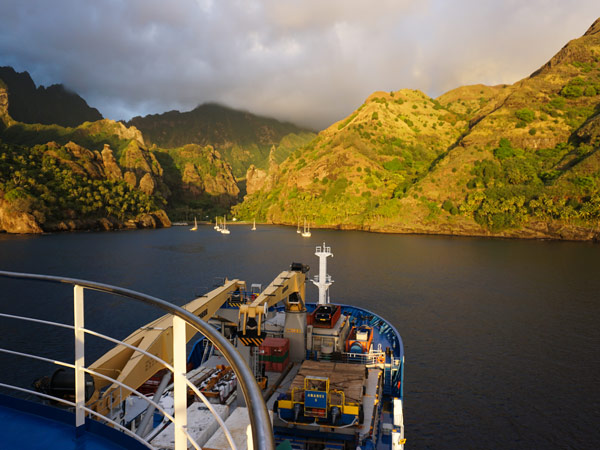
I might’ve remained on the ship for lunch as it steamed from Omoa to Hanavave, but I think these islands demand some effort from those who come to see them. Besides, the hours spent at sunset anchored a few hundred metres from the shore feel more precious to me now. As the evening light illuminates the high cliffs and escarpments above Hanavave, four-metre-wide manta rays circle the boat.
Memorable moments onboard Aranui
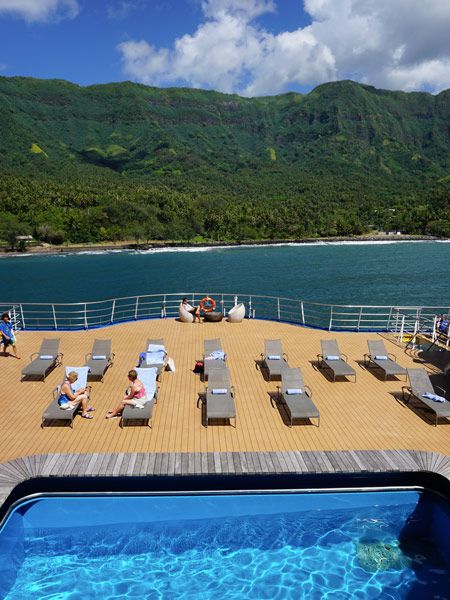
There are other ports of interest – some islands like Ua Huka and Ua Pou, oddly, are as barren as the rest are lush – though I find some of the most memorable moments I have on this 13-day journey through this forgotten world are ones I have onboard. I wake each morning at dawn off a new island, and I wander across the ship’s floors as if it were a deserted town. I cherish these quiet moments, when with a coffee from the infinite thermos in the lounge I watch for spinner dolphins and whales from my favourite vantage points: the top deck beside the bridge, my own super-sized balcony and the Sky Bar where in the moments before we dock, the same regulars congregate to detail how they might’ve parked our Aranui better.
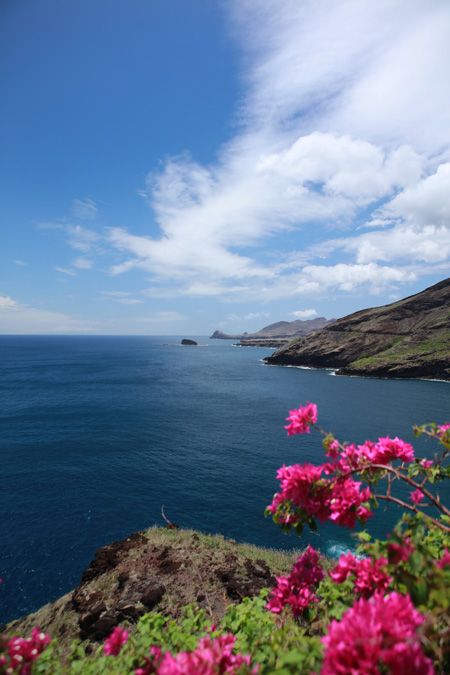
The journey home
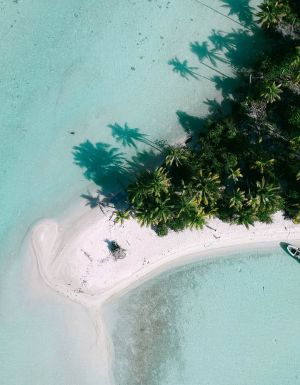
The sea is so calm for the voyage home that it feels like a journey across the world’s largest lake. We stop for a swim fix at the luscious lagoons French Polynesia is famous for: first at Rangiroa, and then Bora Bora. There are two other cruise ships in the lagoon beside us in Bora Bora and while it’s hardly Bondi Beach at Christmas, after the isolation of the Marquesas it feels cramped. Thankfully, it’s the isolation of the Marquesas that will save this
lost world from progress. For if isolation is indeed a bliss, then these islands must be the happiest islands in the whole world.
Trip details
Getting there
Air Tahiti Nui flies from Brisbane, Sydney and Melbourne to Papeete, Tahiti, via Auckland with Qantas codeshare.
Cruising there
Aranui 5 offers a regular 13-day voyage from Papeete to nine Tahitian islands across the
Marquesas, Tuamotu and Society Islands, including Bora Bora. An Aranui 5 cruise
includes shore excursions, laundry service, three meals per day and complimentary French
wine with onboard lunches and dinners
Weekly travel news, experiences
insider tips, offers, and more.
Speaking there
English and French are widely spoken in The Islands of Tahiti, including the Marquesas, but it’s good to try a few Tahitian words and phrases while you’re there.
‘Ia ora na – Good morning
E aha te huru? – How are you?
Maita’i – Good/well
Māuruuru – Thank you
Māuruuru roa – Thanks very much
Nānā – Goodbye
Manuia – Cheers
Tiare – Flower
Motu – Island
Moana – Ocean
E or ‘oia – Yes
‘Aita – No
Researching there
Good reading before heading to the Marquesas includes:
The Cruise of the Snark by Jack London
Typee by Herman Melville
In the South Seas by Robert Louis Stevenson
The Happy Isles of Oceania by Paul Theroux
Paul Gauguin and the Marquesas: Paradise Found? by Caroline Boyle-Turner
Want to see more stories from International Traveller in your Google search results?
- Click here to set International Traveller as a preferred source.
- Tick the box next to "International Traveller". That's it.