hero media

The ultimate guide to stargazing in the 24 Utah dark sky places

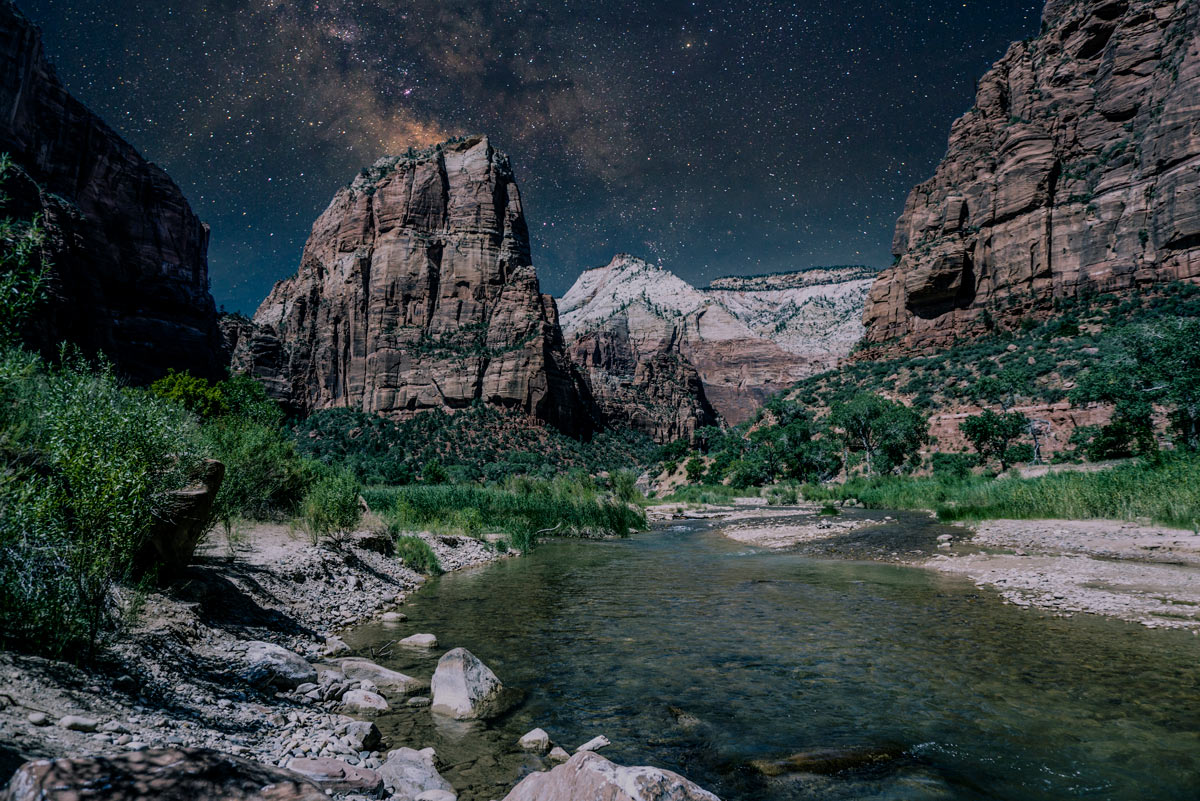
Witness the wonders of the cosmos from the dark sky parks that encompass Utah.

Utah is at the heart of a dense cluster of certified parks in the USA called The Great Western Starry Way from New Mexico to Montana, and is home to 24 international dark sky parks and communities, the highest concentration in the world.

Stargazing is one of the most calming, awe-inspiring hobbies, and whether you’re an Astro-tourism buff or just want to unwind off the beaten path, it connects you to nature and allows you to peer inward and think about your place in the universe.
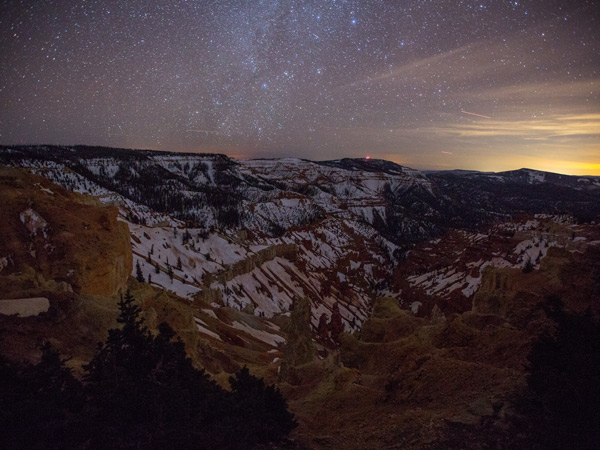
Stars above Brian Head ski slopes in Utah
Stargazing connects you with your surroundings. (Image: Adam Clark)

The International Dark Sky Association is working to protect natural areas from light pollution, and Utah alone, with a mission to protect naturally dark places for present and future generations, has certified 24 (and counting) locations, including communities, parks, and protected areas.

Boasting some of the finest dark skies in the world, viewing the billions of stars in the Milky Way has become an increasingly popular pastime for all ages. We’ve put together the ultimate guide to stargazing in Utah’s dark sky parks.
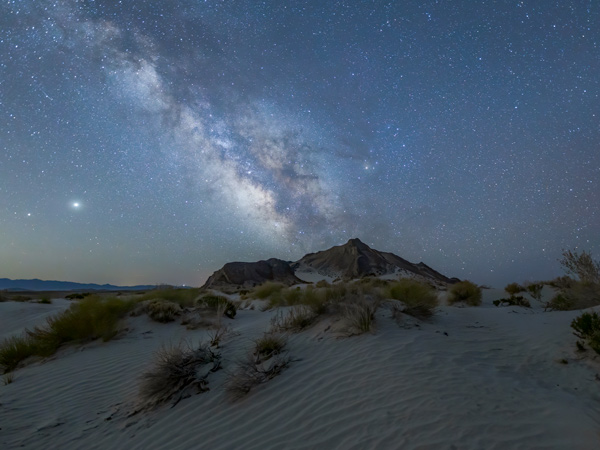
Milky Way above Knolls in Utah
There are so many incredible spots to stargaze in Utah.

Southeastern Utah

1. Arches National Park

Arches National Park is a 296-square-kilometre wonderland of eroded sandstone fins, towers, ribs, gargoyles, hoodoos, balanced rocks, and, of course, the arches northwest of Moab.
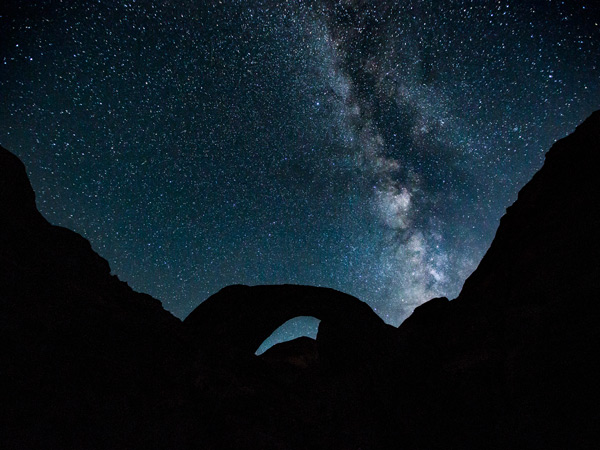
Milky Way behind the Arches in Utah
The ideal spot to unwind.

After the sun sets and the sandstone has cooled you can see countless stars set against a pitch-black night sky.
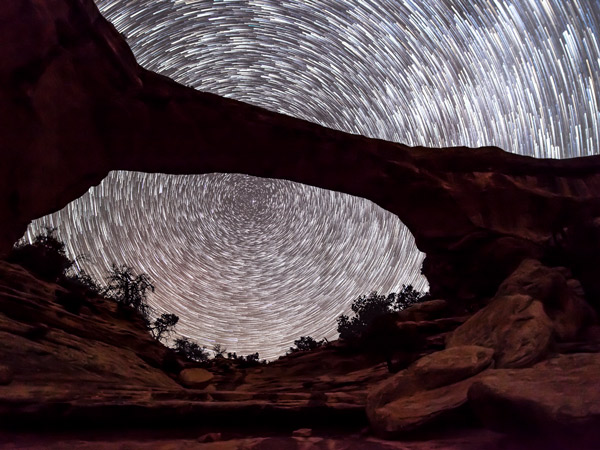
Stars in spiral at Arches in Utah
Lay down under the arches to watch the stars.

2. Canyonlands National Park

Imagine endless deep canyons, towering mesas, pinnacles, cliffs, and spires stretching across 1365 square kilometres. This is Canyonlands National Park, the largest national park in Utah, formed by the currents and tributaries of Utah’s Green and Colorado rivers.
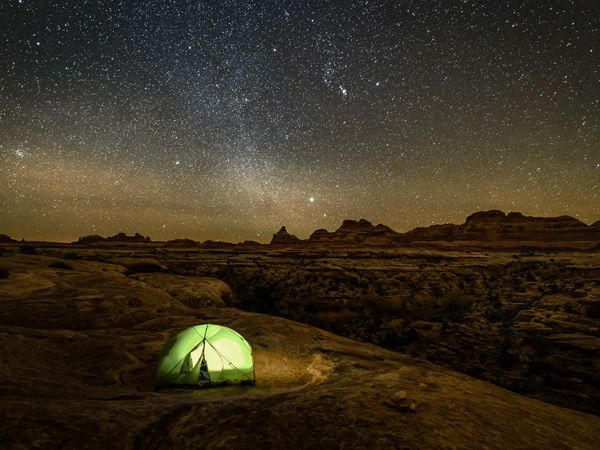
Lonely tent pitched under the stars at canyonlands National Park in Utah
Camp under the stars in Canyonlands.

The utter darkness of a moonless night in Canyonlands surprises many visitors. At Canyonlands, the naked eye is sufficient to witness a wealth of stars, and under the right conditions, common binoculars may even reveal the rings of Saturn.
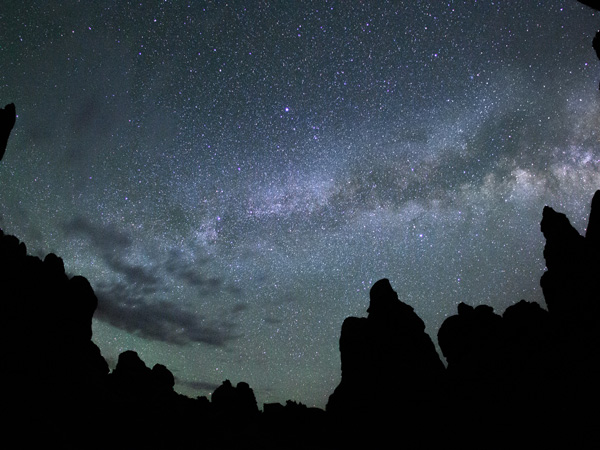
Starry sky behind rock formations at Canyonlands National Park in Utah
Try your luck seeing Saturn at Canyonlands.

3. Dead Horse Point State Park

Driving to each of the Dead Horse Point State Park’s many overlooks reveals a completely different perspective into Utah’s vast canyon country. Some visitors claim Dead Horse Point State Park is even more captivating than the Grand Canyon. It’s also the place where Thelma & Louise drove their convertible off a cliff!

Since 2016, Dead Horse Point State Park has been an officially designated International Dark Sky Park. The first Utah State Park to achieve the certification, the high plateau and distance from city light pollution make it an ideal place to view the celestial sphere.
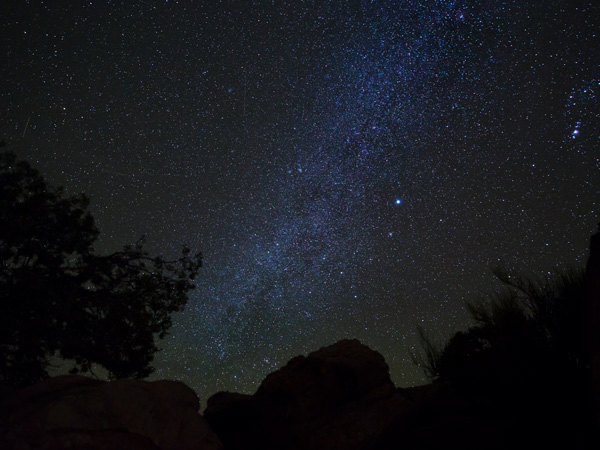
The Milky Way at Dead Horse Point
Dead Horse Point was the first Utah State Park to be certified.

4. Goblin Valley State Park

Goblin Valley State Park captures and bewilders the imagination, challenging you with its geologic quirkiness. The landscape, covered with sandstone “goblins" and other fascinating formations, is often compared to Mars.

Fun and goofy by day, and slightly spooky at night, Goblin Valley’s location attracts a lot fewer crowds. It’s one of the most spectacular — and ghoulish — places in the world to view the Milky Way.
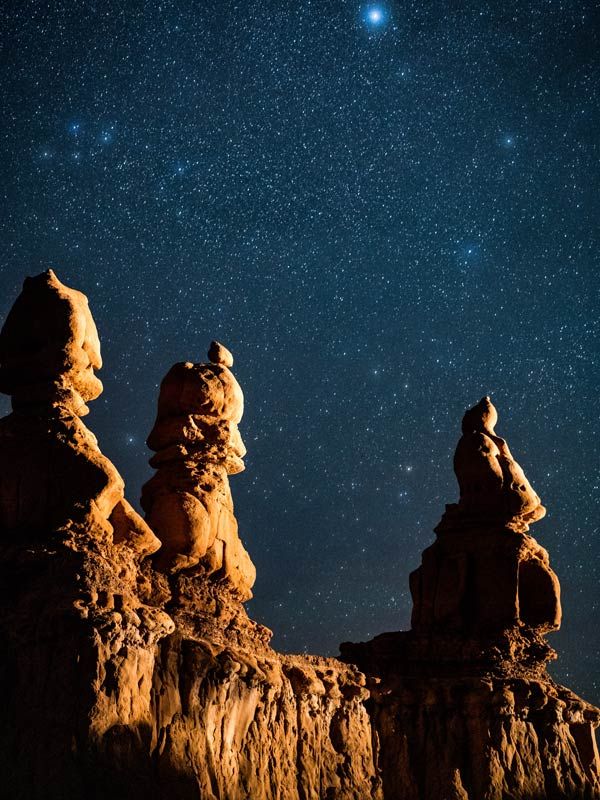
Starry sky behind rock formations at Goblin Valley state park.
Goblin Valley is fun and goofy by day, and slightly spooky at night.

5. Goosenecks State Park

Goosenecks State Park is an easy-to-get-to area with a million-dollar view. From this primitive state park, you can see the famous goosenecks.

Look down upon the San Juan River 300 metres below and see the results of 300 million years of erosion. Look up and Goosenecks’ night skies rival its sensational geological formations.
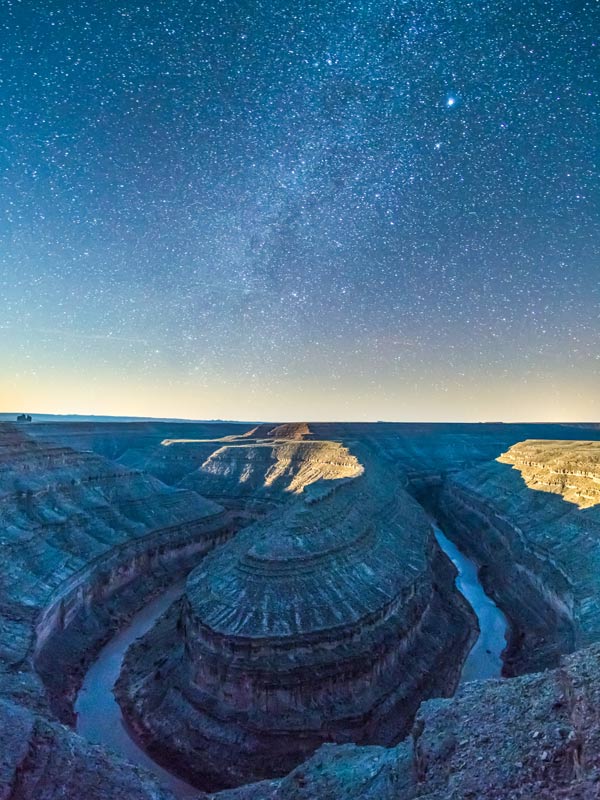
Goosenecks with starry sky in background
Goosenecks’ night skies rival its sensational geological formations.

6. Hovenweep National Monument

Delve into the world of the Ancestral Puebloan people by visiting Hovenweep National Monument. Hovenweep trails are open from sunrise to sunset daily. Stargazing and exploring the night sky is allowed from the visitor centre parking lot and campground.

7. Natural Bridges National Monument

Given its remote location, it’s no wonder the park has some of the world’s least light-polluted night skies.

Natural Bridges National Monument was the world’s first International Dark Sky Park. Accordingly, park rangers not only give interpretive discussions on astronomy but also changed out the park’s light fixtures to reduce their own light pollution.
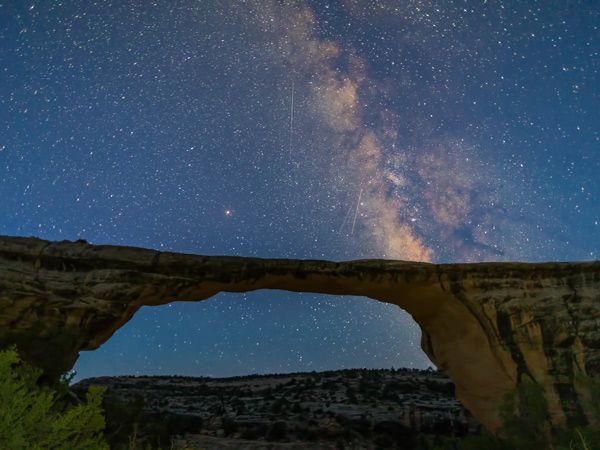
Milky way behind Natural Bridges National Monument
Natural Bridges National Monument was the world’s first International Dark Sky Park.

8. Rainbow Bridge National Monument

Considered sacred in Navajo culture, Rainbow Bridge is a symbol of deities responsible for creating rain, the essence of life in the desert.

Rainbow Bridge National Monument is the first International Dark Sky Sanctuary in the National Park Service. The monument itself can only be accessed by boat on Lake Powell or by backpacking from Navajo Mountain, but the entire Glen Canyon National Recreation Area boasts dark skies.
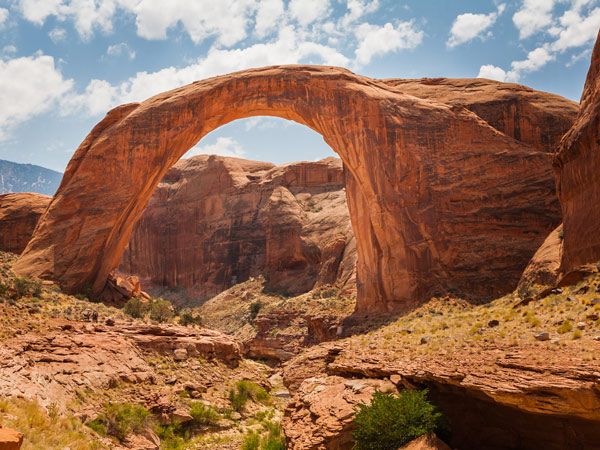
Bridge at Rainbow Bridge
Rainbow Bridge National Monument is the first International Dark Sky Sanctuary in the National Park Service.

Southwestern Utah

9. Bryce Canyon National Park

An alpine forest with as many red rock hoodoos as trees. At dawn and dusk, mule deer graze the forested plateau along the road into Bryce Canyon. Water and wind, over millions of years of freezes and thaws, have carved into the plateau endless fields of distinctive red rock pillars called hoodoos, as well as into the park’s series of natural amphitheatres.

Far from the light pollution of civilisation and protected by a special force of park rangers and volunteer Utah astronomy enthusiasts, Bryce Canyon is known as the last grand sanctuary of natural darkness and has one of the nation’s oldest astronomy programs. During moonless and clear nights, 7500 stars will welcome you to their domain.
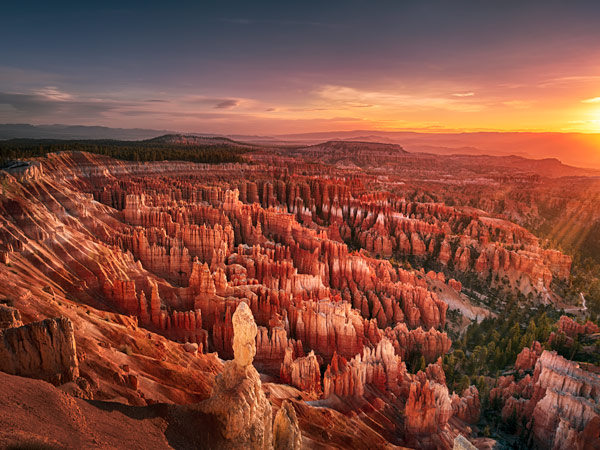
Dawn over Bryce Canyon in Utah
Bryce Canyon is known as the last grand sanctuary of natural darkness.

10. Capitol Reef National Park

While Bryce and Zion are like encapsulated little fantasy lands of coloured stone and soaring cliffs, the less-visited Capitol Reef is almost like a planet itself. Here you get a real feel for what the earth might have been like before life appeared when nothing existed but earth and sky.
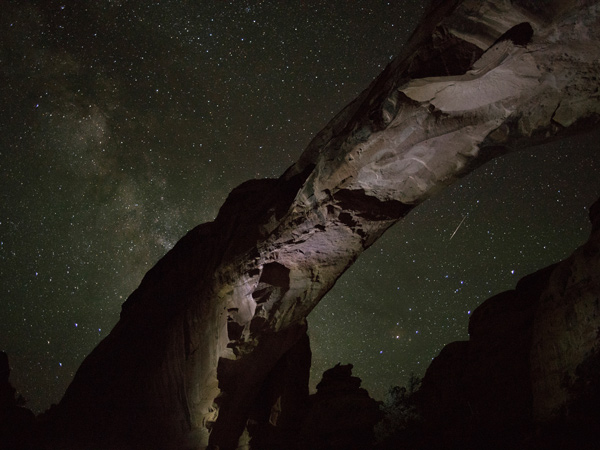
Eph Hanks Tower at Capitol Reef.
Capital Reef is in its own realm. (Image: Ariel Solomon)

11. Cedar Breaks National Monument

Hidden within the mountains above Cedar City is the brilliant geology and vibrant environment of Cedar Breaks National Monument.

Far from any metro light pollution and high in altitude makes Cedar Breaks one of the best locations for astral viewing. It’s also an ideal spot to sleep under the stars at Cedar Breaks’ campground.
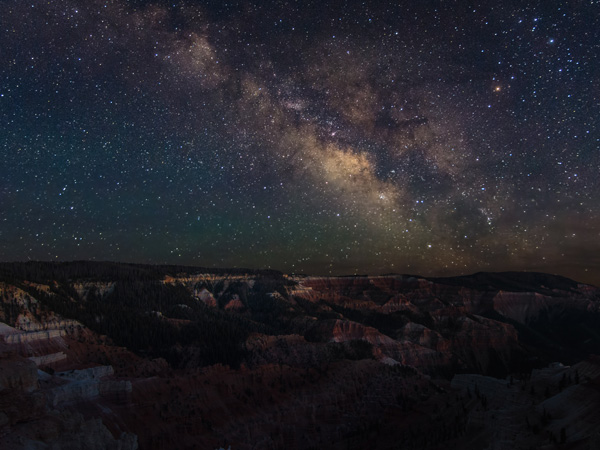
Overlooking the canyon at Cedar Breaks
Cedar Breaks is one of the best locations for astral viewing.

12. Fremont Indian State Park

Fremont Indian State Park is known for its captivating dark skies. Located in Fishlake National Forest, here you can explore the ancient petroglyphs and pictographs of the scenic canyon by day, and the Milky Way galaxy by the cover of night.

13. Kodachrome Basin State Park

If ever a state park was made to be photographed, it is Kodachrome Basin State Park. The park covers 9 square kilometres of canyon country and is surrounded by Grand Staircase-Escalante National Monument on three sides.
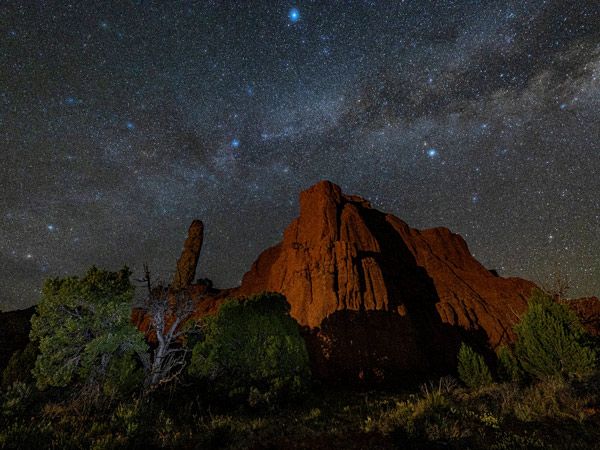
Milky Way over Kodachrome in Utah
Kodachrome Basin State Park was made to be photographed. (Image: Ryan Andreasen)

Pillars shaded red, pink, white, yellow and grey are only the start of the greatness of Kodachrome. Due to its geographical remoteness, superb air quality, high elevation, low humidity and distance from urban areas, the park boasts one of the darkest skies remaining in the continental US.
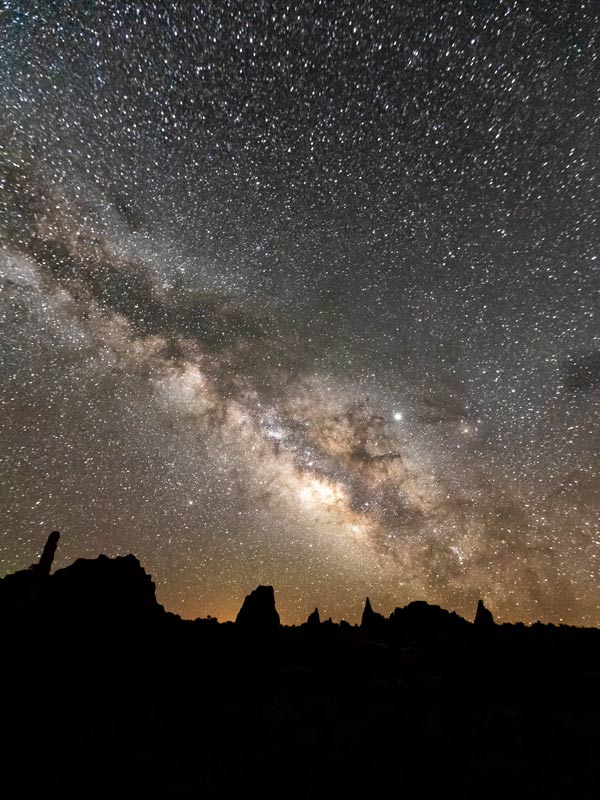
Milky Way behind Kodachrome Basin State Park in Utah
Kodachrome Basin State Park boast one of the darkest skies in the US. (Image: Angie Payne)

14. Zion National Park

Zion National Park is the newest addition to Utah’s certified dark sky parks, and it doesn’t disappoint.

Zion is a great place to reconnect with the night sky, as it protects this dark sky resource for future generations by not lighting up the night. But this means that after sunset, the park is very dark. Be prepared!
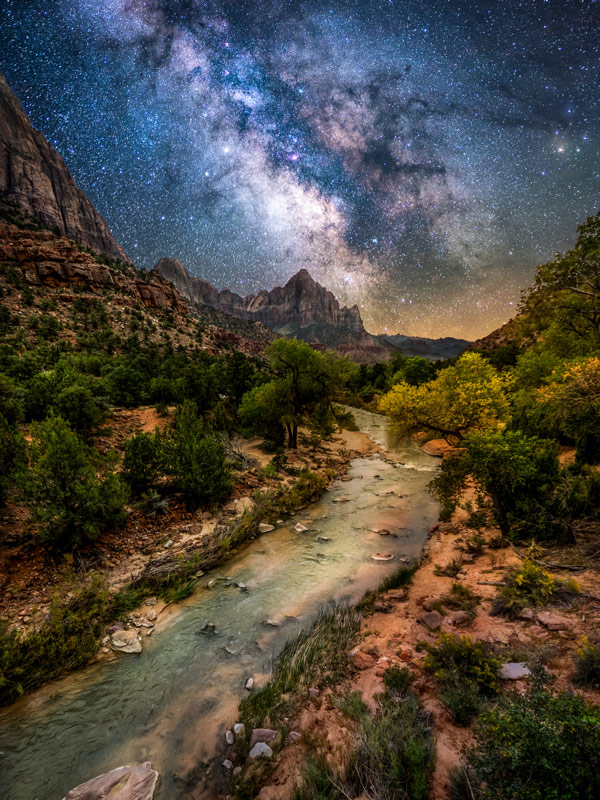
Milky Way over Virgin River at Zion National Park in Utah
Zion National Park is the newest dark sky park in Utah.

Northern Utah

15. Antelope Island State Park

Antelope Island State Park is 40 kilometres north of Salt Lake City. Accessed by a causeway, the island sits in the Great Salt Lake and features free-roaming bison and antelope herds.

Overlooking the Great Salt Lake at night with countless stars above makes for near-seamless stargazing. The park often presents dark sky programs and events to learn more about the Milky Way and beyond.
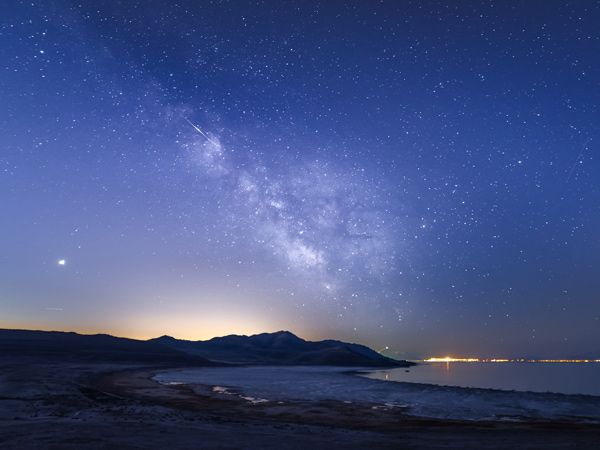
Blue starry sky at Antelope Island in Utah
Antelope Island has near-seamless stargazing. (Image: Dan Ransom)

Weekly travel news, experiences
insider tips, offers,
and more.

16. Dinosaur National Monument

Northeastern Utah’s dinosaur legacy comes to life at Dinosaur National Monument, where geological and climatic forces have tilted, warped, and eroded the earth’s crust to reveal a treasure trove of fossils.

The monument boasts one of the most magnificent Utah dark sky parks, perfect for stargazing and connecting with the monument’s primordial foundation.
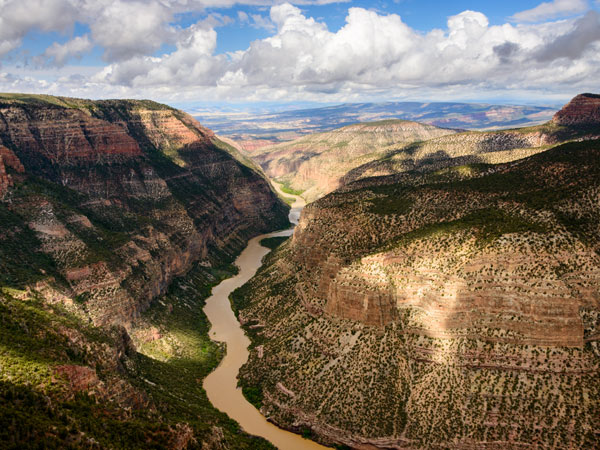
Wide shot of the Dinosaur National Monument
Utah’s dinosaur legacy comes to life at Dinosaur National Monument.

17. East Canyon State Park

The rugged East Canyon State Park, oozing history, is a land of stark contrasts. Sagebrush gives to oak and then to cottonwood. Long expanses of dry dirt are suddenly punctuated by creek beds.

Although East Canyon State Park is close to the big city, the mountains provide a blockade for light pollution. At night, visitors are treated to an array of black skies and starry constellations.

18. Jordanelle State Park

Jordanelle State Park is close to Park City, Midway and Heber City, but the surrounding hillsides and mountains provide a blockade for light pollution. The park hosts dark-sky events, and its Rock Cliff Nature Area boasts the darkest skies in the park.
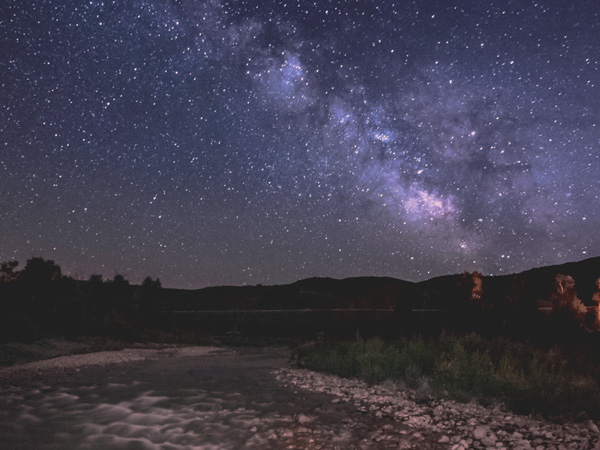
Mily Way over Rock Cliff Nature Area at the Jordanelle State Park in Utah
The Rock Cliff Nature Area boasts the darkest skies in Jordanelle State Park.

19. North Fork Park

This sprawling county park tucked into a canyon near Ogden is one of the few places you can still see the Milky Way near an urban centre — in part because the mountains block light pollution from the Wasatch Front and Cache Valley, and because of successful local efforts to limit light pollution in the park.

It doesn’t take an astronomer to locate or appreciate the stars at North Fork Park – amateurs and artists have been doing it for centuries. In the summertime, you can pitch your tent or simply sleep under the stars, a show that changes every night but lasts throughout the year.

20. Rockport State Park

Rockport State Park sits at a base elevation of 1800 metres above sea level in a rural valley between the Wasatch and Uinta mountain ranges.

The surrounding mountains create a protective halo that blocks out light pollution from the nearby communities, making it an exceptional stargazing spot.

Park staff host public programs on best dark sky practices and the importance of dark skies for the area’s nocturnal species.
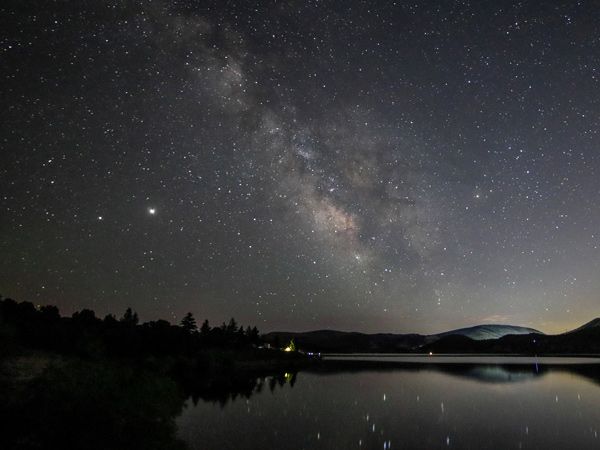
Milky Way over Rockport State Park.
Rockport State Park’s surrounding mountains create a protective halo that blocks out light pollution. (Image: Shelby Stock)

21. Steinaker State Park

Located just north of Vernal and between Ashley National Forest and Dinosaur National Monument, Steinaker is a remote destination with welcoming accessibility for dark sky viewing. The park offers nighttime programming right in the parking lot for visitors ready to soak in the vibrant Milky Way.
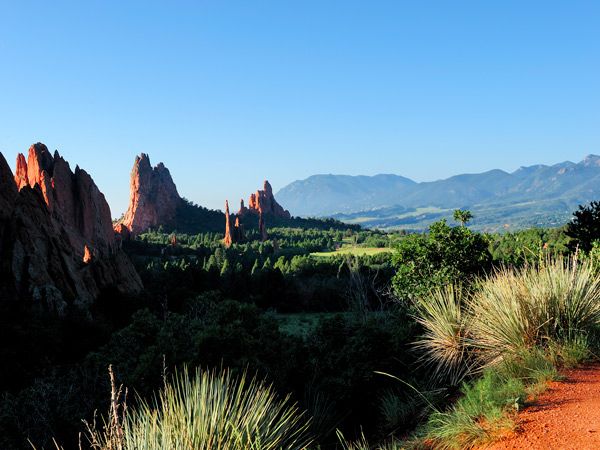
Nature view of Steinaker State Park in Utah
Steinaker is a remote destination with welcoming accessibility for dark sky viewing.

22. Timpanogos Cave National Monument

Famous for its spectacular caves of helictites, stalactites and stalagmites, the cave has a new designation — the first National Park Service unit to be certified as an Urban Night Sky Place.

Dark sky communities

23. Helper

Located near Nine Mile Canyon and along the way to more popular Southern Utah adventures, this former mining and railroad town rallied its locals to protect and share its natural dark sky parks, leading to its certification of being an International Dark Sky Community.

Helper’s nearby Dark Sky Observers lead regular astronomy programs and special events in the area.

24. Torrey

Located just 13 kilometres from the west entrance of Capitol Reef National Park, Torrey is an idyllic little tree-lined, high-elevation town on the Capitol Reef Country Scenic Byway surrounded by rose-coloured cliffs and green meadows.

The town came together to protect its night skies by improving outdoor lighting ordinances and retrofitting dark-sky-compliant lighting to minimise light pollution and strengthen the town’s already close relationship with nature, place and the universe.
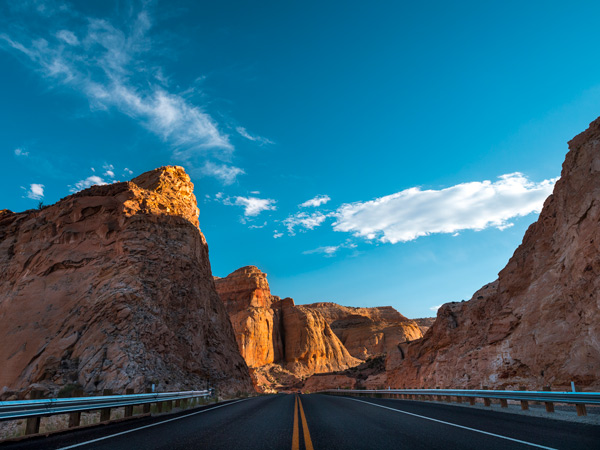
Highway 24 between Torrey and Hanksville
The town of Torrey came together to protect its night skies.

Want to see more stories from International Traveller in your Google search results?

  1. Click here to set International Traveller as a preferred source.
  2. Tick the box next to "International Traveller". That's it.
hero media

12 grand journeys throughout North America

    Discover North America’s epic adventures — from Route 66 and Alaska cruises to Hawai‘i road trips, NYC culture, Mexico trails and more.

    1. Route 66, the Main Street of America

    Travelling with: Ricky French

    Sunset on Route 66 in the California Mojave Desert.
    Hit the open road and trace America’s legendary highway. (Image: Getty/Der_Thomasa)

    Dubbed the Main Street of America, Route 66 radiates serious main character energy, cemented into popular culture through everything from John Steinbeck’s novel The Grapes of Wrath to the Disney Pixar film Cars. Spanning nearly 4000 kilometres from Chicago to Los Angeles, the historic highway celebrates its centenary next year, a timely invitation to take the mother of all road trips along the Mother Road. Allow two to three weeks to tackle the full length, or bite off a smaller chunk at either end, cruising the dramatic deserts of California or the more pastoral landscapes of Illinois, lined with neon-lit diners, retro gas stations and quirky roadside attractions.

    2. Mexico’s Día de los Muertos

    Travelling with: Carla Grossetti

    emblematic catrina of mexico with flowers and necklace with sempasuchil flowers
    Celebrate life and honour loved ones in vibrant style. (Image: Getty/Fabian Pacheco)

    You might know Oaxaca as the birthplace of mole and mezcal. But the state in southern Mexico is also where the Día de los Muertos (Day of the Dead) began. Time your visit to coincide with the colourful holiday, on 1–2 November, which honours and celebrates loved ones who have passed away. Oaxaca is also Mexico’s Michelin-starred culinary capital, with 18 restaurants and a humble taco stand listed in the 2025 guide.

    3. Museum-hop in New York City

    Travelling with: Carla Grossetti

    The Guggenheim Museum’s iconic spiralling exterior, a highlight of North America Epic Adventures.
    Step inside and marvel at bold, world-class art. (Image: Damiano Fiore)

    Your map app will look like it’s been scattered with confetti after you’ve dropped pins on all the museums you want to visit in New York City. Must-sees are the Solomon R. Guggenheim Museum, the Metropolitan Museum of Art aka the Met, and the Museum of Modern Art. The American Museum of Natural History is also a draw. It’s also worth venturing into the boroughs to browse institutions such as the Brooklyn Museum, which has a huge permanent collection categorised by culture.

    4. The USA’s music scene

    Travelling with: Elizabeth Whitehead

    The Seattle skyline at night, aglow with city lights on North America Epic Adventures.
    Soak up skyline views and dive into the city’s coffee culture. (Image: Abigail Boone)

    If you’re a muso, chances are you’ve wanted to make a pilgrimage to the United States, the epicentre of so many beloved genres. Whether you’re head-banging your way around the Grunge Circuit in Seattle, chasing the twang of the pedal steel through Tennessee or bouncing between blues bars in the Mississippi Delta, the USA’s rich music culture has something that’ll strike a chord.

    5. Road-tripping Hawai‘i

    Travelling with: Carla Grossetti

    A woman surfing in Hawaii, gliding across turquoise waves on North America Epic Adventures.
    Catch the waves and ride Hawaii’s iconic swells. (Image: Ben Ono)

    Hawai‘i is one of the most diverse US states to road trip around. Of the six major islands to visit, the Island of Hawai‘i packs in everything from the snowy summits of Mauna Kea and Mauna Loa to black-sand beaches and lava fields frozen in the act of flowing forward. Change down a few gears on the island of O‘ahu, too, where you can find your own patch of sand on Waimanalo Beach. Visit poi and pineapple plantations. And hang ten on beginner-friendly waves on the North Shore.

    6. Cruising Alaska

    Travelling with: Carla Grossetti

    Explora Journeys ship cruising in Alaska.
    Sail past glaciers and spot whales in pristine waters.

    Seeing Alaska from the sea allows you to cover a lot of distance quickly. This immersive frontier now beckons more than ever before with Explora Journeys adding the American state to its global destination portfolio. Best of all are the pre-and post-journey immersions that connect the luxury of a cruise onboard Explora III with the rugged grandeur of the Alaskan interior. UnCruise Adventures also weaves in access to remote national parks, legendary wildlife corridors and authentic cultural experiences on its Alaskan itineraries.

    7. The Wixárika Route in Mexico

    Travelling with: Elizabeth Whitehead

    People journeying through the Wixarika Route.
    Journey deep into sacred Huichol traditions and art.

    For generations, the Indigenous Wixárika People of Mexico have walked a sacred path known as Tatehuarí Huajuyé, or ‘The Path of Our Grandfather Fire’. The annual pilgrimage route spans 500 kilometres, taking in significant sites in Wixárika spirituality and cosmology. The route passes through the deserts, mountains and forests of northern Mexico before reaching Wirikuta, believed to be the place the sun first emerged. The route is a living cultural landscape of Indigenous culture pre-Columbian influence and, in July this year, was formally inscribed into UNESCO’s World Heritage List.

    8. Drive the Iceberg Coast in Canada

    Travelling with: Carla Grossetti

    Iceberg off the east coast of Canada
    Chase icebergs along Expedition 51 on Canada’s east coast. (Image: Canadian Tourism Commission/ Chris Hendrickson)

    Download the icebergfinder.com map to better plan your road trip along Canada’s Iceberg Coast. The new highway, which has been nearly 25 years and CAD$1.1 billion in the making, threads through the country’s pleated coastlines around Quebec, Newfoundland, Labrador, Nova Scotia and New Brunswick before looping in the French islands of St Pierre and Miquelon. As well as chasing icebergs along Expedition 51, travellers will have the opportunity to engage with cultures that have thrived in the pristine provinces for thousands of years.

    9. A foodie tour of Nova Scotia

    Travelling with: Katie Carlin

    Lunenberg Nova Scotia
    Try lobster rolls in Lunenburg on the east coast of Canada in Nova Scotia. (Image: Natalia Kvitovska/ Unsplash)

    World-famous for its lobster, Nova Scotia is a Canadian province best savoured through its culinary clout shaped by sea and terroir. Bite into lobster rolls at historic Lunenburg’s Salt Shaker Deli & Inn and sip maple rum at Ironworks Distillery. Winery-hop around Wolfville’s rising vineyards (don’t miss Lightfoot & Wolfville). Take a maple syrup tour at Sugar Moon Farm near Earltown. And pull up a seat at waterfront Bar Sofia in Halifax, where Nova Scotia oysters aguachile arrive bright with cucumber, lime and pickled onion.

    10. Soak up the sun in the Caribbean

    Travelling with: Carla Grossetti

    Overwater bungalows off a beach in the Caribbean
    Experience the white-sand beaches and cerulean seas of the Caribbean on board a cruise.

    The Caribbean is on the radar for seasoned cruisers. And it’s easy to see why, with white-sand beaches, cerulean seas and swaying palms so picture-perfect they look AI-generated. Cruise with Windstar, Royal Caribbean, and Celebrity on its inaugural Xcel season to the Caribbean to enjoy action-packed excursions such as snorkelling coral reefs and shopping for local trinkets. And those sea days? Spectacular.

    11. Red Chair Hikes of Canada

    Travelling with: Kassia Byrnes

    Red Adirondack chairs overlooking Lake Minnewanka in Canada
    Take a seat at Lake Minnewanka, one of more than 400 red Adirondack chairs scattered across Canada’s hiking routes. (Image: Getty Images/ Autumn Sky Photography)

    No one appreciates the great outdoors more than Canadians, emerging from snow-covered winters to tread glacial rivers and snowshoe through forests, or to hike mighty mountains and wildflower-strewn valleys come spring. Along popular hikes around the country, more than 400 red Adirondack chairs have been placed in peaceful, breathtaking locations. What started as a social media contest now sees hikers soaking in classic Canadian lake and mountain vistas, overlooking historic sites or gazing down on the mountainous path they just travelled.

    12. Ride the Rocky Mountaineer from Denver to Moab, USA

    Travelling with: Carla Grossetti

    Sweeping views from the Rocky Mountaineer.
    The Rocky Mountaineer will continue as the Canyon Spirit in 2026, seen here carving through Ruby Canyon.

    Sighting wild animals is one of many incredible thrills along the two-day luxury Rockies to the Red Rocks route onboard the Rocky Mountaineer across America’s Southwest between mid-April and mid-October. In addition to the lone bear, we spot bighorn sheep, elk, beavers, pronghorn antelope, bald eagles and ospreys. Riding the rails onboard the luxury train, which was founded in Canada in 1990 and has been awarded the prestigious World’s Leading Travel Experience by Train several times, has never been about just getting from A to B. Ride the train from Denver to Moab and you will see the scenery change from snow-capped peaks to meadows, red-rock canyons and soaring cliffs that resemble ornate Gaudí-esque cathedrals. But it’s not until you get off the train that you can produce the ultimate Venn diagram, with nature and adventure in the intersecting spheres.