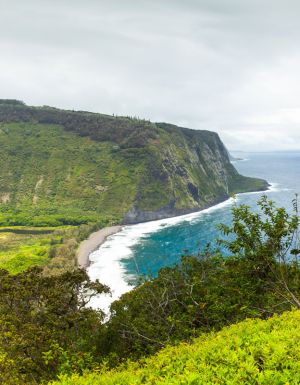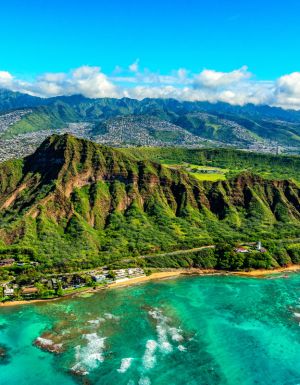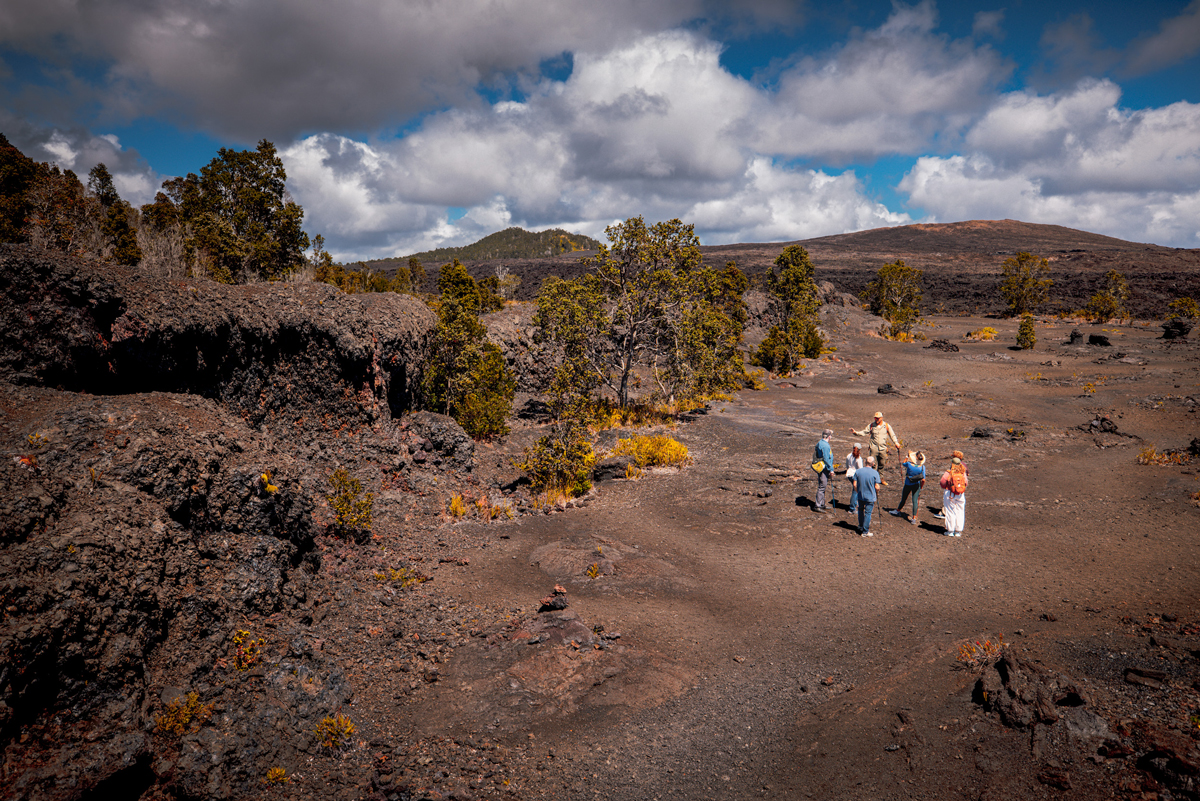
hero media

Your ultimate guide to Hawai‘i Volcanoes National Park

Discover Hawai‘i Volcanoes National Park’s essential sights, travel tips and the best ways to experience its active lava flows, lush rainforests and sacred volcanic terrain.

One of the world’s most active volcanoes, Kīlauea has been erupting episodically roughly every two weeks since December 2024, with no indication of slowing. It’s the kind of natural spectacle travellers dream of witnessing – but timing, as ever, is everything.

While lava fountains may be the headline act at Hawai‘i Volcanoes National Park, its surreal, shifting landscapes ensure the experience remains unforgettable at any time.

Here’s everything you need to know before visiting Hawai‘i Volcanoes National Park, one of the best things to do on the island.

Why visit Hawai‘i Volcanoes National Park?
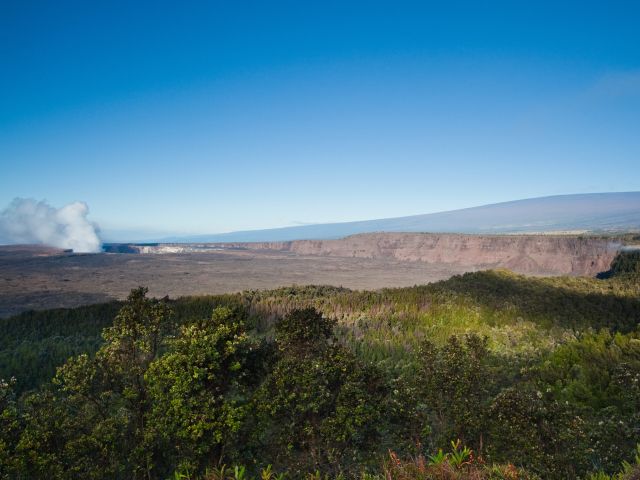
a scenic view of Hawai‘i Volcanoes National Park
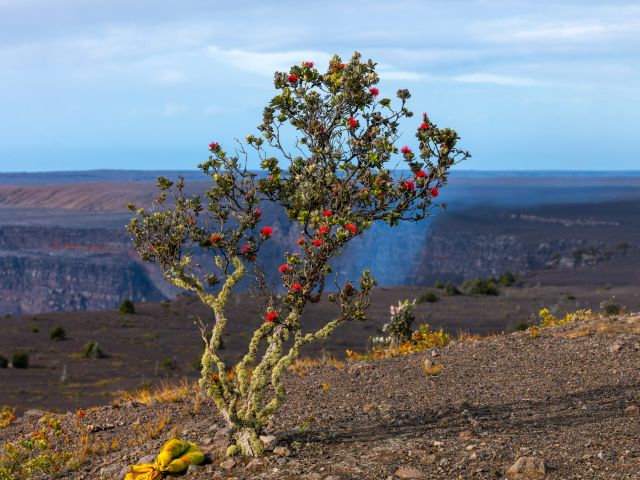
Hawai‘i Volcanoes National Park protects the summits of two of the world’s most active volcanoes: Kīlauea and Mauna Loa. (Credit: Hawaii Tourism Authority (HTA) / Tor Johnson)

To experience some of the world’s most dramatic volcanic landscapes and, if you’re lucky, witness an eruption or glowing lava flows.

How to see Hawai‘i Volcanoes National Park

Hiking
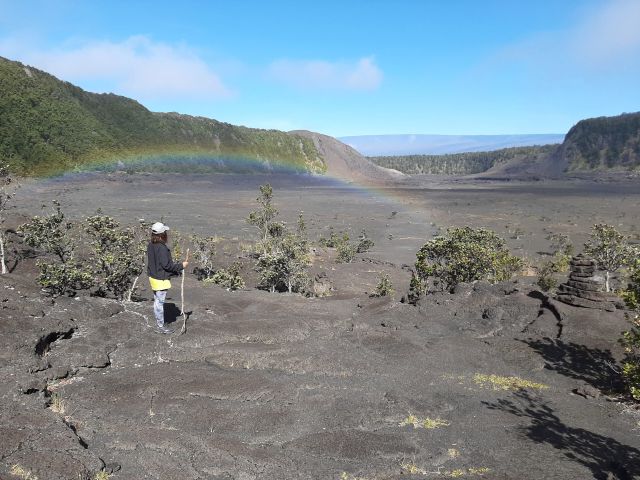
hiking in Hawaii Volcanoes National Park
Panoramic views and ancient Hawaiian rock carvings await. (Credit: Hawaii Tourism Authority (HTA) / Kirk Aeder)

Hiking here feels like walking on another planet. Standout routes include the Crater Rim Trail and Kīlauea Iki, where dense rainforest gives way to steaming crater floors, alongside shorter walks like Devastation Trail and lava-etched paths along Chain of Craters Road.

Driving
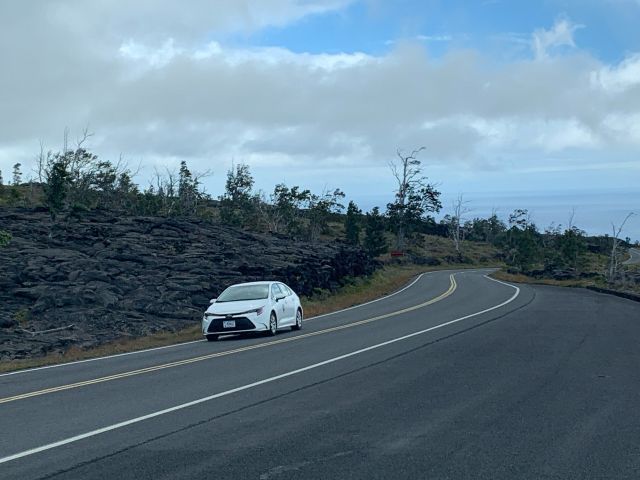
Chain of Craters Road, Hawaii Volcanoes National Park
Drive just less than an hour near the Kīlauea summit to Hōlei Sea Arch. (Credit: Angela Saurine)

Along the winding roads near Kīlauea and down the cinematic sweep of Chain of Craters Road, the landscape shifts from lush green to elemental stone. Fuel up in Hilo or Volcano Village before entering the park, as services are limited and long stretches can feel remote, with road conditions and closures changing in response to volcanic activity.

Tours
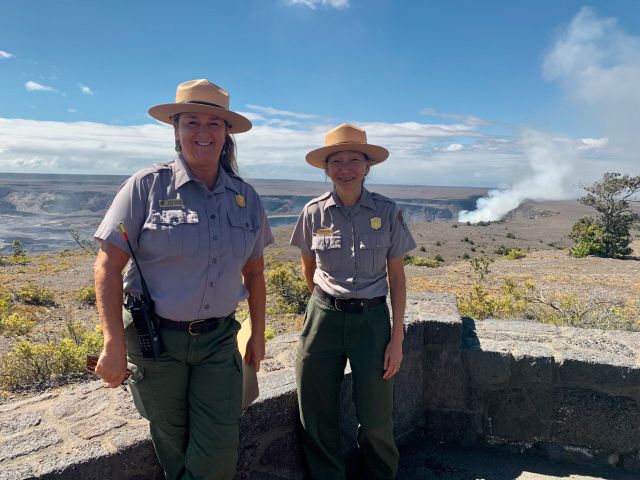
the US National Park Service in Hawaii Volcanoes National Park
Jessica Ferracane and Rhonda Loh of the US National Park Service in Hawaii Volcanoes National Park. (Credit: Angela Saurine)

Operators like Hawai‘i Forest and Trail offer naturalist-led journeys that weave together geology, culture and storytelling. These tours often take you beyond the main viewpoints into lava fields, crater rims and rainforest pockets, offering a more intimate and informed encounter.

How long should you plan to visit?

A minimum of one full day is essential, but to truly do the park justice, two to three days is the sweet spot.

Essential experiences and sights

Steam vents and sulphur banks
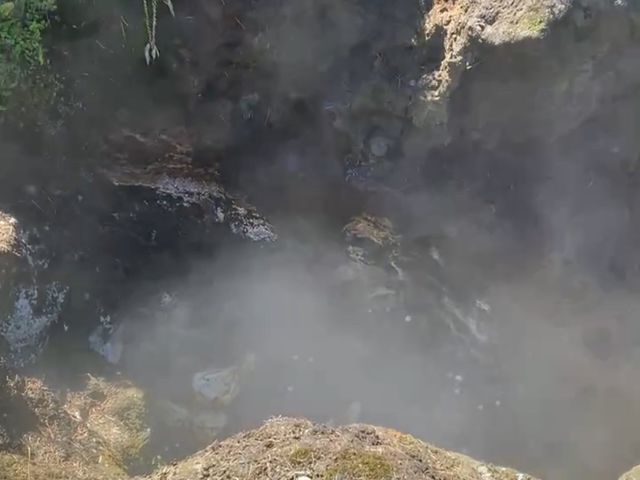
Steam vents in Hawaii Volcanoes National Park
The volcanic rocks heated by magma return as billowing steam. (Credit: Angela Saurine)

A short, well-marked walk along the caldera rim reveals dozens of fissures quietly venting volcanic steam, specifically at Steaming Bluff (Wahinekapu) and the Sulphur Banks (Haʻakulamanu). It’s best to visit in the morning when the plumes are most visible. Be warned – the sulphur-rich air lends the area a distinct rotten-egg tang.

Pu‘u Loa Petroglyphs
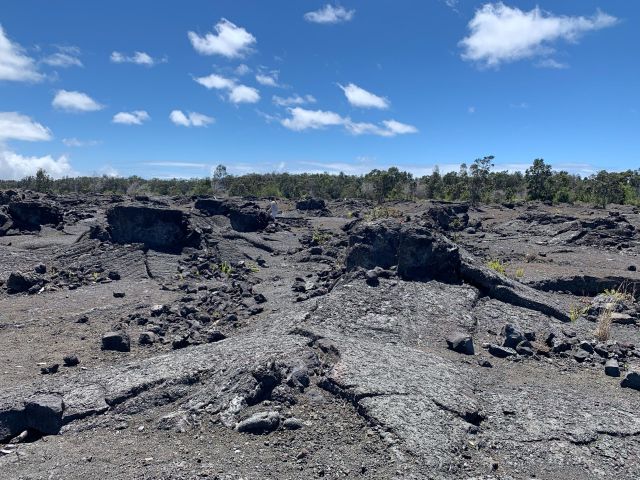
Chain of Craters Road in Hawaii Volcanoes National Park
Traverse uneven, rocky pāhoehoe lava. (Credit: Angela Saurine)

Follow the turnoff along Chain of Craters Road to Pu‘u Loa, where a short but exposed walk across a 550-year-old lava field reveals more than 23,000 petroglyphs enigmatic figures and geometric carvings etched into the rock. Go early or late to avoid the worst of the heat, take water and pause at the boardwalk sections for the best-preserved carvings.

Hōlei Sea Arch
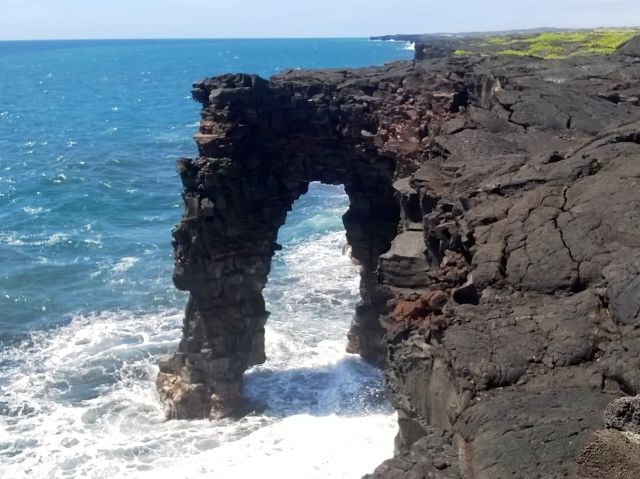
Hōlei Sea Arch at Hawaii Volcanoes National Park
Hōlei Sea Arch is a dramatic endpoint after a scenic drive. (Credit: Getty / CrisRG)

At the end of the Chain of Craters Road, the Hōlei Sea Arch rises like a sculptural flourish from black lava cliffs, a 27-metre basalt bridge carved by relentless Pacific surf over centuries. Arrive early or late for softer light and fewer crowds.

Mauna Ulu
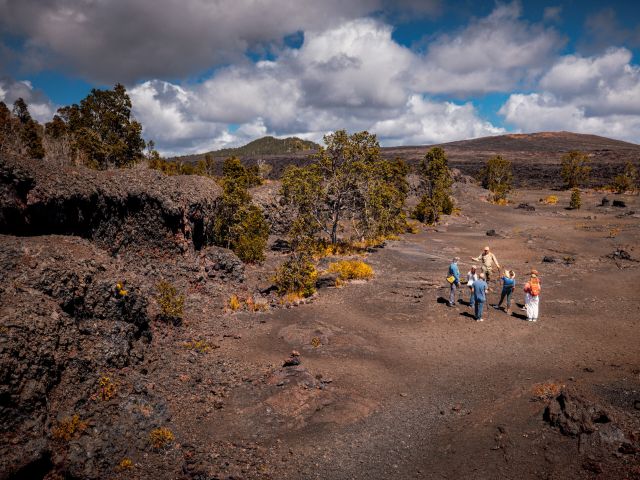
Mauna Ulu at Hawaii Volcanoes National Park
Look for lava trees at Mauna Ulu. (Credit: Hawaii Forest & Trail)

Also along Chain of Craters Road, Mauna Ulu is a brooding volcanic shield born from its last eruption in 1974, which spread 44 square kilometres of solidified lava and sculpted surreal formations including lava trees mushroom-like rock shapes created as molten flows cooled and hardened around standing forest. Take a short walk across this small volcano and continue to nearby Puʻu Huluhulu for incredible views over the terrain.

Crater Rim Trail
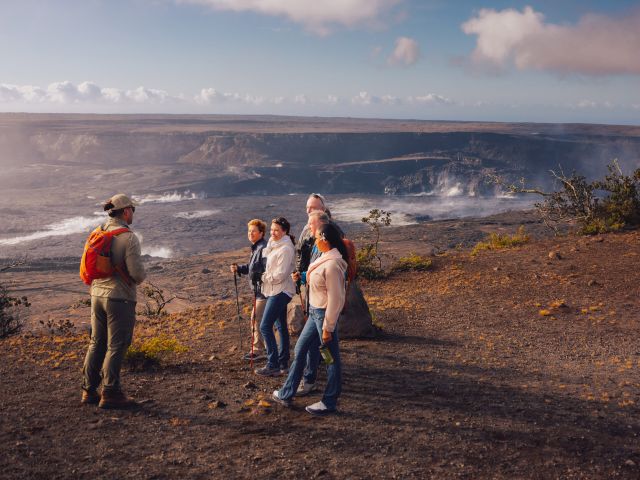
Halemaʻumaʻu crater at Hawaii Volcanoes National Park
Halemaʻumaʻu crater is surrounded by active steam vents. (Credit: Hawaii Forest & Trail)

Tracing the dramatic caldera edge, the Crater Rim Trail reveals a shifting tapestry of volcanic landscapes, from steam vents and sulphur banks to sweeping views into the vast Halemaʻumaʻu crater. Dip into shorter sections rather than tackling the full loop.

Nāhuku (Thurston Lava Tube)
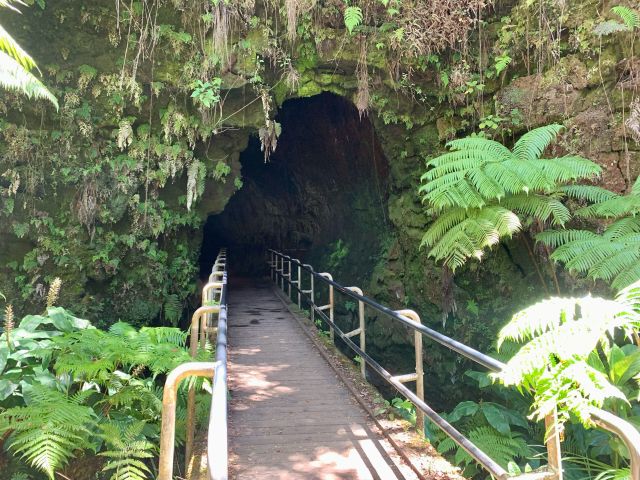
Nahuku Thurston Lava Tube in Hawaii Volcanoes National Park
The 500-year-old lava tube is accessible via a short, easy walk through rainforest. (Credit: Angela Saurine)

A cathedral-like passage carved by a river of molten lava, now softened by fern-draped rainforest and filtered light. Step inside and the temperature drops as the forest’s green hush replaces the fire that once forged this subterranean corridor, offering one of the park’s most atmospheric encounters.

Wildlife spotting
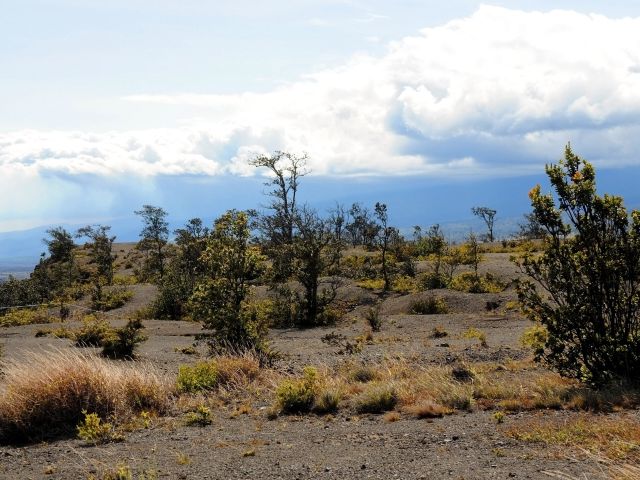
Kilauea volcano on Big Island, Hawaii
The park is a sanctuary for threatened and endangered species. (Credit: Getty / apollob66)

It’s surprising how much life thrives inside Hawaiʻi Volcanoes National Park, where you’d expect only barren lava fields. The secret is the island’s extreme range of microclimates, from steaming rainforest to windswept alpine desert. Take your time exploring at different elevations and you’ll find that what looks inhospitable at first glance is actually one of the most ecologically diverse corners of the islands.

Hawksbill turtle
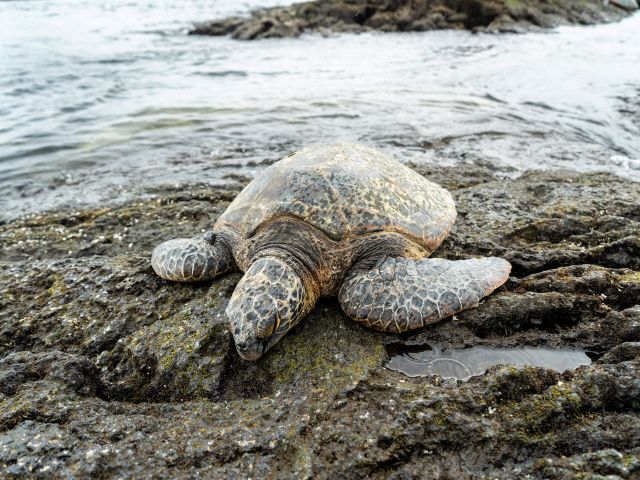
a Hawksbill turtle on Big Island, Hawaii
Remote black-sand beaches serve as the primary nesting ground of the Hawaiian Hawksbill turtle. (Credit: Getty / mphillips007)

Where volcanic craters and rainforest slopes of Hawaiʻi Volcanoes National Park tumble all the way to the Pacific, the endangered hawksbill turtle returns to shore to nest on remote black-sand beaches. These turtles nest at only a few beaches in the Hawaiian Islands, and from June through December you may be fortunate enough to witness a female laying her eggs at Halapē, Apua Point or Keauhou. Keep a safe distance of at least three metres to avoid disturbing these critically endangered animals, as per local, state and federal laws.

Hawaiian honeycreeper
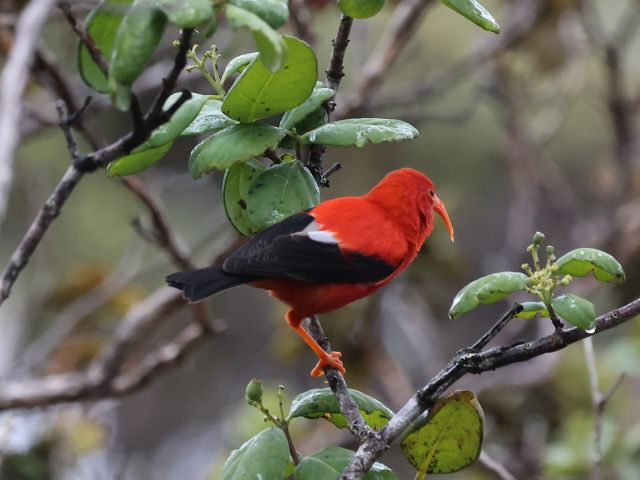
the Hawaiian honeycreeper on Big Island, Hawaii
A rare Hawaiian honeycreeper resting on a branch. (Credit: Getty / artiste9999)

In the park’s misty upland forests, the jewel-toned Hawaiian honeycreepers flit through the canopy like living confetti, their varied beaks telling the evolutionary story of isolation and survival in one of the world’s most remarkable birding destinations. For the best chance of spotting these elusive endemics, head out just after dawn along quieter trails such as the Crater Rim backroads or kipuka pockets of old-growth forest.

Weekly travel news, experiences
insider tips, offers,
and more.

Nēnē
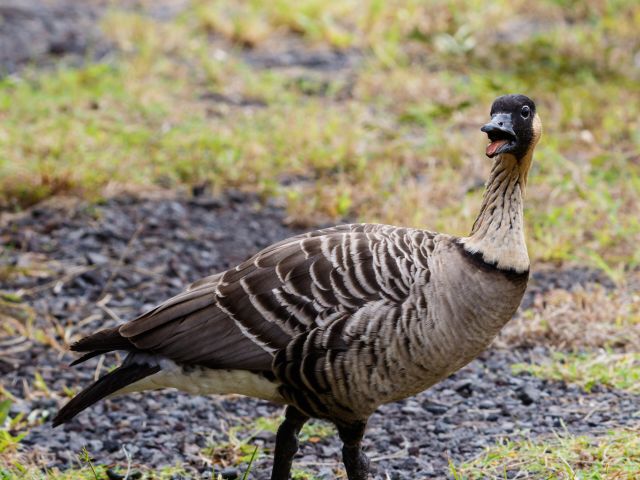
the endangered Nēnē in Hawaii
The Nēnē (Hawaiian goose) is the official state bird of Hawaiʻi and the rarest goose in the world. (Credit: Getty / DGHayes)

The endangered ʻnēnē, or Hawaiian goose, pads calmly through volcanic landscapes that feel more primordial than pastoral, perfectly adapted to life on hardened basalt and high-altitude scrub. Slow down along Chain of Craters Road at dawn or late afternoon, when these charismatic birds often wander surprisingly close to the roadside, unbothered by passing visitors.

Accommodation in Hawai‘i Volcanoes National Park
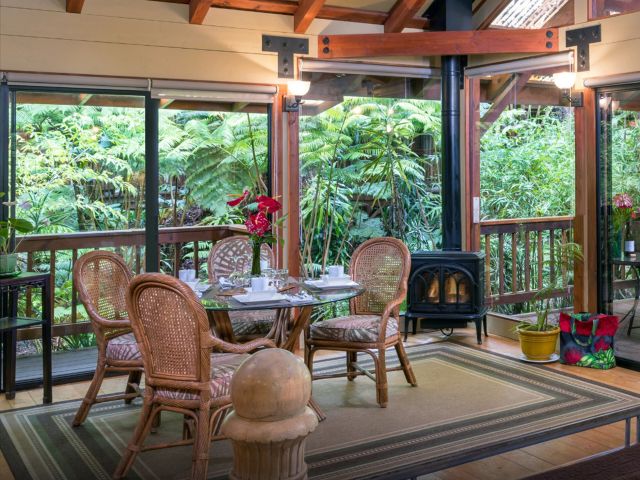
Volcano Village Lodge in Hawaii
Come home to a cosy lodge after a day exploring the lava fields. (Credit: Volcano Village Lodge)

The historic Volcano House offers the rare chance to sleep on the rim of an active volcano. Book well ahead for crater-facing rooms and time dinner for after dark when the glow of the volcano (if active) turns the park into a living, breathing spectacle. Opt for nearby Volcano Village Lodge for a more low-key rainforest retreat just minutes from the park entrance.

Is it accessible?
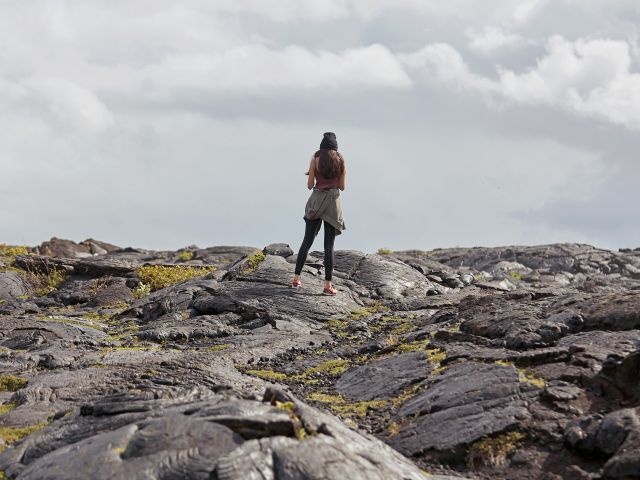
a hiker at Hawaii Volcanoes National Park
Experience some of the world’s most dramatic volcanic landscapes. (Credit: Getty / Mirnet)

Paved overlooks along Crater Rim Drive, wheelchair-friendly sections at key viewpoints and visitor centre facilities make the park more inclusive than its rugged terrain might suggest. For more information, visit nps.gov/havo/planyourvisit/accessibility.htm

What to wear
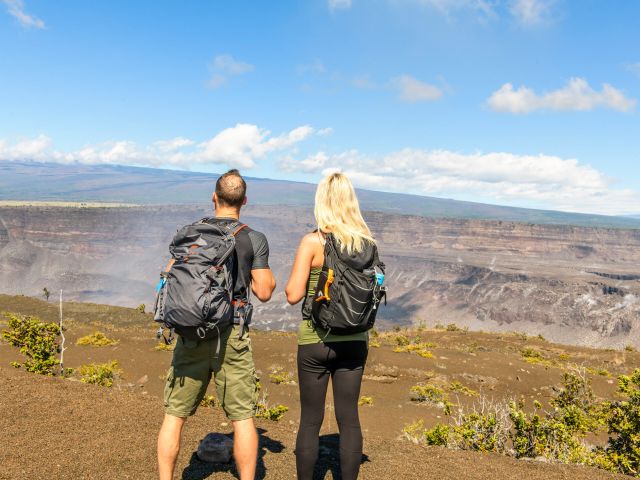
hikers at Hawaii Volcanoes National Park
Wear breathable layers to handle temperature shifts. (Credit: Getty / LSOphoto)

After an eruption, the summit of Kīlauea is often draped in tephra – a scattering of ash, cinders and rock fragments that settles across the landscape. In exposed areas where volcanic debris lingers, it’s wise to dress the part, including eye protection, a dust mask, long sleeves, long pants and sturdy closed-toe shoes or boots.

For the latest updates, visit nps.gov/havo/index.htm

Don’t skip
Halemaʻumaʻu Crater in Hawaiʻi Volcanoes National Park
Halemaʻumaʻu is an active pit crater within the massive Kīlauea summit caldera. (Getty / RugliG)

Seeing Halemaʻumaʻu Crater from the Kīlauea Overlook.

Give it a miss

If you’re short on time, skip the Devastation Trail hike and take in the otherworldly terrain from the Puʻupuaʻi Overlook instead.

My top tip for first-timers

Leave your itinerary flexible and plan your visit for when an eruption is predicted. Check the United States Geological Survey website for forecast short-term eruption windows or subscribe to its Volcano Notification Service.

Most memorable moment

Peering into Steaming Bluff (Wahinekapu) vent getting a natural facial from water vapour rising from beneath the surface.

Want to see more stories from International Traveller in your Google search results?

  1. Click here to set International Traveller as a preferred source.
  2. Tick the box next to "International Traveller". That's it.
hero media

12 grand journeys throughout North America

    Discover North America’s epic adventures — from Route 66 and Alaska cruises to Hawai‘i road trips, NYC culture, Mexico trails and more.

    1. Route 66, the Main Street of America

    Travelling with: Ricky French

    Sunset on Route 66 in the California Mojave Desert.
    Hit the open road and trace America’s legendary highway. (Image: Getty/Der_Thomasa)

    Dubbed the Main Street of America, Route 66 radiates serious main character energy, cemented into popular culture through everything from John Steinbeck’s novel The Grapes of Wrath to the Disney Pixar film Cars. Spanning nearly 4000 kilometres from Chicago to Los Angeles, the historic highway celebrates its centenary next year, a timely invitation to take the mother of all road trips along the Mother Road. Allow two to three weeks to tackle the full length, or bite off a smaller chunk at either end, cruising the dramatic deserts of California or the more pastoral landscapes of Illinois, lined with neon-lit diners, retro gas stations and quirky roadside attractions.

    2. Mexico’s Día de los Muertos

    Travelling with: Carla Grossetti

    emblematic catrina of mexico with flowers and necklace with sempasuchil flowers
    Celebrate life and honour loved ones in vibrant style. (Image: Getty/Fabian Pacheco)

    You might know Oaxaca as the birthplace of mole and mezcal. But the state in southern Mexico is also where the Día de los Muertos (Day of the Dead) began. Time your visit to coincide with the colourful holiday, on 1–2 November, which honours and celebrates loved ones who have passed away. Oaxaca is also Mexico’s Michelin-starred culinary capital, with 18 restaurants and a humble taco stand listed in the 2025 guide.

    3. Museum-hop in New York City

    Travelling with: Carla Grossetti

    The Guggenheim Museum’s iconic spiralling exterior, a highlight of North America Epic Adventures.
    Step inside and marvel at bold, world-class art. (Image: Damiano Fiore)

    Your map app will look like it’s been scattered with confetti after you’ve dropped pins on all the museums you want to visit in New York City. Must-sees are the Solomon R. Guggenheim Museum, the Metropolitan Museum of Art aka the Met, and the Museum of Modern Art. The American Museum of Natural History is also a draw. It’s also worth venturing into the boroughs to browse institutions such as the Brooklyn Museum, which has a huge permanent collection categorised by culture.

    4. The USA’s music scene

    Travelling with: Elizabeth Whitehead

    The Seattle skyline at night, aglow with city lights on North America Epic Adventures.
    Soak up skyline views and dive into the city’s coffee culture. (Image: Abigail Boone)

    If you’re a muso, chances are you’ve wanted to make a pilgrimage to the United States, the epicentre of so many beloved genres. Whether you’re head-banging your way around the Grunge Circuit in Seattle, chasing the twang of the pedal steel through Tennessee or bouncing between blues bars in the Mississippi Delta, the USA’s rich music culture has something that’ll strike a chord.

    5. Road-tripping Hawai‘i

    Travelling with: Carla Grossetti

    A woman surfing in Hawaii, gliding across turquoise waves on North America Epic Adventures.
    Catch the waves and ride Hawaii’s iconic swells. (Image: Ben Ono)

    Hawai‘i is one of the most diverse US states to road trip around. Of the six major islands to visit, the Island of Hawai‘i packs in everything from the snowy summits of Mauna Kea and Mauna Loa to black-sand beaches and lava fields frozen in the act of flowing forward. Change down a few gears on the island of O‘ahu, too, where you can find your own patch of sand on Waimanalo Beach. Visit poi and pineapple plantations. And hang ten on beginner-friendly waves on the North Shore.

    6. Cruising Alaska

    Travelling with: Carla Grossetti

    Explora Journeys ship cruising in Alaska.
    Sail past glaciers and spot whales in pristine waters.

    Seeing Alaska from the sea allows you to cover a lot of distance quickly. This immersive frontier now beckons more than ever before with Explora Journeys adding the American state to its global destination portfolio. Best of all are the pre-and post-journey immersions that connect the luxury of a cruise onboard Explora III with the rugged grandeur of the Alaskan interior. UnCruise Adventures also weaves in access to remote national parks, legendary wildlife corridors and authentic cultural experiences on its Alaskan itineraries.

    7. The Wixárika Route in Mexico

    Travelling with: Elizabeth Whitehead

    People journeying through the Wixarika Route.
    Journey deep into sacred Huichol traditions and art.

    For generations, the Indigenous Wixárika People of Mexico have walked a sacred path known as Tatehuarí Huajuyé, or ‘The Path of Our Grandfather Fire’. The annual pilgrimage route spans 500 kilometres, taking in significant sites in Wixárika spirituality and cosmology. The route passes through the deserts, mountains and forests of northern Mexico before reaching Wirikuta, believed to be the place the sun first emerged. The route is a living cultural landscape of Indigenous culture pre-Columbian influence and, in July this year, was formally inscribed into UNESCO’s World Heritage List.

    8. Drive the Iceberg Coast in Canada

    Travelling with: Carla Grossetti

    Iceberg off the east coast of Canada
    Chase icebergs along Expedition 51 on Canada’s east coast. (Image: Canadian Tourism Commission/ Chris Hendrickson)

    Download the icebergfinder.com map to better plan your road trip along Canada’s Iceberg Coast. The new highway, which has been nearly 25 years and CAD$1.1 billion in the making, threads through the country’s pleated coastlines around Quebec, Newfoundland, Labrador, Nova Scotia and New Brunswick before looping in the French islands of St Pierre and Miquelon. As well as chasing icebergs along Expedition 51, travellers will have the opportunity to engage with cultures that have thrived in the pristine provinces for thousands of years.

    9. A foodie tour of Nova Scotia

    Travelling with: Katie Carlin

    Lunenberg Nova Scotia
    Try lobster rolls in Lunenburg on the east coast of Canada in Nova Scotia. (Image: Natalia Kvitovska/ Unsplash)

    World-famous for its lobster, Nova Scotia is a Canadian province best savoured through its culinary clout shaped by sea and terroir. Bite into lobster rolls at historic Lunenburg’s Salt Shaker Deli & Inn and sip maple rum at Ironworks Distillery. Winery-hop around Wolfville’s rising vineyards (don’t miss Lightfoot & Wolfville). Take a maple syrup tour at Sugar Moon Farm near Earltown. And pull up a seat at waterfront Bar Sofia in Halifax, where Nova Scotia oysters aguachile arrive bright with cucumber, lime and pickled onion.

    10. Soak up the sun in the Caribbean

    Travelling with: Carla Grossetti

    Overwater bungalows off a beach in the Caribbean
    Experience the white-sand beaches and cerulean seas of the Caribbean on board a cruise.

    The Caribbean is on the radar for seasoned cruisers. And it’s easy to see why, with white-sand beaches, cerulean seas and swaying palms so picture-perfect they look AI-generated. Cruise with Windstar, Royal Caribbean, and Celebrity on its inaugural Xcel season to the Caribbean to enjoy action-packed excursions such as snorkelling coral reefs and shopping for local trinkets. And those sea days? Spectacular.

    11. Red Chair Hikes of Canada

    Travelling with: Kassia Byrnes

    Red Adirondack chairs overlooking Lake Minnewanka in Canada
    Take a seat at Lake Minnewanka, one of more than 400 red Adirondack chairs scattered across Canada’s hiking routes. (Image: Getty Images/ Autumn Sky Photography)

    No one appreciates the great outdoors more than Canadians, emerging from snow-covered winters to tread glacial rivers and snowshoe through forests, or to hike mighty mountains and wildflower-strewn valleys come spring. Along popular hikes around the country, more than 400 red Adirondack chairs have been placed in peaceful, breathtaking locations. What started as a social media contest now sees hikers soaking in classic Canadian lake and mountain vistas, overlooking historic sites or gazing down on the mountainous path they just travelled.

    12. Ride the Rocky Mountaineer from Denver to Moab, USA

    Travelling with: Carla Grossetti

    Sweeping views from the Rocky Mountaineer.
    The Rocky Mountaineer will continue as the Canyon Spirit in 2026, seen here carving through Ruby Canyon.

    Sighting wild animals is one of many incredible thrills along the two-day luxury Rockies to the Red Rocks route onboard the Rocky Mountaineer across America’s Southwest between mid-April and mid-October. In addition to the lone bear, we spot bighorn sheep, elk, beavers, pronghorn antelope, bald eagles and ospreys. Riding the rails onboard the luxury train, which was founded in Canada in 1990 and has been awarded the prestigious World’s Leading Travel Experience by Train several times, has never been about just getting from A to B. Ride the train from Denver to Moab and you will see the scenery change from snow-capped peaks to meadows, red-rock canyons and soaring cliffs that resemble ornate Gaudí-esque cathedrals. But it’s not until you get off the train that you can produce the ultimate Venn diagram, with nature and adventure in the intersecting spheres.

    A guide to Hawaii Volcanoes National Park | International Traveller