hero media

Gros Morne: Atlantic Canada’s second largest national park

Extending far out beyond Canada’s lonely east coast, Newfoundland’s Gros Morne National Park protects a rugged landscape unlike anywhere else on Earth.

“This is my favourite view in the park because you can see two planets at once," Brad Young announces as we stride forth under a clear blue sky. “You’ve got Earth to your right," he explains, gesturing towards a granite dome poking out above thickly wooded slopes. “And then there’s Mars on the left."

Instead of looking up to the heavens, I’m gazing in wonder at the most distinctive part of Newfoundland’s World Heritage-listed Gros Morne National Park.

The Tablelands

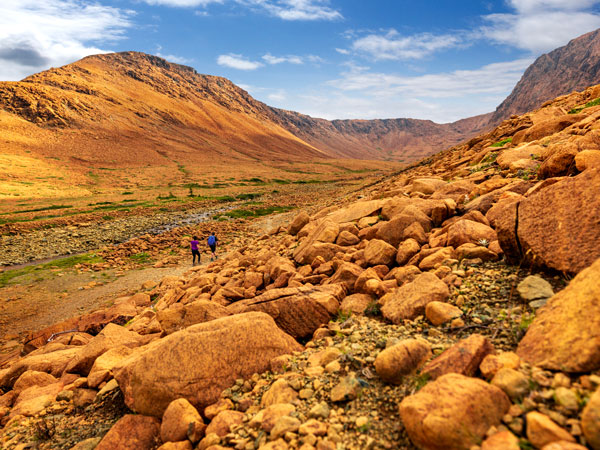
The Tablelands is a barren plateau that formed when two continents collided and forced Earth’s mantle up to the surface. One of only a few places in the world where you can observe this phenomenon, it played a crucial role in confirming the theory of plate tectonics but is far from fertile ground for the local fauna.
a barren plateau at The Tablelands, Gros Morne Mountain
The Tablelands is a barren plateau formed by two colliding continents. (Image: Dru Kennedy)

The rocks of the Tablelands are so rich in heavy metals that “it’s basically a polluted junkyard for most plants". Nearly 500 million years after that initial continental clash, the slopes are still almost entirely devoid of flora, save a few maroon pitcher plants that get their nutrients by capturing unwitting insects.

Instead, the iron-rich rocks have rusted to a dark orange that creates a distinctly Martian landscape. And it’s not just film crews that think so – NASA scientists have visited several times to test their Mars Exploration Rovers.

The absence of any vegetation above ankle height means it’s almost impossible to get a sense of scale as we slowly climb upwards, so I don’t realise how far we’ve ascended until I turn around. And when I do, the otherworldly appearance of the Tablelands is amplified by the contrast between the bare orange rock and the rest of the park. Below me, the cobalt-blue waters of Bonne Bay fjord split into two arms that stretch out towards jagged mountain peaks, broad grassy meadows and dense forests of spruce, larch, balsam and fir.
Gros Morne road with a red landscape in the background
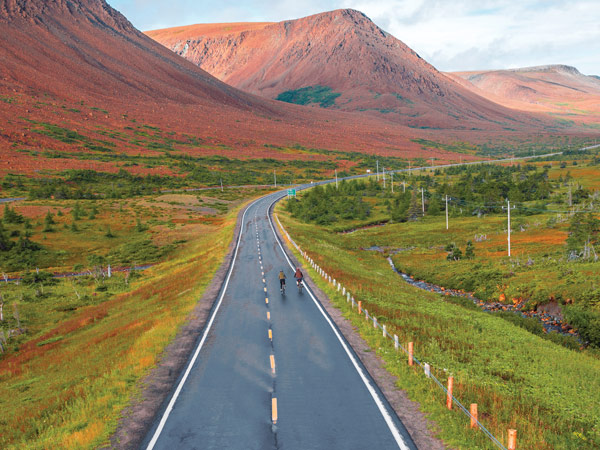
The red landscape is made up of the Earth’s exposed mantle. (Image: Barrett & MacKay Photo)

An eye-popping landscape

I’m visiting as part of World Expeditions’ Gros Morne Adventure, a week-long walking trip that takes me to the heart of this remote and staggeringly beautiful park perched high up on the north-western tip of Newfoundland. Adrift in the wild Atlantic Ocean, this remote island didn’t join Canada until 1949 and the locals still have a fiercely independent streak and take evident pride in the beauty of their surroundings.

Newfoundland’s Gros Morne National Park in Fall
Bask in the colours of fall at Newfoundland’s Gros Morne National Park.

“How can you tell the Newfoundlanders in heaven?" Brad asks at one point, before hitting us with the punchline: “They’re the ones who want to go home." A long-time local who lives in a cabin in the woods and refers to nearby Corner Brook (pop. 20,000) as a big city, he’s equipped with an endless supply of one-liners delivered in the broad maritime accent of a Bostonian who’s just had a shot of Novocaine to the gums.

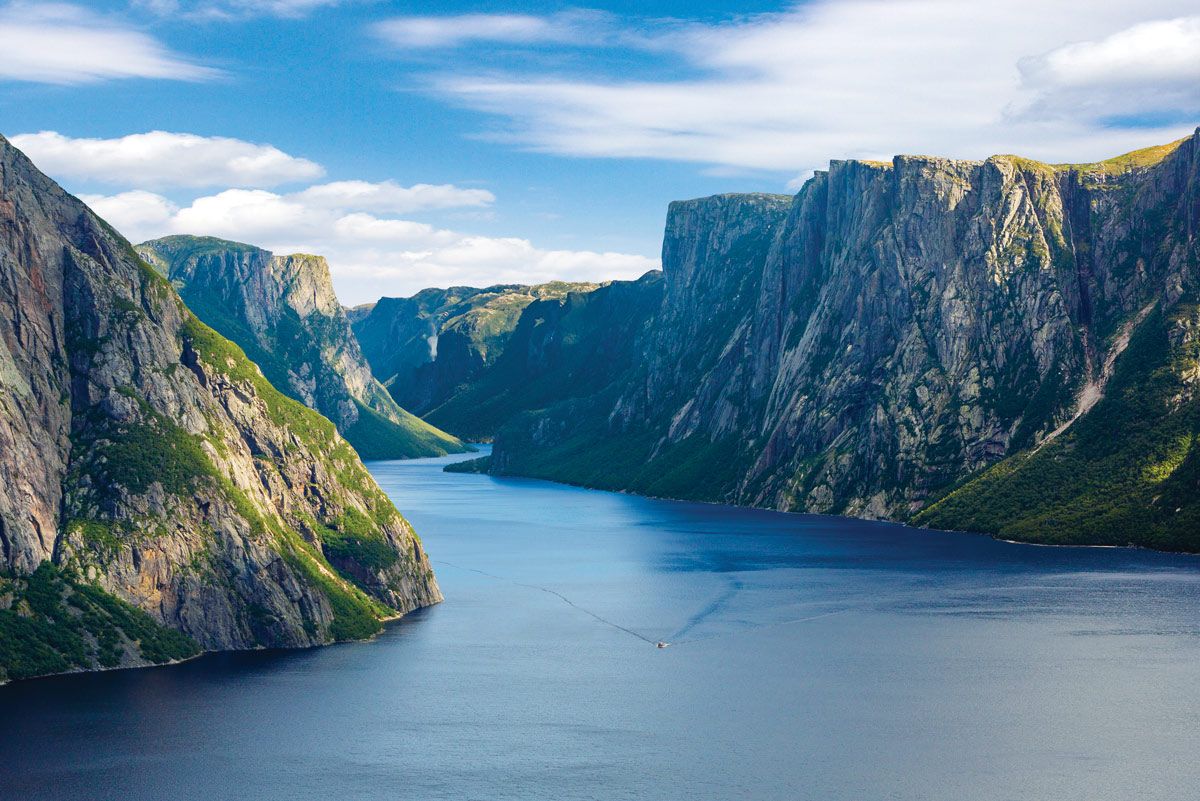
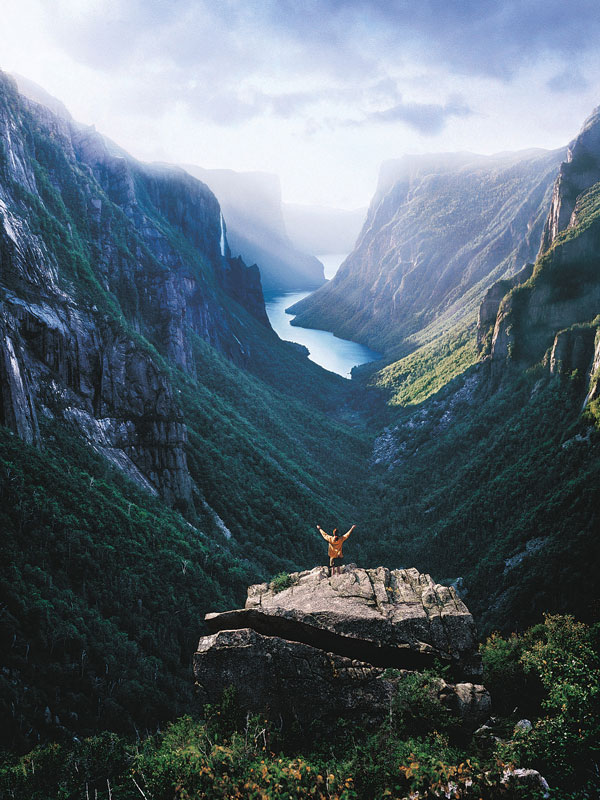
One of the features of the local dialect is that any body of water between two metres and 20 kilometres across is a pond (pronounced “pahnd"), and by far the most beautiful is Western Brook Pond. In any other place this would be the headline act, a stunningly beautiful freshwater fjord gouged from towering cliffs of weathered granite and gneiss that disappear into the clouds.
a person standing on top of Western Brook Pond, Gros Morne National Park
Hike to the top of Western Brook Pond for dramatic views.

Lush forests and freshwater fjords

Even in late June, patches of white dot the upper reaches and the snowmelt feeds roaring waterfalls that rush down the cliff faces in billowing clouds. And, like the Tablelands, this is a peculiarly harsh environment; the small drainage basin and non-reactive granite keep the water so pure that it won’t conduct electricity and it lacks the nutrients to support much marine life.
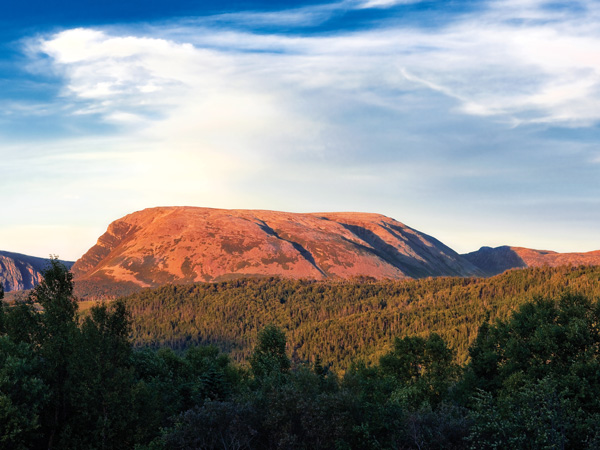
the granite dome of Gros Morne Mountain
Light touches the granite dome of Gros Morne Mountain. (Image: Barrett & MacKay Photo)

Fortunately, not all our surroundings are so unforgiving. For 500 years Newfoundland was the base for fishers plying the Grand Banks, one of the richest fishing grounds in the world, and each night after our walk we have a chance to sample the sea’s bounty.

We feast on sweet, pickled herring and plump steamed mussels in the idyllic fishing community of Trout River, tuck into pan-fried cod in a former fishing loft and taste the most famous local catch prepared in every way imaginable. There are lobster dumplings, lobster bisque, whole lobsters and even the scallop and shrimp risotto is garnished with lobster caviar.
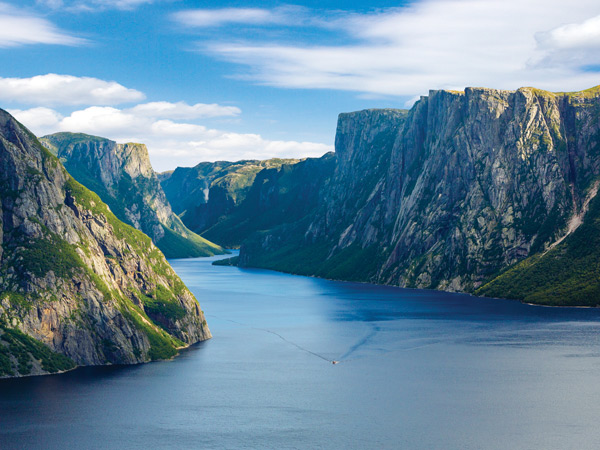
the Western Brook Pond in Gros Morne National Park
Western Brook Pond is a spectacular glacier-cut freshwater fjord. (Image: Barrett & MacKay Photo)

Coastal walking trails

I’m sure that eventually I’d tire of such a diet, but that would take far longer than a single week. And while a daily dose of lobster sounds like gold-plated opulence, the real luxury of this trip lies in its intimate scale. Walking groups are limited to six people, which means we can fit around a table at even the cosiest local restaurants. And that size makes it easy to take in the natural beauty undisturbed on our daily walks that range from eight to 16 kilometres, each taking us into an entirely new environment.

Coastal trails pass forests of wind-blasted “tuckamore" trees that grow almost sideways to form impenetrable tangles of branches. And a bank of fossil-rich shale stands vertically above a rocky beach at Green Point. “Every layer is like a page in a story," our guide tells us, “and one millimetre represents 100 years of sedimentation. That means each step you take along the beach is like travelling 60,000 years through time."
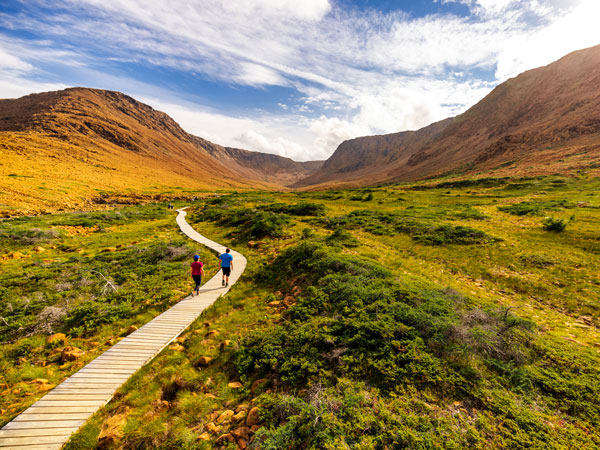
traversing the trail through the Tablelands
A trail through the Tablelands. (Image: Dru Kennedy)

Skyscraping peaks

At 700 metres above sea level, the aptly named Big Lookout gazes out from a flower-filled alpine bog over brooding mountain ranges, windswept volcanic beaches and glacier-carved fjords. Across the bay lies a tall granite dome erupting from a sea of trees. This is the mountain that gives the park its name, and on sunny days Brad says the quartzite that covers the upper sections turns it into “a sheet of glass in the middle of the forest".
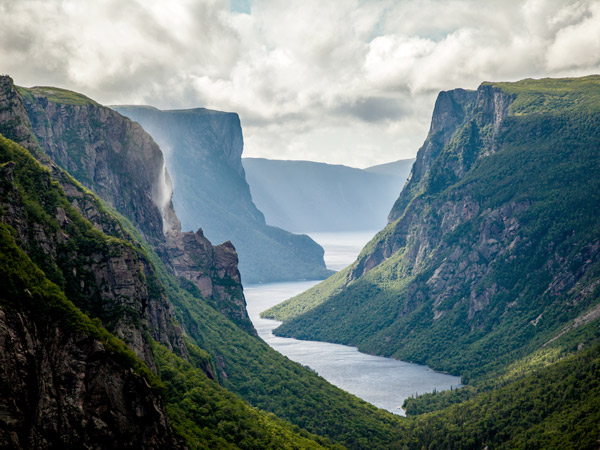
dramatic views on top of Western Brook Pond
This national park in north-west Newfoundland is UNESCO-listed.

Gros Morne Inn

And yet none of these can compete with my favourite view of the park. That would be from Gros Morne Inn, the former hunting lodge perched above the charming town of Woody Point that serves as our home for the week.

I head to one of the cedar hot tubs looking out over Bonne Bay each night after dinner, determined to stay up and see what I am certain will be epic night skies. But the rich lobster dinners and days that seem to stretch out indefinitely so close to the summer solstice mean that I’m always asleep long before the stars come out.
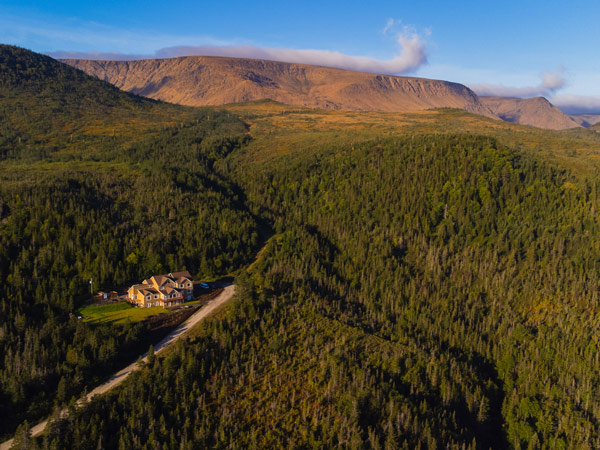
a drone view of Gros Morne Inn and The Tablelands
Gros Morne Inn from above.

Under my goose-down doona, I dream of being a child in Adelaide and trying to dig a hole all the way to China, a notion that seems even more fanciful now than it did then. In truth, I’d have to dig deeper than anyone ever has just to reach the Earth’s mantle, and if I kept going I’d eventually pop out somewhere off the coast of Newfoundland.

The island’s largest settlement, St Johns, lies 18,320 kilometres away from my hometown. But even that doesn’t fully capture just how remote it is. Gros Morne doesn’t just feel like another planet; it contains multiple worlds, each of them somehow more beautiful than the last.
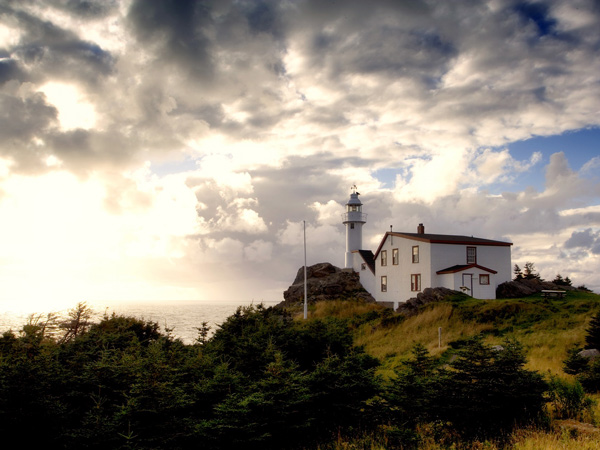
the Lobster Cove HeadLighthouse
Climb up the Lobster Cove Head Lighthouse.

Weekly travel news, experiences
insider tips, offers,
and more.

Conscious traveller

Gros Morne Inn co-owner Rebecca Brushett is a marine biologist and founder of AHOI (Atlantic Healthy Oceans Initiative), a non-profit that conducts marine life surveys, clears marine debris and upcycles it into building materials. All the seafood on the Inn’s seasonal menu is Ocean Wise-certified and the kitchen uses locally sourced produce wherever possible (including jam made by the local mayor).

Newfoundland’s remoteness makes waste management an important issue, so locally made soap, shampoo and conditioner all come in bar form to eliminate packaging, and the Inn is on the path to becoming an entirely waste-free business. For now, all recycling categories are weighed and measured and thin plastic that can’t be recycled is turned into eco-bricks for future construction projects.
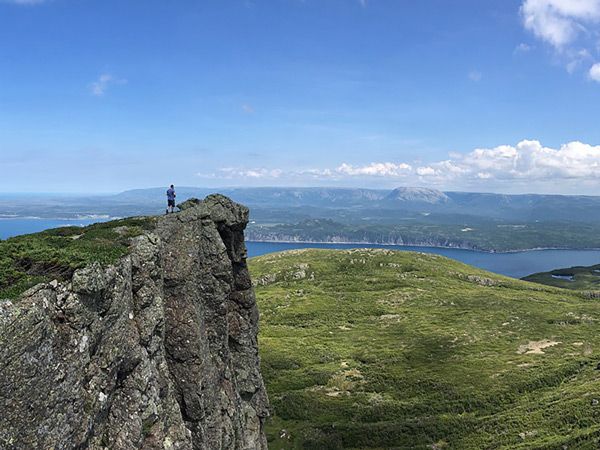
The Big Lookout with views of The Tablelands
The Big Lookout offers spectacular views of The Tablelands.

A traveller’s checklist:

The seven-day Gros Morne Adventure runs between June and September and includes airport transfers, guides, accommodation and all meals.

Getting there

Guests are picked up from Deer Lake Regional Airport, which has multiple daily connections to Toronto, Montreal and Halifax.

Staying there

The base package includes accommodation at Bonne Bay Inn, with an option to upgrade to Gros Morne Inn.
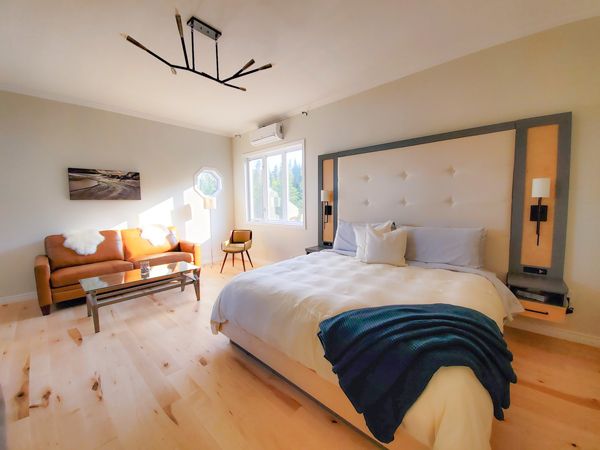
a king room inside the Gros Morne Inn
Sleep in the Gros Morne Inn king room.

Want to see more stories from International Traveller in your Google search results?

  1. Click here to set International Traveller as a preferred source.
  2. Tick the box next to "International Traveller". That's it.
hero media

12 grand journeys throughout North America

    Discover North America’s epic adventures — from Route 66 and Alaska cruises to Hawai‘i road trips, NYC culture, Mexico trails and more.

    1. Route 66, the Main Street of America

    Travelling with: Ricky French

    Sunset on Route 66 in the California Mojave Desert.
    Hit the open road and trace America’s legendary highway. (Image: Getty/Der_Thomasa)

    Dubbed the Main Street of America, Route 66 radiates serious main character energy, cemented into popular culture through everything from John Steinbeck’s novel The Grapes of Wrath to the Disney Pixar film Cars. Spanning nearly 4000 kilometres from Chicago to Los Angeles, the historic highway celebrates its centenary next year, a timely invitation to take the mother of all road trips along the Mother Road. Allow two to three weeks to tackle the full length, or bite off a smaller chunk at either end, cruising the dramatic deserts of California or the more pastoral landscapes of Illinois, lined with neon-lit diners, retro gas stations and quirky roadside attractions.

    2. Mexico’s Día de los Muertos

    Travelling with: Carla Grossetti

    emblematic catrina of mexico with flowers and necklace with sempasuchil flowers
    Celebrate life and honour loved ones in vibrant style. (Image: Getty/Fabian Pacheco)

    You might know Oaxaca as the birthplace of mole and mezcal. But the state in southern Mexico is also where the Día de los Muertos (Day of the Dead) began. Time your visit to coincide with the colourful holiday, on 1–2 November, which honours and celebrates loved ones who have passed away. Oaxaca is also Mexico’s Michelin-starred culinary capital, with 18 restaurants and a humble taco stand listed in the 2025 guide.

    3. Museum-hop in New York City

    Travelling with: Carla Grossetti

    The Guggenheim Museum’s iconic spiralling exterior, a highlight of North America Epic Adventures.
    Step inside and marvel at bold, world-class art. (Image: Damiano Fiore)

    Your map app will look like it’s been scattered with confetti after you’ve dropped pins on all the museums you want to visit in New York City. Must-sees are the Solomon R. Guggenheim Museum, the Metropolitan Museum of Art aka the Met, and the Museum of Modern Art. The American Museum of Natural History is also a draw. It’s also worth venturing into the boroughs to browse institutions such as the Brooklyn Museum, which has a huge permanent collection categorised by culture.

    4. The USA’s music scene

    Travelling with: Elizabeth Whitehead

    The Seattle skyline at night, aglow with city lights on North America Epic Adventures.
    Soak up skyline views and dive into the city’s coffee culture. (Image: Abigail Boone)

    If you’re a muso, chances are you’ve wanted to make a pilgrimage to the United States, the epicentre of so many beloved genres. Whether you’re head-banging your way around the Grunge Circuit in Seattle, chasing the twang of the pedal steel through Tennessee or bouncing between blues bars in the Mississippi Delta, the USA’s rich music culture has something that’ll strike a chord.

    5. Road-tripping Hawai‘i

    Travelling with: Carla Grossetti

    A woman surfing in Hawaii, gliding across turquoise waves on North America Epic Adventures.
    Catch the waves and ride Hawaii’s iconic swells. (Image: Ben Ono)

    Hawai‘i is one of the most diverse US states to road trip around. Of the six major islands to visit, the Island of Hawai‘i packs in everything from the snowy summits of Mauna Kea and Mauna Loa to black-sand beaches and lava fields frozen in the act of flowing forward. Change down a few gears on the island of O‘ahu, too, where you can find your own patch of sand on Waimanalo Beach. Visit poi and pineapple plantations. And hang ten on beginner-friendly waves on the North Shore.

    6. Cruising Alaska

    Travelling with: Carla Grossetti

    Explora Journeys ship cruising in Alaska.
    Sail past glaciers and spot whales in pristine waters.

    Seeing Alaska from the sea allows you to cover a lot of distance quickly. This immersive frontier now beckons more than ever before with Explora Journeys adding the American state to its global destination portfolio. Best of all are the pre-and post-journey immersions that connect the luxury of a cruise onboard Explora III with the rugged grandeur of the Alaskan interior. UnCruise Adventures also weaves in access to remote national parks, legendary wildlife corridors and authentic cultural experiences on its Alaskan itineraries.

    7. The Wixárika Route in Mexico

    Travelling with: Elizabeth Whitehead

    People journeying through the Wixarika Route.
    Journey deep into sacred Huichol traditions and art.

    For generations, the Indigenous Wixárika People of Mexico have walked a sacred path known as Tatehuarí Huajuyé, or ‘The Path of Our Grandfather Fire’. The annual pilgrimage route spans 500 kilometres, taking in significant sites in Wixárika spirituality and cosmology. The route passes through the deserts, mountains and forests of northern Mexico before reaching Wirikuta, believed to be the place the sun first emerged. The route is a living cultural landscape of Indigenous culture pre-Columbian influence and, in July this year, was formally inscribed into UNESCO’s World Heritage List.

    8. Drive the Iceberg Coast in Canada

    Travelling with: Carla Grossetti

    Iceberg off the east coast of Canada
    Chase icebergs along Expedition 51 on Canada’s east coast. (Image: Canadian Tourism Commission/ Chris Hendrickson)

    Download the icebergfinder.com map to better plan your road trip along Canada’s Iceberg Coast. The new highway, which has been nearly 25 years and CAD$1.1 billion in the making, threads through the country’s pleated coastlines around Quebec, Newfoundland, Labrador, Nova Scotia and New Brunswick before looping in the French islands of St Pierre and Miquelon. As well as chasing icebergs along Expedition 51, travellers will have the opportunity to engage with cultures that have thrived in the pristine provinces for thousands of years.

    9. A foodie tour of Nova Scotia

    Travelling with: Katie Carlin

    Lunenberg Nova Scotia
    Try lobster rolls in Lunenburg on the east coast of Canada in Nova Scotia. (Image: Natalia Kvitovska/ Unsplash)

    World-famous for its lobster, Nova Scotia is a Canadian province best savoured through its culinary clout shaped by sea and terroir. Bite into lobster rolls at historic Lunenburg’s Salt Shaker Deli & Inn and sip maple rum at Ironworks Distillery. Winery-hop around Wolfville’s rising vineyards (don’t miss Lightfoot & Wolfville). Take a maple syrup tour at Sugar Moon Farm near Earltown. And pull up a seat at waterfront Bar Sofia in Halifax, where Nova Scotia oysters aguachile arrive bright with cucumber, lime and pickled onion.

    10. Soak up the sun in the Caribbean

    Travelling with: Carla Grossetti

    Overwater bungalows off a beach in the Caribbean
    Experience the white-sand beaches and cerulean seas of the Caribbean on board a cruise.

    The Caribbean is on the radar for seasoned cruisers. And it’s easy to see why, with white-sand beaches, cerulean seas and swaying palms so picture-perfect they look AI-generated. Cruise with Windstar, Royal Caribbean, and Celebrity on its inaugural Xcel season to the Caribbean to enjoy action-packed excursions such as snorkelling coral reefs and shopping for local trinkets. And those sea days? Spectacular.

    11. Red Chair Hikes of Canada

    Travelling with: Kassia Byrnes

    Red Adirondack chairs overlooking Lake Minnewanka in Canada
    Take a seat at Lake Minnewanka, one of more than 400 red Adirondack chairs scattered across Canada’s hiking routes. (Image: Getty Images/ Autumn Sky Photography)

    No one appreciates the great outdoors more than Canadians, emerging from snow-covered winters to tread glacial rivers and snowshoe through forests, or to hike mighty mountains and wildflower-strewn valleys come spring. Along popular hikes around the country, more than 400 red Adirondack chairs have been placed in peaceful, breathtaking locations. What started as a social media contest now sees hikers soaking in classic Canadian lake and mountain vistas, overlooking historic sites or gazing down on the mountainous path they just travelled.

    12. Ride the Rocky Mountaineer from Denver to Moab, USA

    Travelling with: Carla Grossetti

    Sweeping views from the Rocky Mountaineer.
    The Rocky Mountaineer will continue as the Canyon Spirit in 2026, seen here carving through Ruby Canyon.

    Sighting wild animals is one of many incredible thrills along the two-day luxury Rockies to the Red Rocks route onboard the Rocky Mountaineer across America’s Southwest between mid-April and mid-October. In addition to the lone bear, we spot bighorn sheep, elk, beavers, pronghorn antelope, bald eagles and ospreys. Riding the rails onboard the luxury train, which was founded in Canada in 1990 and has been awarded the prestigious World’s Leading Travel Experience by Train several times, has never been about just getting from A to B. Ride the train from Denver to Moab and you will see the scenery change from snow-capped peaks to meadows, red-rock canyons and soaring cliffs that resemble ornate Gaudí-esque cathedrals. But it’s not until you get off the train that you can produce the ultimate Venn diagram, with nature and adventure in the intersecting spheres.