Part of a growing trend in Dark tourism, a visit to one of the world’s most infamous disaster sites is as much about regeneration as it is devastation.
My Geiger counter leaps from zero to .003 in a heartbeat. “It’s OK!" our guide, Helen, assures me. “This is a very low level of radiation!" The Geiger counters are handed out to the members of my tour and activated one by one. Helen assures us of the low radiation levels and explains that these counters, which hang around our necks, will beep as we approach radiation hotspots emitting higher-than-average levels.
On 26 April 1986, Reactor No. 4 at the Chernobyl Nuclear Power Plant, located near the town of Pripyat in Ukraine (then part of the Soviet Union), exploded as a result of a flawed safety test. The resulting open-air reactor core fire released radioactive contamination into the atmosphere that spread over the then-USSR and Western Europe.
The catastrophic event, one of only two nuclear disasters rated at seven (the highest level) on the International Nuclear Event Scale (the other was the Fukushima-Daiichi nuclear disaster in Japan in 2011) resulted in the mass evacuation of the entire region and thousands of long-term health issues. Thirty years on, the area has become a place of interest on the ‘dark tourism’ map.
Tours of Chernobyl have become increasingly popular since they began in 2008, with more than 50,000 people visiting in 2017 alone. Visitor numbers recently spiked to an all-time high following the global success of the acclaimed 2019 HBO miniseries Chernobyl, which details the events surrounding the disaster. Indeed, many travellers in my hostel in Kiev have come to Ukraine solely to visit the reactor; I am joined on the two-hour bus drive from the Ukrainian capital by professional photographers, social media influencers chasing that one fantastic Instagram shot, and curious travellers who seem slightly nervous about the experience ahead.
Traffic thins as we leave the outskirts of the city where derelict buildings begin to appear amid the towering trees. My imagined vision of Chernobyl centred exclusively on a destroyed reactor and an overgrown city, while my trepidation was stoked by outlandish ideas of the remaining radiation mutating everything that comes into contact with it. But, the once-forbidden area contains so much more than disaster porn.
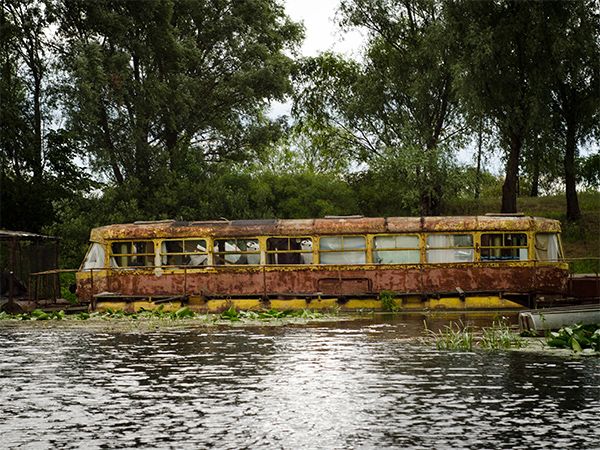
The exclusion zone is 30 kilometres in radius from the reactor and includes 11 villages. Our first stop is Zalissya, which presents like a time capsule: here, we find newspapers, teddy bears, hats and other random household items sitting on shelves and windowsills inside an array of abandoned buildings that have been frozen in time.
Unlike some of the larger sites we will go on to visit throughout the day, we are the only tour bus here. Any eerie quiet that once occupied this village dissipates when our group is given free rein of the area. People rush around taking photos while I cautiously step around broken floorboards and collapsed doorways. Trees burst through small garden sheds, and some homes are nothing more than a pile of scrap building material squeezed behind rows of trees. The guides mention the exclusion zone is full of small villages like this, all swallowed by the encroaching foliage.
An abandoned school building, deserted town hall and row of ramshackle cottages add to the eeriness. I get the sense you could follow the narrow dirt road looping around the small village and uncover hundreds of similarly haunting locations, but I’m called back by the guides.
Back on the bus, we pass another intimidating checkpoint where Helen hands over paperwork that guarantees our entry and drive through Chernobyl. Despite being described as a ‘ghost city’, Chernobyl doesn’t have the same sense of abandonment, mainly because it’s where those who are still working in the area live. Thousands of people continue to toil
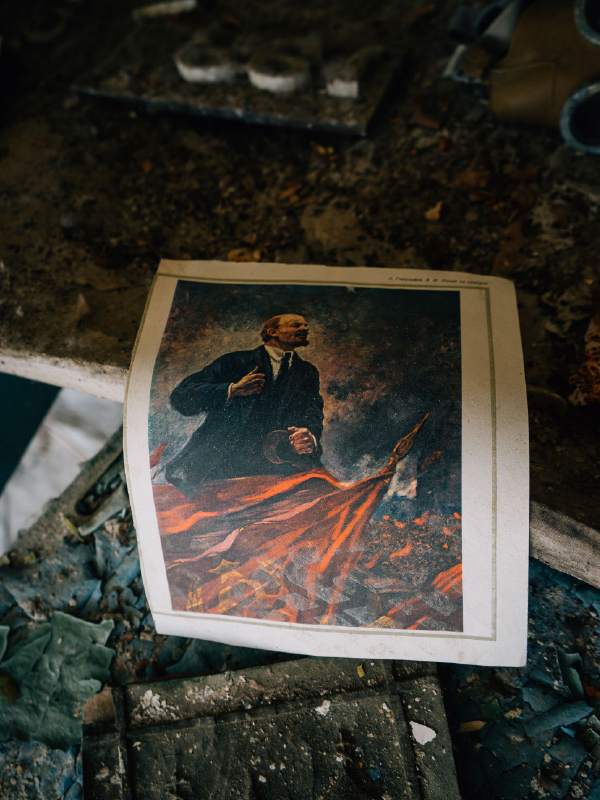
on decommissioning the power plant, as well as researching the radiation and undertaking a raft of other mysterious tasks that are not explained to interlopers. It’s also home to a haunting concrete tribute to the first responders at the disaster, and the only remaining statue of Lenin in Ukraine.
As we drive deeper into the exclusion zone, we see the kind of small farms and homesteads found in rural areas all over the world; the only difference is these are devoid of life. Turning off the main road, we stop by a log shelter with cartoonish murals of bears on signs. Helen translates the warning: “It says, ‘Turn around.’ At this point, military would tell you to turn around," she explains. “Then a little farther along you’d be shot on sight."
Beyond the sign is a former secret military facility that acted as a gateway for one of the largest structures I’ve ever seen: the Duga-1 Missile Detection system. Its primary function was to detect any looming attack during the height of the Cold War. We walk through a large steel gate with buildings on either side until the path becomes narrow and winds back towards the wilderness. Near the trail are steel barrels, carts and cars that all look like they’ve been abandoned in a hurry. Guards feed the wild dogs that are roaming around the debris.
The trees clear and we walk onto a patch of sand at the base of the system, which is coated with rust and peeling white paint, and stare at hundreds of identical mini radars. While it hints at an ominous period in 20th-century history, the structure now looks more like a giant bug zapper than an advanced piece of military equipment.
We approach the power plant, where the enormous industrial reactors 1, 2 and 3 still stand, walking along an old train-line bridge to feed the gigantic catfish that occupy the plant’s cooling pond. The water beneath us is black, and the fish can only be seen as they break the surface to feed on the hard bread. Apparently, government officials are inside the administration building behind us; it’s near to Reactor No. 1 and adds to the aura of secrecy that still surrounds the power plant.
The people in my group all seem to be thrill-seekers. Guides point out radiation hotspots as we walk around and everyone “oohs" and “ahhs", racing towards them with Geiger counters outstretched listening to the beeps increase in frequency. It’s as if they want to find the most radioactive spot possible. Despite the constant reassurance by the guides on the safety of the area, I err on the side of caution and give the hotspots a wide berth.
While I assumed we would be forbidden to approach the heart of the plant without a specific purpose for being there – and a HAZMAT suit – the bus begins to circle the reactors. A large, out-of-place structure comes into view that resembles an enormous airport hangar: Reactor No 4. Inside, beneath a giant concrete sarcophagus are the remnants of the reactor, nuclear waste and all. We are moved along quickly, watched by nearby military staff.
The wind direction on day one of the disaster resulted in a stand of nearby trees being exposed to so much radiation the area still needs to be avoided. The driver slows as we approach the Red Forest, and we are told to put our Geiger counters up to the window; a chorus of loud beeps fills the bus. While the guides and the Ukrainian government claim the area is safe, it is still entirely off-limits; radiation levels remain high, and those who work here can only stay for a maximum of 14 days at a time.
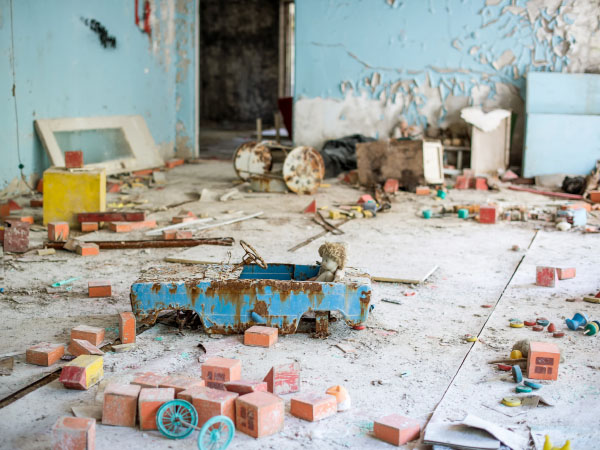
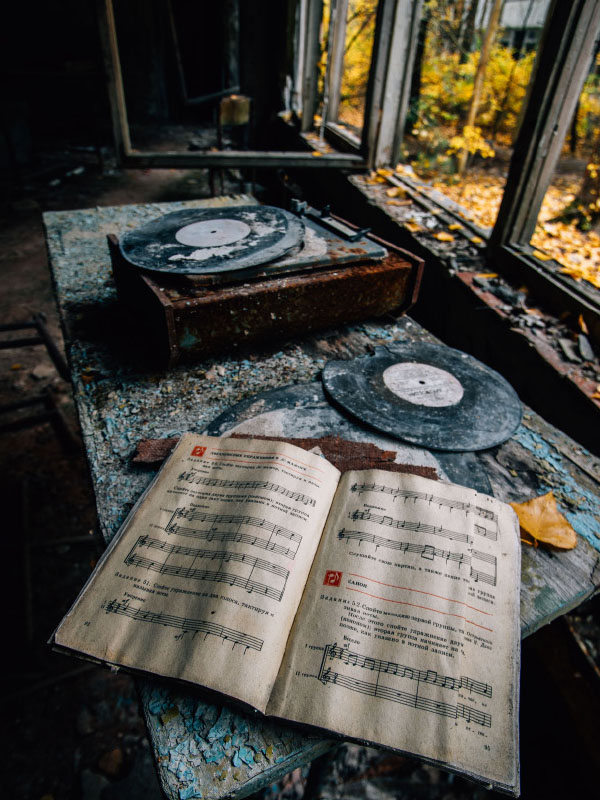
Finally, we arrive at Pripyat, the city built to house the Chernobyl workers and their families. Pripyat is now the world’s most infamous ghost city. It is unsettling to see everyday household items – children’s dolls, soccer balls, clothes – left to decay and rot.
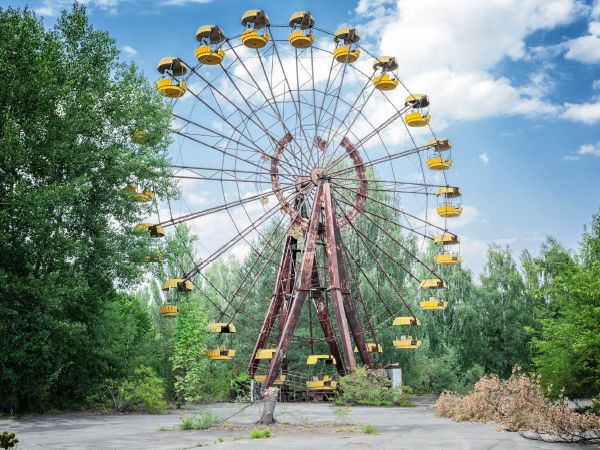
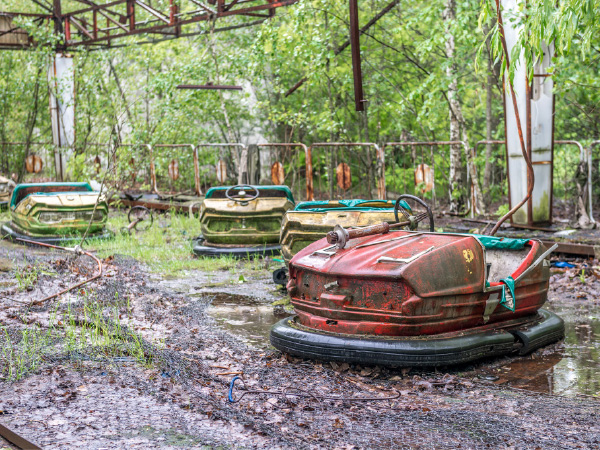
It’s only when I sneak away from the group that I really get a sense of how hastened the evacuation of Chernobyl must have been. The bumper cars at the city’s amusement park are still dispersed on the track, and the supermarket shelves have collapsed under the groaning weight of untouched food tins.
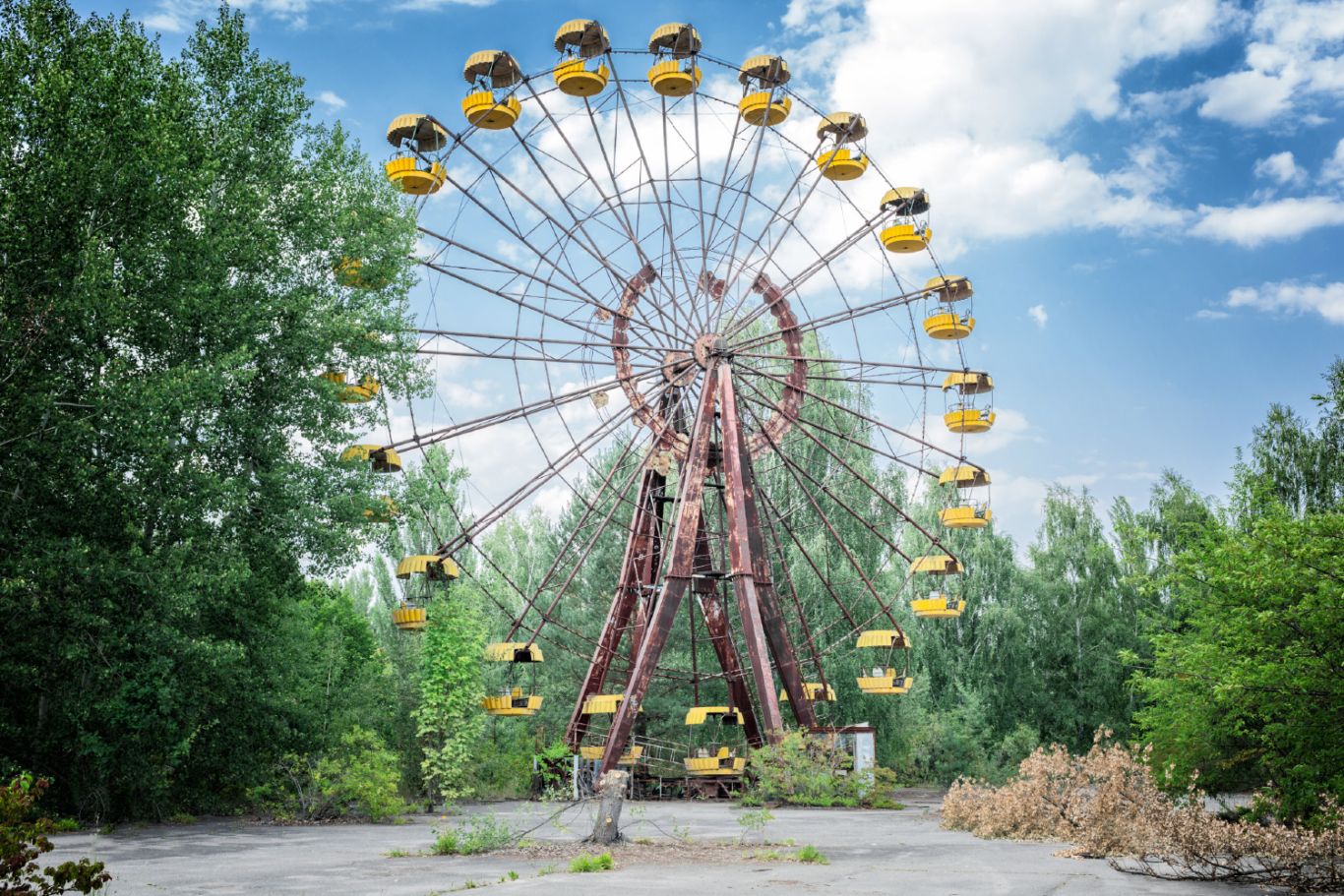
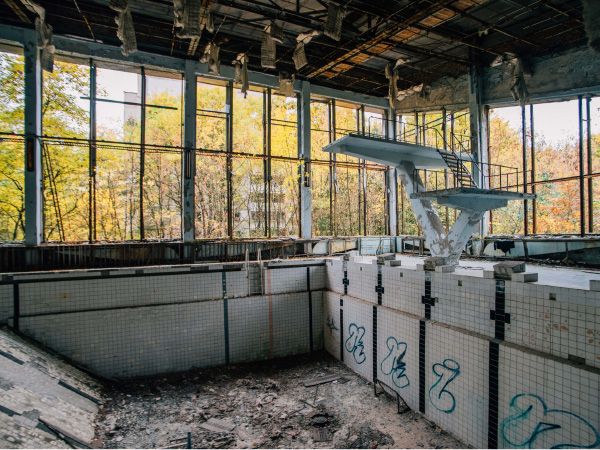
In former classrooms, children’s workbooks are filled with lessons on the power of communism, and there are scrawled drawings of families that don’t live here anymore. The swimming pool is empty, as are the soccer bleachers and the sports hall. We walk past the famed Ferris wheel, which is an Instagram favourite, towards a large open area in the centre of the city.
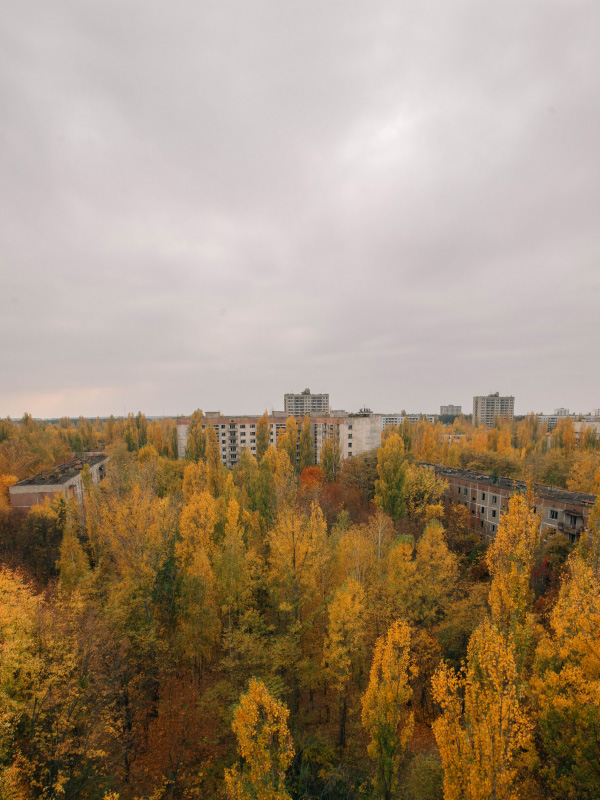
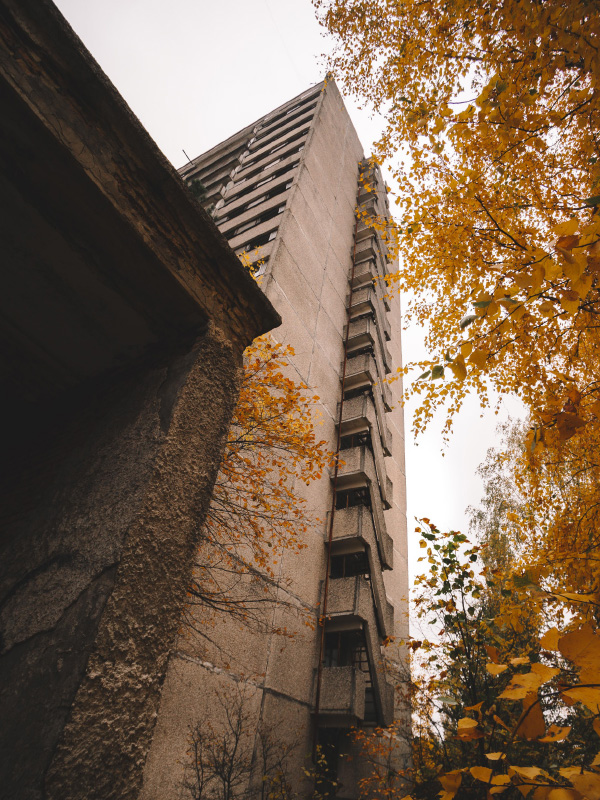
All the buildings are weathered and stained the colour of tobacco, yet it’s the ability of the local flora to break through the Soviet-grey concrete that contrasts the city of Pripyat between then and now. The trees dwarf the buildings in the town centre, and branches lift old park benches from the ground as if reclaiming their rightful space.
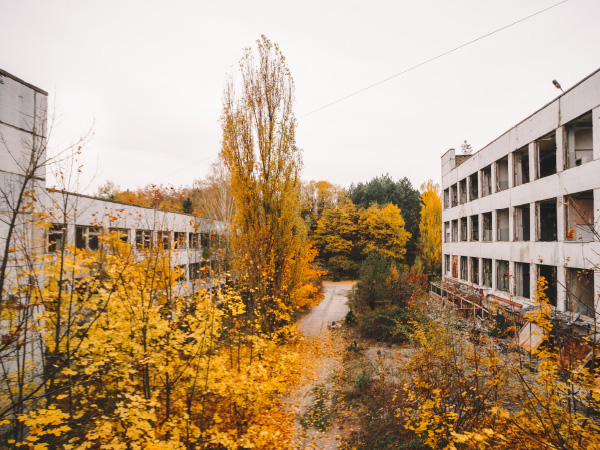
Walking through the remains of Pripyat, I think about the power of human abandonment, and how quickly a once-thriving city can return to its natural state when people up and leave. There’s a strange sense of voyeurism to being here, picking through the leftovers of so many personal tragedies. “In the future, people won’t be able to come here anymore," says Helen. “The entire place will collapse."
We drive back towards Kiev, and the guides walk up and down the bus taking readings of our Geiger counters. Helen writes ‘0.003’ on a certificate and hands it to me. “Congratulations," she says, smiling, “you’ve been exposed to as much radiation as you would after six hours on a plane." It’s a souvenir of a dark, yet fascinating, place.
A Traveller’s Checklist
Getting there
Qatar Airways flies to Kiev via Doha from most capital cities.
Touring there
Chernobyl tour operates a range of tours daily, departing from Kiev Railway Station. The company takes care of the administration required to visit the Exclusion Zone; you will need to take your passport with you.
Dressing there
You must wear closed shoes, long sleeves and pants to gain access to the Exclusion Zone. Take insect repellent and enough food and water for the day.
Talking there
Try practising these Ukrainian phrases ahead of your journey:
Vitayu – Hello
Do pobačennja – Goodbye
Dobroho ranku – Good morning
Dobroho večora – Good evening
Pereprošuju – Excuse me
Diakuju – Thank you
Tak – Yes
Hi – No
Harnoho dnja – Have a nice day
Vy rozmovliajete anhliys’koyu? – Do you speak English?
Visa requirements
Australian passport holders require a visa to enter the Ukraine; visit evisa.mfa.gov.ua to receive an eVisa.
Want to see more stories from International Traveller in your Google search results?
- Click here to set International Traveller as a preferred source.
- Tick the box next to "International Traveller". That's it.