hero media

20 best things to do in Switzerland (other than skiing)

Skiing and Switzerland go together like a hand and (ski) glove, but there is so much to do when the weather turns cool and the land is blanketed in snow…

We’ve found all the activities you can do outside of skiing in Switzerland…

1. Head up in a hot air balloon

Go hot air ballooning at Château-d’Oex, the venue for the International Hot Air Balloon Week every January, when around 90 balloon pilots take to the skies.

Flights are available all year round, and encompass the whole Alpine landscape from Mont-Blanc to the Eiger, taking in the Grand-Combin, the Matterhorn and the Jura, as well as the regions around Lake Geneva and the canton of Fribourg.
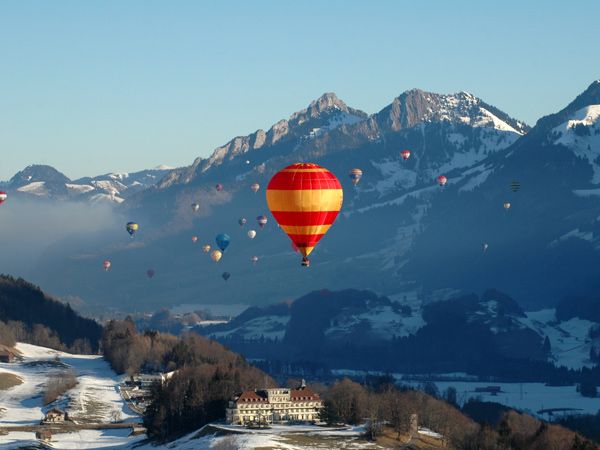
Hot air balloons festival at Chateau-D'oex
The hot air balloon festival at Château-d’Oex is incredibly beautiful.

2. Watch a White Turf horse-race

Attend White Turf, the annual horse-racing meet in St. Moritz that takes place on ice instead of turf every February. It’s a wonderful mix of skill, food, music and more all set amongst a spectacular alpine environment.
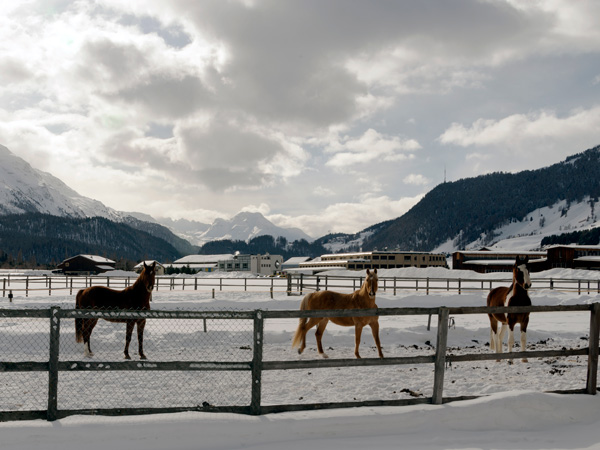
Beautiful horses playing in the barn in the snowy alps switzerland in winter
Switch up your horse racing viewing with a White Turf race.

3. Zipline with First Flyer

Reach speeds of up to 84 kilometres an hour ziplining on the First Flyer down Grindlewald First. With 800 metres of steel cable and up to 50 metres high, ziplining provides an exciting journey through stunning winter scenery and comes to an end thanks to a giant spring device.
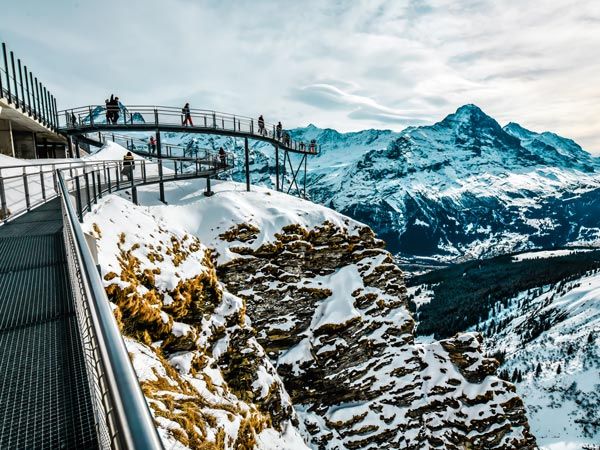
People Standing On Cliff Walk, The Famous Walkway Of Grindelwald First, Switzerland
Ziplining on the First Flyer will give you a birds-eye view of Grindlewald First.

4. Ice-skate on Lake Zurich

Ice-skate at Lake Zurich at the Seehotel Sonne’s Live on Ice. Located in the gardens of the hotel, right next to Lake Zurich, the rink is open from early November until early February. After you are finished on the ice, you can warm up at the mulled wine stand.
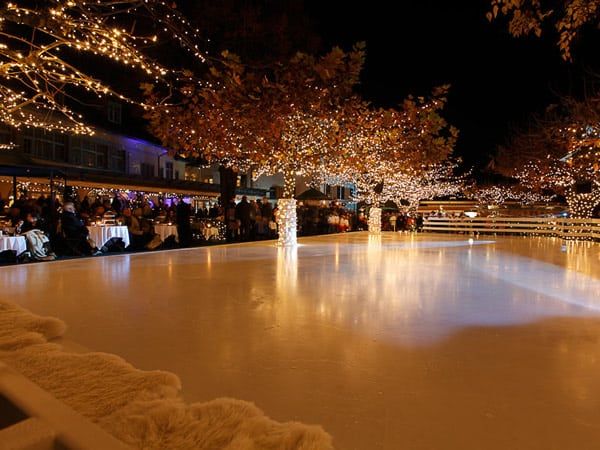
Seehotel Sonne’s Live on Ice is fun for all the family.

5. Hike with a Saint Bernard

Try hiking with a Saint Bernard; every weekend from the end of December until the end of February, the Barry Foundation (owner of the 300-year-old breeding kennel from the Great Saint Bernard Pass Hospice – the Holy Order of the Great Saint Bernard Monastery) organises walks accompanied by Saint Bernard dogs in the Valais mountain village of Champex-Lac. You walk the dog, and little people can take a sled ride pulled by them.
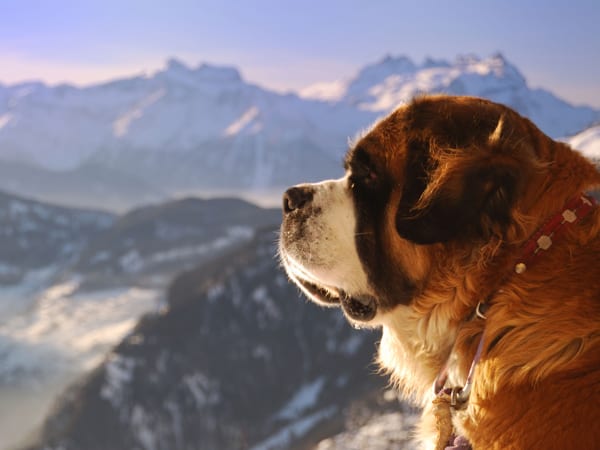
St Bernard sheepdog watching Swiss Alps over Verbier
The Barry Foundation organises walks with St Bernard dogs in Champex-Lac.

6. Take a horse-drawn sleigh ride

Take a horse-drawn sleigh ride to Lake Lauenen in the Bernese Oberland. Leaving from the pretty village of Lauenen, the tour takes roughly one hour and fifteen minutes, gliding through the pristine Rohr nature conservation area to Lake Lauenen and then back again. Each sleigh takes up to six months to make by master craftsmen Ernst and Ueli Reichenbach; sheepskin rugs keep you cosy on route.
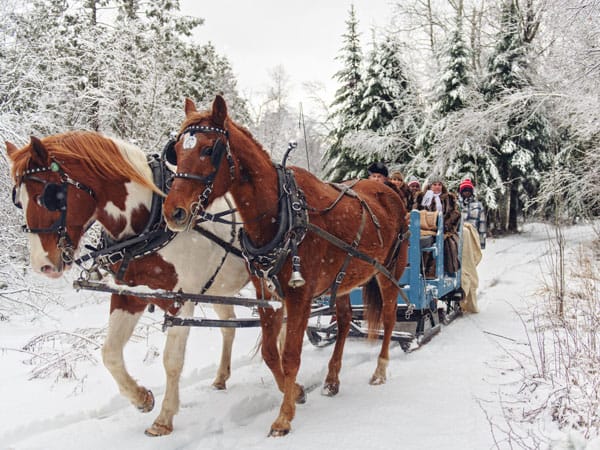
Try a horse-drawn sleigh ride to Lake Lauenen.

7. Visit the Sherlock Holmes Museum

Visit the Sherlock Holmes Museum in Meiringen, close to the fateful Reichenbach Falls where the fictional detective met his end. The museum is located in the basement of the old English church in the heart of the village.

It features exhibits relating to the author Sir Arthur Conan Doyle and his most famous characters, Sherlock Holmes and Dr Watson, including a faithful reconstruction of the living room at 221B Baker Street.
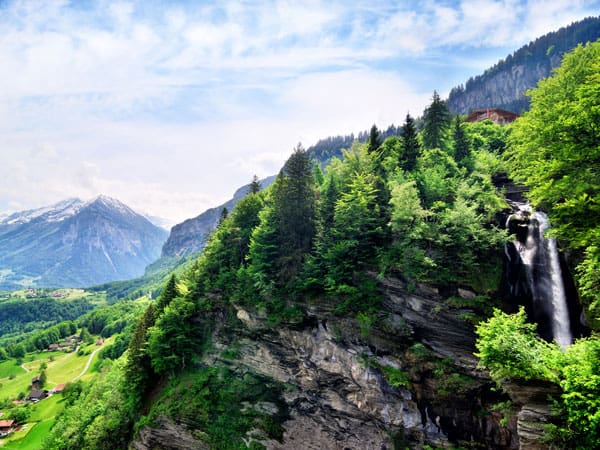
Reichenbach Falls are a series of waterfalls on the Reichenbach stream in the Bernese Oberland region of Switzerland where Sherlock Holmes met his end.

8. Experience a dogsled ride

Jump on a dogsled in Speicherschwendi with Christine and Michael Hanselmann and learn how to handle a team of sled dogs, before experiencing the pure exhilaration of slicing through the snow behind these mighty malamutes. Also, try Huskystuff in Alt St. Johann or a Husky Lodge near Lucerne.
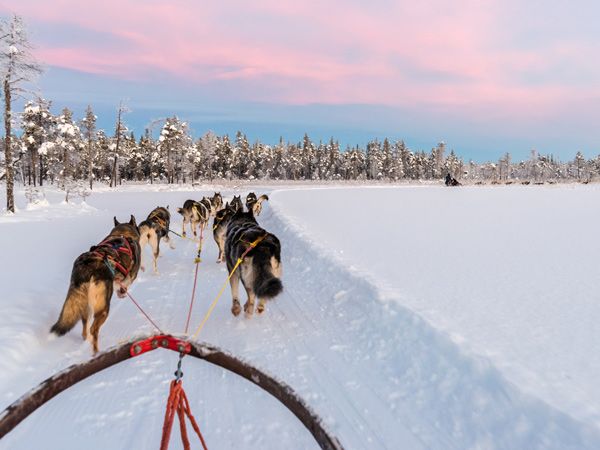
Dog sledding with huskies in beautiful sunrise in Swedish Lapland
Go dog sledding in Switzerland for something different.

9. Strap on snow shoes

Strap on snow shoes and go walking (not skiing) in the snow. There are endless destinations across the country where you can hike through exquisite villages and scenery for anything from a few hours to a few days. Choose a trek that involves overnighting in a mountain hut for a true Alpine experience.
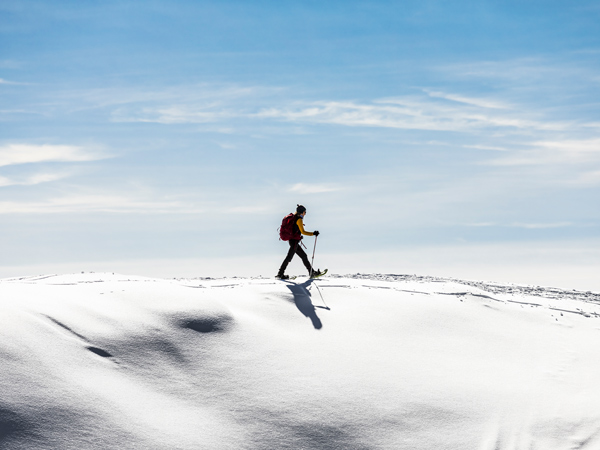
Woman snowshoeing on snow field
Hike through the exquisite villages and scenery for anything from a few hours to a few days.

10. Para-glide down a mountain

Jump off the side of a mountain. After taking a gondola up Grindlewald First, you’ll strap in for a tandem paragliding flight back down again, taking in the spectacular vista of the Eiger, Mönch and Jungfrau mountains.
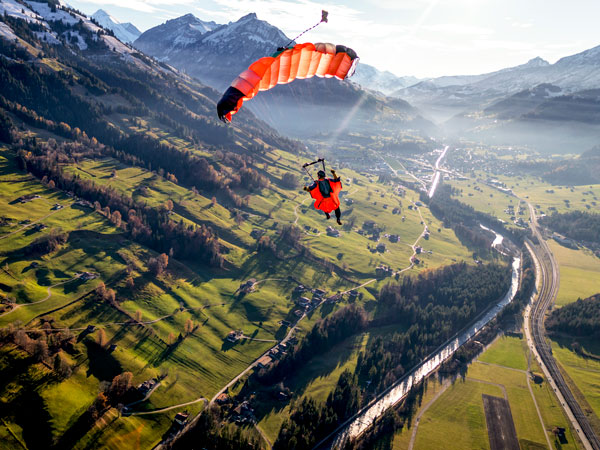
Paraglider flies through clear skies in the morning with the Sunny Swiss Alps below.
Paraglide over the Swiss Alps to get the best view in the house.

11. Get on a toboggan

Toboggan through mountain scenery. After a leisurely post-bus ride through the beautiful Rosenlaui Valley, jump aboard a toboggan and start your rather more adrenalin-packed descent at the foot of the mighty Wetterhorn.

The Eiger Run, which starts at Alpiglen and ends at Brandbegg, is also a great option. Many toboggan runs are lit up at night, adding a new element of loveliness.
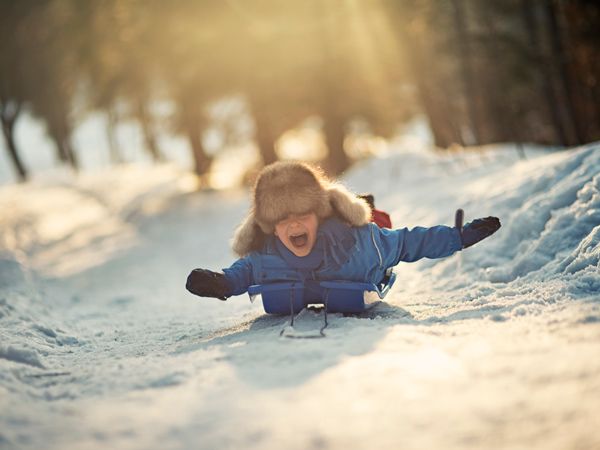
Little boy in funny fake fur hat sliding on his sled and yelling. Sunny winter day evening.
Toboggan through the mountainous scenery in Switzerland.

12. Try out a fatbike

Rent a fatbike and get riding. As the name implies, fatbikes have extra-wide tyres that are designed specifically for riding in the snow and on ice.

Currently taking the country by storm, there are lots of places you can indulge, including Andermatt, Valais and Gstaad.
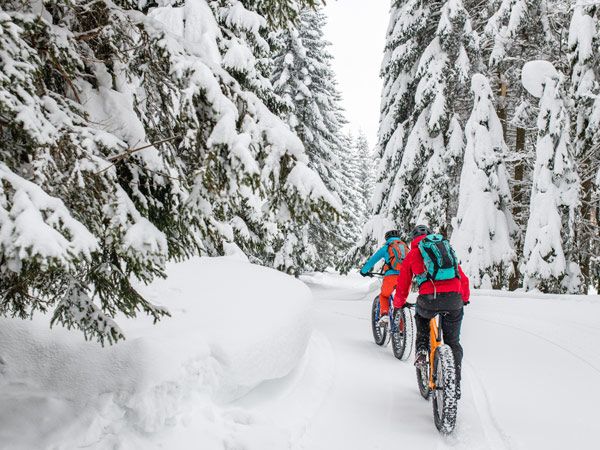
Man and woman riding their fat bikes on snowy forest trail.
Fatbikes have extra-wide tyres for riding on snow and ice.

13. Go on a Mount Titlis Cliff Walk

Walk Europe’s highest suspension bridge, the Mount Titlis Cliff Walk, at 3041 metres above sea level and 500 metres off the ground.

Not for the faint-hearted, the bridge is just one metre wide, 100 metres long and suspended by steel cables. It even sways! This isn’t for anyone with a fear of heights!
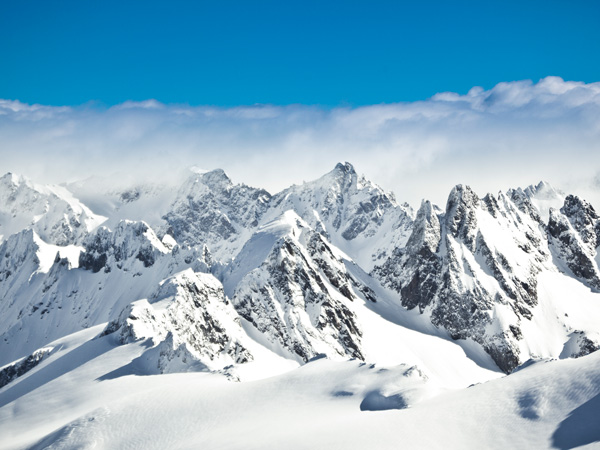
view over misty mountains from mount titlis, engelberg, switzerland. 3200m above sea level.
Walk Europe’s highest suspension bridge on the Mount Titlis Cliff Walk.

Weekly travel news, experiences
insider tips, offers,
and more.

14. Climb a glacier in Interlaken

Go ice-climbing on a glacier in Interlaken with specially-trained mountain guides who will instruct you in the safe use of ropes, ice axes and crampons. There’s no need to be a bodybuilder: routes of differing grades will be set up on ice walls so everyone, big and small, can try it out.

After the effort of going up, rappelling down the deep crevasses is pure fun, and all gear is provided.
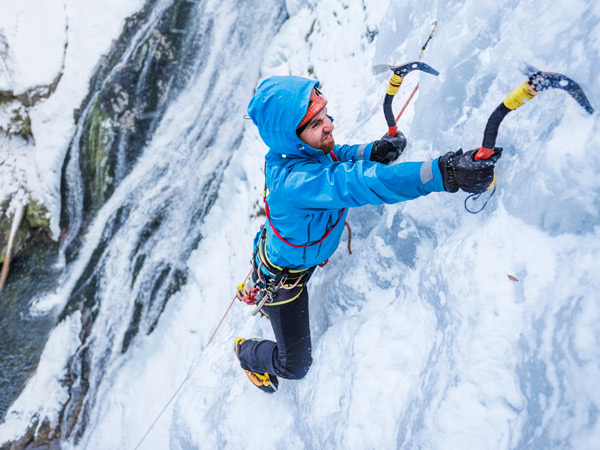
Brave climber facing an extreme ice terrain
Whether you’re a pro or a complete beginner, try out ice-climbing on a glacier in Interlaken.

15. Chocolate at Lindt Home of Chocolate

Stay warm with some hot chocolate at the Lindt Home of Chocolate in Zurich and learn about the fine art of chocolate-making. Visit the chocolate fountain over 9m tall and the biggest Lindt Chocolate Shop in the world, spread over 500 square metres.

16. Do a snow tube run

Launch yourself down well-groomed tracks atop an air-filled tyre. You can go snow tubing at Truebsee Snow Park which has groomed runs that have you spinning in circles before coming to a bumpy but safe stop.
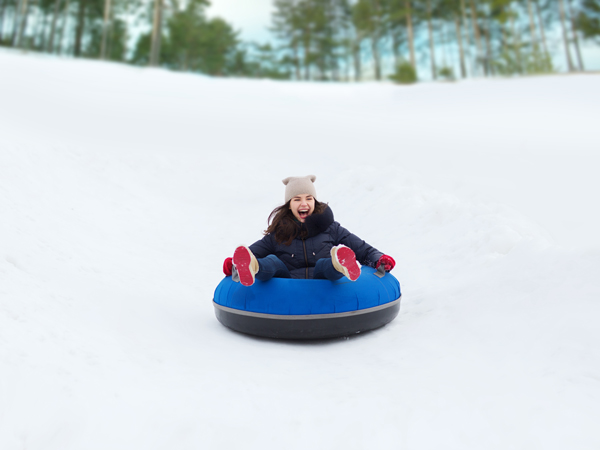
winter, leisure, sport, and people concept - happy teenage girl or woman sliding down on snow tube
Snow tubing is fun for the whole family.

17. Learn about the wildlife

Go wild for wildlife in Val Müstair, where game warden Jon Gross will take you hiking through the landscape to observe the habits of numerous animals that are found there.
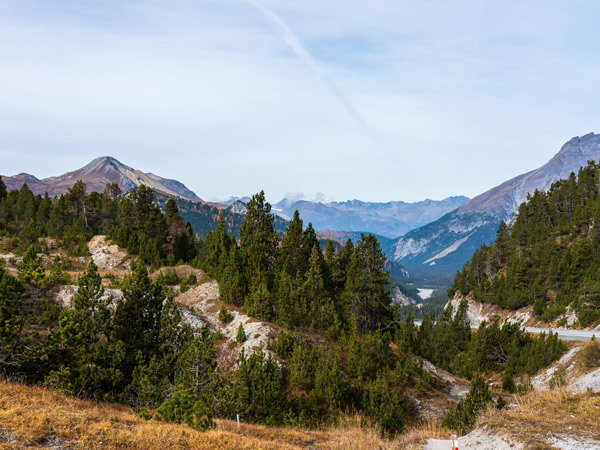
Road to Ofenpass - Fuorn pass in Val Mustair valley of canton Grisons, Graubunden, Switzerland.
Head to Val Müstair to learn about the wilderness.

18. Warm up at a ski resort

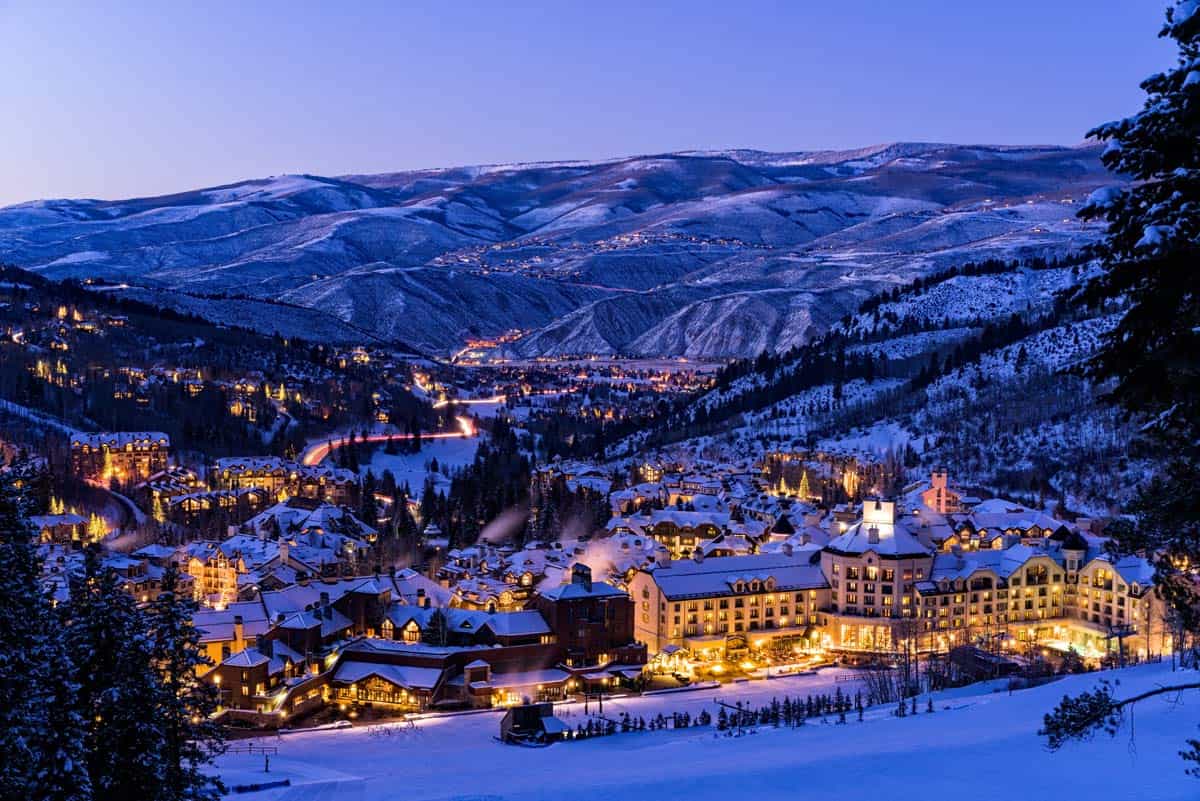
Enjoy some après ski action, even if you don’t ski. Ski resorts are fun places to be after dark when restaurants and bars fill up with visitors and locals and a convivial atmosphere prevails. Warm up from the inside with local staples like fondue and Glühwein.
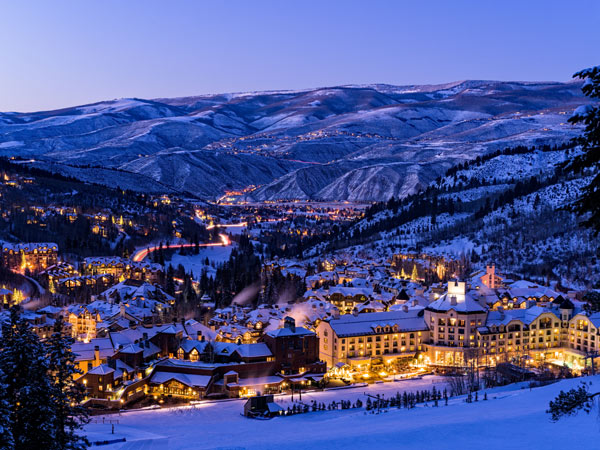
Beaver Creek Resort Winter Skiing at Dusk - Scenic view of village illuminated at night with ski runs.
Ski resorts are the place to be as soon as the sun sets.

19. Stay at the luxurious Whitepod

Check into Whitepod, an eco-luxe hotel made up of 15 individual self-supporting pods sitting 1400 metres above sea level at Les Cerniers, with magnificent unobstructed views of Lake Geneva.

Each one has a pellet-burning stove and all the comforts of home, with breakfast served in the central pod-house, and endless nature just beyond each pod’s adjoining deck.
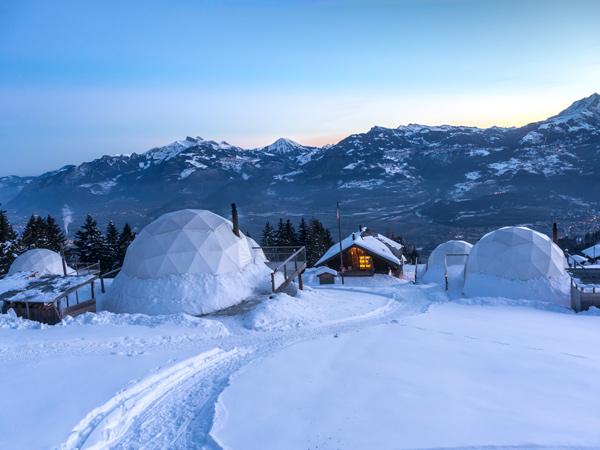
Morning shot of igloos on a snowy mountain
Whitepods are a must stay at least once in your life.

20.  Catch the Cricket on Ice

Watch Cricket on Ice in St. Moritz at the premier event on the Swiss cricket calendar (who knew there was one?).
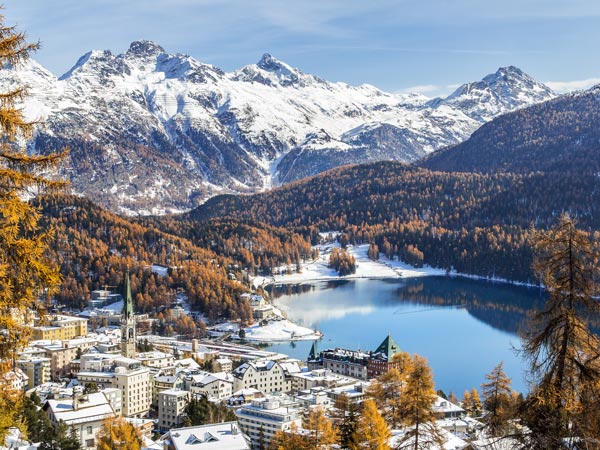
View of St. Moritz, the famouse resort region for winter sprot, from the high hill with the first new snow
St. Moritz is where you’ll catch some Cricket on Ice.

Want to see more stories from International Traveller in your Google search results?

  1. Click here to set International Traveller as a preferred source.
  2. Tick the box next to "International Traveller". That's it.
hero media

What the European heatwave means for your summer travel plans

Temperatures are soaring this summer, breaking records across Europe and the UK. 

Euro summer is a feeling like no other. But when a heatwave hits? The dream trip quickly turns into a sweaty mess. Extreme heat is sweeping Europe and the UK this week, with record-high temperatures impacting travel plans across the continent.

And while Australian summers are typically hotter in absolute temperature, many European cities aren’t equipped for high temperatures, resulting in unbearable weather.

Why is it so hot in Europe?

Signs of a hot summer loomed in May, when the mercury hit unprecedented spring highs. Now, extreme high temperature warning alerts have been issued in countries such as Spain, Italy, France, England, the Netherlands and Germany.

France saw its hottest day on record on Wednesday, with an average temperature of 30°C across the day and night. This surpasses the average temperature for June, which is 15°C to 25°C. Dozens of people have died, including 40 from drowning.

In Spain, 212 deaths have been linked to the heatwave.

The UK recorded its hottest June day ever on Wednesday with temperatures soaring to 36.1°C. In an article published by the Met Office – the UK’s national meteorological service – Professor Stephen Belcher CBE, Met Office Chief Scientist, shared his concerns about June’s heat. “To see temperatures like this in the UK in June is sobering. Events like this bring home the implications of climate change, with very high temperatures and humidity bringing significant health implications from heat stress, as well as impacts to a range of sectors such as transport, energy and water supply,” he said.

Heatwaves are becoming increasingly common in Europe and the UK, neither of which is prepared for such extremes. The World Meteorological Organization reported that in 2025, at least 95% of Europe experienced above-average annual temperatures and that the continent was heating up twice as fast as the global average.

How travel is impacted

A pharmacy sign displaying 40 degrees Celcius
A pharmacy broadcasting local weather data. (Credit: Getty/Dragoncello)

During a heatwave, power grids, water systems and transport networks can be affected, resulting in disrupted itineraries for travellers. In France, power outages have left thousands without electricity and early closures have been implemented for two of Paris’s biggest attractions, the Eiffel Tower (early afternoon rather than late at night) and the Louvre (two hours early). Eurostar cancelled its London to Paris and Paris to London services from the 22nd to the 25th, and major UK rail companies have been advising travellers to avoid using trains where possible, or to travel during early hours.

If a heatwave is predicted, being flexible with your itinerary and having fully refundable/changeable tickets is key, as extreme heat can force the cancellation of outdoor activities, impact rail and flight services and change the opening hours of sites and eateries.

Why does summer in Europe often feel hotter than summer in Australia?

people swimming in the Canal Saint-Martin in Paris
People swimming in the Canal Saint-Martin in Paris to cool off. (Credit: Rachael Thompson)

With some of the highest UV levels in the world, Australians are no strangers to the heat, adapting well to intense weather. But our infrastructure is largely equipped to withstand soaring temperatures with climate-responsive passive design, refrigerated air conditioning or evaporative coolers, as well as swimming spots aplenty.

Buildings in Northern and Western Europe and the UK, however, are constructed to retain heat and handle frosty winters. The lack of universal air conditioning means it generally feels hotter even though the temperature on your app might not look it. During a heatwave, it can feel like you’re in a sauna as cities act like heat traps.

How to stay cool and prepare for another heatwave

Relief is expected across Europe and the UK later this week, but more heatwaves are still possible in the coming months. Summer heat typically peaks in July and August.

Public transport often doesn’t have air conditioning, and buses in particular can be swelteringly hot. If you’re heading outside or your accommodation has no air conditioning, it’s worth buying a spray bottle and a handheld fan from a pharmacy or tourist stand. Check ahead of time if restaurants and cafes have air conditioning and make a booking in advance. The highest temperatures typically hit between 3pm and 6pm, so aim to head outdoors outside of these hours.

Rising temperatures invite travellers to enter a more intentional era of seeing the world. Now more than ever is the time to embrace lower-impact “coolcations” and off-season getaways.

20 best things to do in Switzerland (other than ski) | International Traveller