hero media

Switzerland: the world’s most picturesque cycling routes

From rolling green countryside to lakes and mountains, the beauty of the Swiss landscape is best experienced by bike.


With nothing between you and the view but the lenses of your sports sunglasses, hear the cow bells clang, breathe the fresh air and feel the atmosphere shift as you change altitude. Road cycle touring in Switzerland allows you to connect more closely with the country’s dramatic landscape than car touring does, yet you cover far more ground with greater ease and speed than you can on foot.

Cycle routes range from flat-out easy to epic multiday tours zig-zagging over some of the country’s highest paved passes. Though keep this in mind when planning: it’s Swiss people, raised around the alps, who grade them easy, moderate or difficult. Don’t feel you can’t catch the PostBus or utilise bike transport on steeper ascents.

1. Loop-de-lake
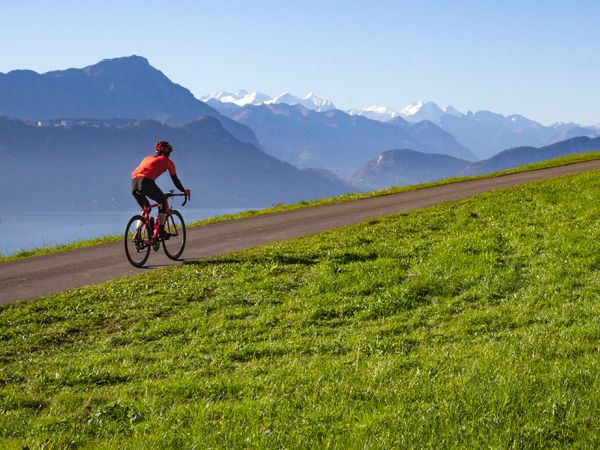
Tour of Lake Lucerne, Switzerland.


Start ‘easy’ by getting to know the countryside around one of Switzerland’s most beautiful lakes. The 68-kilometre Tour of Lake Lucerne begins and ends in a city that’s stood on that lakeshore since the Middle Ages. From Lucerne’s main railway station, cycle south along the waterfront to Hergiswil before diverting to one of the valley’s oldest settlements, Stans. Back at the lake, take a 15-minute boat ride from Beckenried to Gersau then head for the village of Weggis for a caffeine injection. From there the road gently undulates offering elevated views of Lake Lucerne and snow-capped mountains.

Hire a bicycle in Lucerne from Boardlocal Bikelocal.


2. Take me to the river
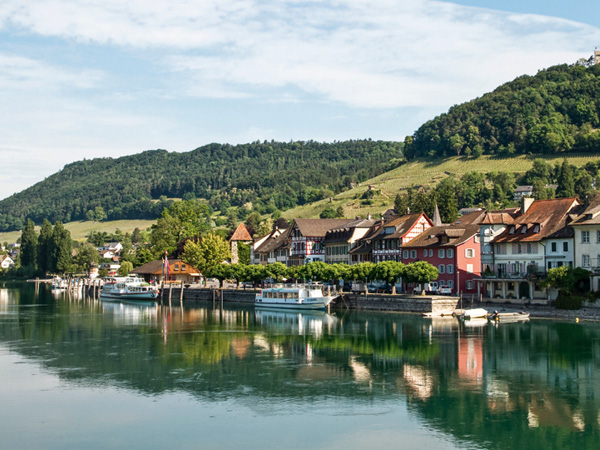
Stein am Rhein: a small town west of Lake Constance (Bodensee), in northeastern Switzerland.


Swiss Rhine Highlights is a four-day/three-night tour that’s as ‘easy’ on the eye as it is on the legs. For 160 kilometres from Kreuzlingen/Gottlieben to Rheinfelden you’ll follow the general course of the Rhine with only minor ascents. Get to know one of Switzerland’s major rivers and see Europe’s largest waterfall, Rhine Falls.

This tour is available from May to October from around $435 per adult, which includes accommodation, luggage transfer, route guidance, travel documents, GPS data and service hotline. Single supplement and bike or e-bike hire at additional cost.


3. Make a pass
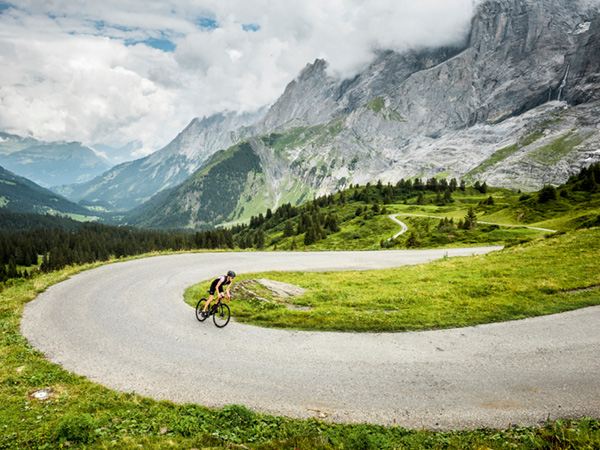
The Grosse Scheidegg is a mountain pass in the Bernese Alps of Switzerland, The pass crosses the col between the Schwarzhorn and the Wetterhorn mountains at an elevation of 1,962m.


The Jungfrau region has Europe’s highest railway station, top-class alpine hiking and one of the continent’s finest mountain passes – the Grosse Scheidegg (alt 1962 metres) – which is car-free apart from PostBuses and the odd tractor. This 80-kilometre circular alpine route, taking in that pass, has been deemed ‘moderate’.
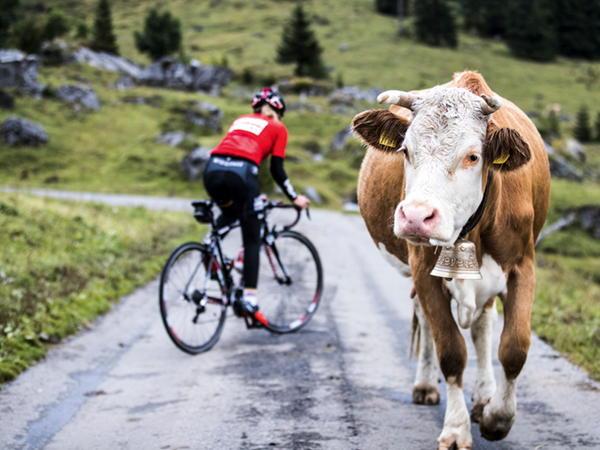
 

A cow passes a cyclist on The Grosse Scheidegg.


From Interlaken, tackle the route clockwise for a long lakeside warmup to Meiringen (alt 595 metres) before turning off for the Grosse Scheidegg ascent on which the road steepens to a gradient of up to 16 per cent. Yet the rewards are great: rock features up to 1700 metres high on either side of the road, the enormous Eiger and visible glaciers. Sail down the other side to the village of Grindelwald.

Hire a bike in Interlaken from Flying Wheels.


4. Basel brush
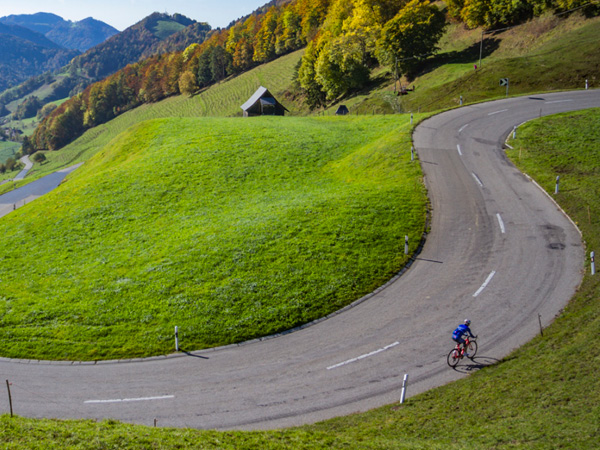
A stunning cycling track in Baselbiet, Switzerland.


The canton of Basel-Landschaft is locally known as Baselbiet. After easily negotiating your way out of Basel on a Swiss-engineered intercity cycle path network, explore country backroads and conquer a couple of passes on a 103-kilometre ‘moderate’ route. From Aesch, where urban gives way to rural, you’ll start to encounter some decent ascents with sweeping views of pastures, woodlands and wilder scenery. Enjoy the hairpins on the descent towards Balsthal.

Hire a bike in Basel from Geneva-based BikeSwitzerland.


5. From one lake to the next
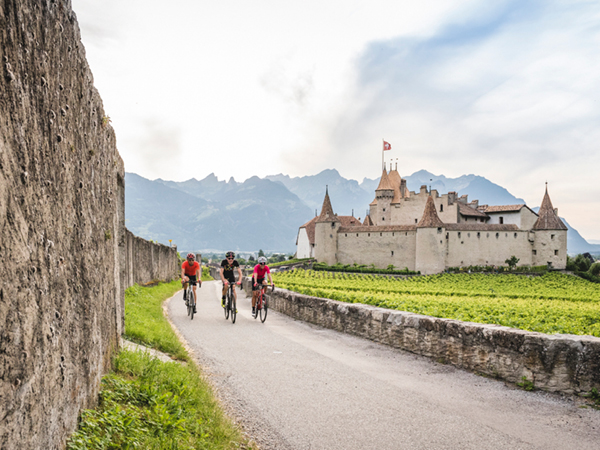
A cycling track through Aigle; a historic town and a municipality and the capital of the district of Aigle in the canton of Vaud in Switzerland.


For those looking for a ‘moderate’ multiday trip consider the 4-day/3-night Lakes Route from Lake Geneva to Lake Thun overnighting in Gruyères and Gstaad. The rolling green countryside of this 135-kilometre hilly route is some of Switzerland’s prettiest non-alpine scenery. Start with a night in Montreux then, the next morning, catch the cog railway up Mont Pèlerin for an altitudinal headstart towards Gruyères and a fondue dinner.
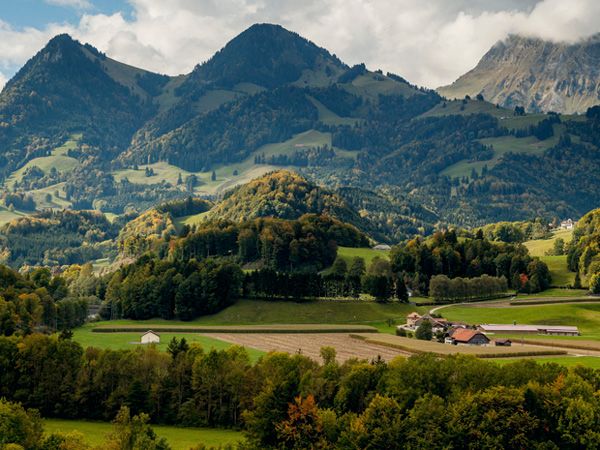
 

Gruyere Lakes Route, Switzerland.


This May to October tour, from around $550 per adult, includes accommodation and luggage transfer. Single supplement and bike or e-bike hire at additional cost.


Weekly travel news, experiences
insider tips, offers,
and more.

6. Up and at ‘em
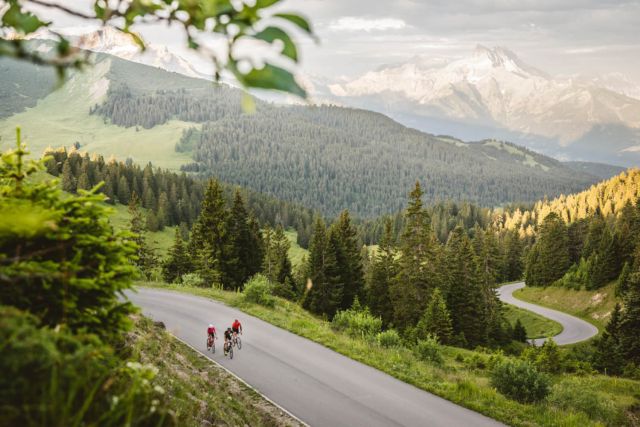
Col de la Croix is an Alpine pass in the canton of Vaud in Switzerland. It connects Bex and Villars-sur-Ollon with Les Diablerets.


Villars’ loop with a view, graded ‘difficult’, starts and ends in Villars-sur-Ollon/Gryon and demands you ascend 2250 altitudinal metres over a 92-kilometre route. It begins with a serious slog up to Croix Pass (alt 1774 metres) into the foothills of the Alps to overlook Lake Geneva and see the surrounding mountains. The views are particularly glorious on the descent to Les Diablerets (where you’ll want coffee) and, from there, sections of climbing and the grand scenery last all the way back to Villars.

Hire a bike in Villars-Sur-Ollon or Gryon from McBoard/Paragon. Check beforehand that Petit Hongrin military zone and Agites Tunnel – both in the first 50 kilometres of the route – are open to traffic.


7. Aching for the Alps
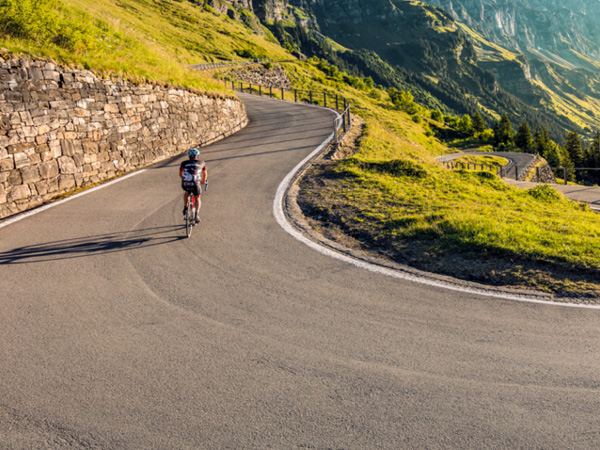
Klausen Pass is a high mountain pass in the Swiss Alps connecting Altdorf in the canton of Uri with Linthal in the canton of Glarus.


This 270-kilometre Alpine Panorama Route from Appenzell to Thun is a challenging cycling tour graded ‘difficult’. The highlight for most riders is Klausen Pass (alt 1948 metres) through the largest alp in Switzerland, called Urnerboden. The grass is definitely greener on the other side in the agricultural Schächental Valley with its mountainous backdrop. Stop overnight in Appenzell, Linthal and Lake Sarnen.


Available late-May to mid-October, this tour is from $660 per adult and that includes accommodation and luggage transfer. Single supplement and bike hire at additional cost.

Want to see more stories from International Traveller in your Google search results?

  1. Click here to set International Traveller as a preferred source.
  2. Tick the box next to "International Traveller". That's it.
hero media

What the European heatwave means for your summer travel plans

Temperatures are soaring this summer, breaking records across Europe and the UK. 

Euro summer is a feeling like no other. But when a heatwave hits? The dream trip quickly turns into a sweaty mess. Extreme heat is sweeping Europe and the UK this week, with record-high temperatures impacting travel plans across the continent.

And while Australian summers are typically hotter in absolute temperature, many European cities aren’t equipped for high temperatures, resulting in unbearable weather.

Why is it so hot in Europe?

Signs of a hot summer loomed in May, when the mercury hit unprecedented spring highs. Now, extreme high temperature warning alerts have been issued in countries such as Spain, Italy, France, England, the Netherlands and Germany.

France saw its hottest day on record on Wednesday, with an average temperature of 30°C across the day and night. This surpasses the average temperature for June, which is 15°C to 25°C. Dozens of people have died, including 40 from drowning.

In Spain, 212 deaths have been linked to the heatwave.

The UK recorded its hottest June day ever on Wednesday with temperatures soaring to 36.1°C. In an article published by the Met Office – the UK’s national meteorological service – Professor Stephen Belcher CBE, Met Office Chief Scientist, shared his concerns about June’s heat. “To see temperatures like this in the UK in June is sobering. Events like this bring home the implications of climate change, with very high temperatures and humidity bringing significant health implications from heat stress, as well as impacts to a range of sectors such as transport, energy and water supply,” he said.

Heatwaves are becoming increasingly common in Europe and the UK, neither of which is prepared for such extremes. The World Meteorological Organization reported that in 2025, at least 95% of Europe experienced above-average annual temperatures and that the continent was heating up twice as fast as the global average.

How travel is impacted

A pharmacy sign displaying 40 degrees Celcius
A pharmacy broadcasting local weather data. (Credit: Getty/Dragoncello)

During a heatwave, power grids, water systems and transport networks can be affected, resulting in disrupted itineraries for travellers. In France, power outages have left thousands without electricity and early closures have been implemented for two of Paris’s biggest attractions, the Eiffel Tower (early afternoon rather than late at night) and the Louvre (two hours early). Eurostar cancelled its London to Paris and Paris to London services from the 22nd to the 25th, and major UK rail companies have been advising travellers to avoid using trains where possible, or to travel during early hours.

If a heatwave is predicted, being flexible with your itinerary and having fully refundable/changeable tickets is key, as extreme heat can force the cancellation of outdoor activities, impact rail and flight services and change the opening hours of sites and eateries.

Why does summer in Europe often feel hotter than summer in Australia?

people swimming in the Canal Saint-Martin in Paris
People swimming in the Canal Saint-Martin in Paris to cool off. (Credit: Rachael Thompson)

With some of the highest UV levels in the world, Australians are no strangers to the heat, adapting well to intense weather. But our infrastructure is largely equipped to withstand soaring temperatures with climate-responsive passive design, refrigerated air conditioning or evaporative coolers, as well as swimming spots aplenty.

Buildings in Northern and Western Europe and the UK, however, are constructed to retain heat and handle frosty winters. The lack of universal air conditioning means it generally feels hotter even though the temperature on your app might not look it. During a heatwave, it can feel like you’re in a sauna as cities act like heat traps.

How to stay cool and prepare for another heatwave

Relief is expected across Europe and the UK later this week, but more heatwaves are still possible in the coming months. Summer heat typically peaks in July and August.

Public transport often doesn’t have air conditioning, and buses in particular can be swelteringly hot. If you’re heading outside or your accommodation has no air conditioning, it’s worth buying a spray bottle and a handheld fan from a pharmacy or tourist stand. Check ahead of time if restaurants and cafes have air conditioning and make a booking in advance. The highest temperatures typically hit between 3pm and 6pm, so aim to head outdoors outside of these hours.

Rising temperatures invite travellers to enter a more intentional era of seeing the world. Now more than ever is the time to embrace lower-impact “coolcations” and off-season getaways.

Switzerland's Best Cycling Routes