hero media

The most spectacular swimming spots in Malta

Malta has been described as the ‘underrated gem of the Mediterranean’ and looking at these pictures of spectacular swimming spots, it’s easy to see why.

With some of the cleanest waters in the Mediterranean, spending your days lazily ticking off these beaches on your Malta bucket list is a holiday dream.


Be warned though – many of the beaches are the rocky kind often found in this part of the world, so try to put the Australian version of sandy beaches out of your mind. The upside? No pesky fine-grained sand in your bathers and beach bag!


Here are the best swimming spots to cool off in Malta.

1. Ramla Bay

Known locally as ‘the red sandy beach’, this is the island of Gozo’s most popular swimming spot. With Roman ruins in the background, this is a truly epic spot for a dip.


It’s a ‘blue flag’ beach – an international award given to beaches, harbours, marinas and boats which have proven to be clean and safe, and respectful to the environment.
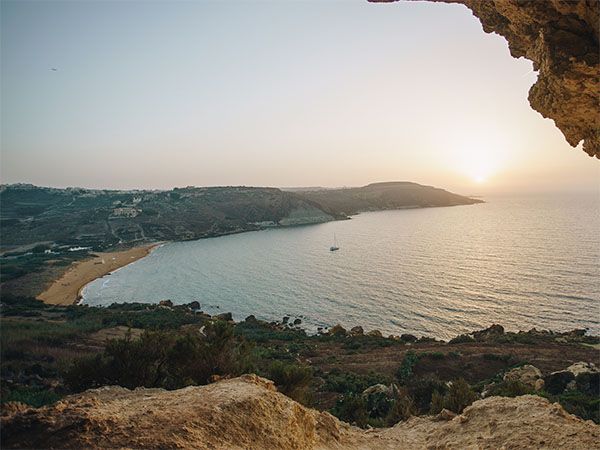
Ramla Bay Malta
Ramla Bay is one of Gozo’s most popular swimming spot

2. The Blue Lagoon

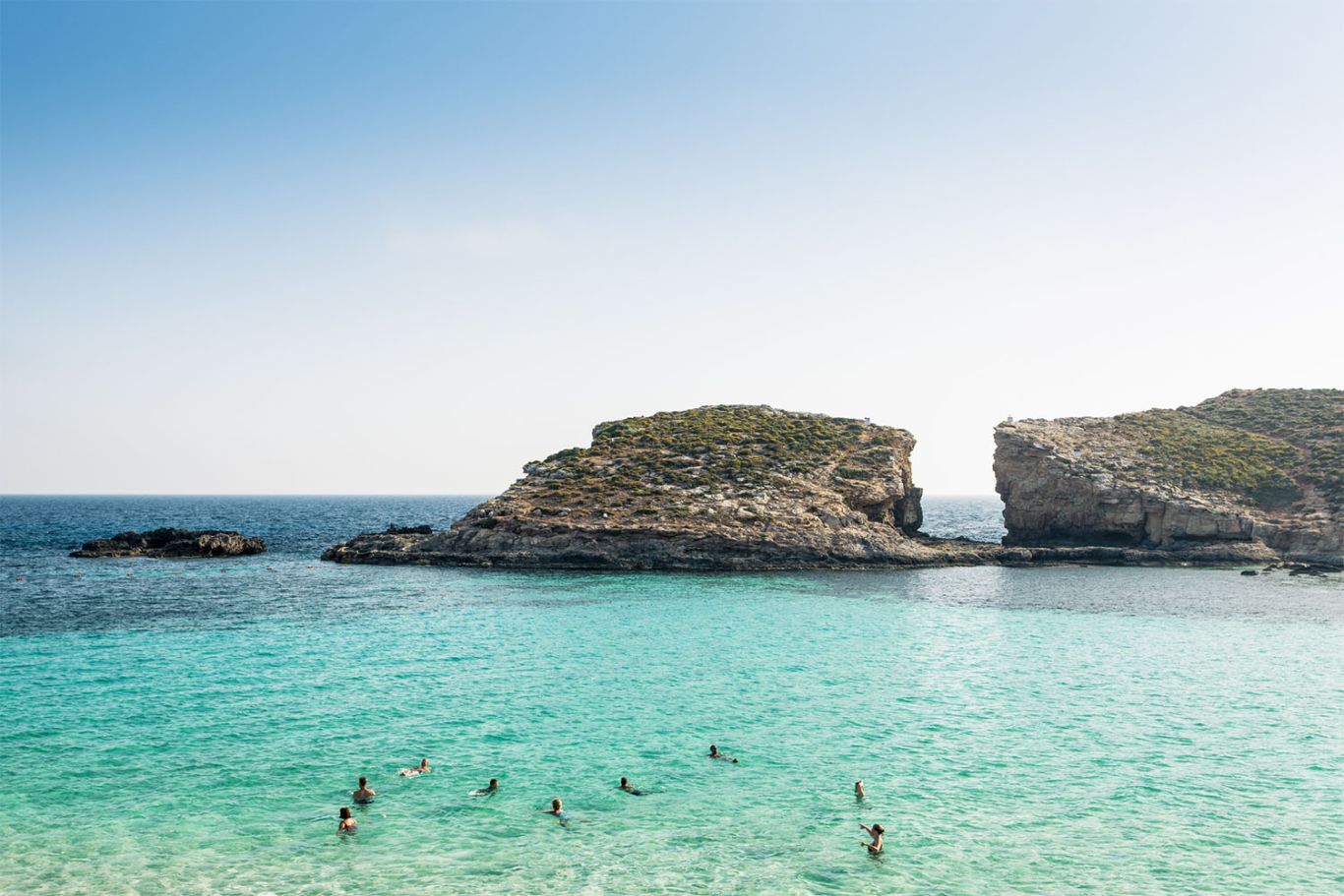
Just a boat ride from the seaside resort of Sliema on Malta (the archipelago’s main island) is the small island of Comino. Here, you’ll find the Blue Lagoon – well worth a trip for its crystal-clear, turquoise waters.


You could just position yourself on the rocks beside the water and sunbake the day away, but with an abundance of sea life under the water, it’s worth grabbing some goggles and going for a snorkel.


An ice-cream boat is sure to be patrolling somewhere along the shore, so keep your eyes out for a sweet treat when you’re finished exploring the underwater realm.
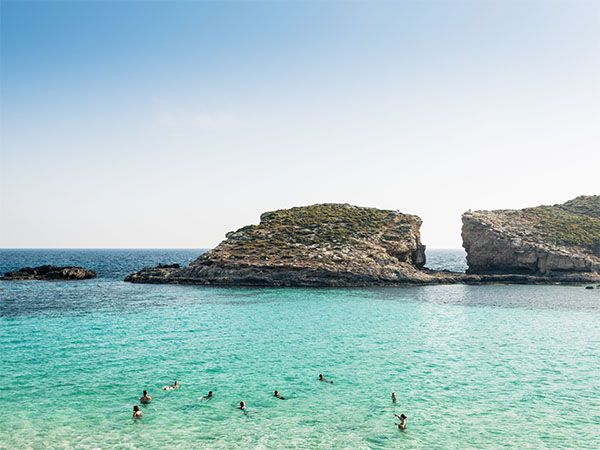
The Blue Lagoon Malta
The Blue Lagoon is well worth a trip for its crystal-clear, turquoise waters

3. Paradise Bay

At the most northern point of Malta is where you will find this lovely small beach, set in natural rocky surrounds. A number of decks have been created for sunbeds and umbrellas, so you can soak up the sun in style. It’s a bit of a steep descent down, but it’s well worth it – from the top of the cliffs you get an unobstructed view of both Gozo and Comino Island.

4. Ta’ Fra Ben (Qawra Point)

Sure, the beach is a little rocky, but this is a beautiful, sheltered beach with spectacular views and crystalline waters. It also doesn’t get quite as busy as some of the others, so it’s a smart choice in the summer months.


The calm waters and easy entry into the water make this a great beach for families. It’s also a popular location for barbecues, with Malta’s beautiful north-eastern seascape as a backdrop.
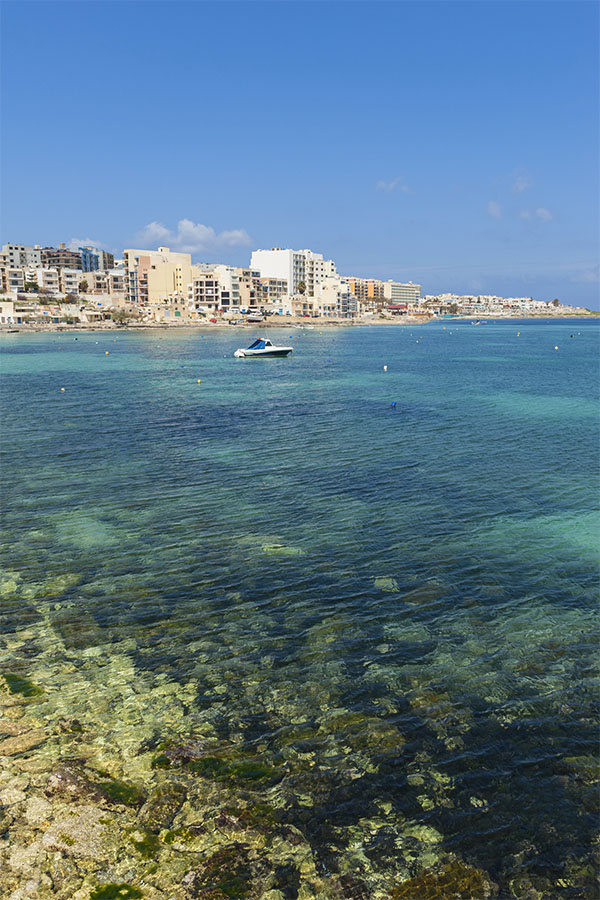
Ta’ Fra Ben Malta
Head to Ta’ Fra Ben spectacular views and crystalline waters

5. Fomm-ir-Rih

This one is tricky to get to, but if you want to escape the crowds it can be well worth the trek. It’s accessed by a fairly rough pathway that takes about 20 minutes to traverse.


Malta’s most remote and inaccessible beach is near the small town of Baħrija on the northwestern Maltese coast. It’s a favourite with divers, snorkellers and people wanting a more rugged beach experience. Take a picnic lunch, as there are no food or drink stands at this secluded spot.
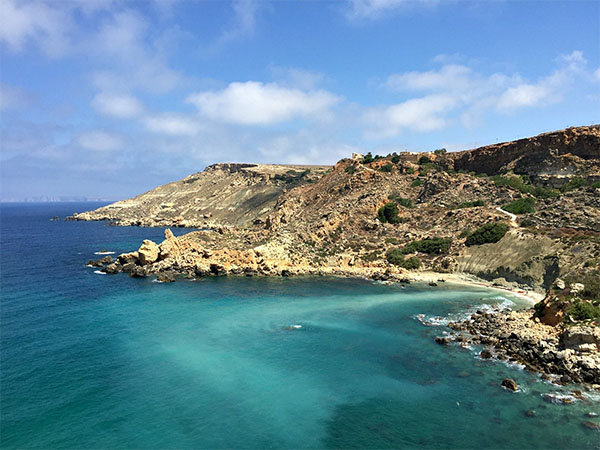
Fomm-ir-Rih Malta
Favoured by divers, snorkellers and rugged-beach goers

Weekly travel news, experiences
insider tips, offers,
and more.

6. GoldenBay

This is one of the few ‘sandy’ beaches, so if you have a vision of lying on a towel and soaking up the sun, this might be the spot for you. Set on Malta’s northwest coast, there are also some great restaurants and kiosks surrounding the beach, making it a great place to spend a whole day. A variety of watersports and boat trips are also offered at this beach. This is another ‘blue flag’ beach, so you can be assured of its cleanliness.
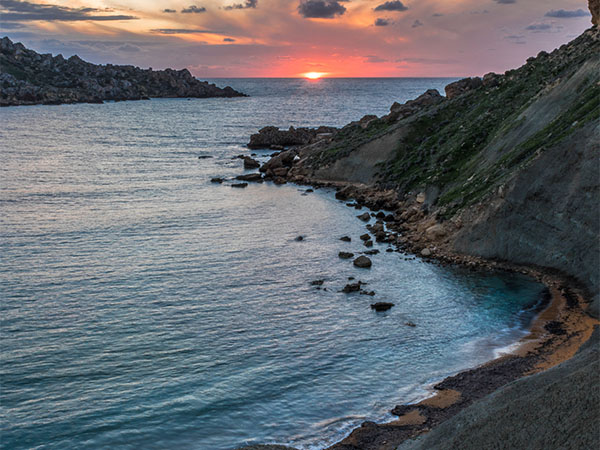
Golden Bay Malta
Sunset at Golden Bay

7. St Peter’s Pool

Set near the charming fishing village of Marsaxlokk, St Peter’s pool is considered one of the most beautiful natural pools in the world.


It’s a great day trip if you’re staying on another part of the island as you can combine a walk through Marsaxlokk (and a spectacular seafood meal) with a dip in the pool – though do note that it’s about a 35-minute walk from the village to St Peter’s Pool. It’s worth it, though. Jumping off the sand-bleached rocks into the light-green water is an absolute treat on a hot day.
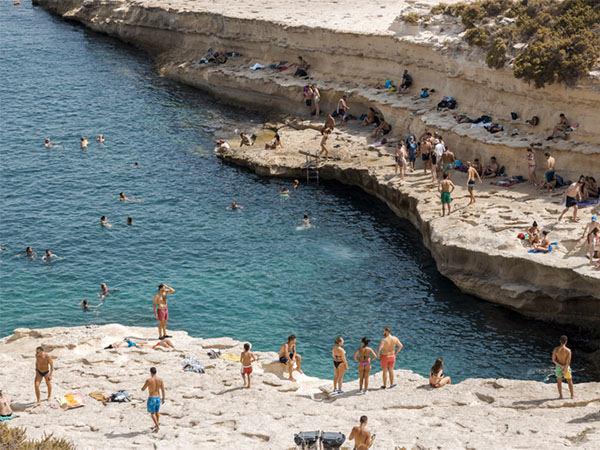
St Peter's Pool Malta
St Peter’s pool is considered one of the most beautiful natural pools in the world

8. San Blas Bay

Another of Gozo’s great swimming spots, San Blas Bay is set in the secluded green countryside at the end of a pristine valley. The sand is the same reddish sand of Ramla Bay, which contrasts so beautifully with the azure sea.


It’s a bit quieter than Ramla, partly because the road has been closed off, so it’s a bit of a trek down to the water via a slightly steep path. This is a superb place for snorkelling around the submerged boulders on the edge of the beach.

Want to see more stories from International Traveller in your Google search results?

  1. Click here to set International Traveller as a preferred source.
  2. Tick the box next to "International Traveller". That's it.
hero media

What the European heatwave means for your summer travel plans

Temperatures are soaring this summer, breaking records across Europe and the UK. 

Euro summer is a feeling like no other. But when a heatwave hits? The dream trip quickly turns into a sweaty mess. Extreme heat is sweeping Europe and the UK this week, with record-high temperatures impacting travel plans across the continent.

And while Australian summers are typically hotter in absolute temperature, many European cities aren’t equipped for high temperatures, resulting in unbearable weather.

Why is it so hot in Europe?

Signs of a hot summer loomed in May, when the mercury hit unprecedented spring highs. Now, extreme high temperature warning alerts have been issued in countries such as Spain, Italy, France, England, the Netherlands and Germany.

France saw its hottest day on record on Wednesday, with an average temperature of 30°C across the day and night. This surpasses the average temperature for June, which is 15°C to 25°C. Dozens of people have died, including 40 from drowning.

In Spain, 212 deaths have been linked to the heatwave.

The UK recorded its hottest June day ever on Wednesday with temperatures soaring to 36.1°C. In an article published by the Met Office – the UK’s national meteorological service – Professor Stephen Belcher CBE, Met Office Chief Scientist, shared his concerns about June’s heat. “To see temperatures like this in the UK in June is sobering. Events like this bring home the implications of climate change, with very high temperatures and humidity bringing significant health implications from heat stress, as well as impacts to a range of sectors such as transport, energy and water supply,” he said.

Heatwaves are becoming increasingly common in Europe and the UK, neither of which is prepared for such extremes. The World Meteorological Organization reported that in 2025, at least 95% of Europe experienced above-average annual temperatures and that the continent was heating up twice as fast as the global average.

How travel is impacted

A pharmacy sign displaying 40 degrees Celcius
A pharmacy broadcasting local weather data. (Credit: Getty/Dragoncello)

During a heatwave, power grids, water systems and transport networks can be affected, resulting in disrupted itineraries for travellers. In France, power outages have left thousands without electricity and early closures have been implemented for two of Paris’s biggest attractions, the Eiffel Tower (early afternoon rather than late at night) and the Louvre (two hours early). Eurostar cancelled its London to Paris and Paris to London services from the 22nd to the 25th, and major UK rail companies have been advising travellers to avoid using trains where possible, or to travel during early hours.

If a heatwave is predicted, being flexible with your itinerary and having fully refundable/changeable tickets is key, as extreme heat can force the cancellation of outdoor activities, impact rail and flight services and change the opening hours of sites and eateries.

Why does summer in Europe often feel hotter than summer in Australia?

people swimming in the Canal Saint-Martin in Paris
People swimming in the Canal Saint-Martin in Paris to cool off. (Credit: Rachael Thompson)

With some of the highest UV levels in the world, Australians are no strangers to the heat, adapting well to intense weather. But our infrastructure is largely equipped to withstand soaring temperatures with climate-responsive passive design, refrigerated air conditioning or evaporative coolers, as well as swimming spots aplenty.

Buildings in Northern and Western Europe and the UK, however, are constructed to retain heat and handle frosty winters. The lack of universal air conditioning means it generally feels hotter even though the temperature on your app might not look it. During a heatwave, it can feel like you’re in a sauna as cities act like heat traps.

How to stay cool and prepare for another heatwave

Relief is expected across Europe and the UK later this week, but more heatwaves are still possible in the coming months. Summer heat typically peaks in July and August.

Public transport often doesn’t have air conditioning, and buses in particular can be swelteringly hot. If you’re heading outside or your accommodation has no air conditioning, it’s worth buying a spray bottle and a handheld fan from a pharmacy or tourist stand. Check ahead of time if restaurants and cafes have air conditioning and make a booking in advance. The highest temperatures typically hit between 3pm and 6pm, so aim to head outdoors outside of these hours.

Rising temperatures invite travellers to enter a more intentional era of seeing the world. Now more than ever is the time to embrace lower-impact “coolcations” and off-season getaways.