hero media

How a cruise through the Med fulfilled a lifelong dream

Sailing the Med onboard Princess cruises’ newest ship offers a breadth of experience and an invitation to return.

If it is better to have loved and lost than not to have loved at all, surely it is better to have been than to not have been at all. This question is a constant when cruising the Mediterranean.

The harsh reality is that we will never be able to spend as much time as we would like in most of the places of the world, so all travel decisions are invariably a choice between depth and breadth.

Visiting two small slices of Italy onboard Princess Cruises’ newest ship, Sun Princess, I finally came to peace with this balancing act and appreciated the range that cruising gives travellers.

Exploring Taormina: A dream three decades in the making

From the age of 18, I have been on a quest to visit Taormina, Sicily. Like all life pursuits, it is my mum’s fault. Before I flew the nest on a gap year in 1991, she took some time to share a few of her favourite places in Europe and declared “Taormina is the most beautiful town in Sicily, if not Italy." She painted a seductive picture of a town wrapped in Phoenician, Roman and Arabic history set against the steep cliffs of the island’s east coast.

To see Taormina, for me, was to live up to the rich life she had lived, and to which I aspired, plus share a bond in appreciating this small piece of Italy. I didn’t make it in 1991. Nor did I get that far south when I lived in London from 2001 to 2003. But now, more than 30 years later, I can fulfil my familial quest.
the beautiful old town of Taormina, Italy
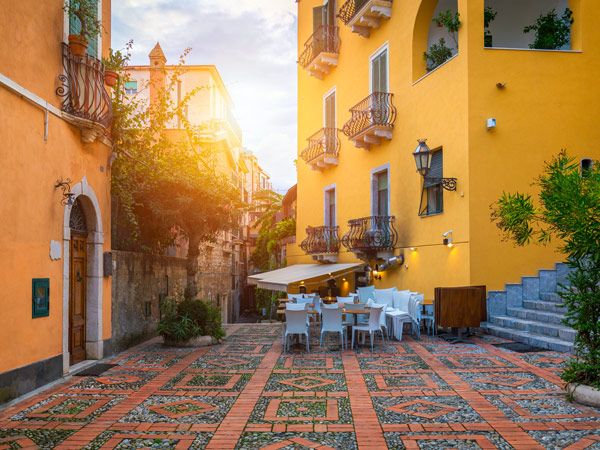
Corso Umberto in Taormina. (Image: Getty/DaLiu)

Sun Princess docks at Messina at 8am and, by 10am, the coach has traversed the scenic coastal highway and steep switchbacks to arrive at Taormina. Connecting the Porta Catania (the original gates to the old city) to the Teatro Antico (ancient theatre), the Corso Umberto is ‘medieval Europe’ from central casting. Iron balconies jut out over a cobbled lane where the stones have been polished to a sheen by thousands of years of foot traffic.
the snow-capped Mount Etna as seen from the ancient Greek theatre of Taormina, Italy
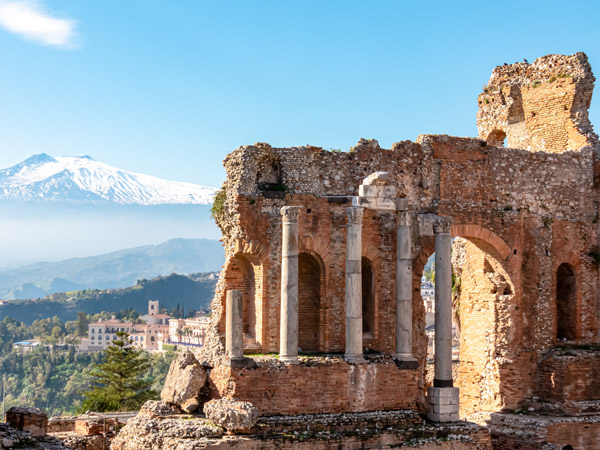
Explore the Teatro Antico. (Image: Getty/Christopher Moswitzer)

The balconies themselves are alternatively adorned with neat and orderly gardens and all-conquering rebellious flora. A third of the way along the Corso, Piazza IX Aprile offers breathtaking views of the coast. Just past the piazza, it is hard to spot Vicolo Stretto, the smallest laneway in Italy, just 50 centimetres wide.

The shopfronts along Corso Umberto are like Taormina itself: well-maintained. High-end fashion houses such as Louis Vuitton and Dior rub shoulders with more approachable, local designers as well as restaurants and the ubiquitous gelaterias.

The highlight of my four-hour wander is the ancient theatre. The seating has accommodated the behinds of Greeks, Phoenicians, Romans and even Saracens. And now mine. Reboarding Sun Princess, it is impossible for me not to plan to return to Taormina one day for an extended period. But whether I make it or not, at least I have been once.
a scenic view of the Taormina Beach
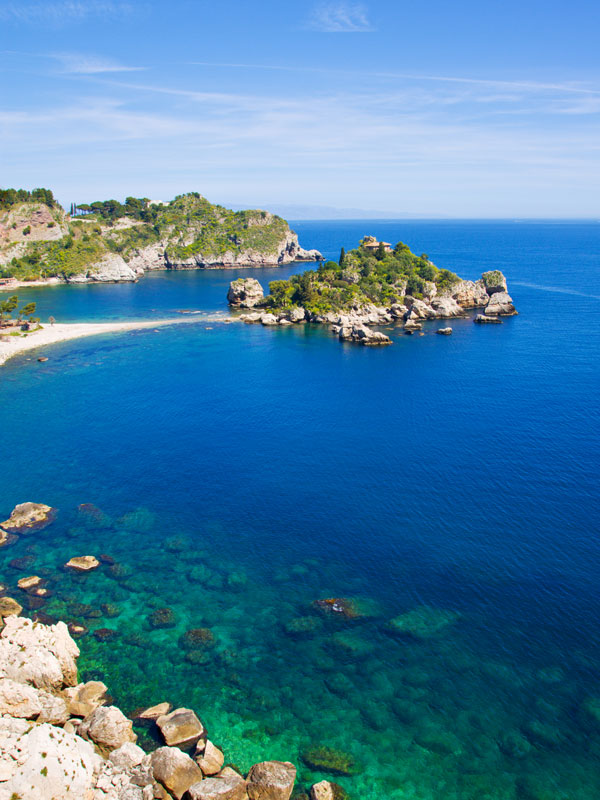
Soak up the sun on Sicily’s east coast. (Image: Getty/unknown1861)

From Naples to Ischia: Italy’s next big thing
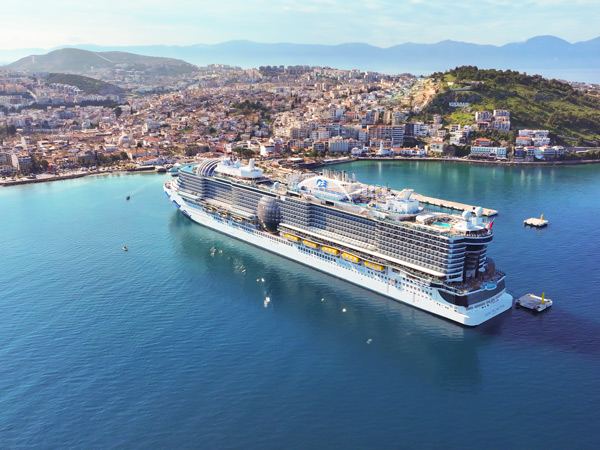
the Sun Princess ship cruising in Italy
Cruise to Naples, Italy.

I disembark in Naples the following day and jump on a fast ferry to a destination many are picking as the next big thing – Ischia. Less known and developed than her most famous neighbour Capri, Ischia – the largest of the islands in the Bay of Naples – is close to bursting out of the shadows. Expect to see your Instagram flooded with Ischia posts in the coming 24 months.
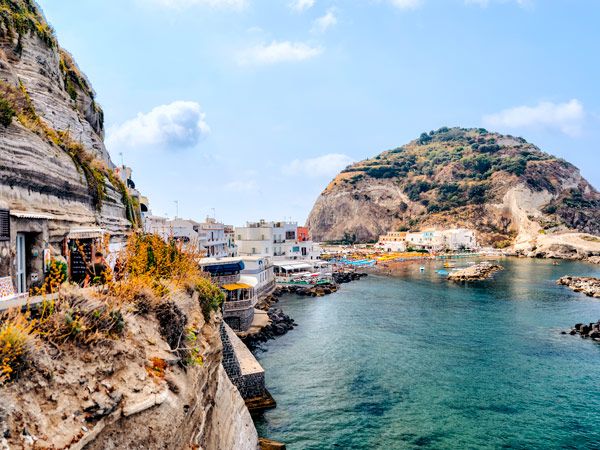
the small beach village of Sant' Angelo on the island of Ischia in Italy
Ischia is an island to watch. (Image: Getty/todamo)

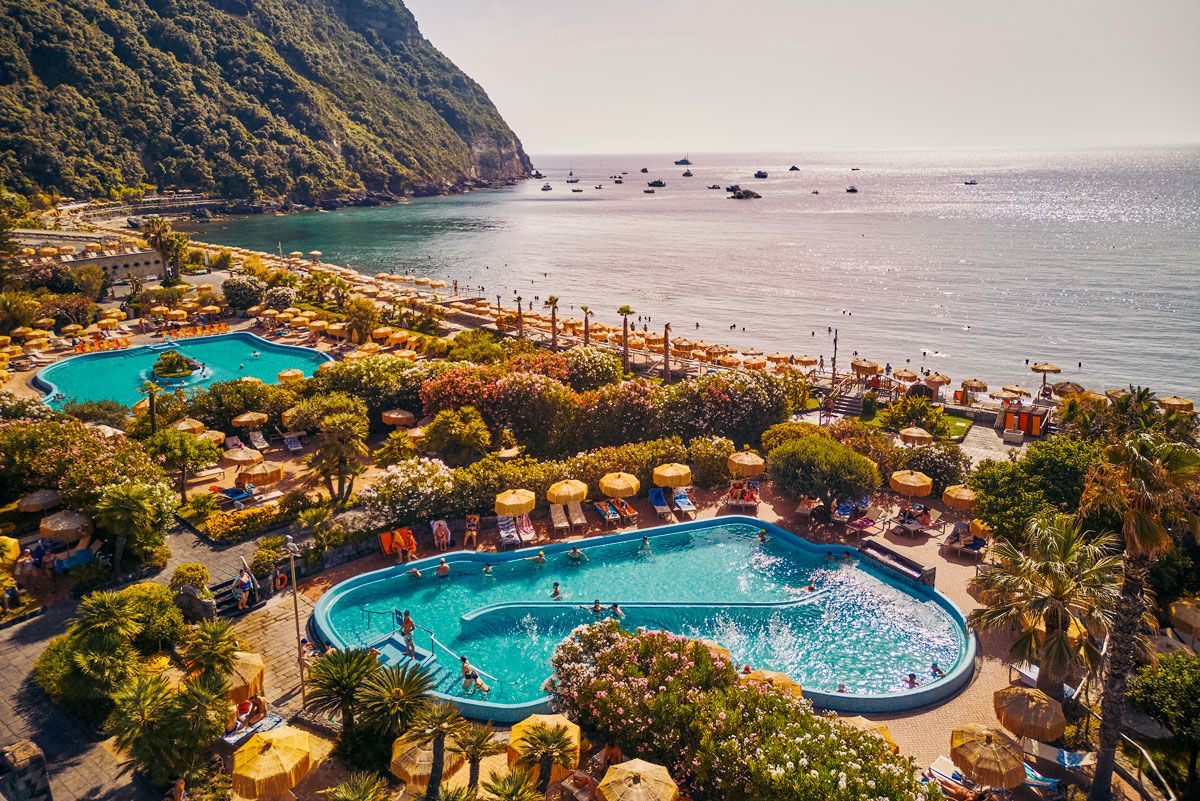
The Giardini Poseidon Terme (Poseidon’s Garden Spa) is a scenic 30-minute drive from the ferry. Lighthouses punctuate the cliff faces as we weave around headlands and sandy beaches.

Floating between 20 different pools, I spend a slow day taking to the water like a European and chatting to a couple from Geelong, who are enthralled by the entire cruise experience. Their first grand tour of Europe has been the perfect Euro sampler. Many of the destinations on the itinerary are, like Taormina for me, earmarked for a return and extended visit.
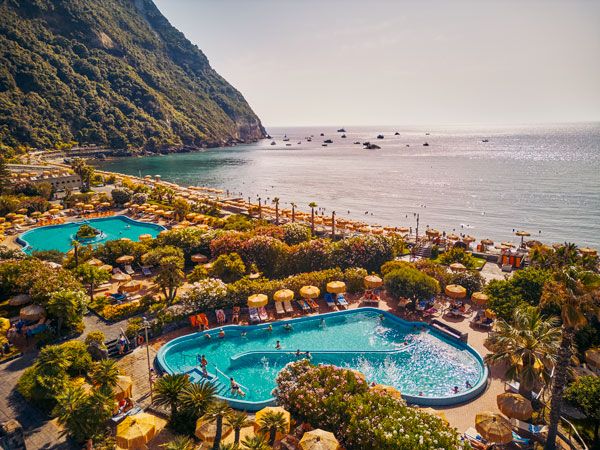
the pool view from Giardini Poseidon Terme, Sun Princess
The ship’s Wake View Terrace.

Weekly travel news, experiences
insider tips, offers,
and more.

Sun Princess highlights onboard and beyond

The Sun Princess cruise is a love affair with Italy. My favourite moments onboard are almost all Italian. The most outstanding meal is at Sabatini’s, the specialty Italian restaurant: the lobster tortellini is not to be missed. Sabatini’s is also the venue for another favourite moment, the Tapas Tuscan Wine Tasting.

Sure, tapas and Tuscan wine sound like a crime against wine-matching, however I would argue it is acceptable when the wines involved are the convention-busting Super Tuscans. Super Tuscans are a controversial and rebellious style of wine, mixing the traditional Tuscan sangiovese grapes with French varietals such as cabernet sauvignon, syrah and merlot. My love affair with Italy is to be continued.
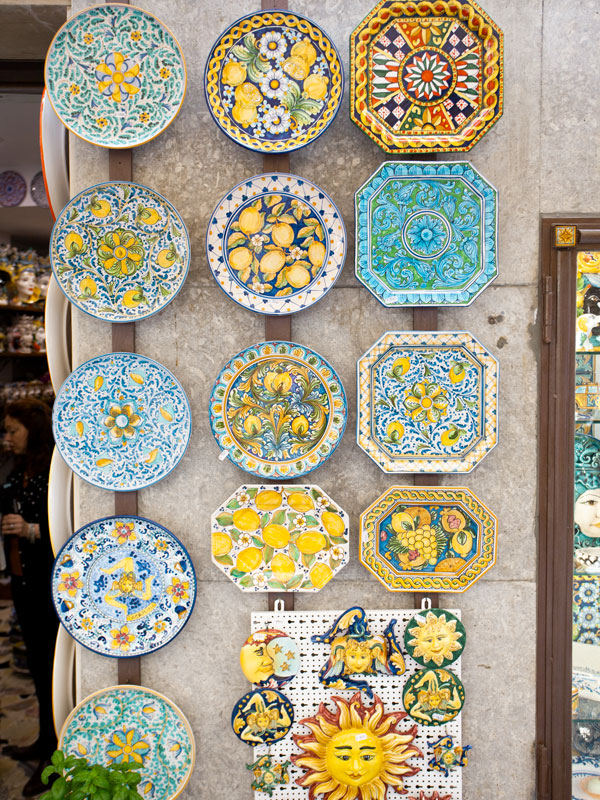
the ceramic pattern detail
Swoon over the beauty of Sicilian ceramics. (Image: Quentin Long)

For more on Sun Princess, check out my comprehensive review here.

Want to see more stories from International Traveller in your Google search results?

  1. Click here to set International Traveller as a preferred source.
  2. Tick the box next to "International Traveller". That's it.
Quentin Long
Quentin Long is the Co-Founder and Managing Director of Australian Traveller Media. Quentin is a sought-after travel media commentator. He is Australia’s most trusted source for travel news and insights, having held weekly radio segments across the country since 2006, and regularly appearing on Channel 9’s Today and A Current Affair programs from 2010. Don't ask him his favourite travel experience as that's like asking him to choose a favourite child. However he does say that Garma Festival is the one travel experience that changed him the most.
View profile and articles
hero media

What the European heatwave means for your summer travel plans

Temperatures are soaring this summer, breaking records across Europe and the UK. 

Euro summer is a feeling like no other. But when a heatwave hits? The dream trip quickly turns into a sweaty mess. Extreme heat is sweeping Europe and the UK this week, with record-high temperatures impacting travel plans across the continent.

And while Australian summers are typically hotter in absolute temperature, many European cities aren’t equipped for high temperatures, resulting in unbearable weather.

Why is it so hot in Europe?

Signs of a hot summer loomed in May, when the mercury hit unprecedented spring highs. Now, extreme high temperature warning alerts have been issued in countries such as Spain, Italy, France, England, the Netherlands and Germany.

France saw its hottest day on record on Wednesday, with an average temperature of 30°C across the day and night. This surpasses the average temperature for June, which is 15°C to 25°C. Dozens of people have died, including 40 from drowning.

In Spain, 212 deaths have been linked to the heatwave.

The UK recorded its hottest June day ever on Wednesday with temperatures soaring to 36.1°C. In an article published by the Met Office – the UK’s national meteorological service – Professor Stephen Belcher CBE, Met Office Chief Scientist, shared his concerns about June’s heat. “To see temperatures like this in the UK in June is sobering. Events like this bring home the implications of climate change, with very high temperatures and humidity bringing significant health implications from heat stress, as well as impacts to a range of sectors such as transport, energy and water supply,” he said.

Heatwaves are becoming increasingly common in Europe and the UK, neither of which is prepared for such extremes. The World Meteorological Organization reported that in 2025, at least 95% of Europe experienced above-average annual temperatures and that the continent was heating up twice as fast as the global average.

How travel is impacted

A pharmacy sign displaying 40 degrees Celcius
A pharmacy broadcasting local weather data. (Credit: Getty/Dragoncello)

During a heatwave, power grids, water systems and transport networks can be affected, resulting in disrupted itineraries for travellers. In France, power outages have left thousands without electricity and early closures have been implemented for two of Paris’s biggest attractions, the Eiffel Tower (early afternoon rather than late at night) and the Louvre (two hours early). Eurostar cancelled its London to Paris and Paris to London services from the 22nd to the 25th, and major UK rail companies have been advising travellers to avoid using trains where possible, or to travel during early hours.

If a heatwave is predicted, being flexible with your itinerary and having fully refundable/changeable tickets is key, as extreme heat can force the cancellation of outdoor activities, impact rail and flight services and change the opening hours of sites and eateries.

Why does summer in Europe often feel hotter than summer in Australia?

people swimming in the Canal Saint-Martin in Paris
People swimming in the Canal Saint-Martin in Paris to cool off. (Credit: Rachael Thompson)

With some of the highest UV levels in the world, Australians are no strangers to the heat, adapting well to intense weather. But our infrastructure is largely equipped to withstand soaring temperatures with climate-responsive passive design, refrigerated air conditioning or evaporative coolers, as well as swimming spots aplenty.

Buildings in Northern and Western Europe and the UK, however, are constructed to retain heat and handle frosty winters. The lack of universal air conditioning means it generally feels hotter even though the temperature on your app might not look it. During a heatwave, it can feel like you’re in a sauna as cities act like heat traps.

How to stay cool and prepare for another heatwave

Relief is expected across Europe and the UK later this week, but more heatwaves are still possible in the coming months. Summer heat typically peaks in July and August.

Public transport often doesn’t have air conditioning, and buses in particular can be swelteringly hot. If you’re heading outside or your accommodation has no air conditioning, it’s worth buying a spray bottle and a handheld fan from a pharmacy or tourist stand. Check ahead of time if restaurants and cafes have air conditioning and make a booking in advance. The highest temperatures typically hit between 3pm and 6pm, so aim to head outdoors outside of these hours.

Rising temperatures invite travellers to enter a more intentional era of seeing the world. Now more than ever is the time to embrace lower-impact “coolcations” and off-season getaways.