hero media

Review: Parapark, Hungary

Where else but the birthplace of Houdini, should you surrender yourself under lock and key? David Whitley attempts an escape in this bizarre playground for grown-ups.

The clock is ticking as I tear the wooden box apart.

It’s a Jenga-like deconstruction, with each block having to be pulled out in the correct order to reveal the remote control inside.

I press random buttons to see what they do and a vacuum cleaner on the table starts to roar.

Aha! That’s how to get to the plastic bag. I stick the attachment on the Hoover hose and use suction power to pull the bag through a tiny hole in the side of the locked cabinet. There’s a key inside. Another task solved.

If this sounds a little like a computer game, that’s because it’s based on one. Parapark has taken the popular online room escape games from the web and recreated them in a Budapest cellar.

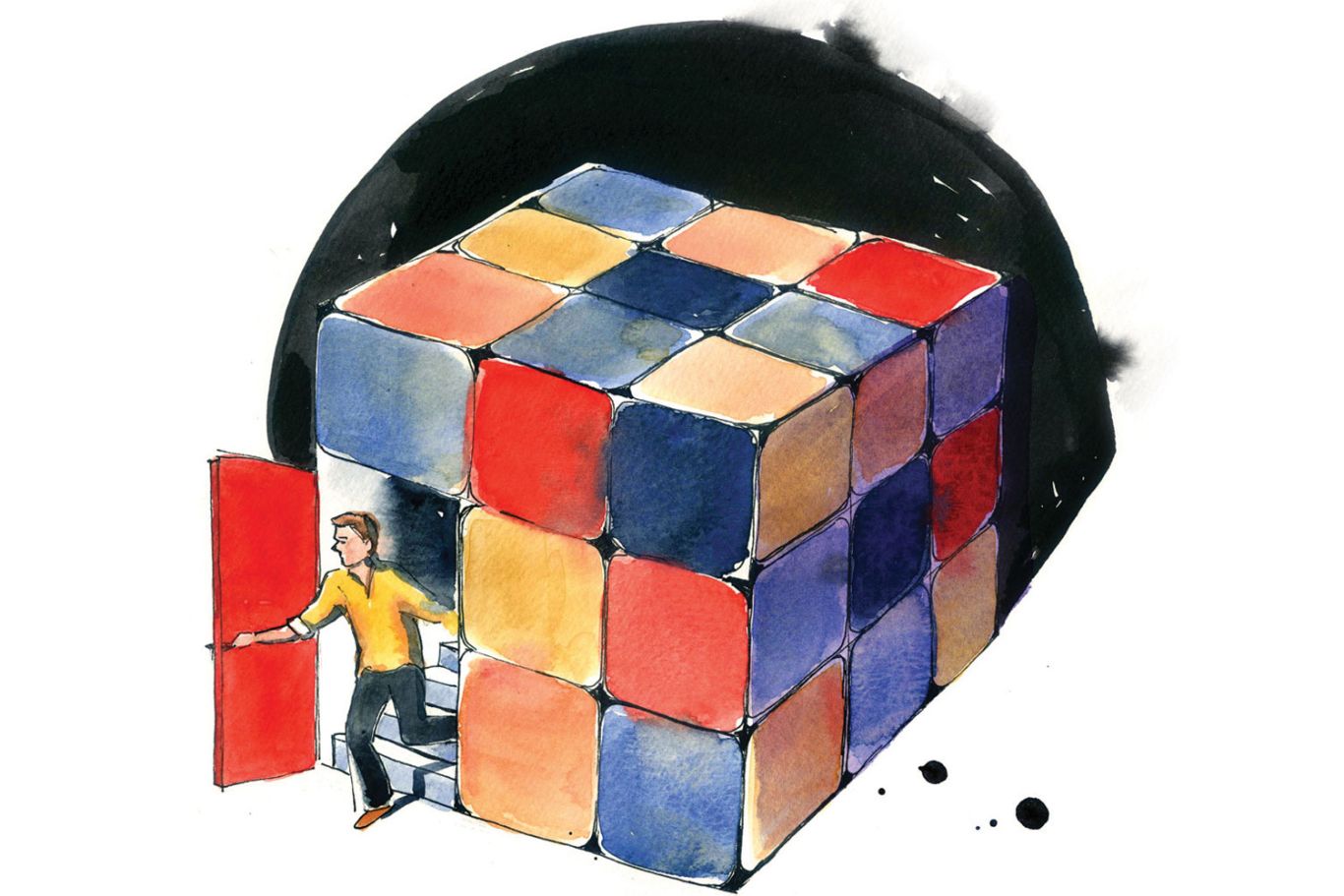
On the surface, it’s simple – you’re locked in and you’ve got an hour to escape. However, to pull off that escape, you need to solve a series of puzzles that will give you the equipment to do so.

Sometimes this is as simple as scouring for keys hidden behind picture frames, or rifling through A4 folders for diagrams, maps and codes. But most of the time, you need to solve one puzzle in order to reveal another one.

So mirrors have to be placed at certain angles to divert a laser at a specific sensor. Once correctly aligned, a light comes on to unveil “K = 5". It’s part of a code which, when the rest of it is gathered, will provide the right combination to unlock a safe. In that safe are more keys, a handle to attach to a secret door hidden behind a rug, and so on. Easy, no?

In terms of brilliant ideas set to go global, there’s a strong possibility that this could be up there with karaoke or pub quizzes.

Parapark has already expanded from one game in one basement to numerous sites across the city. It has also spawned dozens of imitators in Budapest – room escape games are a booming trend in the Hungarian capital – and the idea has just started to venture overseas.

Parapark has opened in Barcelona, and a copycat has set one up in London.

Part of the reason why it works so well is that there’s proper psychological theory behind it. The basic principle is that enjoyment comes from the full absorption in an activity.

It’s not something you can do while checking Twitter, or watching telly in the background. It’s something you have to thoroughly throw yourself into – the time limit adds a pressure that leads to heightened senses and an intense focus on the task.

The other key factor is that it’s essential to work as a team. Some tasks can only be completed with one person doing something in one part of the basement, with a companion seeing what effects it has on a screen elsewhere. The sharing of information becomes vital too. It’s often the case that something I’ve spotted has to be combined with a clue that my wife has clocked. “Why didn’t you mention that before?" becomes a depressingly common cry as valuable minutes are wasted.

It’s never allowed to get too frustrating, though. The game has a ‘controller’ who sits in a separate room, monitoring what’s going on via cameras. If he sees the dungeon-dwellers struggling, he can send clues to the computer and TV screens within the room. These will often be pictures of something in the room – showing the befuddled would-be escapees where to look for something they need.

With a couple of minutes to go, alarms are sounding and lights are flashing. We’re into the box that contains the door’s locking mechanism. It turns out we need four little chains to complete an electrical circuit and open the lock.

One chain is on the floor. Another is around the neck of a toy dog. As my wife frantically rummages through drawers, I decide to improvise. Will the big metal bar we cast aside earlier do the job instead?

I shove it between the dangling connection points. There’s a click. And the sensation of triumph surges through us as we yelp with giddy joy.

It worked! We’re out!

The Details

Parapark, Various sites around Budapest, Hungary, +36 209 869 196, parapark.hu

The IT verdict

David, who paid his own way and visited anonymously, says: “A true ‘why didn’t someone think of this before?’ idea. But the genius of the concept is matched by the execution."

Notes

David paid $42 to play at Parapark. The price is the same whether you have a group of two, three, four or five.

Want to see more stories from International Traveller in your Google search results?

  1. Click here to set International Traveller as a preferred source.
  2. Tick the box next to "International Traveller". That's it.
hero media

What the European heatwave means for your summer travel plans

Temperatures are soaring this summer, breaking records across Europe and the UK. 

Euro summer is a feeling like no other. But when a heatwave hits? The dream trip quickly turns into a sweaty mess. Extreme heat is sweeping Europe and the UK this week, with record-high temperatures impacting travel plans across the continent.

And while Australian summers are typically hotter in absolute temperature, many European cities aren’t equipped for high temperatures, resulting in unbearable weather.

Why is it so hot in Europe?

Signs of a hot summer loomed in May, when the mercury hit unprecedented spring highs. Now, extreme high temperature warning alerts have been issued in countries such as Spain, Italy, France, England, the Netherlands and Germany.

France saw its hottest day on record on Wednesday, with an average temperature of 30°C across the day and night. This surpasses the average temperature for June, which is 15°C to 25°C. Dozens of people have died, including 40 from drowning.

In Spain, 212 deaths have been linked to the heatwave.

The UK recorded its hottest June day ever on Wednesday with temperatures soaring to 36.1°C. In an article published by the Met Office – the UK’s national meteorological service – Professor Stephen Belcher CBE, Met Office Chief Scientist, shared his concerns about June’s heat. “To see temperatures like this in the UK in June is sobering. Events like this bring home the implications of climate change, with very high temperatures and humidity bringing significant health implications from heat stress, as well as impacts to a range of sectors such as transport, energy and water supply,” he said.

Heatwaves are becoming increasingly common in Europe and the UK, neither of which is prepared for such extremes. The World Meteorological Organization reported that in 2025, at least 95% of Europe experienced above-average annual temperatures and that the continent was heating up twice as fast as the global average.

How travel is impacted

A pharmacy sign displaying 40 degrees Celcius
A pharmacy broadcasting local weather data. (Credit: Getty/Dragoncello)

During a heatwave, power grids, water systems and transport networks can be affected, resulting in disrupted itineraries for travellers. In France, power outages have left thousands without electricity and early closures have been implemented for two of Paris’s biggest attractions, the Eiffel Tower (early afternoon rather than late at night) and the Louvre (two hours early). Eurostar cancelled its London to Paris and Paris to London services from the 22nd to the 25th, and major UK rail companies have been advising travellers to avoid using trains where possible, or to travel during early hours.

If a heatwave is predicted, being flexible with your itinerary and having fully refundable/changeable tickets is key, as extreme heat can force the cancellation of outdoor activities, impact rail and flight services and change the opening hours of sites and eateries.

Why does summer in Europe often feel hotter than summer in Australia?

people swimming in the Canal Saint-Martin in Paris
People swimming in the Canal Saint-Martin in Paris to cool off. (Credit: Rachael Thompson)

With some of the highest UV levels in the world, Australians are no strangers to the heat, adapting well to intense weather. But our infrastructure is largely equipped to withstand soaring temperatures with climate-responsive passive design, refrigerated air conditioning or evaporative coolers, as well as swimming spots aplenty.

Buildings in Northern and Western Europe and the UK, however, are constructed to retain heat and handle frosty winters. The lack of universal air conditioning means it generally feels hotter even though the temperature on your app might not look it. During a heatwave, it can feel like you’re in a sauna as cities act like heat traps.

How to stay cool and prepare for another heatwave

Relief is expected across Europe and the UK later this week, but more heatwaves are still possible in the coming months. Summer heat typically peaks in July and August.

Public transport often doesn’t have air conditioning, and buses in particular can be swelteringly hot. If you’re heading outside or your accommodation has no air conditioning, it’s worth buying a spray bottle and a handheld fan from a pharmacy or tourist stand. Check ahead of time if restaurants and cafes have air conditioning and make a booking in advance. The highest temperatures typically hit between 3pm and 6pm, so aim to head outdoors outside of these hours.

Rising temperatures invite travellers to enter a more intentional era of seeing the world. Now more than ever is the time to embrace lower-impact “coolcations” and off-season getaways.

Review: Parapark, Hungary - escape artistry - International Traveller Magazine