hero media

Your guide to island-hopping in Malta

Picture yourself drifting between three sun-drenched islands, each one able to be explored in a day, yet interesting enough to fill your photo album for a lifetime.

Europeans have been going here for centuries, but for many unaware travellers, Malta is still a name dropped in passing rather than a destination circled on the map. That’s a good thing, as it means you can still wander into villages that feel untouched, step inside temples older than Stonehenge and eat food unique to anywhere else. Not to mention, Malta islands rival those of any Mediterranean country.

The trick is to move slowly. Begin on the main island, then let the ferry carry you to Gozo and Comino when you see fit. Island-hopping here isn’t about ticking boxes; it’s about leaning into the rhythm of local life.

Malta

At a glance
sailboat in front of valetta malta island
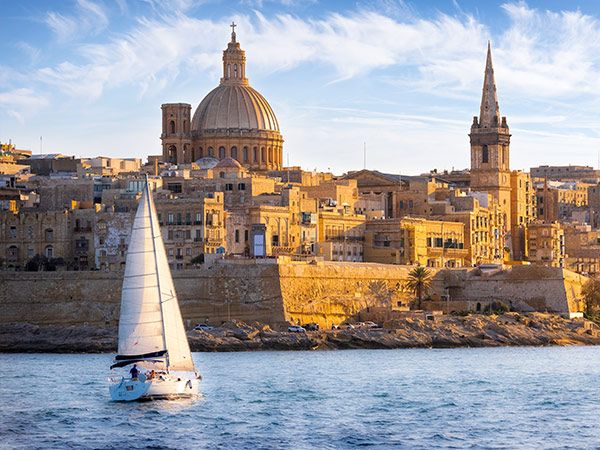
Start in Malta’s colourful capital, Valletta. (Image: Getty/ ewg3D)

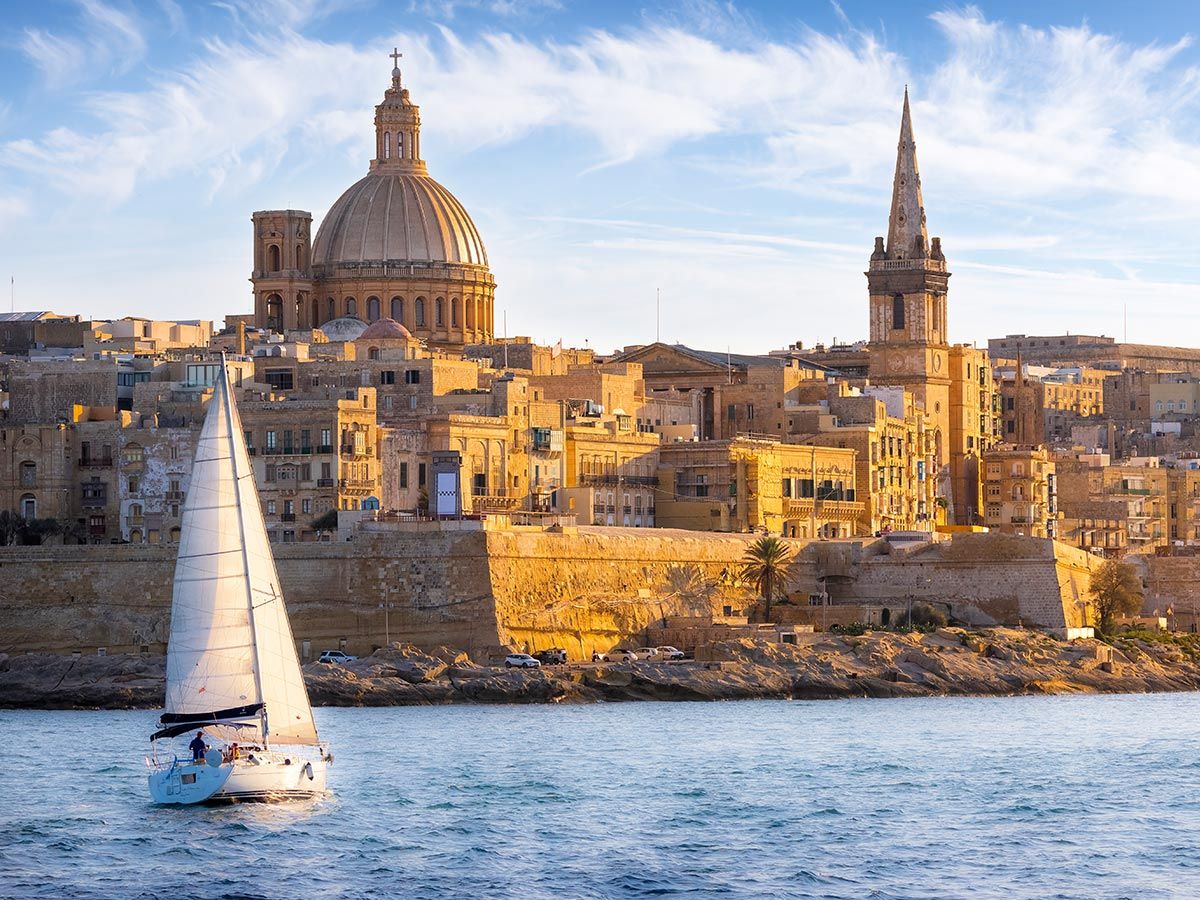
Malta itself is the entry point and the largest of the three islands (technically, Malta is made up of five islands, yet only three are inhabited). Malta’s colourful capital, Valletta, is a city teeming with elaborate, historic buildings that will have you stopping to take a snap every five seconds. Each street is alive with wine bars, boutique hotels and locals who seem to know everyone by name. Quaint towns worthy of exploration can be found just outside of the capital, each with its own square, church, and bakeries serving fresh ftira (traditional Maltese sourdough bread).

See
Scuba divers exploring and enjoying sea life in malta
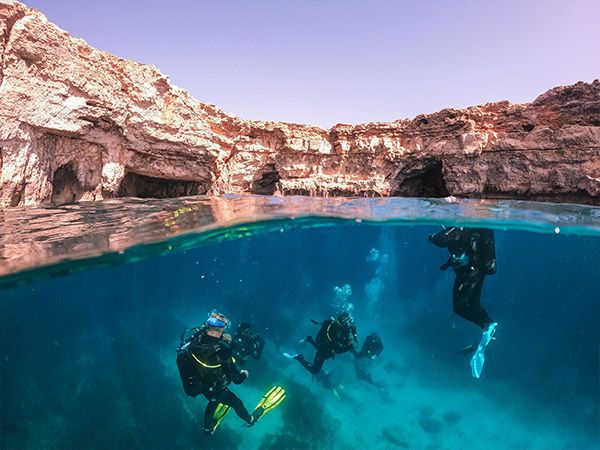
Dive into Malta’s gorgeous underwater scene.

A ride across the Grand Harbour in a traditional dghajsa is like living a scene directly out of an antique painting. Once you’re back on land, make a beeline for the island’s wilder corners. Clifftop trails wrap around the coastline, dotted with chapels and precarious watchtowers, while inland paths cut through olive groves and wildflower fields.

Diving is Malta’s calling card, with reefs, wrecks and caves creating a crystal-clear underwater playground that attracts adventurers from across Europe. If you’d rather stay dry, helicopter tours offer a bird’s-eye sweep of the Maltese Archipelago, each inlet and hidden cove revealed in miniature below.

Taste
holding traditional Maltese pastry Pastizzi in Valletta
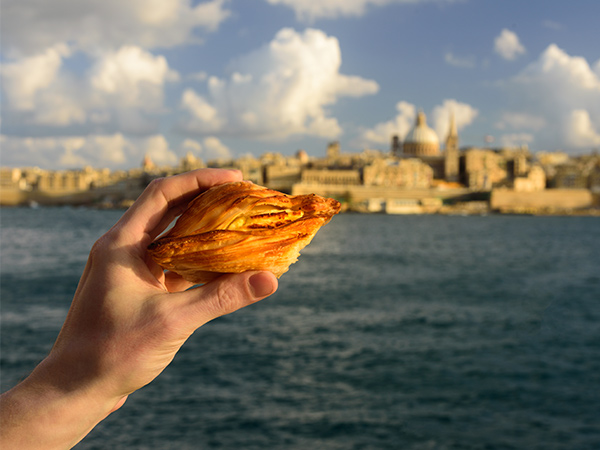
Taste delicious pastizzi. (Image: Getty/ Molenira)

Food in Malta is bold, rustic and made to share. Start with pastizzi, hot parcels of flaky pastry filled with ricotta or thoroughly seasoned mashed peas. Dozens queue at The Serkin Crystal Palace, a famous bakery that has perfected the dish over decades. However, for those who love venturing away from the hot spots, let your nose do the walking and pop your head into bakeries in the periphery of the (arguably modest) hustle and bustle.

Malta’s national dish, rabbit stew or fenkata, is usually cooked in red wine with a generous heaping of garlic, best enjoyed at rural restaurants where the portions are generous and the atmosphere is heaving.

Take a wander through Valletta’s side streets and you’ll notice something curious: brightly painted wooden balconies jutting out over the cobbles. The bright paint initially served the sole purpose of protecting wood from the elements, but as word continues to get out, it acts as its own unique tourist attraction.

Gozo

At a glance
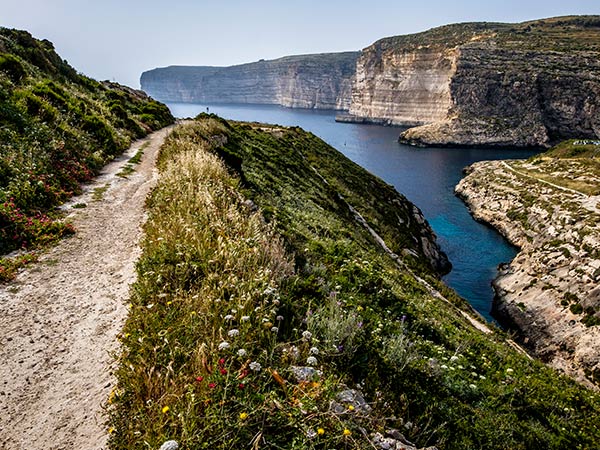
Hiking Path, Cliffs nearby Xlendi Tower, Ras il-Bajda, Xlendi, Gozo, Malta

Slow down on Gozo. (Image: Getty/ VFKA)

Hop back on the ferry from Valletta and 45 minutes later, you’re in Gozo. The difference is immediate: this island is greener, more laidback, and dotted with a niche hoard of travellers who have known to base themselves in converted farmhouses. Where else could you find centuries-old accommodation with private pools, air conditioning and terraces opening directly onto sprawling vineyards and orchards?

See
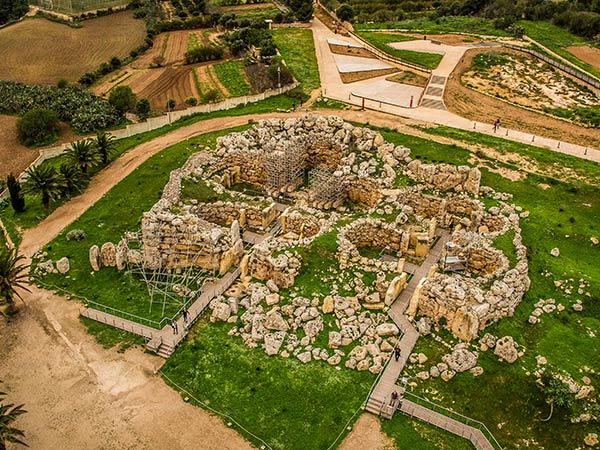
Ggantija Temples on gozo malta island
Visit the ancient Ggantija Temples. (Image: Visit Malta)

Ir-Rabat (Victoria), the island’s capital, is a medieval fortress with sweeping views across the countryside. Beyond the city, villages like Xaghra offer a treat for history hunters, from the Ġgantija Temples dating back to a time pre-pyramids, to the 200-year-old Ta’ Kola Windmill.

Ramla Bay’s red-gold sand makes it one of Malta’s most striking beaches. Elsewhere, the Xwejni Salt Pans glisten in the sun as workers collect the essential mineral using methods unchanged for centuries. The best moments, however, often come from the simplest detours: watching cheesemakers press rounds of ġbejna (Gozo’s tangy sheep or goat milk cheese), or joining a picnic on a clifftop where local farmers unpack baskets of olives, tomatoes and bread.

Taste
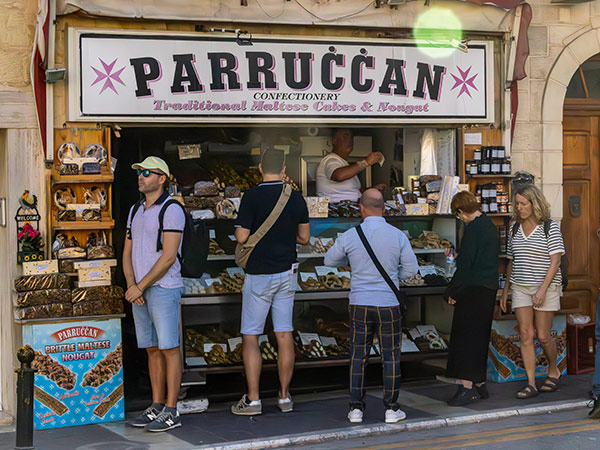
Rabat, Malta, Nov 4, 2024 People buying sweets from Parruccan Confectionery, a traditional bakery on Pjazza San Pawl
Join the local food scene. (Image: Getty/ Alexander Farnsworth)

Ġbejna is often considered the star of Gozo, served fresh or dried, plain or peppered. Try it folded into salads or tucked inside a ftira, the island’s take on pizza, topped with tuna, capers and potatoes.

For the full experience, head to Nadur, where generations have been making legendary ftira in wood-fired ovens, or visit the Cittadella for platters of cheese, cured meats and local wine. Cooking classes in farmhouse kitchens give you a deeper understanding of traditional dishes alongside the families who have perfected them over generations.

If you’re venturing to Malta during the summer, villages in Gozo are known to throw a festa dedicated to their patron saints. Marching bands, fireworks illuminating the sky, and church facades lit with hundreds of bulbs can leave travellers in awe.

Weekly travel news, experiences
insider tips, offers,
and more.

Other islands to try

Comino
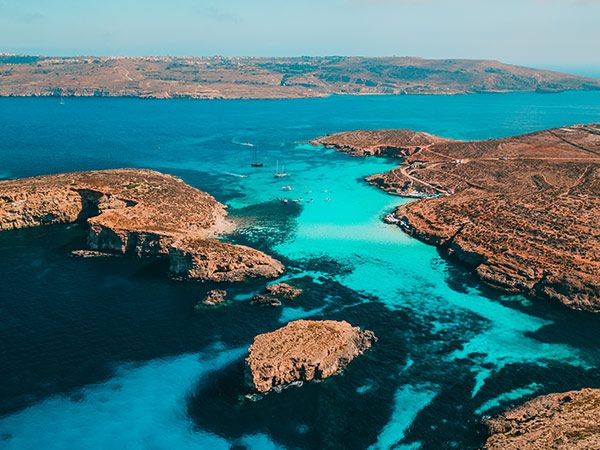
aerial shot of comino, malta island
Hike around Comino. (Image: Visit Malta)

The objectively tiny island of Comino, spanning a mere three square kilometres, sits snugly between Malta and Gozo. Lace up your shoes and follow the walking trails around the island. With views stretching back to Malta on one side and Gozo on the other, it feels like standing in the middle of the Mediterranean itself.

Beyond Malta
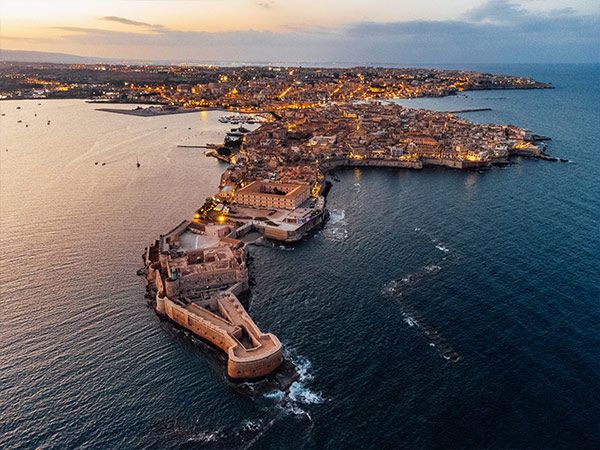
Aerial view of Ortigia Island and Siracusa city at sunset
Sail on over to Sicily. (Image: Getty/ Filippo Bacci)

Of course, your trip doesn’t have to end after your cup’s full in Malta. Sicily lies just over the horizon, with regular ferries linking Valletta to Catania. St Paul’s Island, closer to home, is worth a visit for its wildlife when the seas are calm. The ease of these connections makes Malta the perfect springboard for a wider European journey.

Other Mediterranean islands have their postcard moments, but Malta rewards curiosity; it invites you to explore, taste, and ponder. The best part? It still feels like a discovery.

Start planning your Mediterranean adventure at visitmalta.com/en.

Want to see more stories from International Traveller in your Google search results?

  1. Click here to set International Traveller as a preferred source.
  2. Tick the box next to "International Traveller". That's it.
Kassia Byrnes
Kassia Byrnes is the Native Content Editor for International Traveller. She's come a long way since writing in her diary about family trips to Grandma's. After graduating a BA of Communication from University of Technology Sydney, she has been writing about her travels (and more) professionally for over 10 years for titles like AWOL, News.com.au, Pedestrian.TV, Body + Soul and Punkee. She's addicted to travel but has a terrible sense of direction, so you can usually find her getting lost somewhere new around the world. Luckily, she loves to explore and have new adventures – whether that’s exploring the backstreets, bungee jumping off a bridge or hiking for days.
View profile and articles
hero media

What the European heatwave means for your summer travel plans

Temperatures are soaring this summer, breaking records across Europe and the UK. 

Euro summer is a feeling like no other. But when a heatwave hits? The dream trip quickly turns into a sweaty mess. Extreme heat is sweeping Europe and the UK this week, with record-high temperatures impacting travel plans across the continent.

And while Australian summers are typically hotter in absolute temperature, many European cities aren’t equipped for high temperatures, resulting in unbearable weather.

Why is it so hot in Europe?

Signs of a hot summer loomed in May, when the mercury hit unprecedented spring highs. Now, extreme high temperature warning alerts have been issued in countries such as Spain, Italy, France, England, the Netherlands and Germany.

France saw its hottest day on record on Wednesday, with an average temperature of 30°C across the day and night. This surpasses the average temperature for June, which is 15°C to 25°C. Dozens of people have died, including 40 from drowning.

In Spain, 212 deaths have been linked to the heatwave.

The UK recorded its hottest June day ever on Wednesday with temperatures soaring to 36.1°C. In an article published by the Met Office – the UK’s national meteorological service – Professor Stephen Belcher CBE, Met Office Chief Scientist, shared his concerns about June’s heat. “To see temperatures like this in the UK in June is sobering. Events like this bring home the implications of climate change, with very high temperatures and humidity bringing significant health implications from heat stress, as well as impacts to a range of sectors such as transport, energy and water supply,” he said.

Heatwaves are becoming increasingly common in Europe and the UK, neither of which is prepared for such extremes. The World Meteorological Organization reported that in 2025, at least 95% of Europe experienced above-average annual temperatures and that the continent was heating up twice as fast as the global average.

How travel is impacted

A pharmacy sign displaying 40 degrees Celcius
A pharmacy broadcasting local weather data. (Credit: Getty/Dragoncello)

During a heatwave, power grids, water systems and transport networks can be affected, resulting in disrupted itineraries for travellers. In France, power outages have left thousands without electricity and early closures have been implemented for two of Paris’s biggest attractions, the Eiffel Tower (early afternoon rather than late at night) and the Louvre (two hours early). Eurostar cancelled its London to Paris and Paris to London services from the 22nd to the 25th, and major UK rail companies have been advising travellers to avoid using trains where possible, or to travel during early hours.

If a heatwave is predicted, being flexible with your itinerary and having fully refundable/changeable tickets is key, as extreme heat can force the cancellation of outdoor activities, impact rail and flight services and change the opening hours of sites and eateries.

Why does summer in Europe often feel hotter than summer in Australia?

people swimming in the Canal Saint-Martin in Paris
People swimming in the Canal Saint-Martin in Paris to cool off. (Credit: Rachael Thompson)

With some of the highest UV levels in the world, Australians are no strangers to the heat, adapting well to intense weather. But our infrastructure is largely equipped to withstand soaring temperatures with climate-responsive passive design, refrigerated air conditioning or evaporative coolers, as well as swimming spots aplenty.

Buildings in Northern and Western Europe and the UK, however, are constructed to retain heat and handle frosty winters. The lack of universal air conditioning means it generally feels hotter even though the temperature on your app might not look it. During a heatwave, it can feel like you’re in a sauna as cities act like heat traps.

How to stay cool and prepare for another heatwave

Relief is expected across Europe and the UK later this week, but more heatwaves are still possible in the coming months. Summer heat typically peaks in July and August.

Public transport often doesn’t have air conditioning, and buses in particular can be swelteringly hot. If you’re heading outside or your accommodation has no air conditioning, it’s worth buying a spray bottle and a handheld fan from a pharmacy or tourist stand. Check ahead of time if restaurants and cafes have air conditioning and make a booking in advance. The highest temperatures typically hit between 3pm and 6pm, so aim to head outdoors outside of these hours.

Rising temperatures invite travellers to enter a more intentional era of seeing the world. Now more than ever is the time to embrace lower-impact “coolcations” and off-season getaways.