hero media

How the Pope’s death will affect your trip to Rome

With the world’s eyes on Rome, here’s what visitors can expect during the papal funeral, the conclave, and a once-in-a-generation Holy Year.

Rome has always been a place of pilgrimage, and now it’s also a place of history in the making. Following the death of Pope Francis on Easter Monday (21 April), the Eternal City has entered an extraordinary period marked by mourning, ceremony and change. For travellers, it’s a time of both reverence and rare access, with unprecedented events unfolding and sacred spaces opening up in unexpected ways.

Here’s what you need to know if you’re visiting Rome in the coming days, weeks or months – and why 2025 is set to be one of the biggest years in Vatican history.

What happens to Rome after a pope dies?
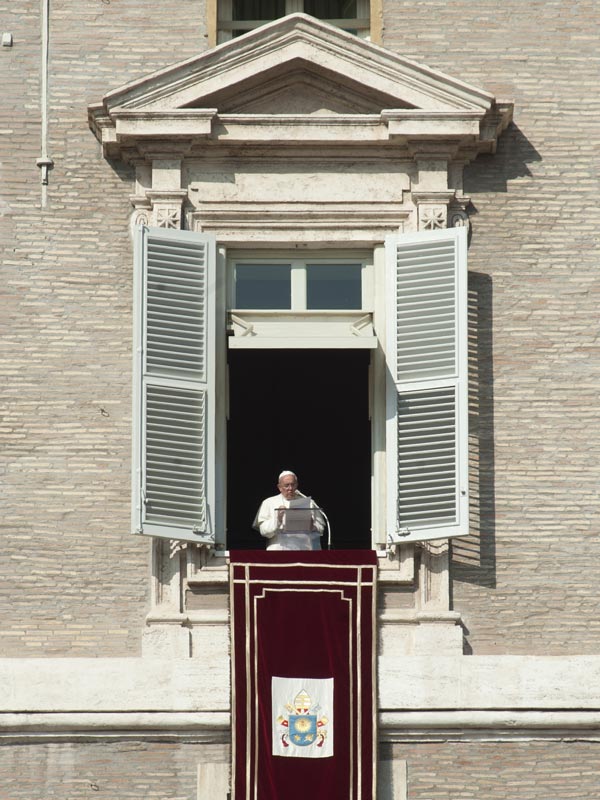
Pope Francis during Angelus prayer at Vatican City in St. Peter's Square
Pope Francis has died aged 88. (Image: Getty Images/neneos)

The death of a pope is a moment of global significance, and the Vatican springs into ceremonial motion. An official nine days of mourning, known as the novemdiales occurred, where the city prepared for an elaborate farewell through a series of mourning rites, public masses and processions. While this period is solemn, it’s also intensely atmospheric for travellers.

Will Rome get more crowded?
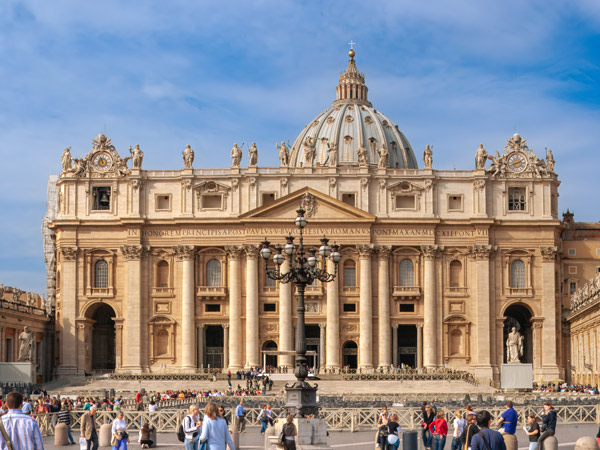
Tourists and Pilgrims at the Papal Basilica of Saint Peter, officially known as Basilica Papale di San Pietro in Vaticano.
There will be big crowds arriving in Rome. (Image: Getty Images/ Devasahayam Chandra Dhas)

Expect a swelling of pilgrims, world leaders and international media. With millions set to pay their respects, visitor numbers will soar around the Vatican and the four major basilicas. If you’re in the city, book entry tickets, accommodation and restaurant reservations as early as you can.

What is the conclave, and can you see anything?
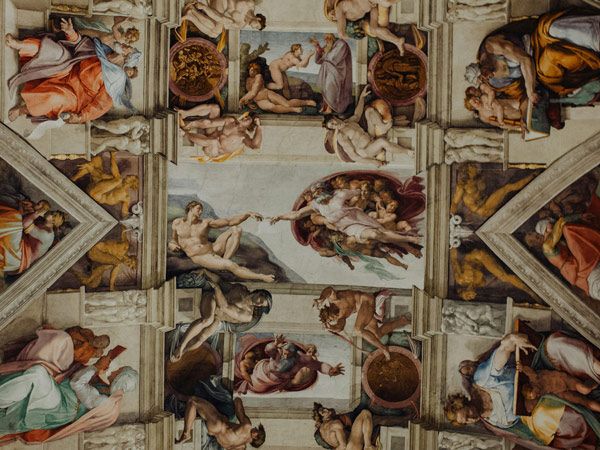
Sistine Chapel Ceiling
The College of Cardinals gathers in the Sistine Chapel for the conclave. (Image: Calvin Craig)

Once the mourning period ended, the College of Cardinals has begun to gather in the Sistine Chapel for the conclave – the secretive vote to elect a new pope. While the process itself is closed to the public, Rome buzzes with speculation.

A two-thirds majority is needed for a new pope to be elected, and only cardinals under the age of 80 are allowed to vote. Plumes of black smoke (no decision) or white smoke (new pope) rising from the chapel’s chimney draw huge crowds to St Peter’s Square, often in silent vigil.

Even without access, there’s an undeniable sense of theatre. In 2013, it took two days to elect Pope Francis. Need a warm-up? Now might be the time to watch Conclave (2024) starring Ralph Fiennes, Stanley Tucci and John Lithgow. You’ll never look at papal politics the same way again.

Why is Santa Maria Maggiore significant?
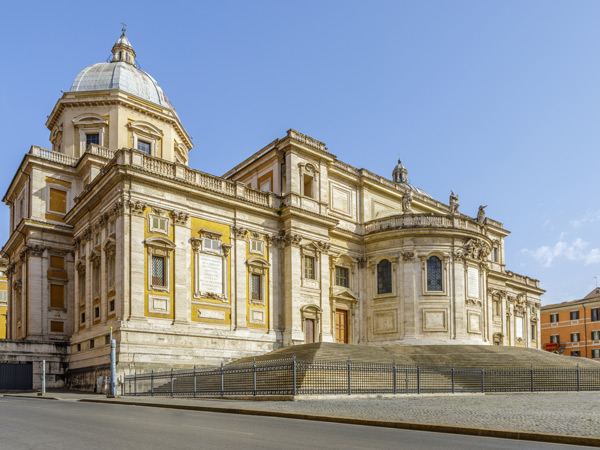
The Basilica di Santa Maria Maggiore, or church of Santa Maria Maggiore, is a Papal major basilica and the largest Catholic Marian church in Rome, Italy.
The Basilica of Santa Maria Maggiore is less well-known than St. Peter’s Basilica. (Image: Getty Images/tunart)

Often overlooked by tourists, Santa Maria Maggiore is one of Rome’s four major papal basilicas – and it’s now the centre of attention. Pope Francis’s decision to be buried here reflects his deep devotion to the Virgin Mary and signals a major moment in the basilica’s already rich history.

Weekly travel news, experiences
insider tips, offers,
and more.

And then comes Jubilee 2025…
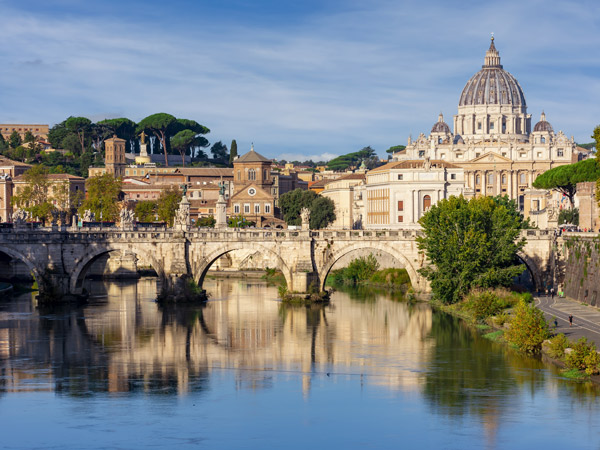
St Peter's basilica in Vatican and Victor Emmanuel II bridge in Rome, Italy
35 million pilgrims are expected to come to Rome for the Jubilee. (Image: Getty Images/Vladislav Zolotov)

As if Rome wasn’t already under the spotlight enough, 2025 marks a Jubilee Holy Year – an event held once every 25 years. 35 million pilgrims are expected to descend on Rome for a year of indulgences, special church openings and religious celebrations. The city is currently undergoing a huge infrastructure push, including a new underpass for pilgrims and the return of the Holy Doors.

Travellers should prepare for massive crowds and accommodation shortages – book early, a new “digital pilgrim card" recommended by the Vatican for navigating events and special exhibits and liturgies across the city’s major churches.

Should you still go to Rome now, or wait?
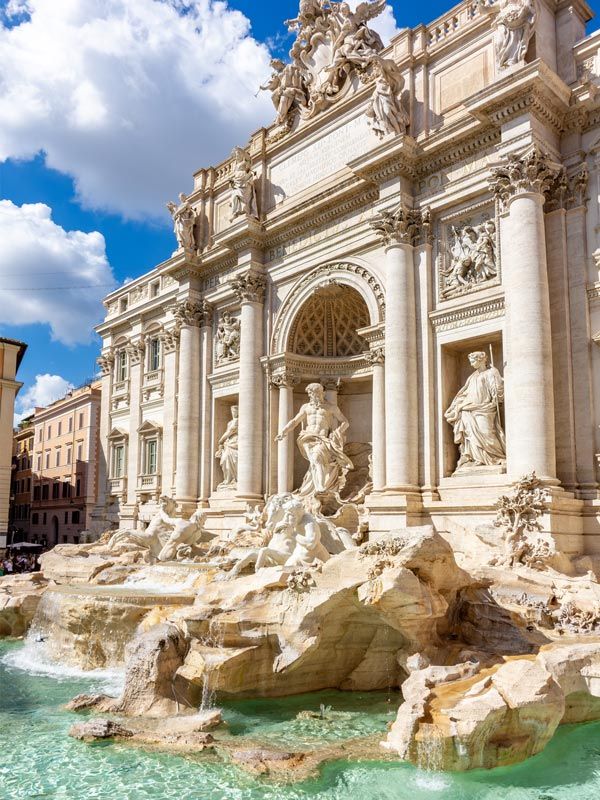
Famous Trevi fountain in Rome, Italy
There’s no better time to visit Rome. (Image: Getty Images/Vladislav Zolotov)

That depends. If you want to witness history, there’s no better time. From the theatre of the conclave to the lead-up to Jubilee 2025, this is Rome in full swing – layered, spiritual and alive with global attention.

Just don’t expect business as usual, but maybe that’s exactly the point.

Want to see more stories from International Traveller in your Google search results?

  1. Click here to set International Traveller as a preferred source.
  2. Tick the box next to "International Traveller". That's it.
Emily Murphy
Emily Murphy is International Traveller's Email & Social Editor, and in her time at the company, through various roles, she has been instrumental in crafting compelling narratives that inspire others to explore the world. Her previous job was a journalist at Prime Creative Media and before that she was freelancing in publishing, content creation and digital marketing – equipping her with a diverse skill set that enhances her storytelling and audience engagement. When she's not creating scroll-stopping travel content, Em is a devoted 'bun mum' and enjoys spending her spare time by the sea, reading, binge-watching a good TV show and exploring under-the-radar destinations. Next on her travel wish list? Mexico and an African safari.
View profile and articles
hero media

What the European heatwave means for your summer travel plans

Temperatures are soaring this summer, breaking records across Europe and the UK. 

Euro summer is a feeling like no other. But when a heatwave hits? The dream trip quickly turns into a sweaty mess. Extreme heat is sweeping Europe and the UK this week, with record-high temperatures impacting travel plans across the continent.

And while Australian summers are typically hotter in absolute temperature, many European cities aren’t equipped for high temperatures, resulting in unbearable weather.

Why is it so hot in Europe?

Signs of a hot summer loomed in May, when the mercury hit unprecedented spring highs. Now, extreme high temperature warning alerts have been issued in countries such as Spain, Italy, France, England, the Netherlands and Germany.

France saw its hottest day on record on Wednesday, with an average temperature of 30°C across the day and night. This surpasses the average temperature for June, which is 15°C to 25°C. Dozens of people have died, including 40 from drowning.

In Spain, 212 deaths have been linked to the heatwave.

The UK recorded its hottest June day ever on Wednesday with temperatures soaring to 36.1°C. In an article published by the Met Office – the UK’s national meteorological service – Professor Stephen Belcher CBE, Met Office Chief Scientist, shared his concerns about June’s heat. “To see temperatures like this in the UK in June is sobering. Events like this bring home the implications of climate change, with very high temperatures and humidity bringing significant health implications from heat stress, as well as impacts to a range of sectors such as transport, energy and water supply,” he said.

Heatwaves are becoming increasingly common in Europe and the UK, neither of which is prepared for such extremes. The World Meteorological Organization reported that in 2025, at least 95% of Europe experienced above-average annual temperatures and that the continent was heating up twice as fast as the global average.

How travel is impacted

A pharmacy sign displaying 40 degrees Celcius
A pharmacy broadcasting local weather data. (Credit: Getty/Dragoncello)

During a heatwave, power grids, water systems and transport networks can be affected, resulting in disrupted itineraries for travellers. In France, power outages have left thousands without electricity and early closures have been implemented for two of Paris’s biggest attractions, the Eiffel Tower (early afternoon rather than late at night) and the Louvre (two hours early). Eurostar cancelled its London to Paris and Paris to London services from the 22nd to the 25th, and major UK rail companies have been advising travellers to avoid using trains where possible, or to travel during early hours.

If a heatwave is predicted, being flexible with your itinerary and having fully refundable/changeable tickets is key, as extreme heat can force the cancellation of outdoor activities, impact rail and flight services and change the opening hours of sites and eateries.

Why does summer in Europe often feel hotter than summer in Australia?

people swimming in the Canal Saint-Martin in Paris
People swimming in the Canal Saint-Martin in Paris to cool off. (Credit: Rachael Thompson)

With some of the highest UV levels in the world, Australians are no strangers to the heat, adapting well to intense weather. But our infrastructure is largely equipped to withstand soaring temperatures with climate-responsive passive design, refrigerated air conditioning or evaporative coolers, as well as swimming spots aplenty.

Buildings in Northern and Western Europe and the UK, however, are constructed to retain heat and handle frosty winters. The lack of universal air conditioning means it generally feels hotter even though the temperature on your app might not look it. During a heatwave, it can feel like you’re in a sauna as cities act like heat traps.

How to stay cool and prepare for another heatwave

Relief is expected across Europe and the UK later this week, but more heatwaves are still possible in the coming months. Summer heat typically peaks in July and August.

Public transport often doesn’t have air conditioning, and buses in particular can be swelteringly hot. If you’re heading outside or your accommodation has no air conditioning, it’s worth buying a spray bottle and a handheld fan from a pharmacy or tourist stand. Check ahead of time if restaurants and cafes have air conditioning and make a booking in advance. The highest temperatures typically hit between 3pm and 6pm, so aim to head outdoors outside of these hours.

Rising temperatures invite travellers to enter a more intentional era of seeing the world. Now more than ever is the time to embrace lower-impact “coolcations” and off-season getaways.

How the Pope’s death will affect your trip to Rome