hero media

White Pebble Suites – the perfect Greek island oasis does exist

On the Greek island of Milos, this Australian-owned hotel echoes the lunar-like landscape with the sparkling sea on the horizon, combining luxury design and relaxed hospitality.

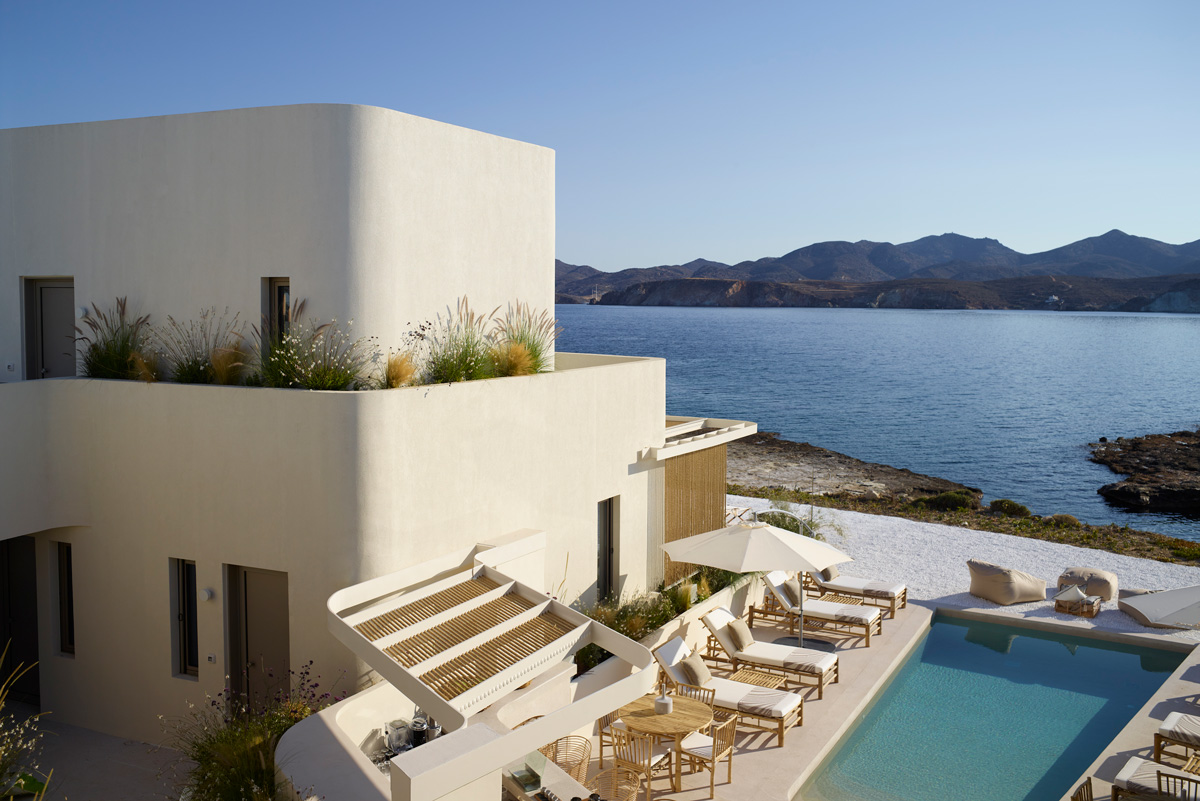
Tucked on a little peninsula near a chic village on the island of Milos, the White Pebble Suites hotel seduces the eye with the sensual curves of its creamy exteriors.

They’re framed with waving grasses which ripple alongside a central saltwater pool that opens out to the Aegean. With its modern interpretation of Cycladic minimalism, the hotel design echoes the lunar-like landscape of Milos.

It’s the vision of three Greek-Australian women, Lefkothea Georgantis and sisters Helen Logas and Aphrodite Lambrou. When they discovered Milos while on a yachting holiday together in 2017, almost on a whim, they decided to utilise their combined travel industry, fashion and hospitality backgrounds to build a hotel.
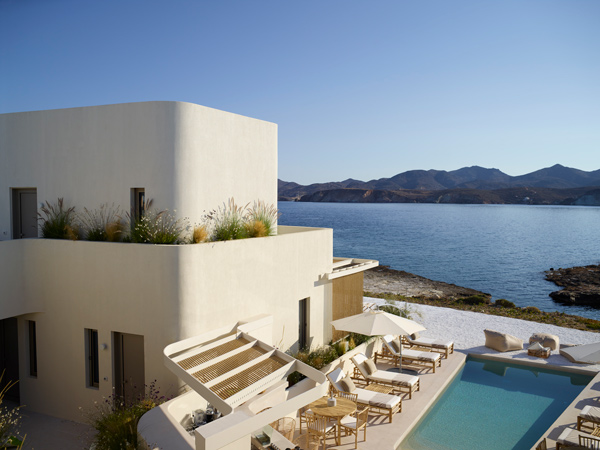
the outdoor pool at White Pebble Suites, Milos, Greece
White Pebble Suites is a luxe Greek-Australian-owned hotel on the coast of Milos. (Image: Vangelis Pateraks)

“The island was so beautiful. It had an airport and lots of ferries, but no luxury accommodation. We felt like it was an opportunity waiting to happen," says Lefkothea.

“We’re all Australian-born, but we have Greek blood running through our veins," adds Helen. “It just felt like the right thing for all of us to do."

The process was complicated, but they had great advisors to assist with purchasing the land and getting construction permits. And Instagram came to the rescue to help them find the right architects for the job.
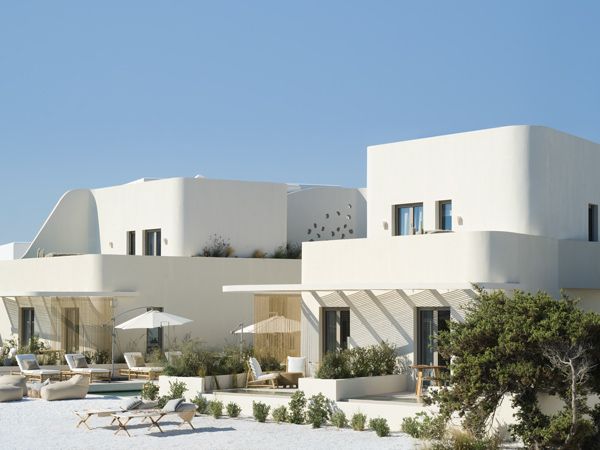
the white-washed exterior of White Pebble Suites, Milos, Greece
The organic design is by Athens-based KKMK. (Image: Vangelis Pateraks)

They took a gamble with KKMK, an emerging Athens-based architectural firm founded by Kate Karagianni and Marina Karamali, whose winning proposal envisaged the building’s shell as creamy sun-bleached volcanic rock sculpted by water and wind.
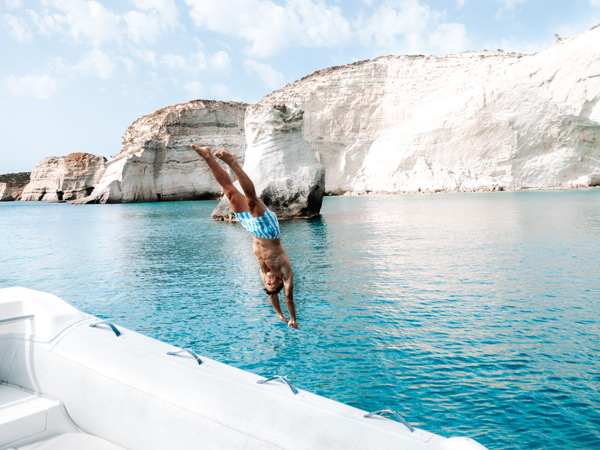
a man jumping into the Aegean sea in front of a volcanic rock
The island of Milos is a sun-bleached beauty in the Aegean Sea, shaped by volcanic rock.

This organic theme was also carried into the interior spaces with curvy walls and built-in furniture. The 12 suites are crafted from warm wood, cool polished cement and marble and are furnished with pebble-shaped stools and tables.
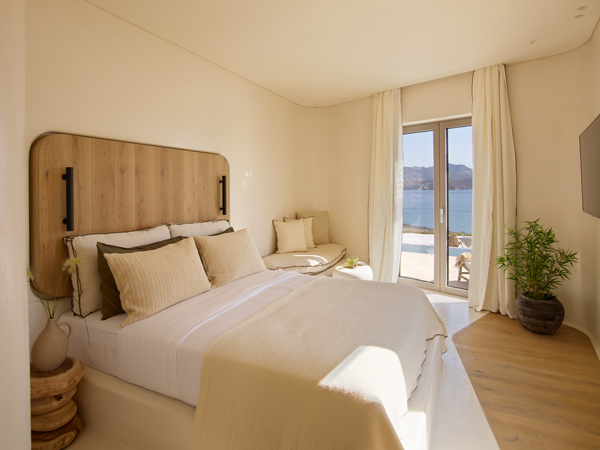
a look inside the Cabana Seaview Suite, White Pebble Suites, Milos, Greece
Each suite is styled with natural elements. (Image: Vangelis Pateraks)

There’s not a sharp angle in sight. Each has a private deck, beautifully screened with wispy vegetation and rows of thick rope that create distinctive patterns of shade. Eight have private plunge pools with jets. Most have serene sea views.
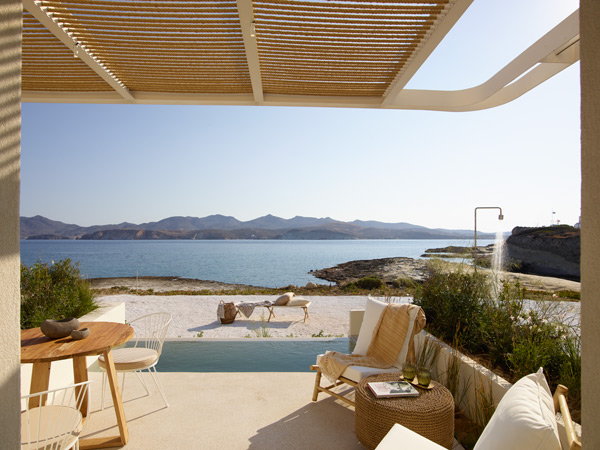
a suite with a plunge pool at White Pebble Suites, Milos, Greece
Sea views from a suite with a plunge pool. (Image: Vangelis Pateraks)

“We were really these young architects’ first clients. Now they’ve gone on to do projects in Indonesia and Singapore and even a Greek restaurant at the Shoal Bay Country Club in Port Stephens," says Aphrodite.

“They’re also working on six apartments for us down the road, which will be called the White Pebble Village, as well as a villa by Sarakiniko Beach."
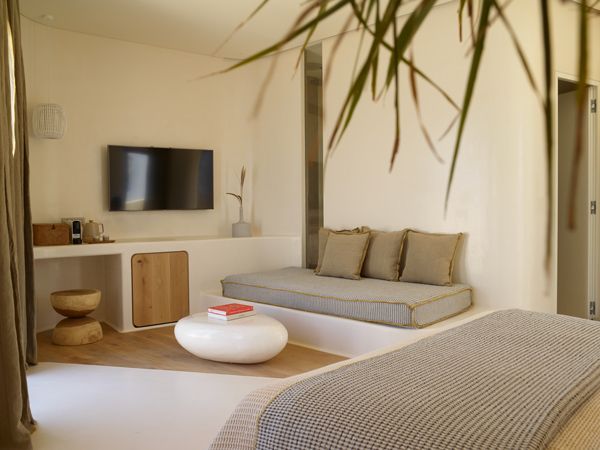
the interior of Honeymoon PenthouseSuite, White Pebble Suites, Milos, Greece
Inside the Honeymoon Penthouse Suite. (Image: Vangelis Pateraks)

Helen, Lefka and Aphrodite’s parents were among Australia’s post-Second World War Greek immigrants. Now, after living here six months a year, they feel a real sense of belonging to this ancient part of Greece.

“From the beginning, we committed to being friends with everyone in the community. We’ve connected with all the locals, who’ve taken it upon themselves to help these funny Greek–Australian women with their wonky accents," says Lefka.

As a result, they have all the expert sea and land-touring guides on speed dial, which provides an excellent concierge service for clients.
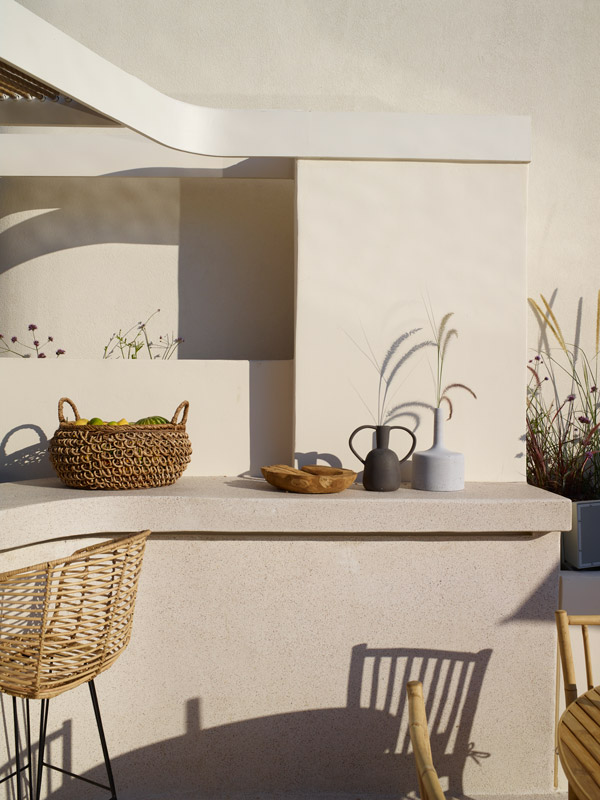
the interior details of White Pebble Suites, Milos, Greece
The hotel is one of the first luxury stays on the island. (Image: Vangelis Pateraks)

“We also have a great rapport with our staff. We pay people correctly and treat everyone with respect. We’re far from home and we know that many people come to Milos just to work for the season, so we try to make everyone feel like they’re part of a big family here."

The three owners have brought a relaxed Australian attitude to hospitality, giving staff opportunities to excel and express their unique personalities in the job.

As for the food, they’ve worked closely with chef Kostandinos Slampakis, who has created a flexible all-day dining menu to be enjoyed around the pool, at tables overlooking the sea or on the suites’ private decks.
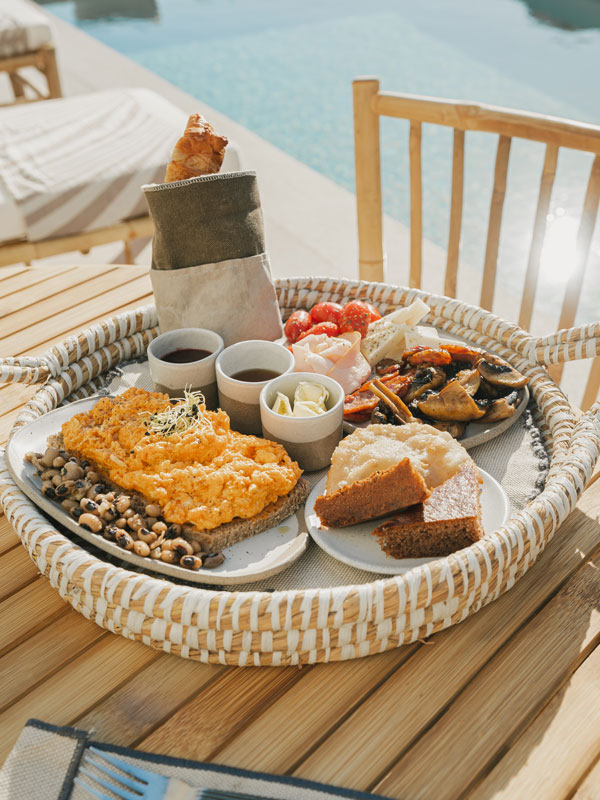
a meal platter by the pool at White Pebble Suites, Milos, Greece
The all-day menu is by a local, lauded chef. (Image: Vangelis Pateraks)

Slampakis, who has his own superb waterfront restaurant, Marrone, down the road in Pollonia, has recently been named one of the top 100 chefs in Greece by the country’s Food & Leisure Guide.

Olive Era beauty products from Crete are used in the spa, which also has a marble-clad hammam. The boutique showcases D’Artemide clothing, handmade in Greece.

“We love living on this island, especially when you can watch the sun set over the water right out the front of our hotel with absolutely no crowds. The White Pebble Suites is like an oasis. It almost feels like you’re on a yacht sailing into the deep blue sea."
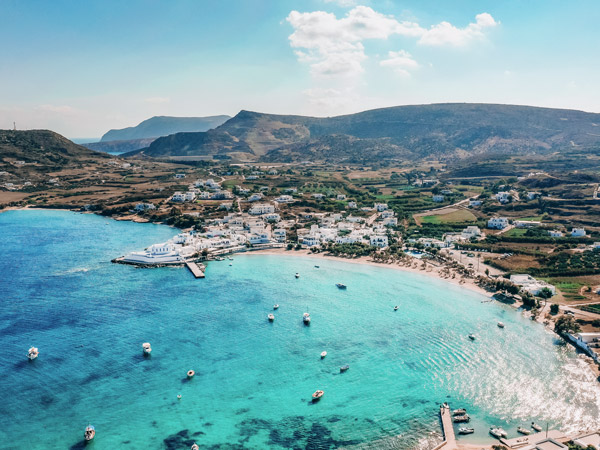
an aerial view of the Greek Island, Milos
Milos is one of Greece’s lesser-visited islands. (Image: Vangelis Pateraks)

Want to see more stories from International Traveller in your Google search results?

  1. Click here to set International Traveller as a preferred source.
  2. Tick the box next to "International Traveller". That's it.
hero media

What the European heatwave means for your summer travel plans

Temperatures are soaring this summer, breaking records across Europe and the UK. 

Euro summer is a feeling like no other. But when a heatwave hits? The dream trip quickly turns into a sweaty mess. Extreme heat is sweeping Europe and the UK this week, with record-high temperatures impacting travel plans across the continent.

And while Australian summers are typically hotter in absolute temperature, many European cities aren’t equipped for high temperatures, resulting in unbearable weather.

Why is it so hot in Europe?

Signs of a hot summer loomed in May, when the mercury hit unprecedented spring highs. Now, extreme high temperature warning alerts have been issued in countries such as Spain, Italy, France, England, the Netherlands and Germany.

France saw its hottest day on record on Wednesday, with an average temperature of 30°C across the day and night. This surpasses the average temperature for June, which is 15°C to 25°C. Dozens of people have died, including 40 from drowning.

In Spain, 212 deaths have been linked to the heatwave.

The UK recorded its hottest June day ever on Wednesday with temperatures soaring to 36.1°C. In an article published by the Met Office – the UK’s national meteorological service – Professor Stephen Belcher CBE, Met Office Chief Scientist, shared his concerns about June’s heat. “To see temperatures like this in the UK in June is sobering. Events like this bring home the implications of climate change, with very high temperatures and humidity bringing significant health implications from heat stress, as well as impacts to a range of sectors such as transport, energy and water supply,” he said.

Heatwaves are becoming increasingly common in Europe and the UK, neither of which is prepared for such extremes. The World Meteorological Organization reported that in 2025, at least 95% of Europe experienced above-average annual temperatures and that the continent was heating up twice as fast as the global average.

How travel is impacted

A pharmacy sign displaying 40 degrees Celcius
A pharmacy broadcasting local weather data. (Credit: Getty/Dragoncello)

During a heatwave, power grids, water systems and transport networks can be affected, resulting in disrupted itineraries for travellers. In France, power outages have left thousands without electricity and early closures have been implemented for two of Paris’s biggest attractions, the Eiffel Tower (early afternoon rather than late at night) and the Louvre (two hours early). Eurostar cancelled its London to Paris and Paris to London services from the 22nd to the 25th, and major UK rail companies have been advising travellers to avoid using trains where possible, or to travel during early hours.

If a heatwave is predicted, being flexible with your itinerary and having fully refundable/changeable tickets is key, as extreme heat can force the cancellation of outdoor activities, impact rail and flight services and change the opening hours of sites and eateries.

Why does summer in Europe often feel hotter than summer in Australia?

people swimming in the Canal Saint-Martin in Paris
People swimming in the Canal Saint-Martin in Paris to cool off. (Credit: Rachael Thompson)

With some of the highest UV levels in the world, Australians are no strangers to the heat, adapting well to intense weather. But our infrastructure is largely equipped to withstand soaring temperatures with climate-responsive passive design, refrigerated air conditioning or evaporative coolers, as well as swimming spots aplenty.

Buildings in Northern and Western Europe and the UK, however, are constructed to retain heat and handle frosty winters. The lack of universal air conditioning means it generally feels hotter even though the temperature on your app might not look it. During a heatwave, it can feel like you’re in a sauna as cities act like heat traps.

How to stay cool and prepare for another heatwave

Relief is expected across Europe and the UK later this week, but more heatwaves are still possible in the coming months. Summer heat typically peaks in July and August.

Public transport often doesn’t have air conditioning, and buses in particular can be swelteringly hot. If you’re heading outside or your accommodation has no air conditioning, it’s worth buying a spray bottle and a handheld fan from a pharmacy or tourist stand. Check ahead of time if restaurants and cafes have air conditioning and make a booking in advance. The highest temperatures typically hit between 3pm and 6pm, so aim to head outdoors outside of these hours.

Rising temperatures invite travellers to enter a more intentional era of seeing the world. Now more than ever is the time to embrace lower-impact “coolcations” and off-season getaways.

White Pebble Suites - the perfect Greek island oasis does exist





