hero media

7 captivating day trips from Berlin

If you want to see more of Germany without checking out from your Berlin hotel, we’ve got the list for you.

You’ve got into the clubs, strolled down the Unter Den Linden, devoured a currywurst or two and selfied to your heart’s content in front of the Brandenburg Gate. But what is there to do next if you have a few spare days when visiting the German capital? Here are our suggestions for the top day trips from Berlin.

1. Embark on one of Berlin’s top day trips at Potsdam

You only need to take a short train trip to experience Potsdam, an architecturally lavish city destination that was once the home of Prussian royalty.
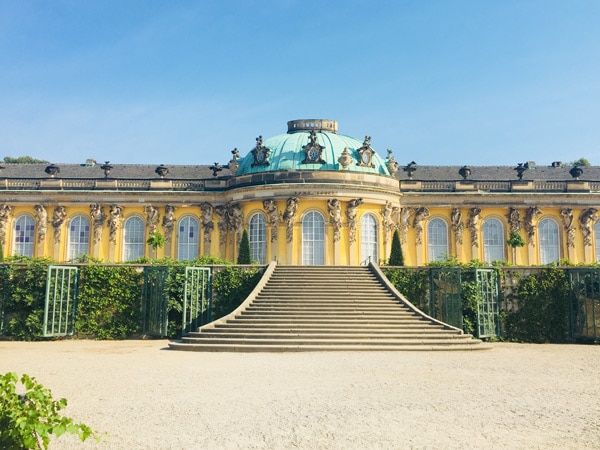
the elegant property exterior of Sanssouci Palace, Berlin
Visit the summertime residence of King Frederick the Great.

Here, explore the gardens and Versailles-like hallways of Sanssouci Palace and Grounds, the elegant summertime residence of King Frederick the Great that is today a UNESCO World Heritage site.
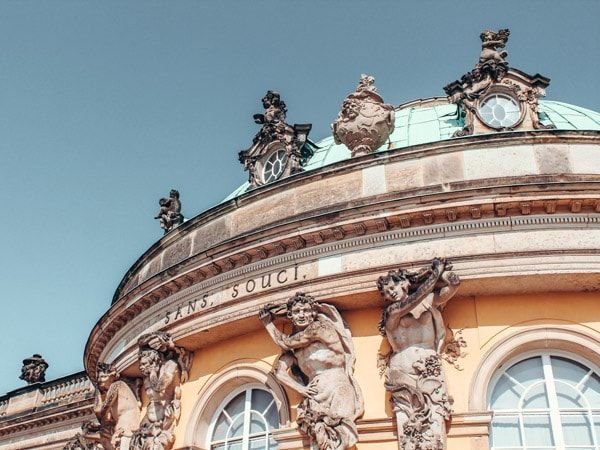
a close-up of the architectural design of Sanssouci Palace, Berlin
Sanssouci Palace’s architectural design is a blend of French and Italian Rococo styles. (Image: Dana Ward)

Delve into twentieth-century history with a trip to the Cecilienhof Palace. It was here that the Allied forces worked together in 1945 to decide the future of post-war Europe.
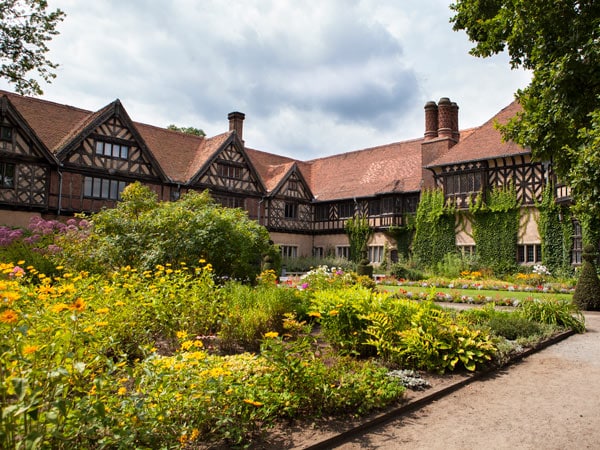
the exterior of Cecilienhof Palace in Berlin, Germany
Cecilienhof Palace was designed in the style of a country manor.

Follow that up with the Glienicker Bridge: a spot where American and Russian spies were exchanged during the Cold War in the years following.
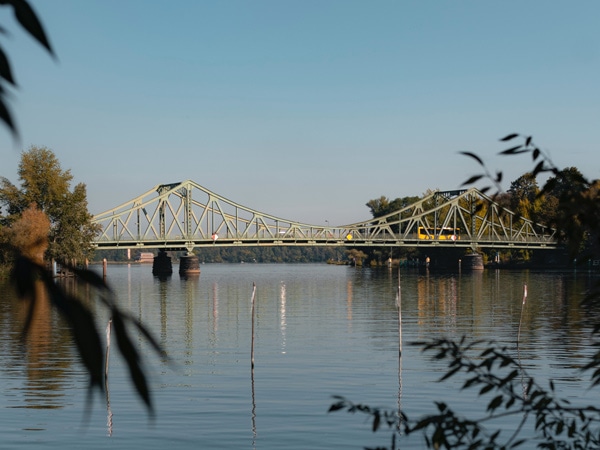
the Glienicker Bridge in western Berlin
Glienicker Bridge connects the district of Wannsee in western Berlin with Potsdam. (Image: Nadine Redlich)

Distance from Berlin: 25 minutes by the RE1 train or 30 minutes by car (30 kilometres from Berlin)

2. Make a date with nature at Spreewald

Need to break up the endless streetscapes of Berlin? Hop on the train to the southeast and arrive at the UNESCO-designated biosphere reserve of Spreewald.
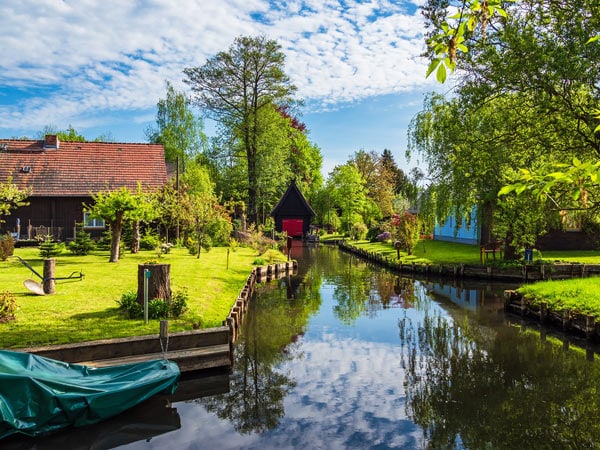
a scenic garden and river at Spreewald, Berlin
Get closer to nature at Spreewald.

Densely forested and with a tangled net of rivers and wetlands, Spreewald is popular amongst visitors for its many opportunities to canoe, kayak and hike.
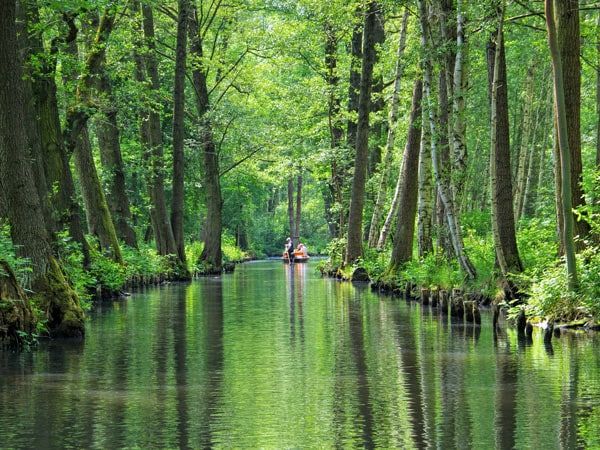
a person canoeing in Spreewald
Kayak between lush greenery.

Come here for a hearty dose of green. Stay here for lunch – incomplete without a side of the famous Spreewald pickles.
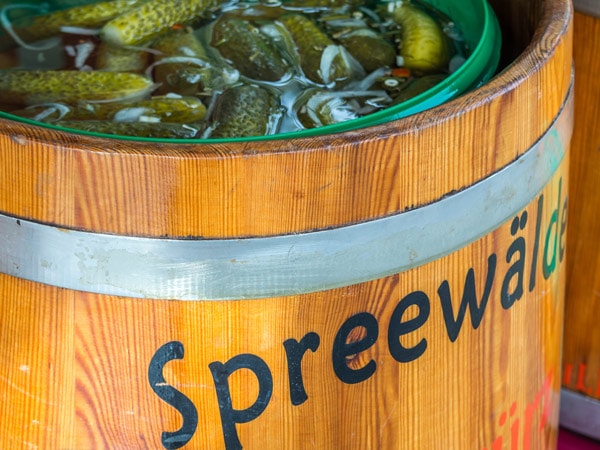
a closeup photo of Spreewald Pickles
Try Spreewald pickles.

Distance from Berlin: One hour to Lübben (Spreewald) by the RE2 or the RE7 train or by car (85 kilometres from Berlin)

3. A taste of arts and culture in Leipzig

While Berlin attracts the crowds, the city of Leipzig is fast becoming known for its vibrant arts scene, historical significance and as a cultural hub. Historian buffs should start at the Völkerschlachtdenkmal (Monument to the Battle of the Nations), Leipzig’s monument to Napoleon’s military defeat at the town, and learn about life in this East German town during the Cold War at the Gedenkstätte Museum.
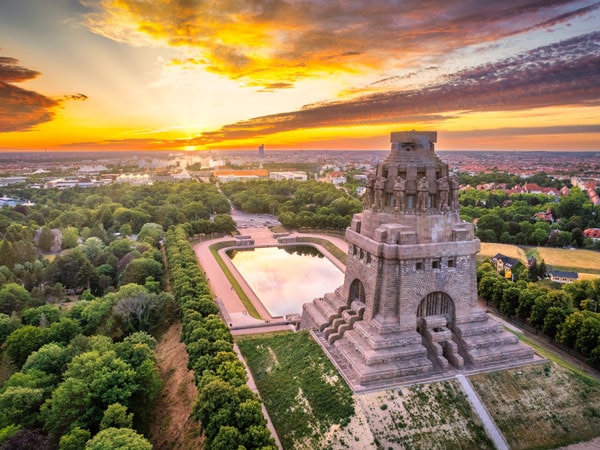
an aerial view of Völkerschlachtdenkmal
Immerse in the vibrant arts and culture of Leipzig at Völkerschlachtdenkmal.

There is also the Bach-Museum (the famous composer lived and died here), the magnificent 12th-century St. Thomas Church, and the ornate architecture of the New Town Hall and the Mädler Passage shopping arcade.
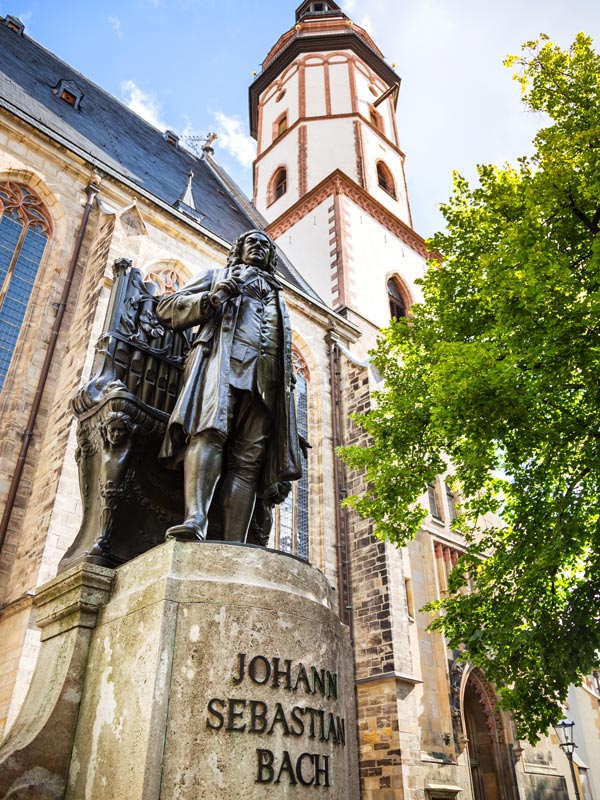
the Bach Memorial monument in Berlin, Germany
Bach Memorial monument is a tribute to the late German composer.

Distance from Berlin: One hour and 15 minutes by Deutsche Bahn (DB) train or one hour and 45 minutes by car (190 kilometres from Berlin)

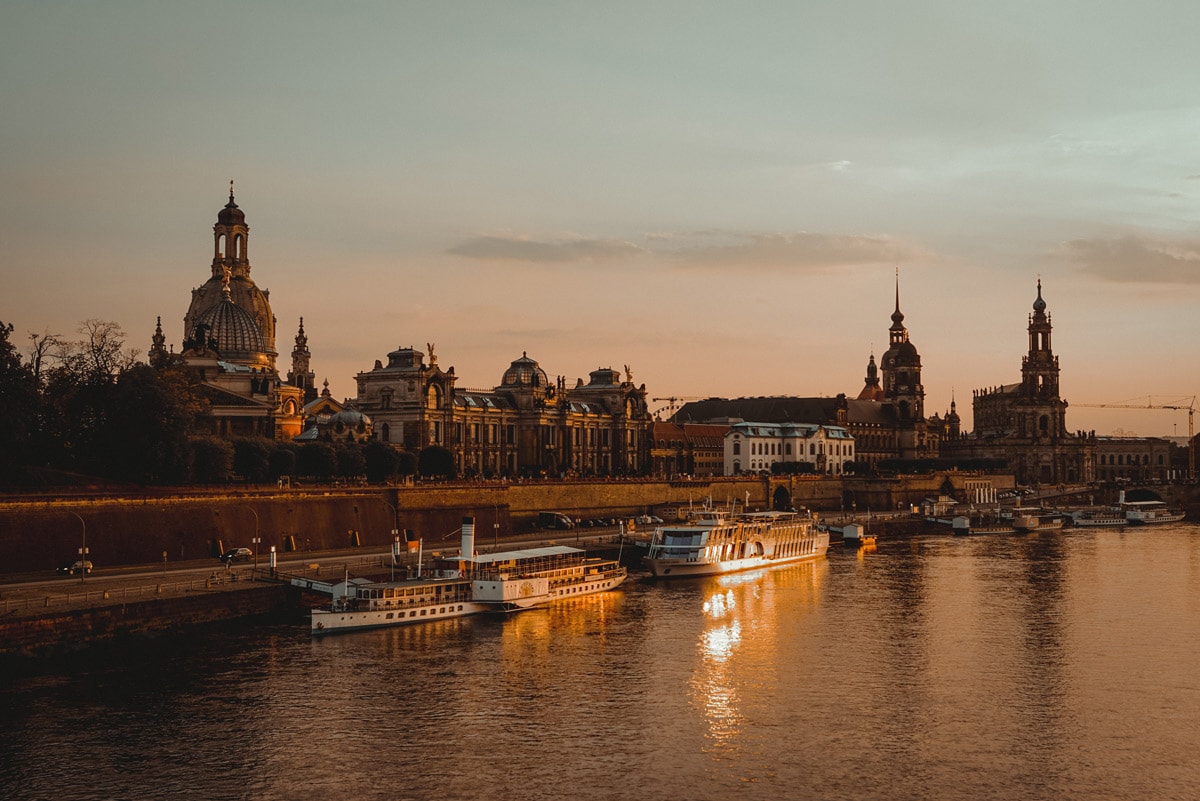
4. Marvel at the architecture in Dresden

Take a day trip to Saxony and the lovely town of Dresden. Located on the Elbe River, Dresden is perhaps most well-known for the role it played – and the damage it suffered – during WWII. But when you arrive, there is so much more to discover – for architecture lovers in particular.
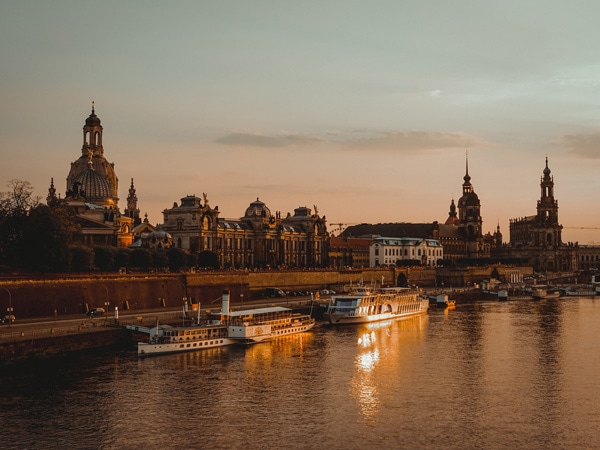
the lovely town of Dresden, Berlin, Germany
Fall in love with Dresden.

For example, the Lutheran church of Frauenkirche Dresden was reconstructed after it was ruined during war bombings. There is also the enormous porcelain mural of Fürstenzug Palace, the baroque workings of the Zwinger Palace and the curiously playful designs of the courtyards of Kunsthofpassage, to uncover.
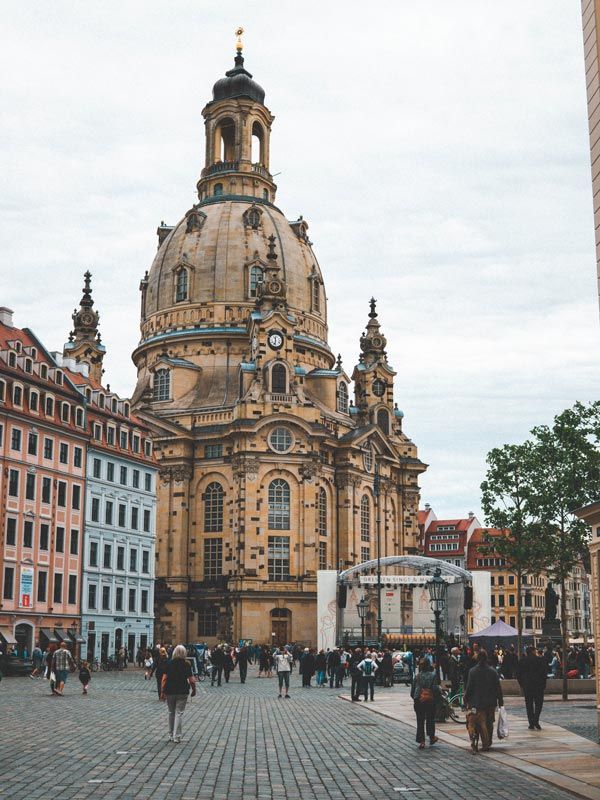
the Lutheran church of Frauenkirche Dresden
Frauenkirche Dresden was successfully restored after being destroyed in WWII.

Distance from Berlin: Two hours and 15 minutes by DB train or two hours by car (194 kilometres from Berlin)

5. Take a swim near Berlin at Wannsee and Müggelsee

If you’re looking for a way to cool off in the European summer, you’re in luck. Berlin was built on a swamp and, as such, is surrounded by many lakes. This means there are loads of options when it comes to taking a day trip to a natural swimming spot.
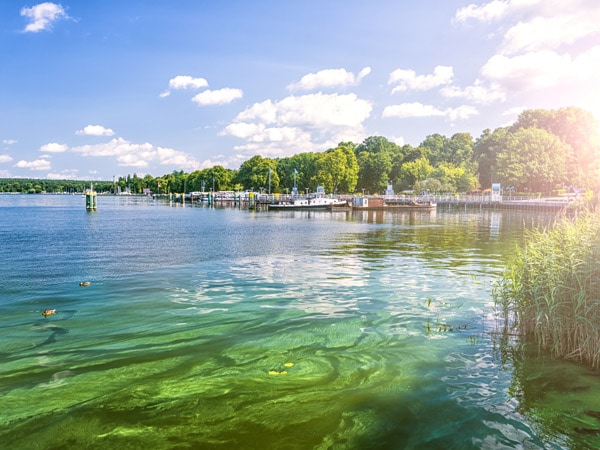
an inland lake at Wannsee, Berlin
Take a refreshing dip in Wannsee.

But which one of the literally thousands of lakes should you pick? Wannsee and Müggelsee are arguably two of the most famous.

Wannsee is to the west, an inland lake with a beach made of white sand imported from the Baltics. To the east, you will find Müggelsee, with the seaside resort of Friedrichshafen. Both have a cheeky nudist beach if you’re feeling daring enough to even up those tan lines.
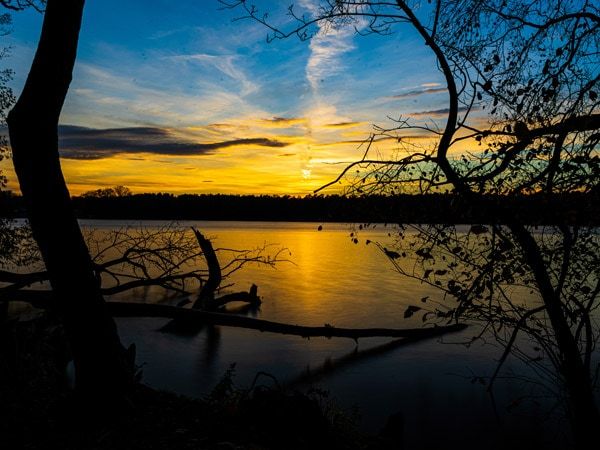
Müggelsee at sunset, Berlin, Germany
Dare to bare at Müggelsee.

Distance from Berlin: Wannsee is 30 minutes by S1 or S7 S-Bahn to Wannsee Station, and then 10 minutes by bus or 20 minutes by car (27 kilometres from Berlin). Müggelsee is 30 minutes on the S3 S-Bahn train and five minutes by tram or 30 minutes by car (21 kilometres from Berlin).

Weekly travel news, experiences
insider tips, offers,
and more.

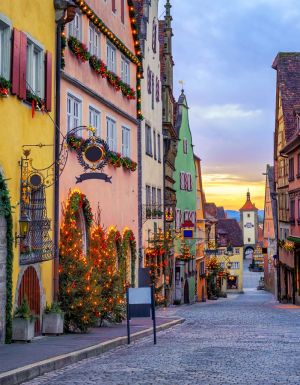
6. Discover a winter Christmas market at Quedlinburg

Nothing is quite as alluring to the winter traveller as a European Christmas market. If that mulled wine and ginger spice life is for you, take a day trip from Berlin to the Harz Mountain town of Quedlinburg: home to one of Germany’s best Christmas markets.
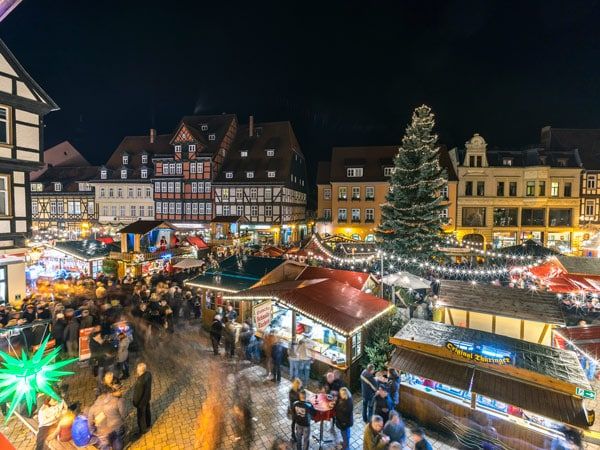
the Quedlinburg Christmas Market at night
Shop for holiday gifts at the Quedlinburg Christmas Market.

For the whole Yuletime period, there are stalls in the historic marketplace selling ornaments, punch and other Christmas goodies. Quedlinburg even has a ‘real’ Advent calendar, with surprises behind 24 doors in hidden-away courtyards.
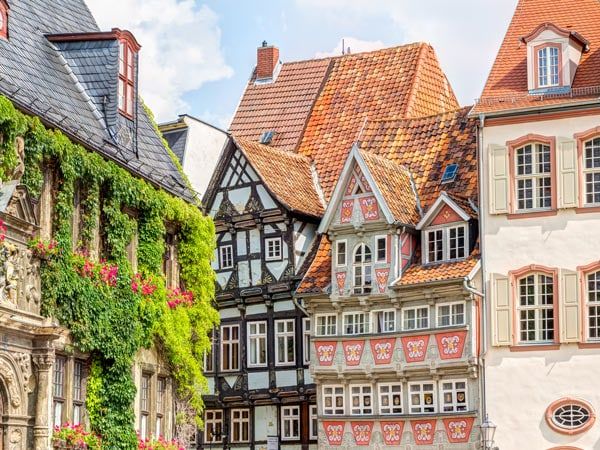
charming houses in Quedlinburg, Berlin
Find charming houses along the cobblestone streets in Quedlinburg.

Distance from Berlin: It is a three-hour and 20-minute train ride from Quedlinburg to Berlin or two hours by car (237 kilometres from Berlin).

7. Understand the history of Sachsenhausen Concentration Camp in Oranienburg

You won’t go far in Germany without encountering reminders of the violence of World War II. For those who want to understand more about the horrors of the war and the crimes perpetrated, the former concentration camp of Sachsenhausen is reachable from Berlin by train.

It was at this camp that the Nazis interned over 200,000 prisoners, eventually murdering those from the LGBTIQ+ and Jewish communities, prisoners of war, Jehovah’s Witnesses, Freemasons and other persecuted groups.
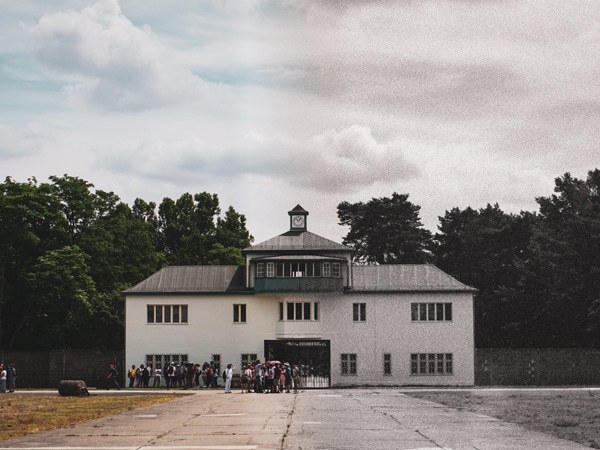
the former concentration camp of Sachsenhausen
Sachsenhausen is reachable from Berlin by train. (Image: Miguel Angel Diaz)

Distance from Berlin: 50 minutes on the S1 S-Bahn train or 30 minutes by car (39 kilometres from Berlin)

Want to see more stories from International Traveller in your Google search results?

  1. Click here to set International Traveller as a preferred source.
  2. Tick the box next to "International Traveller". That's it.
hero media

What the European heatwave means for your summer travel plans

Temperatures are soaring this summer, breaking records across Europe and the UK. 

Euro summer is a feeling like no other. But when a heatwave hits? The dream trip quickly turns into a sweaty mess. Extreme heat is sweeping Europe and the UK this week, with record-high temperatures impacting travel plans across the continent.

And while Australian summers are typically hotter in absolute temperature, many European cities aren’t equipped for high temperatures, resulting in unbearable weather.

Why is it so hot in Europe?

Signs of a hot summer loomed in May, when the mercury hit unprecedented spring highs. Now, extreme high temperature warning alerts have been issued in countries such as Spain, Italy, France, England, the Netherlands and Germany.

France saw its hottest day on record on Wednesday, with an average temperature of 30°C across the day and night. This surpasses the average temperature for June, which is 15°C to 25°C. Dozens of people have died, including 40 from drowning.

In Spain, 212 deaths have been linked to the heatwave.

The UK recorded its hottest June day ever on Wednesday with temperatures soaring to 36.1°C. In an article published by the Met Office – the UK’s national meteorological service – Professor Stephen Belcher CBE, Met Office Chief Scientist, shared his concerns about June’s heat. “To see temperatures like this in the UK in June is sobering. Events like this bring home the implications of climate change, with very high temperatures and humidity bringing significant health implications from heat stress, as well as impacts to a range of sectors such as transport, energy and water supply,” he said.

Heatwaves are becoming increasingly common in Europe and the UK, neither of which is prepared for such extremes. The World Meteorological Organization reported that in 2025, at least 95% of Europe experienced above-average annual temperatures and that the continent was heating up twice as fast as the global average.

How travel is impacted

A pharmacy sign displaying 40 degrees Celcius
A pharmacy broadcasting local weather data. (Credit: Getty/Dragoncello)

During a heatwave, power grids, water systems and transport networks can be affected, resulting in disrupted itineraries for travellers. In France, power outages have left thousands without electricity and early closures have been implemented for two of Paris’s biggest attractions, the Eiffel Tower (early afternoon rather than late at night) and the Louvre (two hours early). Eurostar cancelled its London to Paris and Paris to London services from the 22nd to the 25th, and major UK rail companies have been advising travellers to avoid using trains where possible, or to travel during early hours.

If a heatwave is predicted, being flexible with your itinerary and having fully refundable/changeable tickets is key, as extreme heat can force the cancellation of outdoor activities, impact rail and flight services and change the opening hours of sites and eateries.

Why does summer in Europe often feel hotter than summer in Australia?

people swimming in the Canal Saint-Martin in Paris
People swimming in the Canal Saint-Martin in Paris to cool off. (Credit: Rachael Thompson)

With some of the highest UV levels in the world, Australians are no strangers to the heat, adapting well to intense weather. But our infrastructure is largely equipped to withstand soaring temperatures with climate-responsive passive design, refrigerated air conditioning or evaporative coolers, as well as swimming spots aplenty.

Buildings in Northern and Western Europe and the UK, however, are constructed to retain heat and handle frosty winters. The lack of universal air conditioning means it generally feels hotter even though the temperature on your app might not look it. During a heatwave, it can feel like you’re in a sauna as cities act like heat traps.

How to stay cool and prepare for another heatwave

Relief is expected across Europe and the UK later this week, but more heatwaves are still possible in the coming months. Summer heat typically peaks in July and August.

Public transport often doesn’t have air conditioning, and buses in particular can be swelteringly hot. If you’re heading outside or your accommodation has no air conditioning, it’s worth buying a spray bottle and a handheld fan from a pharmacy or tourist stand. Check ahead of time if restaurants and cafes have air conditioning and make a booking in advance. The highest temperatures typically hit between 3pm and 6pm, so aim to head outdoors outside of these hours.

Rising temperatures invite travellers to enter a more intentional era of seeing the world. Now more than ever is the time to embrace lower-impact “coolcations” and off-season getaways.