hero media

How to spend the perfect 72 hours in Paris

The next few years are big for Paris, with a surge in urban renewal leading up to the 2024 Summer Olympics and Paralympics: think plenty of new restaurants and bars, as well as blockbuster exhibitions in freshly minted museums.

Here’s how to see the current stars of the French capital in just three days.

Day One

9am: Steps from the Seine, the Marais district in the 4th arrondissement is quite possibly the French capital’s hippest hangout. The streets are filled with designer boutiques, contemporary galleries and achingly cool bars. And then there’s the Place de Vosges, which has been called one of the most beautiful squares in the world.


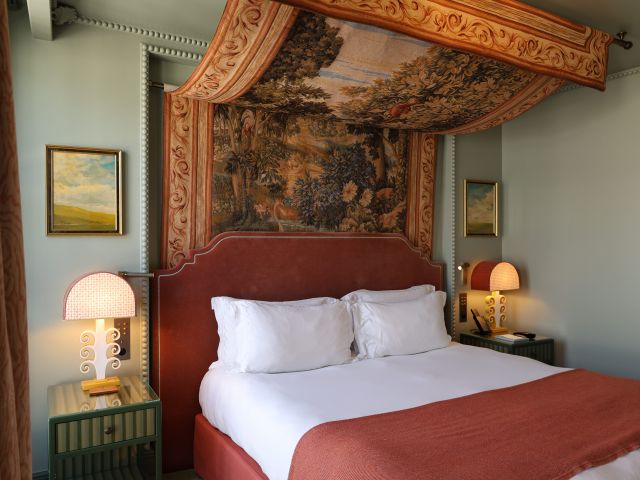
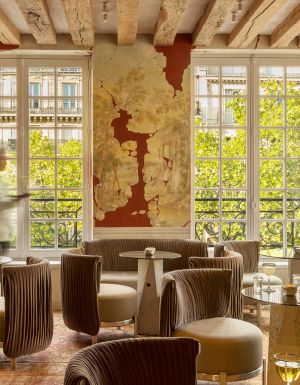
It’s here that you’ll find the grand hotel Le Pavillon de la Reine, set in an ivy-covered, 17th-century mansion, replete with a fairy-tale garden courtyard. Check into one of its 56 rooms and suites, each individually decorated with exposed wooden beams, bold fabrics, patterned wallpaper and gilded mirrors – some also come with marble fireplaces.

Le Pavillon de la Reine hotel

10am: In the same district, legendary Poilâne has been hand-cutting cookies and kneading sourdough since 1932. Its apple tart is the perfect morning pick-me-up – order it with a bowl of café au lait.


11am: Irrespective of season, there’s nothing quite as romantic as wandering along the banks of the Seine. Follow the river as it winds north-west towards the Eiffel Tower, taking your time to peruse the wares of the city’s bouquinistes. Set up on either side of the water, these independent sellers of antiquarian books also stock old maps, postcards and vintage posters.


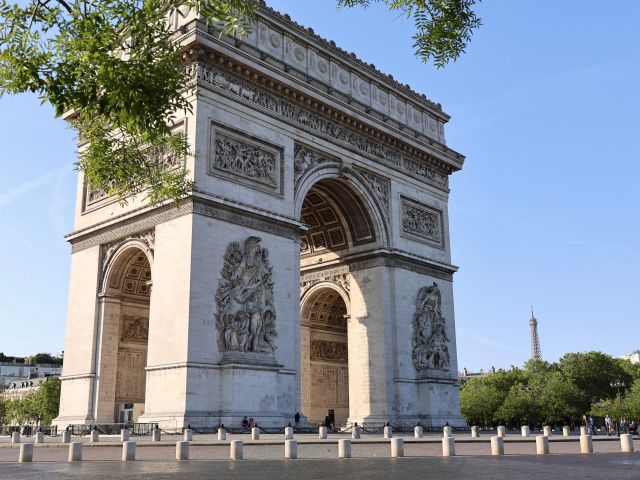
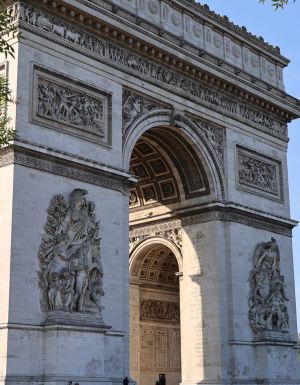
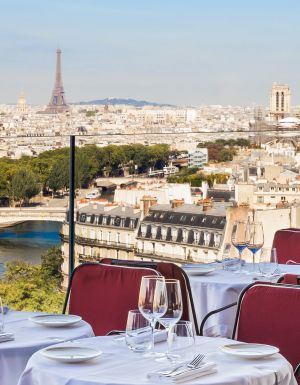
12.45pm: While the words ‘bus’ and ‘restaurant’ rarely sit well together, the Parisians have managed to take the concept of movable dining to chic heights. The city’s new Bustronome experience serves lunch and dinner; jump aboard the elegantly fitted double-deckers at the Arc de Triomphe and motor past landmarks like the Louvre and Opéra de Paris. Soft jazz plays while you enjoy a four-course meal paired with French wines.

Gaze upon the Eiffel Tower as you pass aboard Bustronome

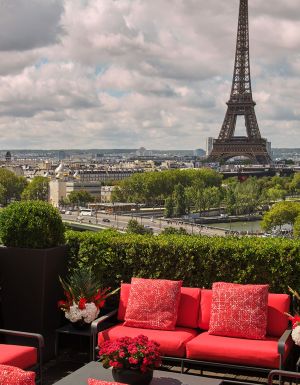
2.30pm: Once you disembark, it’s a short walk to the city’s most famous landmark. For security reasons, the Eiffel Tower is now ringed by glass walls, which means you can no longer linger freely beneath it. But you can still zip to the top for unbroken views and a glass of bubbly in the tiny Champagne bar.


4.30pm: Perfectly positioned within the opulent Ritz Hotel, the Chanel au Ritz Paris spa is a serene cocoon of billowy white fabric and blonde wood. Treatments use Chanel products exclusively: book Le Grand Soin, which sees you massaged and slathered from top to toe in collagen, then pop past the make-up lounge for a zhuzh-up in anticipation of your next stop.

The Chanel au Ritz Paris spa

6.30pm: Despite its recent facelift during the Ritz Hotel’s multi-million-dollar renovation, Bar Hemingway is still as charming as ever. Named after author Ernest Hemingway – who was responsible for ‘liberating’ the space from the Nazis, apparently by downing 51 dry martinis in a row – the dimly lit lounge is decorated with photos of past frequenters such as Cole Porter and F. Scott Fitzgerald. Sink into the bar’s classic tufted leather banquettes and order the Ritz Pimms, uniting Champagne and ginger ale with fruit garnishes.


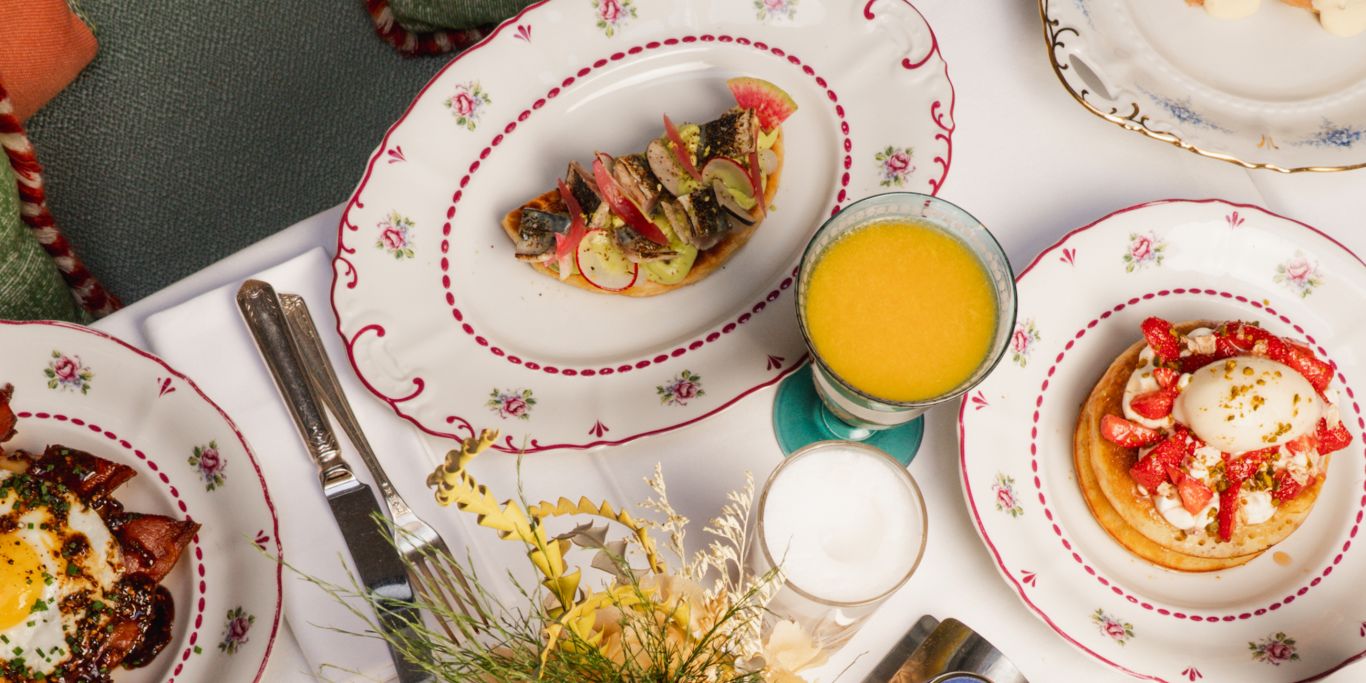
8pm: It’s a short stroll west to the new Fauchon l’Hôtel, a first for this brand, more traditionally known in Paris for its incredible patisseries. Make a beeline for the Grand Fauchon Café, a design-driven restaurant done in glossy pink and gold. The dinner menu is extremely well priced, especially if you order the generously portioned tasting plates: a flavour-packed bowl of rice studded with razor clams and topped with shellfish foam, perhaps, or Auvergne candied pork, perfectly paired with pointed cabbage and silky white asparagus.

The Grand Fauchon Café - chic and a little bit sexy
The Grand Fauchon Café – chic and a little bit sexy

Day Two

9.30am: Cross the Seine and head south to the 14th arrondissement. It’s here you’ll find Poinçon, a newly opened social hub occupying an abandoned train station. In addition to a creative space, there’s a bar-restaurant-café where you can order breakfast staples such as buttery croissants (is there any other kind in Paris?) and strong coffee.


11am: Still on the Left Bank, multi-level arts and culture venue La Cité de la Mode et du Design occupies a dramatic, undulating riverside building, clad with a bright green roof and concrete-and-glass facade. Ponder the museum-quality art installations, then order a pre-lunch cocktail on a terrace overlooking the water.


1.30pm: Jump on the subway to Forum des Halles, a sprawling shopping and dining district in the heart of Paris. Amid the 150 shops and restaurants – capped by a spectacular wavy roof nicknamed La Canopée – you’ll find Chez la Vieille, a bistro dishing up rustic terrines and slow-braised meats. Next door is a dramatic circular building that was once the city’s grain market; it’s currently being given an overhaul by Pritzker Prize-winning architect Tadao Ando.


3.30pm: A former iron foundry, L’Atelier des Lumières is now the city’s first digital art gallery. Opened in 2018, the space hosts dazzling digital shows that highlight major artists through projections over concrete floors, ceilings and walls. The current season is dedicated to iconic works from Dutch artist Vincent van Gogh.


6pm: It’s cocktail hour, and there’s no menu at popular Marais bar, Bisou. Instead, tell the mixologist what you fancy, and he’ll create something bespoke on the spot.


8.30pm: One of the best ways to take in the lights of Paris is on an evening river cruise. Book the new Ducasse sur Seine experience, and you’ll do just that over a six-course meal courtesy of Michelin-star-laden chef Alain Ducasse. The sleek, eco-friendly electric boat – tastefully decorated in navy and chrome – silently glides along the water while you sip Dom Pérignon and nibble croque-monsieur canapés, before sitting down to an astoundingly good meal.

Style afloat on the Ducasse sur

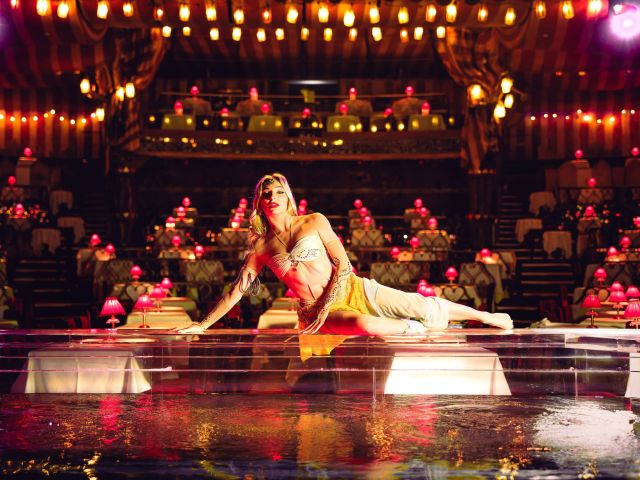
11pm: End your evening at recently opened speakeasy Roxie, where cocktails come with names like Ginger Rogers and Charlie Chaplin, and live music includes everything from jazz to show tunes. The lipstick-red space, which doubles as a dining room, comes with plenty of vintage razzle-dazzle.

Weekly travel news, experiences
insider tips, offers,
and more.

Day Three

9am: The most famous avenue in Paris, perhaps the world, glamorous Champs-Élysées is a dining and shopping mecca. At famously luxe bakery Maison Ladurée, start the day with
light-as-a-feather blinis topped with house-cured salmon, followed by melty macarons to take away.


10am: It’s a short walk up the boulevard to the newest outpost of the Galeries Lafayette department store, where 150 personal stylists are on call to ensure you strut the streets of the world’s fashion capital in style. Flamboyant French-Lebanese jeweller Selim Mouzannar has a boutique here, as does punk-inspired fashion brand Enfants Riches Déprimés.

Galeries Lafayette department store

12pm: The Left Bank’s 7th arrondissement is the setting for new tree-lined foodie precinct, Beaupassage. Choose from high-profile chefs including Anne-Sophie Pic (gastronomy), Yannick Alléno (with a restaurant, wine cellar and art gallery), Olivier Bellin (seafood), Nicole Barthélémy (cheeses) and Pierre Hermé (pastries), among others.


2pm: It’s a 30-minute subway ride east to the towering Grande Arche de la Defense, recently reopened and now inviting visitors to its rooftop for views over the city. Yes, there are other places to gain perspective, but this modern marvel opens up a pretty pocket of Paris often overlooked by visitors.


3.30pm: The Arche is also within easy reach of the Fondation Louis Vuitton, a creative hub occupying a sailboat-like building crafted by star Canadian-born American architect Frank Gehry. In addition to a range of commissioned artworks (including an installation by Gehry himself), the space hosts exhibitions, cultural workshops and events.


7pm: One of Paris’s standout kitchen talents, chef Sota Atsumi is the brains behind freshly opened 11th arrondissement restaurant, Maison. The menu of biodynamic produce might feature crisp Jerusalem artichokes with Comté cheese, walnuts and uni (sea urchin), or Breton-style pastry kouign-amann with mango-ginger chutney. Book well in advance.

Want to see more stories from International Traveller in your Google search results?

  1. Click here to set International Traveller as a preferred source.
  2. Tick the box next to "International Traveller". That's it.
hero media

What the European heatwave means for your summer travel plans

Temperatures are soaring this summer, breaking records across Europe and the UK. 

Euro summer is a feeling like no other. But when a heatwave hits? The dream trip quickly turns into a sweaty mess. Extreme heat is sweeping Europe and the UK this week, with record-high temperatures impacting travel plans across the continent.

And while Australian summers are typically hotter in absolute temperature, many European cities aren’t equipped for high temperatures, resulting in unbearable weather.

Why is it so hot in Europe?

Signs of a hot summer loomed in May, when the mercury hit unprecedented spring highs. Now, extreme high temperature warning alerts have been issued in countries such as Spain, Italy, France, England, the Netherlands and Germany.

France saw its hottest day on record on Wednesday, with an average temperature of 30°C across the day and night. This surpasses the average temperature for June, which is 15°C to 25°C. Dozens of people have died, including 40 from drowning.

In Spain, 212 deaths have been linked to the heatwave.

The UK recorded its hottest June day ever on Wednesday with temperatures soaring to 36.1°C. In an article published by the Met Office – the UK’s national meteorological service – Professor Stephen Belcher CBE, Met Office Chief Scientist, shared his concerns about June’s heat. “To see temperatures like this in the UK in June is sobering. Events like this bring home the implications of climate change, with very high temperatures and humidity bringing significant health implications from heat stress, as well as impacts to a range of sectors such as transport, energy and water supply,” he said.

Heatwaves are becoming increasingly common in Europe and the UK, neither of which is prepared for such extremes. The World Meteorological Organization reported that in 2025, at least 95% of Europe experienced above-average annual temperatures and that the continent was heating up twice as fast as the global average.

How travel is impacted

A pharmacy sign displaying 40 degrees Celcius
A pharmacy broadcasting local weather data. (Credit: Getty/Dragoncello)

During a heatwave, power grids, water systems and transport networks can be affected, resulting in disrupted itineraries for travellers. In France, power outages have left thousands without electricity and early closures have been implemented for two of Paris’s biggest attractions, the Eiffel Tower (early afternoon rather than late at night) and the Louvre (two hours early). Eurostar cancelled its London to Paris and Paris to London services from the 22nd to the 25th, and major UK rail companies have been advising travellers to avoid using trains where possible, or to travel during early hours.

If a heatwave is predicted, being flexible with your itinerary and having fully refundable/changeable tickets is key, as extreme heat can force the cancellation of outdoor activities, impact rail and flight services and change the opening hours of sites and eateries.

Why does summer in Europe often feel hotter than summer in Australia?

people swimming in the Canal Saint-Martin in Paris
People swimming in the Canal Saint-Martin in Paris to cool off. (Credit: Rachael Thompson)

With some of the highest UV levels in the world, Australians are no strangers to the heat, adapting well to intense weather. But our infrastructure is largely equipped to withstand soaring temperatures with climate-responsive passive design, refrigerated air conditioning or evaporative coolers, as well as swimming spots aplenty.

Buildings in Northern and Western Europe and the UK, however, are constructed to retain heat and handle frosty winters. The lack of universal air conditioning means it generally feels hotter even though the temperature on your app might not look it. During a heatwave, it can feel like you’re in a sauna as cities act like heat traps.

How to stay cool and prepare for another heatwave

Relief is expected across Europe and the UK later this week, but more heatwaves are still possible in the coming months. Summer heat typically peaks in July and August.

Public transport often doesn’t have air conditioning, and buses in particular can be swelteringly hot. If you’re heading outside or your accommodation has no air conditioning, it’s worth buying a spray bottle and a handheld fan from a pharmacy or tourist stand. Check ahead of time if restaurants and cafes have air conditioning and make a booking in advance. The highest temperatures typically hit between 3pm and 6pm, so aim to head outdoors outside of these hours.

Rising temperatures invite travellers to enter a more intentional era of seeing the world. Now more than ever is the time to embrace lower-impact “coolcations” and off-season getaways.