hero media

The Western Front: how to plan your visit

Lucy E Cousins commemorates 100 years since the end of the First World War by visiting the battlefields and monuments most significant to Australian history.

Stretching over 700 kilometres from the Swiss border to the North Sea, the Western Front is inextricably linked to the Australian psyche in a way that Anzac Cove, Kokoda and Tobruk are. But what stands it apart is that the Western Front was the scene of not one or two military campaigns, but the heart of the First World War one for over four years.

The Western Front is both incredibly heartrending and fascinating to visit. However, traversing the whole stretch is unrealistic for most people, so focusing on the main centres of Australian participation in Belgium and France is a good starting point.

Where should I go in Belgium?

The medieval walled city of Ypres (Iepers in Flemish) is a convenient place to base your exploring from. It was a pivotal city during the war years as it is on the route to the seaports of Belgium and France, and was fiercely contested by the Allied and German forces. In fact, the whole city was levelled in the hostilities and completely rebuilt in its previous style afterwards.
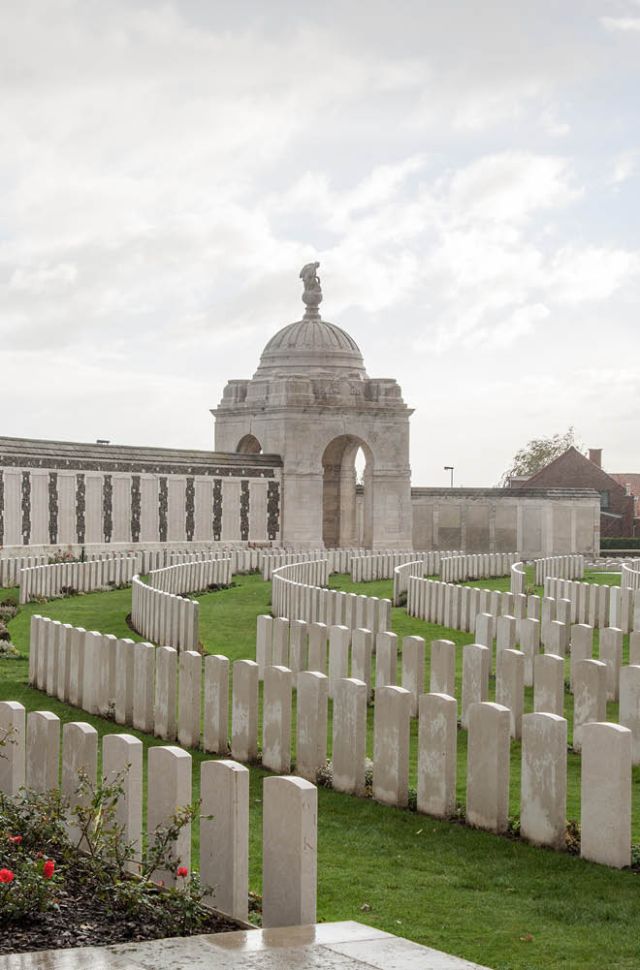
Cemetery fallen soldiers in World War I in Flanders Belgium
Cemetery of fallen soldiers in World War I in Flanders Belgium

Nearby are several important battlefields and cemeteries, including the sobering Tyne Cot (the biggest – and most overwhelming – of the Commonwealth cemeteries), Hill 60 and 62, the battlegrounds of the battlegrounds of the Ypres Salient (which saw the battles of Passendale, Polygon Wood, Hill 60 and others) as well as trench reconstructions, memorials, mostly-overlooked roadside cemeteries and small museums. The modern In Flanders Museum is worth a visit to refresh your chronological history of the war and to find out how the war affected the people of Ypres as well.

Where should I go in France?

In France, the towns of Péronne, Villers-Bretonneux or the bigger city of Amiens are good bases from which to explore the surrounding area – the infamous Somme battlefields. This region saw some of the biggest losses to the Australian Army, but also some of the biggest victories, including the liberation of Péronne and the Battle of Amiens. The Australian Corps Memorial Park near Le Hamel is built on positions captured by the Aussies (along with US infantry troops), while the Australian National Memorial in Villers–Bretonneux is the main memorial to Australian losses on the Western Front, and where the Dawn Service is held every Anzac Day.
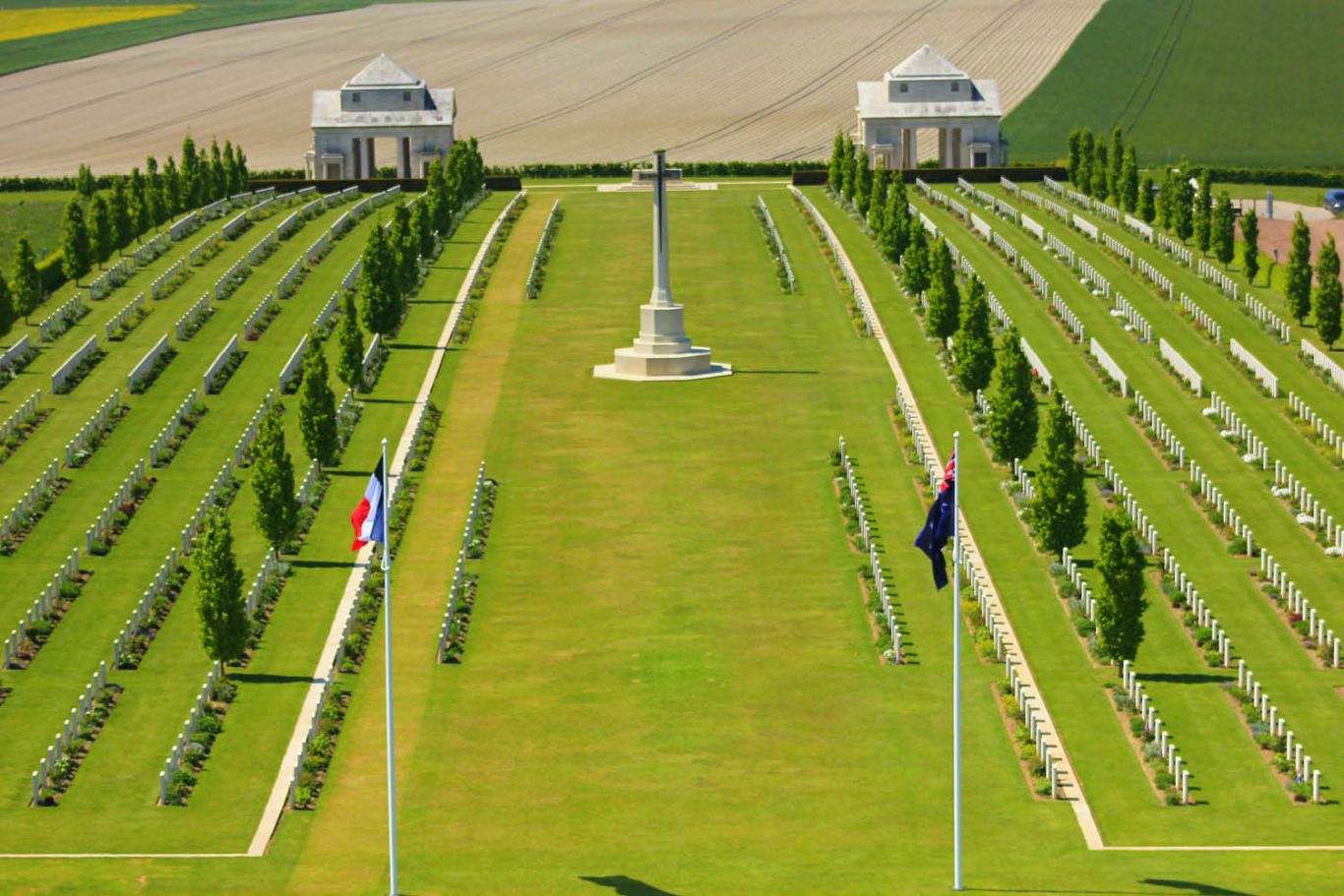
Australian military cemetery of the first world war at villers bretonneux

Nearby, the town of Pozières saw 23,000 Australian casualties in 1916, and further north, Fromelles marks the first major battle fought by the Australians on the Western Front and has been called the worst 24 hours in our history. There are several museums worth visiting, including the Franco-Australian Museum of Villers-Bretonneux and the Museum of the Great War in Péronne, and the remains of trenches, shell holes and battles can still be seen (and visited) in the surrounding countryside. If you have time, don’t miss the 13th-century Amiens Cathedral which is UNESCO World Heritage listed and one of the biggest Gothic buildings ever built.

When should I go?

The battlefields, cemeteries, towns and memorials that connect the Western Front are popular all year round, especially this year as it marks the 100th anniversary of several of the fiercest battles, as well as the end of the hostilities on 11 November 1918. Traditionally, June and July are the busiest months overall, so to avoid the crowds plan for early spring or late autumn before the colder weather really sets in, but check for anniversaries before you book.

How long do I need?

This ultimately depends on how much of the 700-kilometre Western Front you want to see and how prolifically you want to visit the battlefields and monuments. As a rough guide, three to four days in each country is enough to scratch the surface in the areas mentioned here. To do it justice, however, consider upwards of a week or more in each country.
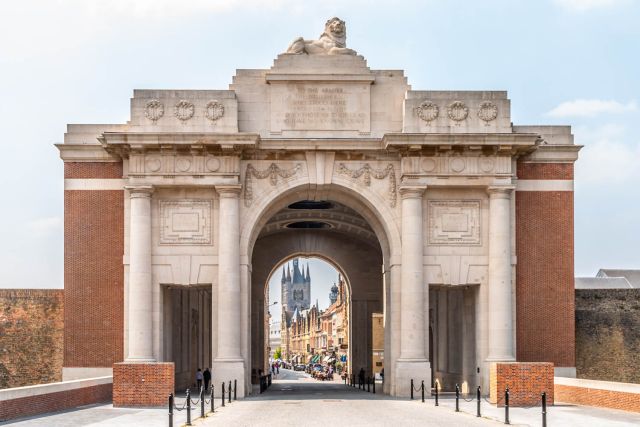
Front view of Menin gate at Ypres Belgium

How do I get around?

Most of the Western Front rests on mostly flat lands so it can be easily explored on foot or by bicycle, however a car allows you to cover a broader area. A lot of the signage has been updated and improved because of the 100th anniversary, but if you’re not familiar with the history, a guided tour can really help to set the scene.

For more information:

https://www.cwgc.org

https://anzacportal.dva.gov.au

http://www.toerismeieper.be/en

https://www.visit-somme.com


Weekly travel news, experiences
insider tips, offers,
and more.

Want to see more stories from International Traveller in your Google search results?

  1. Click here to set International Traveller as a preferred source.
  2. Tick the box next to "International Traveller". That's it.
hero media

What the European heatwave means for your summer travel plans

Temperatures are soaring this summer, breaking records across Europe and the UK. 

Euro summer is a feeling like no other. But when a heatwave hits? The dream trip quickly turns into a sweaty mess. Extreme heat is sweeping Europe and the UK this week, with record-high temperatures impacting travel plans across the continent.

And while Australian summers are typically hotter in absolute temperature, many European cities aren’t equipped for high temperatures, resulting in unbearable weather.

Why is it so hot in Europe?

Signs of a hot summer loomed in May, when the mercury hit unprecedented spring highs. Now, extreme high temperature warning alerts have been issued in countries such as Spain, Italy, France, England, the Netherlands and Germany.

France saw its hottest day on record on Wednesday, with an average temperature of 30°C across the day and night. This surpasses the average temperature for June, which is 15°C to 25°C. Dozens of people have died, including 40 from drowning.

In Spain, 212 deaths have been linked to the heatwave.

The UK recorded its hottest June day ever on Wednesday with temperatures soaring to 36.1°C. In an article published by the Met Office – the UK’s national meteorological service – Professor Stephen Belcher CBE, Met Office Chief Scientist, shared his concerns about June’s heat. “To see temperatures like this in the UK in June is sobering. Events like this bring home the implications of climate change, with very high temperatures and humidity bringing significant health implications from heat stress, as well as impacts to a range of sectors such as transport, energy and water supply,” he said.

Heatwaves are becoming increasingly common in Europe and the UK, neither of which is prepared for such extremes. The World Meteorological Organization reported that in 2025, at least 95% of Europe experienced above-average annual temperatures and that the continent was heating up twice as fast as the global average.

How travel is impacted

A pharmacy sign displaying 40 degrees Celcius
A pharmacy broadcasting local weather data. (Credit: Getty/Dragoncello)

During a heatwave, power grids, water systems and transport networks can be affected, resulting in disrupted itineraries for travellers. In France, power outages have left thousands without electricity and early closures have been implemented for two of Paris’s biggest attractions, the Eiffel Tower (early afternoon rather than late at night) and the Louvre (two hours early). Eurostar cancelled its London to Paris and Paris to London services from the 22nd to the 25th, and major UK rail companies have been advising travellers to avoid using trains where possible, or to travel during early hours.

If a heatwave is predicted, being flexible with your itinerary and having fully refundable/changeable tickets is key, as extreme heat can force the cancellation of outdoor activities, impact rail and flight services and change the opening hours of sites and eateries.

Why does summer in Europe often feel hotter than summer in Australia?

people swimming in the Canal Saint-Martin in Paris
People swimming in the Canal Saint-Martin in Paris to cool off. (Credit: Rachael Thompson)

With some of the highest UV levels in the world, Australians are no strangers to the heat, adapting well to intense weather. But our infrastructure is largely equipped to withstand soaring temperatures with climate-responsive passive design, refrigerated air conditioning or evaporative coolers, as well as swimming spots aplenty.

Buildings in Northern and Western Europe and the UK, however, are constructed to retain heat and handle frosty winters. The lack of universal air conditioning means it generally feels hotter even though the temperature on your app might not look it. During a heatwave, it can feel like you’re in a sauna as cities act like heat traps.

How to stay cool and prepare for another heatwave

Relief is expected across Europe and the UK later this week, but more heatwaves are still possible in the coming months. Summer heat typically peaks in July and August.

Public transport often doesn’t have air conditioning, and buses in particular can be swelteringly hot. If you’re heading outside or your accommodation has no air conditioning, it’s worth buying a spray bottle and a handheld fan from a pharmacy or tourist stand. Check ahead of time if restaurants and cafes have air conditioning and make a booking in advance. The highest temperatures typically hit between 3pm and 6pm, so aim to head outdoors outside of these hours.

Rising temperatures invite travellers to enter a more intentional era of seeing the world. Now more than ever is the time to embrace lower-impact “coolcations” and off-season getaways.