Being transformed by a destination doesn’t stop when you leave it, as we discovered during lockdown thanks to memories, music and a Netflix subscription.
What did you obsess over during lockdown? Was it making bread complete with a bubbling, belligerent sourdough starter? Did you maintain your equilibrium by religiously doing the daily Wordle puzzle? Or perhaps you created your own home gym and spent endless days, weeks and months feeling the burn.
My obsession was a little larger in scale. It was actually the culture of an entire country: Korea (officially the Republic of Korea, South Korea to some, The Land of the Morning Calm to others). It wasn’t a random choice; my last international trip before the global shutdown was to Seoul, a city in a country that had long been at the top of my ‘must-get-there’ list.
The behemoth capital of South Korea has a population of some 26 million – the same as the whole of Australia – which accounts for roughly 50 per cent of the country’s inhabitants. So, Korea was fresh in my mind’s eye and ripe for recollection, but my fascination went beyond mere instant recall.
Memories are made of this
We are often predisposed to liking a destination when we travel, having done the research and expended valuable time, effort and money to get there. Then we return home and move on to planning for the next one. But sometimes a destination makes you pause, capturing your imagination in a way that transcends the lingering glow of having been somewhere new. Some destinations are transformational; Korea was that place for me.
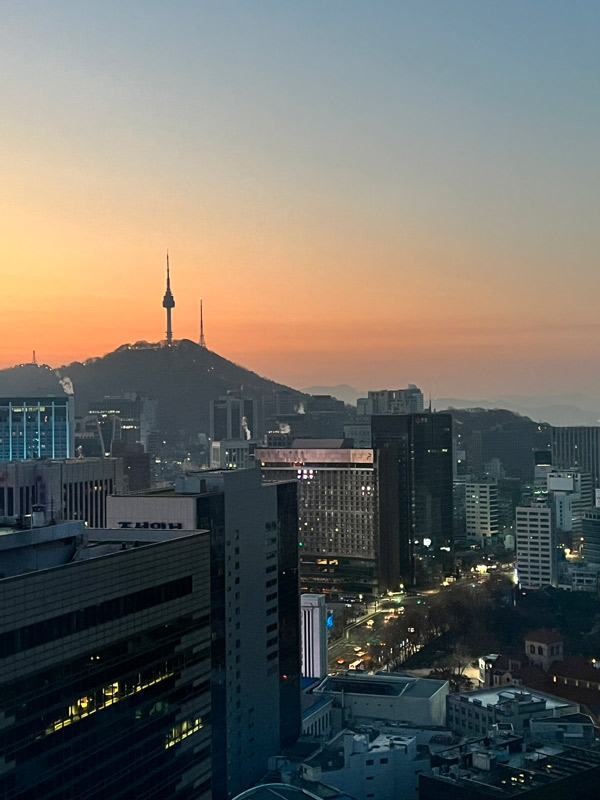
I loved it while I was on the ground. The constant colour, noise and movement of Seoul’s tightly packed dongs (neighbourhoods). The intricately beautiful royal palaces and historic ancestral shrines sitting in contrast to the glass and steel skyscrapers that are visual markers of Korea’s rapid economic and social transformation.
The adherence to ancient ways of interacting and approaching each other that make little concession to the modern social cues observed internationally. The intricacies of a collective personality that gives rise to the exuberance of K-pop while at the same time having a word – han – that describes an internalised feeling of melancholy that many Koreans experience. I intended to go back, and then suddenly couldn’t.
I found solace where I could and transformation almost by accident. I watched my first K-drama, then another. As my Netflix feed filled with exclusively Korean content I started to recognise words and phrases and gained insights into the multi-layered customs and social practices at the heart of Korean society. And to stay happy in a time rife with sadness and anxiety, I filled my Spotify with can’t-help-but-dance-to-it music by the likes of BTS.
The second act
Korea was one of the first places I returned to when international travel became an option again (which coincided with Qantas launching direct flights from Sydney to Seoul). But having experienced the destination vicariously, through the twisted plotlines of K-dramas and exhilaration of K-pop, would my memories live up to the hype in my head, or did deprivation of travel result in a romanticising of remembrance?
Taking a seat on my first night at a bustling barbecue restaurant, a quintessential Korean dining experience, the busy chatter of the staff and patrons fills my ears and I feel a pleasing familiarity, in both my recollections and the knowledge gained – on language, food, customs – in the years since my first visit.
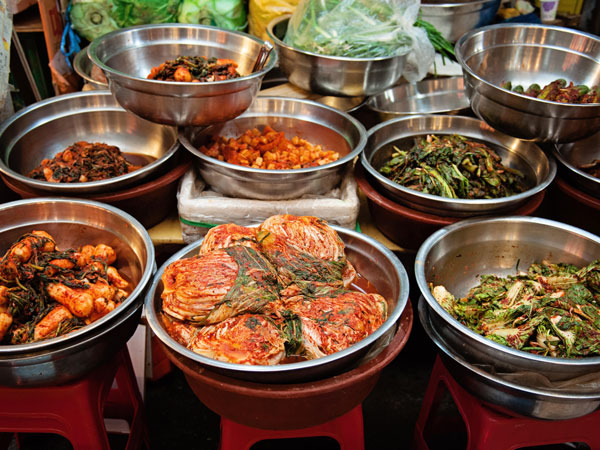
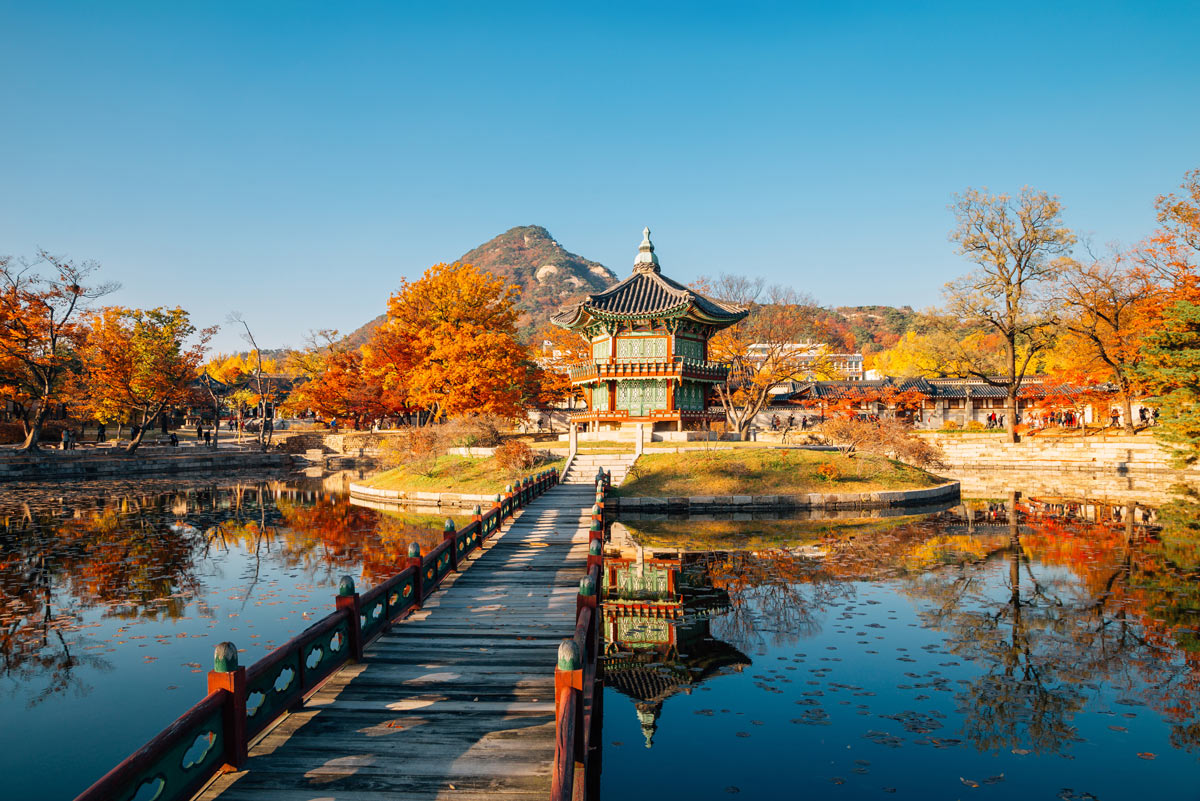
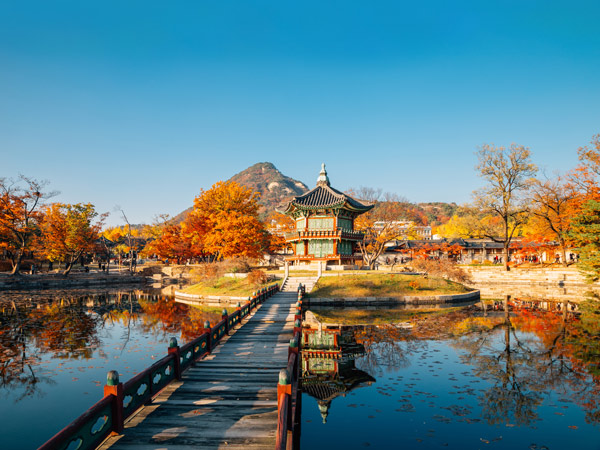
As the meat sizzles on the grill, tiny glasses of potent soju are emptied in one go and kimchi fried rice and banchan (side dishes of pickles and kimchi) are delivered to the table, I feel content. It is the same at the imposing Gyeongbokgung Palace the next day. Under an impossibly blue sky, the vibrantly painted structure, one of the five palace complexes in the historic downtown districts of Seoul, is as visually compelling as I remember.
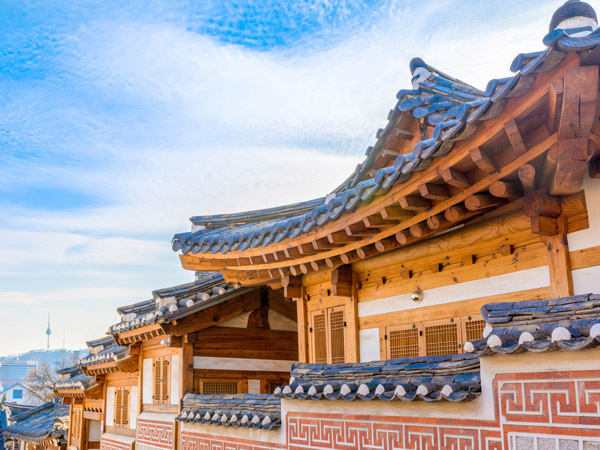
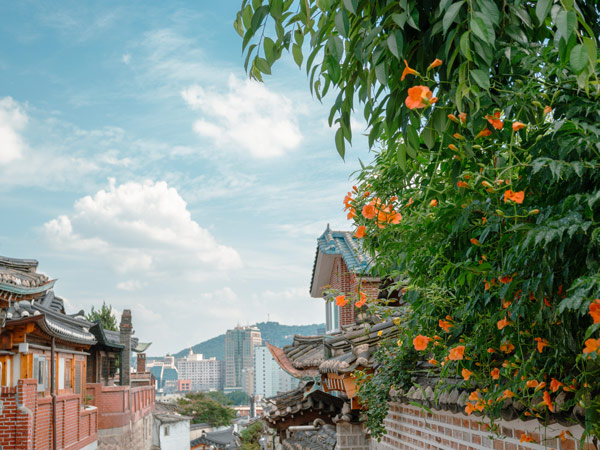
But I have garnered a better understanding of its history during my time away and how it would have been used that, rather than diminishing the experience, allows me to look at it through a new lens of understanding. In the inner-city village of Bukchon, I am happy to rediscover the cobblestoned streets lined with traditional hanok houses and recognise some buildings as the backdrop for a favourite K-drama.
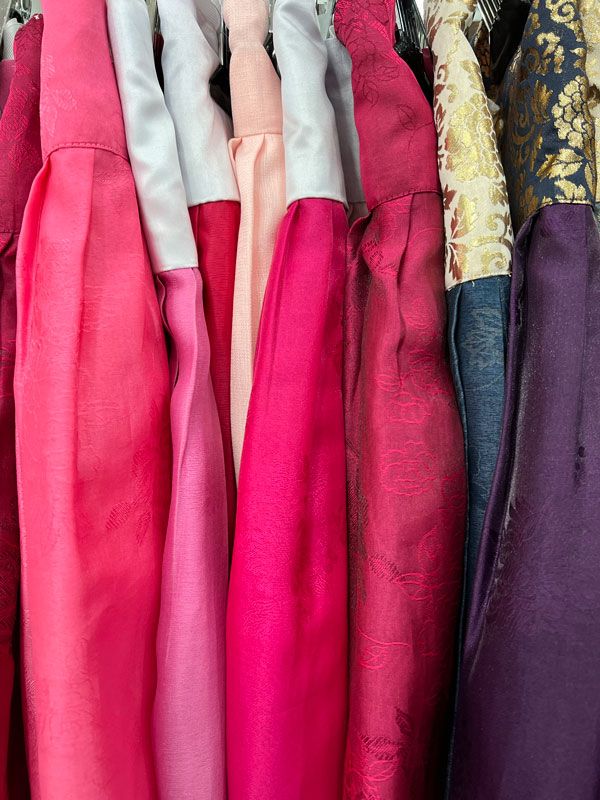
Attending a tea ceremony at Rakkojae Culture Lounge, a restored hanok complex that interestingly also boasts its own craft gin, is an exquisitely considered ritual of measuring, mixing and pouring. It also allows me the privilege of time within one of these lovely structures as I sip persimmon tea and nibble on traditional rice cakes.
The convergence of history and hospitality is a recurring theme throughout Seoul, where neighbourhoods such as Insadong, Ikseondong and Anguk boast a roster of cool, impossibly Instagrammable eateries and restaurants retrofitted into hanoks.
Better days
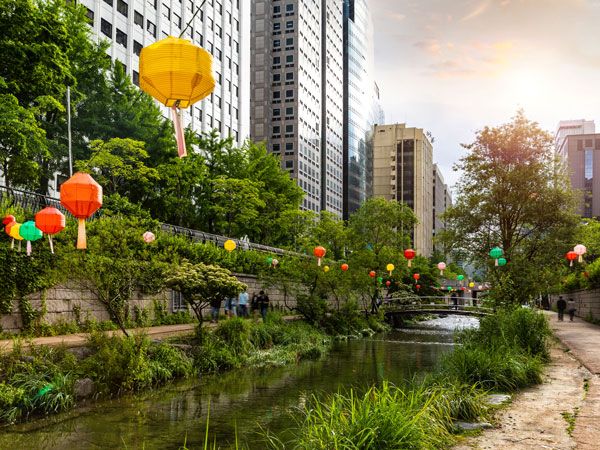
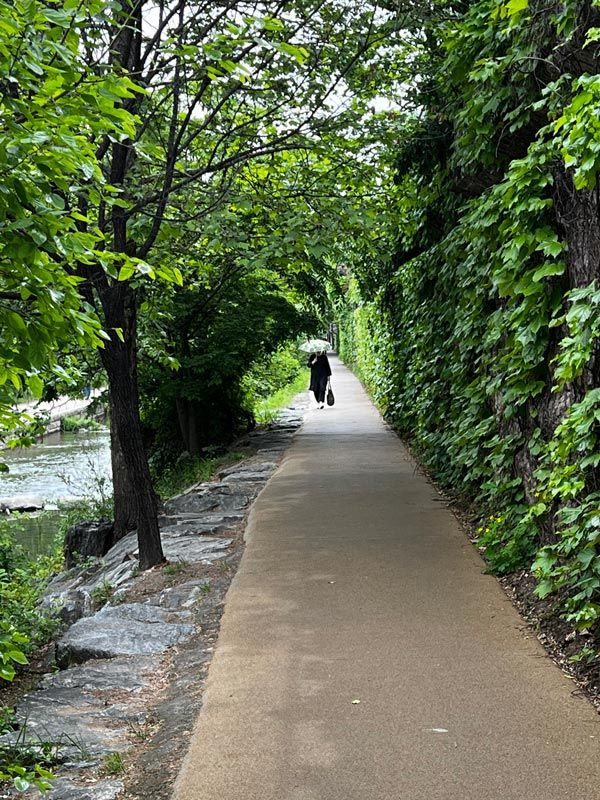
Seoul is the kind of international city where you can do as much or as little as you please and still feel you have encountered something singular. One where the beauty in the quiet and muted is as distracting as that of the bright and obvious. Walking the 10.9-kilometre Cheonggyecheon Stream, a former open stream running through the heart of Seoul that has been revitalised into a lush, landscaped oasis of greenery, fish, birdlife and art, is a simple pleasure that allows access to must-see locations at a meandering pace.
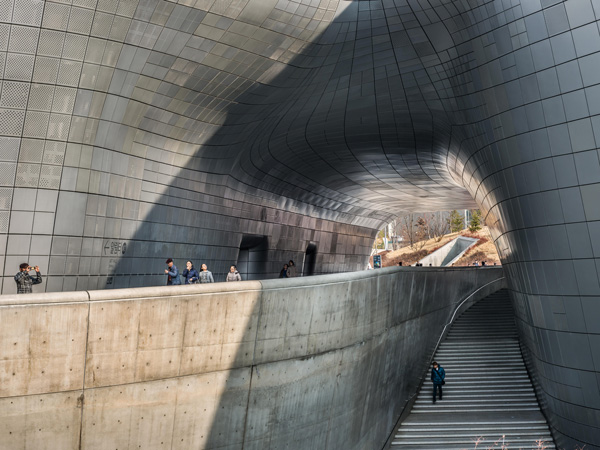
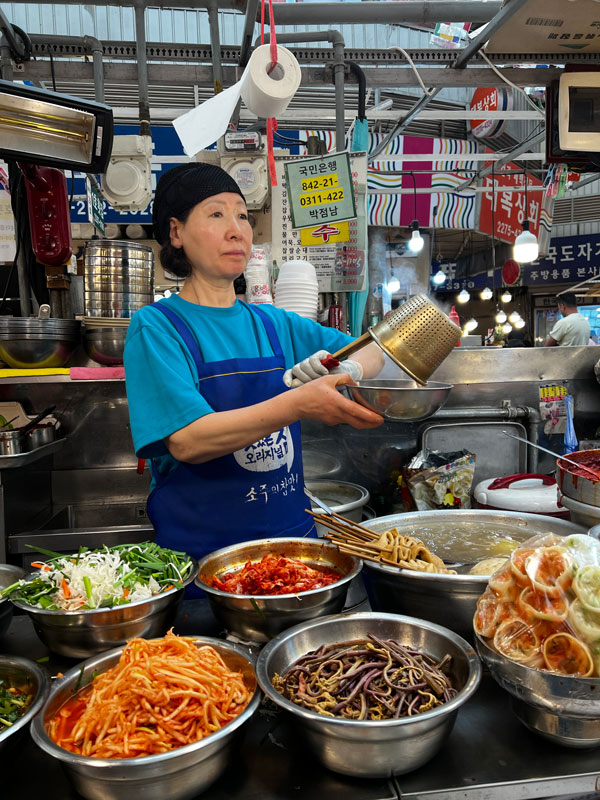
Places such as Dongdaemun, which is dominated by the hulking silver Dongdaemun Design Plaza (DDP), are conjured by the imagination of the late architect Zaha Hadid. Or the heaving, aromatic Gwangjang Market, where locals and tourists sit shoulder-to-shoulder at benches and communal tables to eat bindae-tteok (crisp, golden mung bean pancakes), mandu (bulbous, juicy dumplings) and cigar-like gimbap.
These little seaweed rolls filled with rice, pickles and wilted greens, sprinkled with sesame seeds and served with a tangy, mustardy dipping sauce are the ultimate Korean snack (nicknamed mayak gimbap or ‘addictive gimbap’). It also rewards you for regularly leaving its well-trodden, tree-lined paths by offering up undiscovered pockets of the city, where the streets are laced with electricity wires and locals stand chatting outside corner shops.
Or depositing you at the door of any number of chic, in-the-know cafes where Seoul’s vibrant youth sip meticulously brewed coffee and snack on crispy, flaky baked goods (Seoul’s cafe culture is off-the-charts good, with everything from old shoe factories to hanoks kitted out with coffee machines and super-sleek design).
On my last day, I visit the lovely Jingwansa Temple in the west of Seoul. The Buddhist temple complex is set against a mountainous backdrop, close to Bukhansan National Park, which provides a setting that is as picturesque as it is peaceful. Having been greeted by a smiling nun in minimalist grey robes under a ceiling festooned with colourful lanterns, I am introduced to the gentle rituals of Korean Buddhism through a session of meditation.
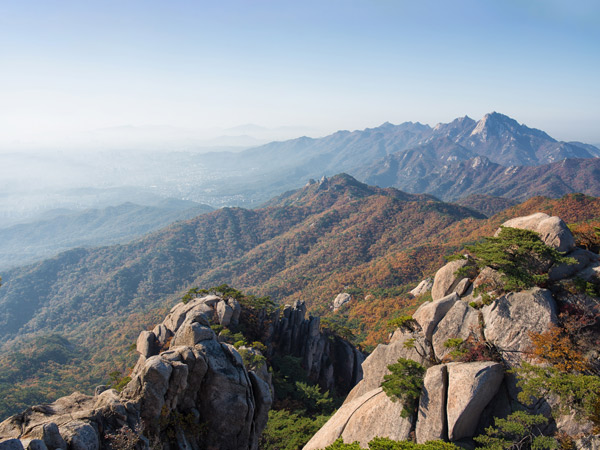
Park, west of Seoul.
As I lay on the smooth wooden floor engulfed in silence, save for an occasional chime ringing, my internal contemplation becomes an affirmation: of the accuracy of my memories; of the validity of my fascination; of the joy in once again being transformed by a destination.
Weekly travel news, experiences
insider tips, offers, and more.
Getting there
Qantas flies direct from Sydney to Korea’s Incheon International Airport four times a week from November to April, and three times a week from May to October.
Staying there
Four Seasons Hotel Seoul is in the Gwanghwamun area, where the city’s rich history and modern sensibilities coexist. The sophisticated property has views out to jutting skyscrapers, storied royal palaces and verdant mountain ranges from its elegant guest rooms.
It boasts several signature eateries (breakfast is served in a subterranean space with a glass floor in parts that provide glimpses of the foundations of historic buildings from the Joseon period), marble-swathed wellness and fitness facilities, a seasonal rooftop terrace and a schmoozy hidden bar, Charles H.
Arriving there
To celebrate Visit Korea Year 2023–2024, Australian passport holders no longer require a visa or visa waiver to enter the country. Once on the ground, getting from Incheon International Airport to Seoul takes between 45 and 60 minutes; the journey can be undertaken by Express Airport Bus, with several drop-off points in the city, or via the Airport Railroad Express Train (AREX) which travels direct from Terminal 1 to Seoul Station. If you want to take a taxi, head to the signposted international taxi stand where the drivers speak English (among other languages) and the fare is fixed depending on the drop-off location.
Spending there
To get an exchange rate just a smidge lower than the cash rate, take Australian dollars with you and change them at one of the cash-only exchange desks in the arrivals hall at Incheon. Not all ATMs in Korea accept international bank cards, so if you need to get money out, look for clearly marked ‘Global ATMs’. Apple Pay launched in South Korea in March 2023, but Google Pay is not yet available.
Navigating there
Naver Map and KakaoMap are the preferred apps for locals, with Naver offering more English text and real-time updates on traffic conditions, business hours and the like.
Want to see more stories from International Traveller in your Google search results?
- Click here to set International Traveller as a preferred source.
- Tick the box next to "International Traveller". That's it.