hero media

Dining in South Korea is a lesson in old meets new culinary delights

InsideAsia’s holidays to South Korea offer a journey into the rarest of the rare: a country that’s packed to bursting with quirks, charm and cultural riches, especially when it comes to food.

Every meal has a backstory in South Korea. It’s not just how you eat – waiting for the eldest at the table to begin, pouring drinks for others before yourself, leaving food on your plate to signal you are full – but a meal is also an important link to the past, a reflection of Korea’s vibrant traditions. This is an insight I would have likely missed if it weren’t for the Local Insiders at InsideAsia, a network of local tour leaders who provide travellers with authentic, hyperlocal experiences.

InsideAsia’s Soul of Korea small group tour is for curious travellers who want more than a cookie-cutter experience. The 10-day trip, starting in Seoul, takes me from city to coast to village and back again. And while there are many memorable moments I could share, I find it’s the experience of dining in Korea that gives the most potent insight into its culture.
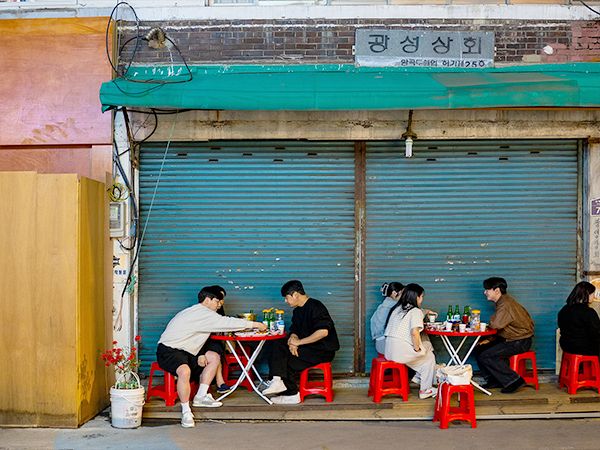
Experience Korea’s food culture up close.

A taste of hanjeongsik and Korean hospitality in Seoul

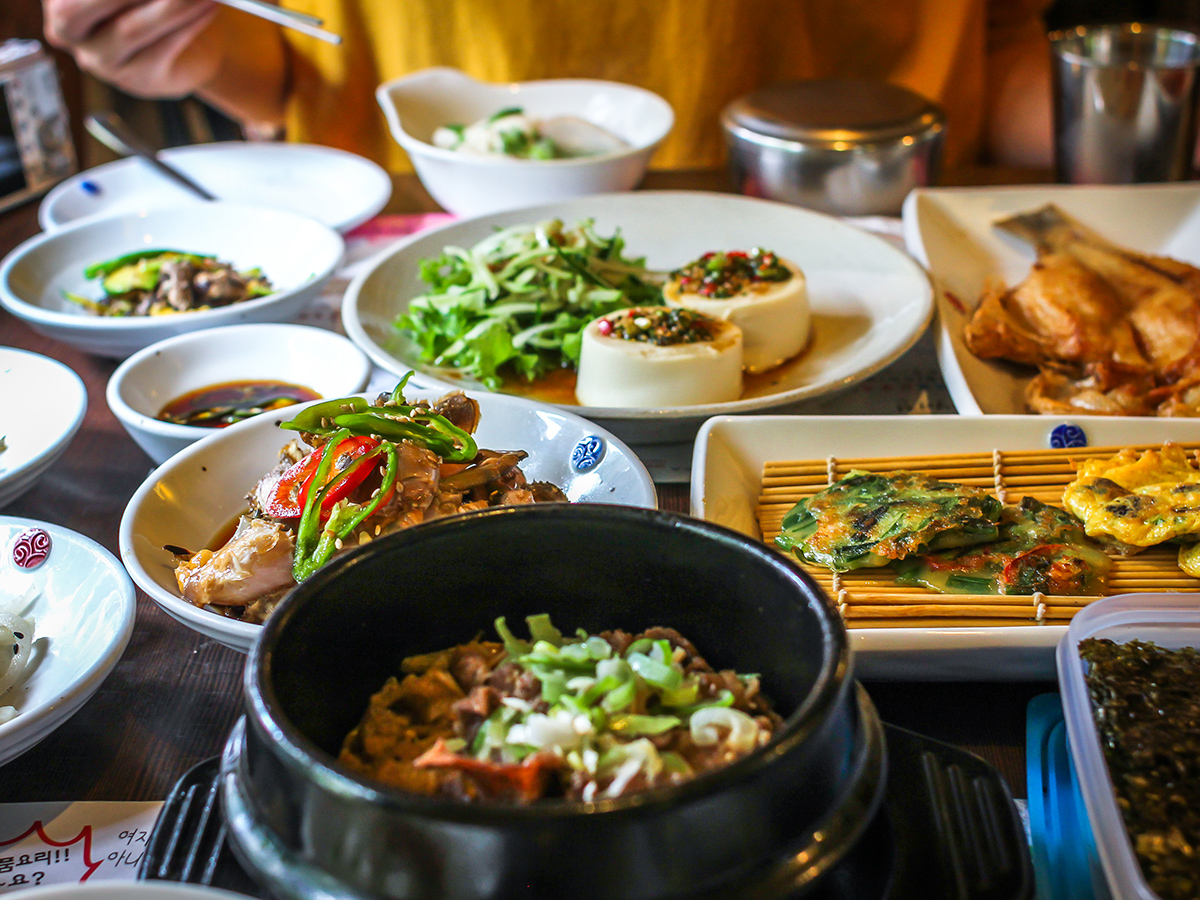
Tour leader Jun Jang has been a licensed guide in South Korea for over 10 years, and a local to Seoul for most of it. Our tour group of just five followed him down a rabbit’s warren of backstreets in Insadong (a Seoul neighbourhood renowned for its boutique galleries, wooden teahouses and Korean restaurants) to try hanjeongsik, a traditional full-course Korean meal accompanied by a variety of all-you-can-eat small side dishes known as banchan.

This is a style of eating rooted in the royal banquets of the Joseon Dynasty (1392-1910), when the grand feasts were a colourful display of the nation’s wealth and culture, filled with dance, music and ceremonial traditions. Today, it’s the communal act of eating together that speaks the loudest. We listen carefully as Jun explains the banquet set before us: bulgogi (soy sauce-marinated pork), jap chae (glass noodles with vegetables), gajami gui (grilled flatfish) and doenjang jjigae (soybean paste stew), just to name a few – there is not a speck of space left on the table. It’s our first experience of just how generous Korean hospitality truly is, and it won’t be the last.
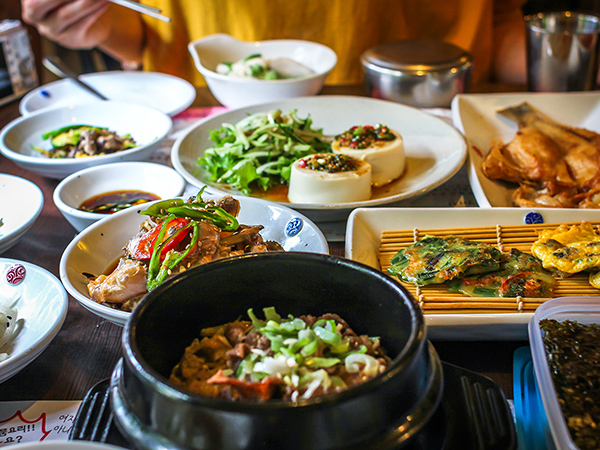
A korean lunch spread.
Dine like royalty in Seoul. (Image: Getty/Angela Woo)

Busan’s late-night pojangmacha

InsideAsia’s Local Insider Chris Tarp has us seated elbow-to-elbow around a table inside one of a dozen bright yellow tents lining the waterfront in the Yeongdo-gu district of Busan. The scent of sizzling pork and beef fills the night air as laser-focused women with little time for small talk cook at makeshift kitchen stations. The plastic tables and chairs scattered along the pavement are mostly taken by locals: groups of businessmen cradling beers, an older couple eating with blankets draped over their shoulders for warmth, two soldiers tucking into a late-night snack.

These stalls are South Korea’s iconic pojangmacha (pocha for short), and they’re also where you find the nation’s best street food. Their origin is linked to the end of Japanese occupation, at a time when the poor working class turned to selling food and drinks from transportable carts to make a living. Now it’s about authentic Korean comfort food sold cheap alongside beer and soju (a Korean alcoholic spirit). We pile our paper plates with steaming hot LA galbi (short ribs), gom jangeo (spicy stir-fried hagfish) and ggomak (cockles) as Chris continues his valiant effort to get us to eat every item on the menu; try as I may, it’s becoming increasingly difficult to find more room in my stomach.

Come morning, these pop-up diners will be packed up and wheeled away, and parked cars will take their place, making it a slice of Korean culture that is hard to find without a local.
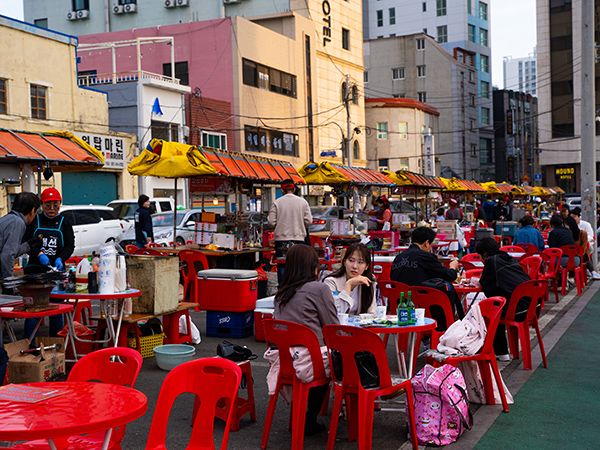
Pocha in Busan.
Pull up a stool at a pocha for iconic Korean street food.

Cafe culture in the ancient city of Gyeongju

It’s said to have originated out of a bakery in Japan in the early 2000s, but Korea has made the buttery, crunchy treat of sogeumppang (salt bread) its own since it first started dominating cafe culture across the country. I get my first taste of the viral sensation at Do Not Disturb, a cafe with views of tumuli – ancient royal burial chambers disguised as grass mounds – we’d walked around earlier that day with Local Insider Brian Huh.

Unlike other meals in South Korea, salt bread needs very little introduction; Korean bakeries have already made their way Down Under. It looks like a dinner roll with a crunchy sprinkling of sea salt on top, and has a ratio of butter to flour that makes it an addictive, melt-in-your-mouth experience. There are whole cafes dedicated to pumping out savoury and sweet versions – think fillings such as ham and cheese to pistachio cream. It’s a taste of a more modern phenomenon (spurred on by the so-called ‘Korean Wave’ sweeping the world) in a city that served as the capital of the Silla kingdom for 1000 years. A kind of old meets new experience that perfectly encapsulates why South Korea remains an endlessly fascinating place to visit: it never stays the same for long.

Shio pan or Japanese butter cookies,Bread baking.
Sink your teeth into Korea’s latest obsession. (Image: Getty/Thanyathep Eakphaitoon)

Want to see more stories from International Traveller in your Google search results?

  1. Click here to set International Traveller as a preferred source.
  2. Tick the box next to "International Traveller". That's it.
Katie Carlin
Katie Carlin is International Traveller's Head of Content and when she’s not travelling or behind her computer, she’s hosting a dinner party (likely cooking an Alison Roman recipe). She joined International Traveller in 2018 and is responsible for leading the editorial team across print, digital, social, email and native content. Her job is to make sure we create content that connects readers to incredible experiences in around the world. In addition to sharing her expertise on travel through industry speaking engagements, Katie appears on Today, A Current Affair and various radio segments. With a BA in Communications majoring in Journalism and a career that has spanned roles at Fairfax Media and Are Media writing for titles such as The Sydney Morning Herald, The Age, and various lifestyle brands, she brings a wealth of experience to her role. Her most impactful trip to date has been spotting polar bears and beluga whales in Arctic Canada.
View profile and articles
hero media

5 things every hotel needs for a more restorative stay

    Kate Bettes Kate Bettes
    Wellbeing means different things to different travellers. Here’s how to pick a hotel that gets it right for you.

    The best wellness holidays aren’t necessarily spent wrapped in a spa robe. Sometimes they’re found around a dinner table in Cambodia, on a hiking trail in New Zealand or after finally beating jet lag on the other side of the world. The hotel you choose is what makes them happen.

    1. Easy access to good food

    meals from Novotel Bangkok Sukhumvit 20
    Taste delicious meals at Novotel Bangkok Sukhumvit 20.

    One of the quickest ways to derail healthy habits on holiday is to spend half of it working out where to eat instead of digging into the culture around you. Thankfully, Novotel has done much of the hard work already, with chefs building menus that lean into the flavours, ingredients and traditions of each destination.

    In Sihanoukville, Cambodia, Korkor soup – often dubbed ‘Cambodian ratatouille’ – sits alongside raw blue crab dressed with lime and chilli, best enjoyed with views across the Gulf of Thailand.

    In the lovingly chaotic city of Bangkok, the presence of food cranks up the sociability. At Novotel Bangkok Sukhumvit 20, you can settle in with mango sticky rice and stranger-turned-friends beside the pool at Sky on 20 rooftop bar, or bring them along to tackle river prawns and stir-fried crab with holy basil at the buzzing Crab Paradise Dinner Buffet.

    Then Novotel Dubai Al Barsha welcomes you with a laidback twist on the level of indulgence the Middle Eastern city is best known for up on Deck Se7en. Looking towards Burj Al Arab, the rooftop lounge has everything from Mediterranean-style dishes like seabass ceviche to Italian prosecco sundowners.

    At the other end of the scale, in the hills that surround the Novotel Bali Ubud Resort, calm comes from nature. At Siralada restaurant, Balinese traditions shape the menu while thunder rumbles over the surrounding jungle – proving the setting is as nourishing as the food itself.

    While at Novotel Nha Trang, chef Kieu Thi My Hanh and her team showcase Vietnam’s knack for balancing freshness, texture and fragrant herbs. Pho remains a favourite, while seafood salad with pomelo and mango brings those flavours together in one bright dish.

    It’s all an approach backed by partnerships with expert food creators such as Alfie Steiner, whose plant-forward recipes prove healthy food should never taste plain.

    2. Better sleep options

    Novotel Bali Ubud Resort room
    Sleep deeply with Novotel.

    There are few travel experiences more disappointing than arriving in a new country, determined to seize the day, only to fall asleep fully clothed by 3pm.

    For Australian travellers, jet lag is often an unavoidable part of the journey. That’s one reason Novotel runs sleep-focused initiatives that help guests adjust quickly without compromising on health. We’re talking partnerships with Sydney-based sleep specialist Olivia Arezzolo, known for her advice on everything from better sleep habits to beating jet lag, alongside features like pillow menus, in-room yoga content and tailored sleep guidance.

    The sooner you’re operating on local time, the sooner you can get back to more pressing matters – like deciding which spa treatment to book.

    3. More ways to move

    woman hiking around queenstown new zealand
    Stay at Novotel Queenstown Lakeside and explore local hiking trails. (Credit: GettyI mages/ naruedom)

    Every place in the world has its own way of getting you moving: whether that’s hiking up ice-bitten mountains before a sauna or gentle stretching by the pool before a facial. From fitness centres to spas, Novotel recognises that wellbeing rarely looks the same.

    At Novotel Queenstown Lakeside, activity is inescapable. Here, hiking trails, ski fields, bungee jumps, and white-water rafting have made the region famous. The hotel’s location on the shores of Lake Wakatipu means less time spent organising yourself and more time out there experiencing them. To top it all off, you can book a private hot tub for the evening before heading back into the wilderness tomorrow.

    Bali, of course, takes a softer approach. At Novotel Bali Ubud Resort or Novotel Bali Nusa Dua, movement is less about conquering a mountain and more about a dance class between the tropical gardens and lagoon pools. Afterwards, the spa takes over, with traditional treatments like a Lulur body scrub: a combination of rice, turmeric, sandalwood, ginger and jasmine that’ll soothe muscles already relaxed by the Balinese heat.

    4. Better connections

    Novotel Sharm El Sheikh
    Kids will love a stay at Novotel Sharm El Sheikh.

    One of the best things about travel is that it gives your family stories you’ll be telling for years. Novotel helps create them with activities that bring everyone together, whether that’s trying something new, learning a local skill, or simply spending more time together.

    Go for a distinctly Thai twist at Novotel Phuket Vintage Park, where many of the family activities draw on local culture. Kids can try everything from beginner Thai boxing and language lessons to umbrella painting and – a pastime beloved by children the world over – pool foam parties. Everyone is welcome to join in, whether that’s getting splashed, covered in paint, or simply watching their children discover a new side of Thailand during the dedicated Family & Kids Day.

    A different adventure awaits at Novotel Sharm El Sheikh. Kids could be perfectly content with discos, drawing classes and new holiday friends, but the Red Sea has other ideas. Sitting on the edge of Naama Bay, days here might involve snorkelling colourful reefs, taking a boat trip to Ras Mohammed National Park or heading into the desert by quad bike or camel for a Bedouin-style dinner beneath the stars.

    5. Location is everything

    Surin Beach, Choeng Thale, Thalang District, Phuket, Thaiföld
    Explore Phuket’s gorgeous beaches. (Credit: Bence Biczo)

    Everyone’s idea of wellness looks a little different. With more than 600 hotels across 65 countries, Novotel gives guests the freedom to choose the destination that suits them best. Whether that’s a beachside escape in Phuket, an alpine expedition in Queenstown or a city break in Bangkok, there’s a good chance a Novotel isn’t far away.

    All that’s left? Choosing your version of wellbeing.

    Discover stays to inspire your everyday at novotel.accor.com.